Italy Marine Hvac Market: Import Trend Analysis
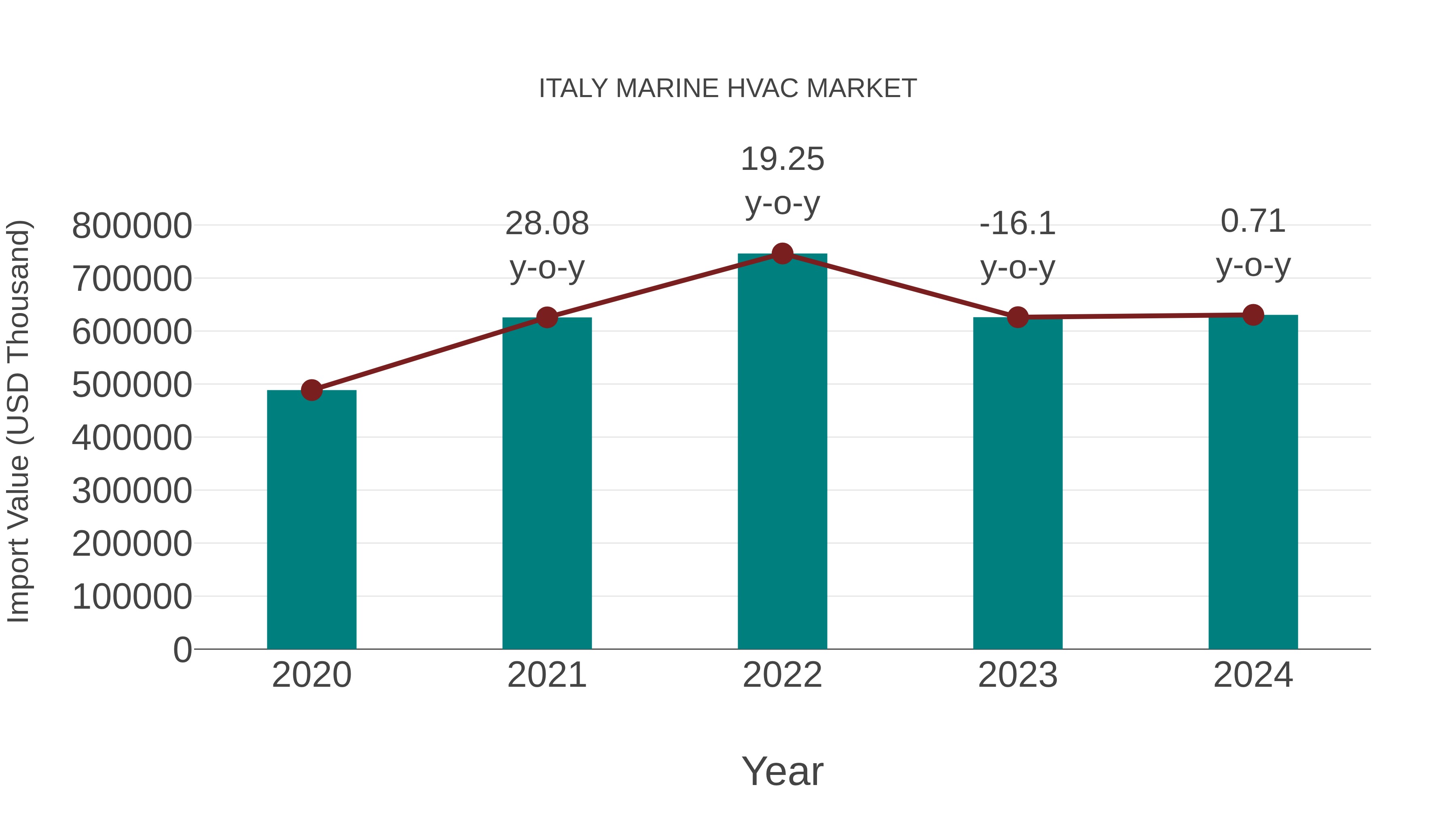
In 2024, Italy marine HVAC Market: Import Trend Analysis witnessed a notable increase in imports. The trend reflected growing demand for HVAC systems in the maritime sector, driven by factors such as fleet expansion and retrofitting activities. Italy reliance on imported marine HVAC equipment remained a key feature of the Market: Import Trend Analysis landscape.
Italy Marine HVAC Market Overview
The Italy Marine HVAC market is experiencing steady growth driven by the increasing demand for energy-efficient HVAC systems in the maritime industry. Key factors contributing to this growth include the rising number of cruise ships, yachts, and other commercial vessels requiring advanced HVAC solutions for passenger comfort and operational efficiency. Additionally, stringent environmental regulations and the focus on reducing carbon emissions are leading shipbuilders and operators to invest in environmentally friendly HVAC systems. The market is characterized by the presence of both domestic and international players offering a range of products such as chillers, air handlers, and ventilation systems tailored to marine applications. Technological advancements, such as the integration of digital controls and smart sensors, are further enhancing the efficiency and performance of marine HVAC systems in Italy.
Italy Marine HVAC Market Trends
The Italy Marine HVAC market is experiencing several key trends. One prominent trend is the increasing demand for energy-efficient HVAC systems in order to comply with environmental regulations and reduce operating costs. Shipowners are increasingly looking for systems that can provide optimal heating, ventilation, and air conditioning while minimizing energy consumption. Another trend is the integration of smart technologies and automation in marine HVAC systems, allowing for remote monitoring and control of onboard systems. Additionally, there is a growing focus on improving indoor air quality and passenger comfort through advanced filtration systems and innovative ventilation designs. Overall, the Italy Marine HVAC market is moving towards more sustainable and technologically advanced solutions to meet the evolving needs of the maritime industry.
Italy Marine HVAC Market Challenges
In the Italy Marine HVAC market, some challenges include stringent regulations and environmental concerns that drive the demand for eco-friendly and energy-efficient HVAC systems. The fluctuating fuel prices and economic uncertainties can also impact the market as ship operators look to optimize operational costs. Additionally, the high initial costs of installing marine HVAC systems and the need for specialized maintenance and servicing present barriers to entry for smaller players in the market. Furthermore, the competitive landscape with established HVAC suppliers vying for market share and the need to keep up with technological advancements to meet evolving customer demands pose additional challenges for businesses operating in the Italy Marine HVAC sector.
Italy Marine HVAC Market Investment Opportunities
The Italy Marine HVAC market presents several promising investment opportunities due to the growing demand for energy-efficient and environmentally friendly HVAC systems in the maritime industry. With stringent regulations focusing on reducing emissions and improving energy efficiency on ships, there is a rising need for advanced HVAC solutions that can meet these requirements. Investors can explore opportunities in developing innovative HVAC technologies tailored for marine applications, such as compact and modular HVAC systems that optimize space utilization on vessels while ensuring optimal performance. Additionally, there is potential for investing in retrofitting existing marine HVAC systems with more sustainable options to align with industry standards and regulations. Collaborating with shipbuilders, operators, and regulatory bodies to address the evolving needs of the Italy Marine HVAC market can also provide lucrative investment prospects.
Italy Marine HVAC Market Government Policy
Government policies related to the Italy Marine HVAC Market focus on promoting energy efficiency and reducing emissions to comply with European Union regulations. The Italian government has introduced initiatives such as tax incentives and subsidies for companies investing in environmentally friendly HVAC systems for marine vessels. Additionally, there are regulations in place to ensure compliance with standards for air quality and noise pollution, particularly in coastal areas and ports. The government also encourages the adoption of innovative technologies in the marine HVAC sector to improve sustainability and reduce the environmental impact of maritime activities. Overall, the regulatory framework aims to drive the transition towards cleaner and more efficient HVAC solutions in the Italy Marine industry.
Italy Marine HVAC Market Future Outlook
The future outlook for the Italy Marine HVAC Market appears promising as the maritime industry continues to grow and modernize. Factors driving this growth include increasing demand for luxury cruises, rising awareness of environmental sustainability leading to the adoption of energy-efficient HVAC systems, and stringent regulations on emissions and air quality. The market is expected to witness a steady increase in demand for marine HVAC solutions tailored to meet the unique requirements of different types of vessels. Technological advancements, such as the integration of smart HVAC systems with automation and control systems, are anticipated to further propel market growth. Overall, the Italy Marine HVAC Market is poised for expansion driven by evolving industry trends and a focus on enhancing passenger comfort and operational efficiency in marine vessels.
Key Highlights of the Report:
- Italy Marine HVAC Market Outlook
- Market Size of Italy Marine HVAC Market, 2025
- Forecast of Italy Marine HVAC Market, 2032
- Historical Data and Forecast of Italy Marine HVAC Revenues & Volume for the Period 2022 - 2032F
- Italy Marine HVAC Market Trend Evolution
- Italy Marine HVAC Market Drivers and Challenges
- Italy Marine HVAC Price Trends
- Italy Marine HVAC Porter's Five Forces
- Italy Marine HVAC Industry Life Cycle
- Historical Data and Forecast of Italy Marine HVAC Market Revenues & Volume By Vessel Type for the Period 2022 - 2032F
- Historical Data and Forecast of Italy Marine HVAC Market Revenues & Volume By Passenger Vessels for the Period 2022 - 2032F
- Historical Data and Forecast of Italy Marine HVAC Market Revenues & Volume By Cargo Carriers for the Period 2022 - 2032F
- Historical Data and Forecast of Italy Marine HVAC Market Revenues & Volume By Fishing Vessels for the Period 2022 - 2032F
- Historical Data and Forecast of Italy Marine HVAC Market Revenues & Volume By Technology Type for the Period 2022 - 2032F
- Historical Data and Forecast of Italy Marine HVAC Market Revenues & Volume By Marine Ventilation Systems for the Period 2022 - 2032F
- Historical Data and Forecast of Italy Marine HVAC Market Revenues & Volume By Marine Air Conditioning for the Period 2022 - 2032F
- Historical Data and Forecast of Italy Marine HVAC Market Revenues & Volume By Marine Heating Systems for the Period 2022 - 2032F
- Historical Data and Forecast of Italy Marine HVAC Market Revenues & Volume By Marine Refrigeration Systems for the Period 2022 - 2032F
- Historical Data and Forecast of Italy Marine HVAC Market Revenues & Volume By Capacity for the Period 2022 - 2032F
- Historical Data and Forecast of Italy Marine HVAC Market Revenues & Volume By Less than 20 RT for the Period 2022 - 2032F
- Historical Data and Forecast of Italy Marine HVAC Market Revenues & Volume By 20 - 90 RT for the Period 2022 - 2032F
- Historical Data and Forecast of Italy Marine HVAC Market Revenues & Volume By Above 90 RT for the Period 2022 - 2032F
- Historical Data and Forecast of Italy Marine HVAC Market Revenues & Volume By Application for the Period 2022 - 2032F
- Historical Data and Forecast of Italy Marine HVAC Market Revenues & Volume By Engine Room for the Period 2022 - 2032F
- Historical Data and Forecast of Italy Marine HVAC Market Revenues & Volume By Cargo Hold for the Period 2022 - 2032F
- Historical Data and Forecast of Italy Marine HVAC Market Revenues & Volume By Deck for the Period 2022 - 2032F
- Historical Data and Forecast of Italy Marine HVAC Market Revenues & Volume By Tender Garage for the Period 2022 - 2032F
- Italy Marine HVAC Import Export Trade Statistics
- Market Opportunity Assessment By Vessel Type
- Market Opportunity Assessment By Technology Type
- Market Opportunity Assessment By Capacity
- Market Opportunity Assessment By Application
- Italy Marine HVAC Top Companies Market Share
- Italy Marine HVAC Competitive Benchmarking By Technical and Operational Parameters
- Italy Marine HVAC Company Profiles
- Italy Marine HVAC Key Strategic Recommendations






































