Italy Metallized Film Market: Import Trend Analysis
In 2024, Italy metallized film Market: Import Trend Analysis witnessed a steady increase in imports. The country experienced a growing demand for imported metallized film products, indicating a reliance on foreign suppliers to meet Market: Import Trend Analysis needs.
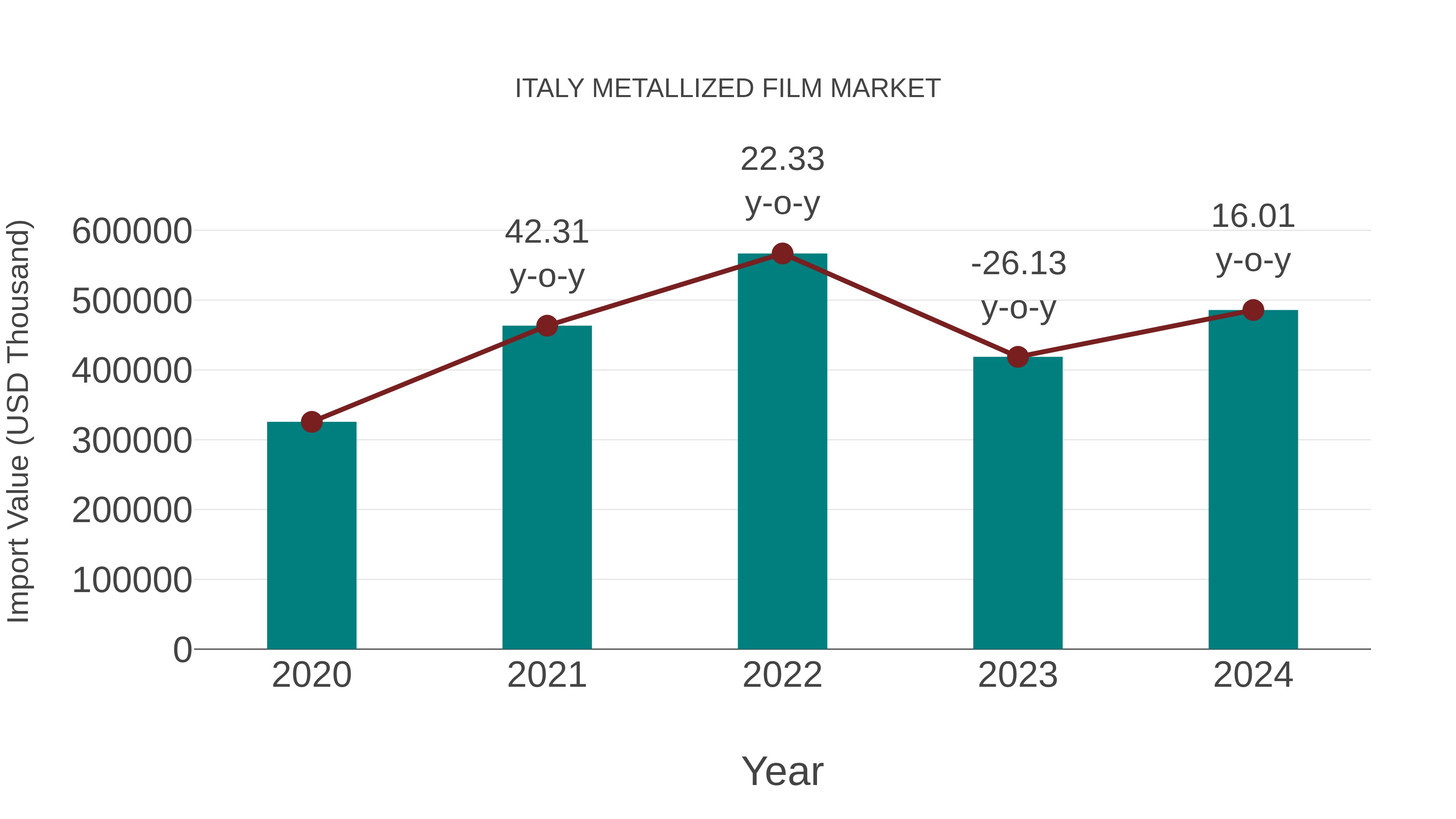
Italy Metallized Film Market Synopsis
Italy metallized film market is expanding, driven by their applications in packaging, electronics, and insulation. Metallized films, which are coated with a thin layer of metal, provide barrier properties, reflectivity, and durability. The market benefits from the increasing demand for flexible packaging solutions, the growth of the electronics industry, and innovations in film manufacturing technologies that enhance performance and sustainability.
Drivers of the market
Italy metallized film market is witnessing growth driven by its applications in packaging, insulation, and decorative laminates for food, beverage, pharmaceutical, and industrial products. With metallized films offering barrier properties, moisture resistance, and aesthetic appeal, their adoption is driven by the demand for lightweight, cost-effective alternatives to traditional metal foils and laminates.
Challenges of the market
The Metallized Film Market in Italy faces challenges associated with technological advancements, material innovation, and market competition. Metallized films, which offer properties such as barrier protection, thermal insulation, and decorative appeal, find applications in packaging, labeling, and industrial sectors. However, addressing concerns about film quality, adhesion strength, and recyclability requires continuous research and development efforts. Moreover, meeting diverse customer requirements, sustainability goals, and regulatory standards adds complexity to the metallized film market landscape in Italy.
Government Policy of the market
In the metallized film market, Italy government policies focus on promoting innovation and competitiveness in the packaging and electronics industries. Regulations ensure the quality and performance of metallized films used in various applications, including food packaging, capacitors, and insulation. Financial incentives may be available for companies investing in research, development, and commercialization of metallized film technologies. Additionally, the government supports initiatives to enhance recycling and waste management of metallized films to reduce environmental impact.
Key Highlights of the Report:
- Italy Metallized Film Market Outlook
- Market Size of Italy Metallized Film Market, 2025
- Forecast of Italy Metallized Film Market, 2032
- Historical Data and Forecast of Italy Metallized Film Revenues & Volume for the Period 2022-2032F
- Italy Metallized Film Market Trend Evolution
- Italy Metallized Film Market Drivers and Challenges
- Italy Metallized Film Price Trends
- Italy Metallized Film Porter's Five Forces
- Italy Metallized Film Industry Life Cycle
- Historical Data and Forecast of Italy Metallized Film Market Revenues & Volume By Metal Types for the Period 2022-2032F
- Historical Data and Forecast of Italy Metallized Film Market Revenues & Volume By Aluminium for the Period 2022-2032F
- Historical Data and Forecast of Italy Metallized Film Market Revenues & Volume By Others for the Period 2022-2032F
- Historical Data and Forecast of Italy Metallized Film Market Revenues & Volume By Material Types for the Period 2022-2032F
- Historical Data and Forecast of Italy Metallized Film Market Revenues & Volume By Polypropylene (PP) for the Period 2022-2032F
- Historical Data and Forecast of Italy Metallized Film Market Revenues & Volume By Polyethylene Terephthalate (PET) for the Period 2022-2032F
- Historical Data and Forecast of Italy Metallized Film Market Revenues & Volume By End-users for the Period 2022-2032F
- Historical Data and Forecast of Italy Metallized Film Market Revenues & Volume By Packaging for the Period 2022-2032F
- Historical Data and Forecast of Italy Metallized Film Market Revenues & Volume By Decorative for the Period 2022-2032F
- Historical Data and Forecast of Italy Metallized Film Market Revenues & Volume By Others for the Period 2022-2032F
- Italy Metallized Film Import Export Trade Statistics
- Market Opportunity Assessment By Metal Types
- Market Opportunity Assessment By Material Types
- Market Opportunity Assessment By End-users
- Italy Metallized Film Top Companies Market Share
- Italy Metallized Film Competitive Benchmarking By Technical and Operational Parameters
- Italy Metallized Film Company Profiles
- Italy Metallized Film Key Strategic Recommendations






































