Italy Peas Market: Import Trend Analysis
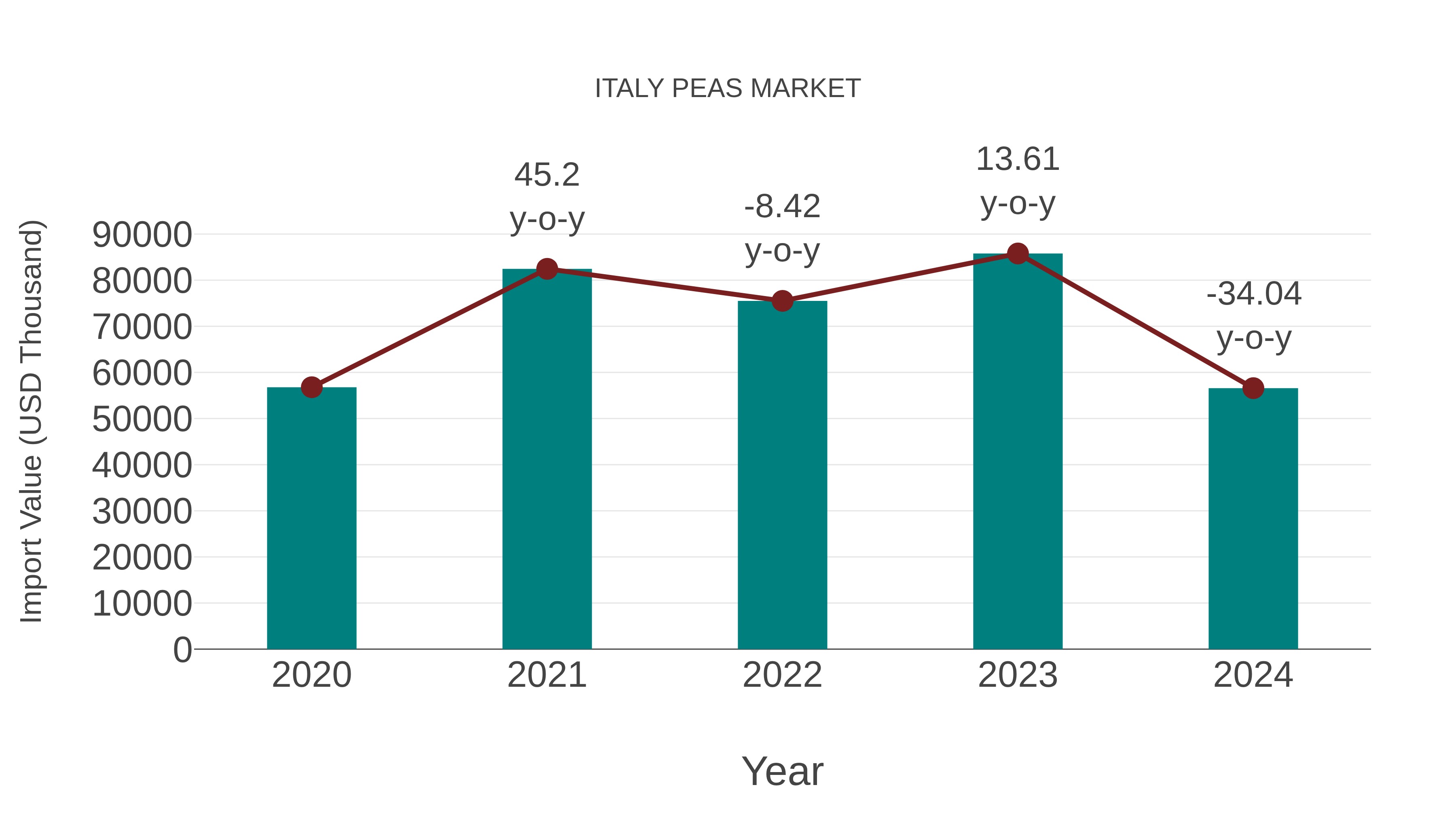
In 2024, Italy import trend for peas saw a steady increase, driven by growing demand for plant-based protein sources. Imports of peas into Italy rose consistently throughout the year, reflecting a shift towards healthier and sustainable food choices in the Market: Import Trend Analysis.
Italy Peas Market Overview
The Italy peas market is experiencing steady growth driven by the increasing consumer demand for plant-based protein sources and the growing popularity of vegetarian and vegan diets. Peas are a versatile ingredient used in various dishes such as soups, salads, and pastas, contributing to their high demand in the food industry. Additionally, peas are known for their nutritional benefits, being rich in protein, fiber, and vitamins, further boosting their consumption. The market is also influenced by the rising awareness of sustainable and environmentally friendly food choices, leading to a preference for locally sourced peas over imported varieties. Italian consumers are increasingly seeking organic and non-GMO peas, driving the market towards more premium and specialty product offerings. Overall, the Italy peas market is poised for continued growth supported by these key trends and consumer preferences.
Italy Peas Market Trends
The Italy Peas Market is experiencing a growing trend towards plant-based proteins, driving an increased demand for peas as a nutritious and sustainable ingredient. Consumers are increasingly seeking plant-based alternatives to meat products, leading to a rise in the use of pea protein in various food and beverage applications. Additionally, there is a focus on environmental sustainability, with peas being recognized for their low carbon footprint compared to animal proteins. The convenience factor of peas, as they are easy to store and prepare, is also contributing to their popularity in the Italian market. Overall, the Italy Peas Market is witnessing a shift towards healthier and more sustainable food choices, positioning peas as a versatile and in-demand ingredient.
Italy Peas Market Challenges
In the Italy Peas Market, some of the key challenges include fluctuating weather conditions affecting crop yields, increasing competition from other vegetable products, changing consumer preferences towards alternative plant-based proteins, and rising production costs. Additionally, the market faces pressure from imports of peas from other countries, which can impact domestic growers. Market players also need to navigate complex regulations and quality standards, as well as address sustainability concerns related to farming practices and packaging. Overall, to succeed in the Italy Peas Market, companies need to adapt to these challenges by investing in technology, innovation, and marketing strategies to differentiate their products and meet evolving consumer demands.
Italy Peas Market Investment Opportunities
In the Italy peas market, there are several investment opportunities available for investors looking to capitalize on the growing demand for plant-based proteins and healthy food choices. One potential opportunity lies in investing in companies involved in pea protein production, as peas are increasingly being used as a source of plant-based protein in food products such as plant-based meat alternatives, dairy alternatives, and sports nutrition products. Another opportunity is in the cultivation and processing of peas for both domestic consumption and export, as Italy has a strong agricultural sector and favorable climate conditions for growing peas. Additionally, investing in research and development to improve pea crop yields and sustainability practices could also be a promising avenue for investment in the Italy peas market.
Italy Peas Market Government Policy
The Italian government plays a significant role in the peas market through various policies aimed at supporting agricultural production and ensuring food security. Some key policies include subsidies for farmers to encourage pea cultivation, support for research and development in pea farming techniques, and regulations to maintain quality standards. Additionally, the government promotes sustainable farming practices to protect the environment and ensure the long-term viability of the peas market. Overall, government policies in Italy aim to boost pea production, safeguard the interests of farmers, and meet the growing demand for peas both domestically and internationally.
Italy Peas Market Future Outlook
The future outlook for the Italy Peas Market appears positive with a projected growth in demand driven by increasing consumer awareness of the health benefits associated with peas consumption. The market is expected to witness a rise in demand for both fresh and processed peas, especially as more consumers are seeking plant-based protein sources. Furthermore, the growing trend of sustainable and environmentally-friendly food choices is likely to boost the market for peas, as they are considered a more eco-friendly crop compared to certain animal protein sources. In addition, advancements in agricultural technology and breeding practices are anticipated to improve the yield and quality of peas, further supporting the market growth in Italy. Overall, the Italy Peas Market is poised for expansion in the coming years.
Key Highlights of the Report:
- Italy Peas Market Outlook
- Market Size of Italy Peas Market, 2025
- Forecast of Italy Peas Market, 2032
- Historical Data and Forecast of Italy Peas Revenues & Volume for the Period 2022 - 2032F
- Italy Peas Market Trend Evolution
- Italy Peas Market Drivers and Challenges
- Italy Peas Price Trends
- Italy Peas Porter's Five Forces
- Italy Peas Industry Life Cycle
- Historical Data and Forecast of Italy Peas Market Revenues & Volume By Type for the Period 2022 - 2032F
- Historical Data and Forecast of Italy Peas Market Revenues & Volume By Field Peas for the Period 2022 - 2032F
- Historical Data and Forecast of Italy Peas Market Revenues & Volume By Garden Peas for the Period 2022 - 2032F
- Historical Data and Forecast of Italy Peas Market Revenues & Volume By Others for the Period 2022 - 2032F
- Historical Data and Forecast of Italy Peas Market Revenues & Volume By Application for the Period 2022 - 2032F
- Historical Data and Forecast of Italy Peas Market Revenues & Volume By Food for the Period 2022 - 2032F
- Historical Data and Forecast of Italy Peas Market Revenues & Volume By Others for the Period 2022 - 2032F
- Historical Data and Forecast of Italy Peas Market Revenues & Volume By Distribution Channel for the Period 2022 - 2032F
- Historical Data and Forecast of Italy Peas Market Revenues & Volume By Online for the Period 2022 - 2032F
- Historical Data and Forecast of Italy Peas Market Revenues & Volume By Offline for the Period 2022 - 2032F
- Historical Data and Forecast of Italy Peas Market Revenues & Volume By Others for the Period 2022 - 2032F
- Italy Peas Import Export Trade Statistics
- Market Opportunity Assessment By Type
- Market Opportunity Assessment By Application
- Market Opportunity Assessment By Distribution Channel
- Italy Peas Top Companies Market Share
- Italy Peas Competitive Benchmarking By Technical and Operational Parameters
- Italy Peas Company Profiles
- Italy Peas Key Strategic Recommendations






































