Italy Polyester Spun Yarn Market Size (2020-2030)
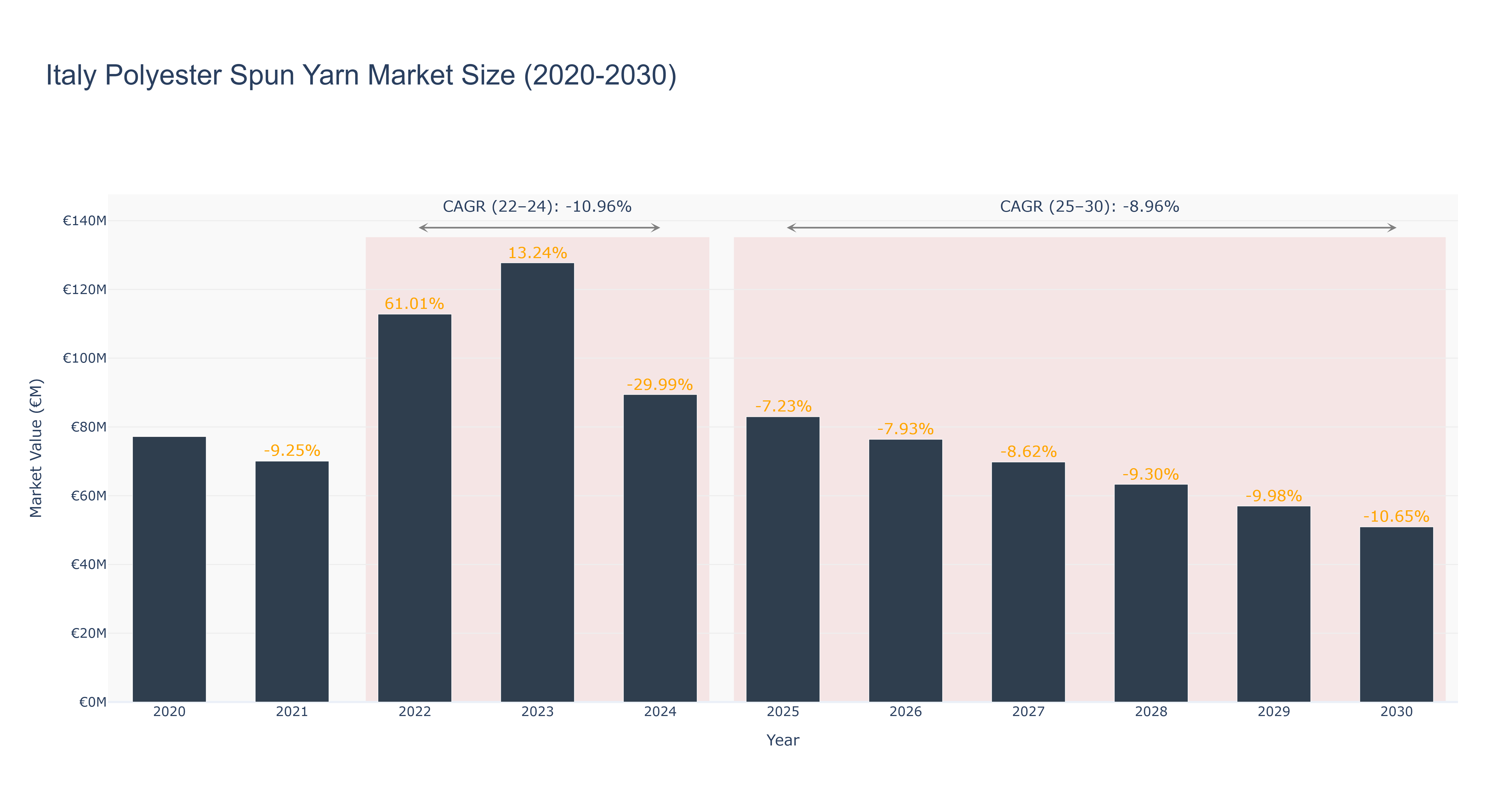
Italy Polyester Spun Yarn Market has witnessed fluctuating trends in recent years. The market peaked at €127.73 million in 2023, followed by a significant decline to €89.43 million in 2024. The forecasted market size is expected to continue decreasing from €82.96 million in 2025 to €50.92 million in 2030, with a CAGR of -8.96% from 2025 to 2030. The market's downfall can be attributed to factors such as changing consumer preferences towards sustainable materials and economic uncertainties. However, industry drivers like technological advancements in yarn production processes and increasing demand for eco-friendly textiles could potentially drive growth in the future. In the coming years, Italy is set to invest in research and development initiatives to enhance the quality and sustainability of polyester spun yarn, aiming to regain market share and competitiveness.
Italy Polyester Spun Yarn Market: Production & Trade Performance (2019-2025)
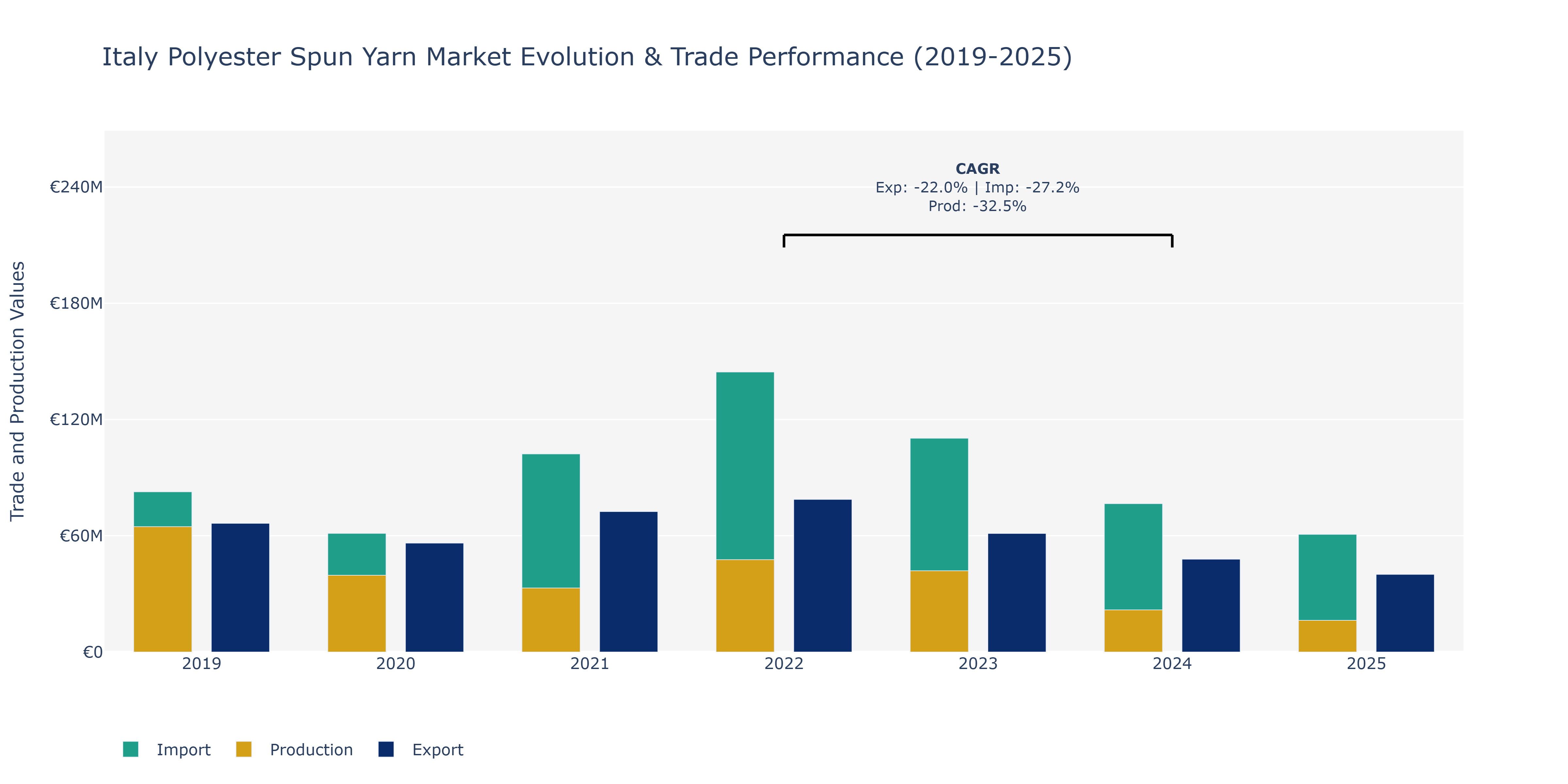
Between 2019 and 2025, the Italy Polyester Spun Yarn Market experienced notable fluctuations in exports, imports, and production. The highest export value of €78.78 million was recorded in 2022, followed by a decline to €40.09 million in 2025. Imports peaked at €144.53 million in 2022 and decreased to €60.73 million in 2025. Production also saw a decline from €64.71 million in 2019 to €16.34 million in 2025. These shifts could be attributed to various factors such as changing demand patterns, global economic conditions, and supply chain disruptions. For instance, the decrease in production might be a response to lower demand or increased competition from other markets. The drop in exports and imports could be influenced by trade policies, currency fluctuations, or shifts in consumer preferences towards alternative materials. To navigate these challenges, market players could focus on product innovation, cost optimization, and market diversification strategies.
Key Highlights of the Report:
- Italy Polyester Spun Yarn Market Outlook
- Market Size of Italy Polyester Spun Yarn Market, 2025
- Forecast of Italy Polyester Spun Yarn Market, 2032
- Historical Data and Forecast of Italy Polyester Spun Yarn Revenues & Volume for the Period 2022-2032F
- Italy Polyester Spun Yarn Market Trend Evolution
- Italy Polyester Spun Yarn Market Drivers and Challenges
- Italy Polyester Spun Yarn Price Trends
- Italy Polyester Spun Yarn Porter's Five Forces
- Italy Polyester Spun Yarn Industry Life Cycle
- Historical Data and Forecast of Italy Polyester Spun Yarn Market Revenues & Volume By Types for the Period 2022-2032F
- Historical Data and Forecast of Italy Polyester Spun Yarn Market Revenues & Volume By Recycled Spun Yarn for the Period 2022-2032F
- Historical Data and Forecast of Italy Polyester Spun Yarn Market Revenues & Volume By Non-recycled Spun Yarn for the Period 2022-2032F
- Historical Data and Forecast of Italy Polyester Spun Yarn Market Revenues & Volume By Fields for the Period 2022-2032F
- Historical Data and Forecast of Italy Polyester Spun Yarn Market Revenues & Volume By Apparel for the Period 2022-2032F
- Historical Data and Forecast of Italy Polyester Spun Yarn Market Revenues & Volume By Household Textiles for the Period 2022-2032F
- Historical Data and Forecast of Italy Polyester Spun Yarn Market Revenues & Volume By Others for the Period 2022-2032F
- Italy Polyester Spun Yarn Import Export Trade Statistics
- Market Opportunity Assessment By Types
- Market Opportunity Assessment By Fields
- Italy Polyester Spun Yarn Top Companies Market Share
- Italy Polyester Spun Yarn Competitive Benchmarking By Technical and Operational Parameters
- Italy Polyester Spun Yarn Company Profiles
- Italy Polyester Spun Yarn Key Strategic Recommendations






































