Italy Wood Pellets Market: Import Trend Analysis
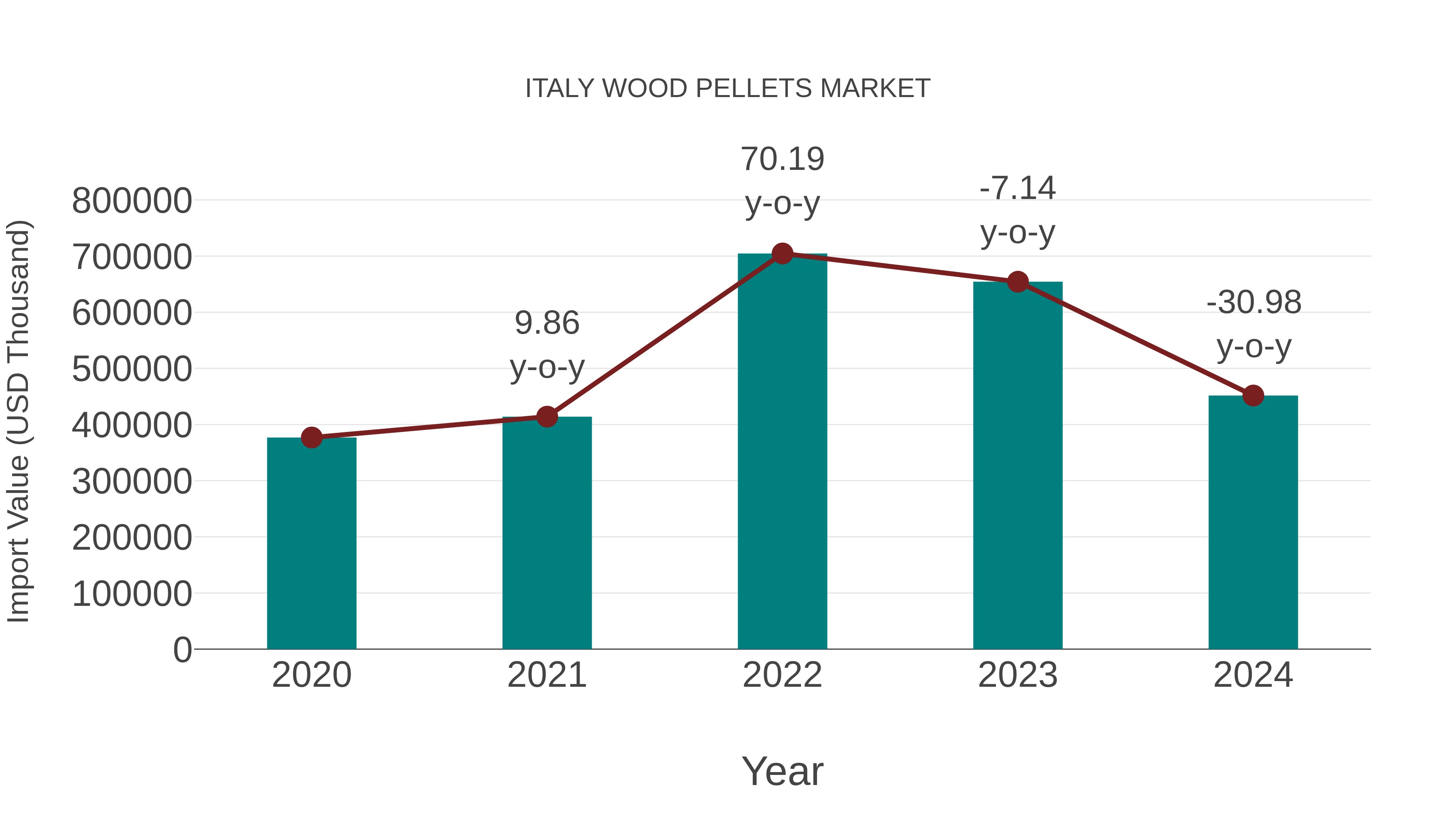
In 2024, Italy wood pellets Market: Import Trend Analysis witnessed a notable increase in imports. This trend was driven by rising demand for sustainable energy sources and a shift towards cleaner alternatives. Italy import data reflects a growing preference for wood pellets as a renewable energy option.
Italy Wood Pellets Market Synopsis
The wood pellets market in Italy supplies renewable biofuel made from compressed sawdust and wood waste. Used for heating and energy production, wood pellets offer an environmentally friendly alternative to fossil fuels, supporting the countrys renewable energy goals.
Drivers of the market
The wood pellets market in Italy is influenced by renewable energy policies and biomass utilization initiatives. Wood pellets, made from compressed sawdust and wood residues, are a renewable and sustainable biofuel used for heating and power generation in residential, commercial, and industrial applications. With a commitment to reducing carbon emissions and dependence on fossil fuels, Italy has implemented supportive policies and incentives to promote the use of biomass energy sources, including wood pellets. Moreover, the availability of wood residues from forestry, sawmills, and wood processing industries further supports the growth of the wood pellets market in Italy. Additionally, the versatility and efficiency of wood pellets as a clean and cost-effective alternative to traditional fuels drive their adoption in heating systems, stoves, and boilers across the country. The focus on renewable energy policies and biomass utilization propels the growth of the wood pellets market in Italy.
Challenges of the market
The wood pellets market in Italy faces several challenges, including raw material availability, competition from alternative energy sources, and regulatory compliance. Ensuring a steady supply of raw materials, such as sawdust and wood chips, can be difficult, particularly with increasing demand. The market also competes with other renewable energy sources like solar and wind, which are becoming more cost-effective and widespread. Additionally, adhering to strict environmental regulations and sustainability standards adds complexity and costs to production processes.
Government Policy of the market
In the Italy Wood Pellets Market, government policies may address renewable energy incentives, biomass sustainability, and industry standards. Regulatory authorities might offer subsidies or tax incentives to encourage the use of wood pellets as a renewable energy source, establish criteria for sustainable biomass production and certification, and enforce quality standards for pellet manufacturing. Moreover, government initiatives may include funding for biomass research and development, support for biomass heating infrastructure, and measures to promote the adoption of wood pellets for residential and industrial heating.
Key Highlights of the Report:
- Italy Wood Pellets Market Outlook
- Market Size of Italy Wood Pellets Market, 2025
- Forecast of Italy Wood Pellets Market, 2032
- Historical Data and Forecast of Italy Wood Pellets Revenues & Volume for the Period 2022-2032F
- Italy Wood Pellets Market Trend Evolution
- Italy Wood Pellets Market Drivers and Challenges
- Italy Wood Pellets Price Trends
- Italy Wood Pellets Porter's Five Forces
- Italy Wood Pellets Industry Life Cycle
- Historical Data and Forecast of Italy Wood Pellets Market Revenues & Volume By Types for the Period 2022-2032F
- Historical Data and Forecast of Italy Wood Pellets Market Revenues & Volume By Hardwood for the Period 2022-2032F
- Historical Data and Forecast of Italy Wood Pellets Market Revenues & Volume By Softwood for the Period 2022-2032F
- Historical Data and Forecast of Italy Wood Pellets Market Revenues & Volume By Applications for the Period 2022-2032F
- Historical Data and Forecast of Italy Wood Pellets Market Revenues & Volume By Power Plants for the Period 2022-2032F
- Historical Data and Forecast of Italy Wood Pellets Market Revenues & Volume By Residential Heating for the Period 2022-2032F
- Historical Data and Forecast of Italy Wood Pellets Market Revenues & Volume By Commercial Heating for the Period 2022-2032F
- Historical Data and Forecast of Italy Wood Pellets Market Revenues & Volume By Combined Heat and Power (CHP) for the Period 2022-2032F
- Italy Wood Pellets Import Export Trade Statistics
- Market Opportunity Assessment By Types
- Market Opportunity Assessment By Applications
- Italy Wood Pellets Top Companies Market Share
- Italy Wood Pellets Competitive Benchmarking By Technical and Operational Parameters
- Italy Wood Pellets Company Profiles
- Italy Wood Pellets Key Strategic Recommendations






































