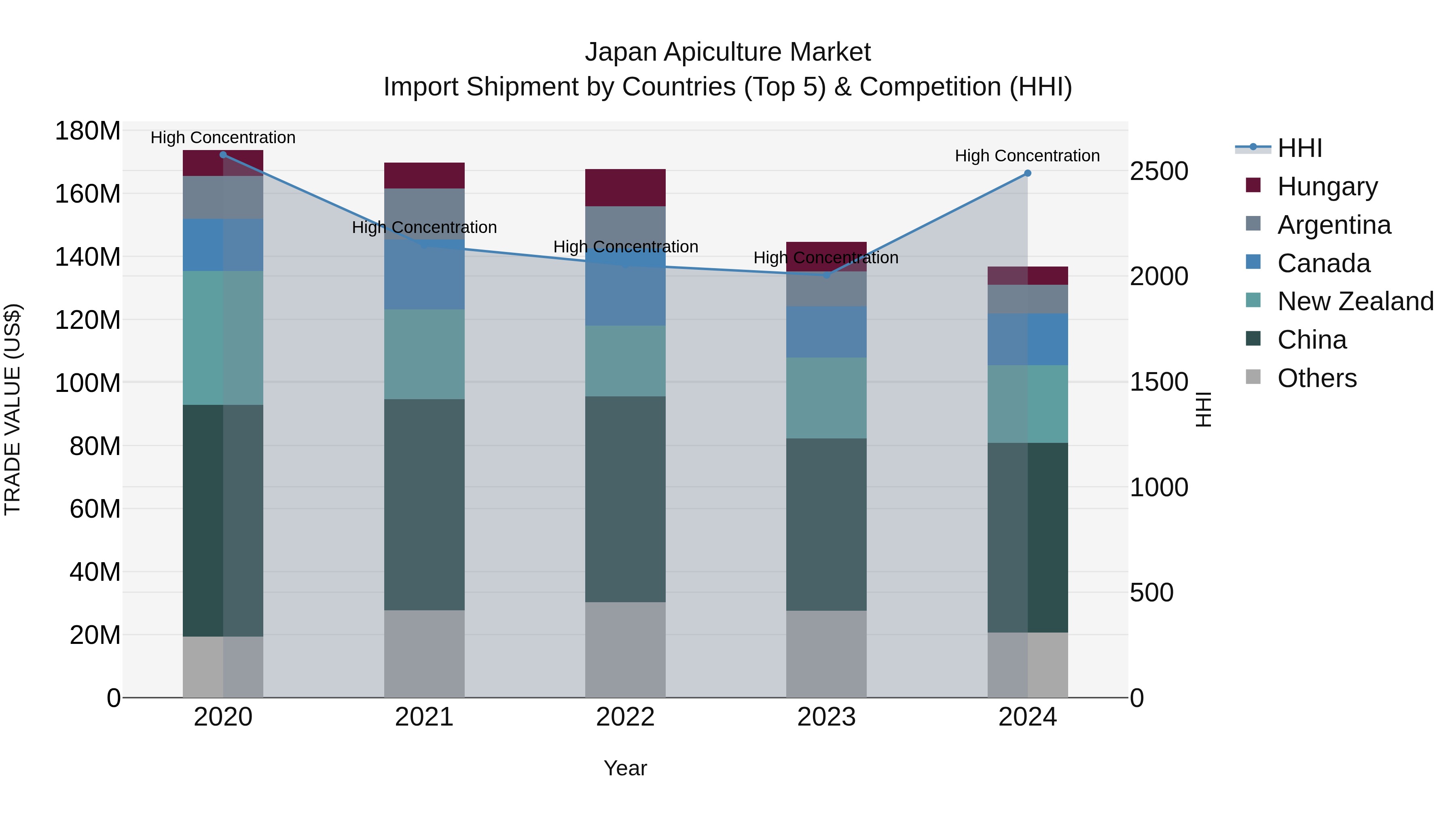
Japan Apiculture Market Import Shipment by Countries (Top 5) & Competition (HHI)
Despite a decline in the Compound Annual Growth Rate (CAGR) from 2020-2024 and a negative growth rate in 2023-24, Japan's apiculture import market continues to show high concentration with top suppliers being China, New Zealand, Canada, Argentina, and Hungary. The market remains competitive with these key players dominating the import shipments, suggesting a steady demand for apiculture products in Japan. The consistent presence of these countries indicates a stable supply chain for the industry, despite the overall decrease in growth rates.
Japan Apiculture Market Synopsis
The apiculture market in Japan is characterized by a growing demand for honey and other bee products, driven by the increasing consumer preference for natural and healthy alternatives. The country`s unique climate and diverse flora provide ideal conditions for beekeeping, leading to a wide variety of high-quality honey varieties such as acacia, citrus, and chestnut. Japanese consumers value authenticity and traceability in their food products, leading to a preference for locally produced honey. Sustainable beekeeping practices and organic certifications are gaining traction in the market, reflecting the overall shift towards environmentally conscious consumption. The apiculture industry in Japan also plays a vital role in pollination services for agriculture, further emphasizing the importance of beekeeping for food security and ecosystem health.
Japan Apiculture Market Trends
The Japan Apiculture Market is experiencing a growing trend towards sustainable and organic beekeeping practices. Consumers are increasingly seeking out honey and other bee products that are produced using environmentally friendly methods, such as natural hive management and minimal pesticide use. There is also a rising interest in the health benefits of bee products, leading to a demand for high-quality, locally sourced honey and bee pollen. Additionally, there is a focus on bee welfare, with beekeepers prioritizing the health and well-being of their colonies. This trend towards sustainability and quality is driving innovation in the apiculture industry in Japan, with a greater emphasis on transparency and traceability in production processes.
Japan Apiculture Market Challenges
In the Japan Apiculture Market, some of the main challenges faced include a declining bee population due to factors such as habitat loss, pesticide use, and climate change. This has led to decreased honey production and increased costs for beekeepers who may need to import bees for pollination services. Additionally, there is a growing concern about the quality and safety of honey products in the market, leading to stricter regulations and standards that beekeepers must adhere to. Competition from imported honey products also poses a challenge for local producers, as consumers have a wide range of choices available. Overall, the Japan Apiculture Market faces challenges related to sustainability, quality control, competition, and ensuring the health and well-being of bee populations.
Japan Apiculture Market Investment Opportunities
The Japan apiculture market presents promising investment opportunities due to the increasing demand for honey and other bee products, driven by growing health consciousness and interest in natural sweeteners. Investing in Japanese beekeeping operations or honey production facilities could prove lucrative, especially with the country`s reputation for high-quality products. Additionally, there is potential for value-added products such as royal jelly, propolis, and beeswax-based cosmetics, catering to the rising trend of natural and organic beauty products. Collaborating with local beekeepers to improve production efficiency and sustainability practices could also be a viable investment strategy in tapping into the growing market. Overall, the Japan apiculture market offers diverse investment avenues with the potential for long-term growth and profitability.
Japan Apiculture Market Future Outlook
The future outlook for the Japan Apiculture Market is promising, driven by increasing consumer awareness of the health benefits of honey and other bee products. The demand for high-quality, locally sourced honey is on the rise, leading to opportunities for small-scale beekeepers to enter the market. Additionally, the Japanese government`s initiatives to support sustainable agriculture and biodiversity conservation are expected to further boost the apiculture industry. However, challenges such as declining bee populations due to environmental factors and competition from imported honey products may impact market growth. Overall, with the right strategies in place to address these challenges and meet the growing demand for natural and organic bee products, the Japan Apiculture Market is likely to experience steady growth in the coming years.
Key Highlights of the Report:
- Japan Apiculture Market Outlook
- Market Size of Japan Apiculture Market, 2024
- Forecast of Japan Apiculture Market, 2031
- Historical Data and Forecast of Japan Apiculture Revenues & Volume for the Period 2021 - 2031
- Japan Apiculture Market Trend Evolution
- Japan Apiculture Market Drivers and Challenges
- Japan Apiculture Price Trends
- Japan Apiculture Porter's Five Forces
- Japan Apiculture Industry Life Cycle
- Historical Data and Forecast of Japan Apiculture Market Revenues & Volume By Product Type for the Period 2021 - 2031
- Historical Data and Forecast of Japan Apiculture Market Revenues & Volume By Honey for the Period 2021 - 2031
- Historical Data and Forecast of Japan Apiculture Market Revenues & Volume By Beeswax for the Period 2021 - 2031
- Historical Data and Forecast of Japan Apiculture Market Revenues & Volume By Live-bees for the Period 2021 - 2031
- Historical Data and Forecast of Japan Apiculture Market Revenues & Volume By Others for the Period 2021 - 2031
- Historical Data and Forecast of Japan Apiculture Market Revenues & Volume By Application for the Period 2021 - 2031
- Historical Data and Forecast of Japan Apiculture Market Revenues & Volume By Medical for the Period 2021 - 2031
- Historical Data and Forecast of Japan Apiculture Market Revenues & Volume By Food Beverages for the Period 2021 - 2031
- Historical Data and Forecast of Japan Apiculture Market Revenues & Volume By Cosmetics for the Period 2021 - 2031
- Historical Data and Forecast of Japan Apiculture Market Revenues & Volume By Others for the Period 2021 - 2031
- Japan Apiculture Import Export Trade Statistics
- Market Opportunity Assessment By Product Type
- Market Opportunity Assessment By Application
- Japan Apiculture Top Companies Market Share
- Japan Apiculture Competitive Benchmarking By Technical and Operational Parameters
- Japan Apiculture Company Profiles
- Japan Apiculture Key Strategic Recommendations






































