Japan Bulletproof Vest Market Summary
The japan bulletproof vest market was estimated at USD 116 Million in 2025 and is projected to reach USD 125 Million by 2032, growing at a CAGR of 2.1% from 2026 to 2032.
Japan Bulletproof Vest Market Year-wise Growth Rate and Key Drivers
This graph highlights how the Japan Bulletproof Vest Market has steadily grown over the past five years, supported by major growth factors.
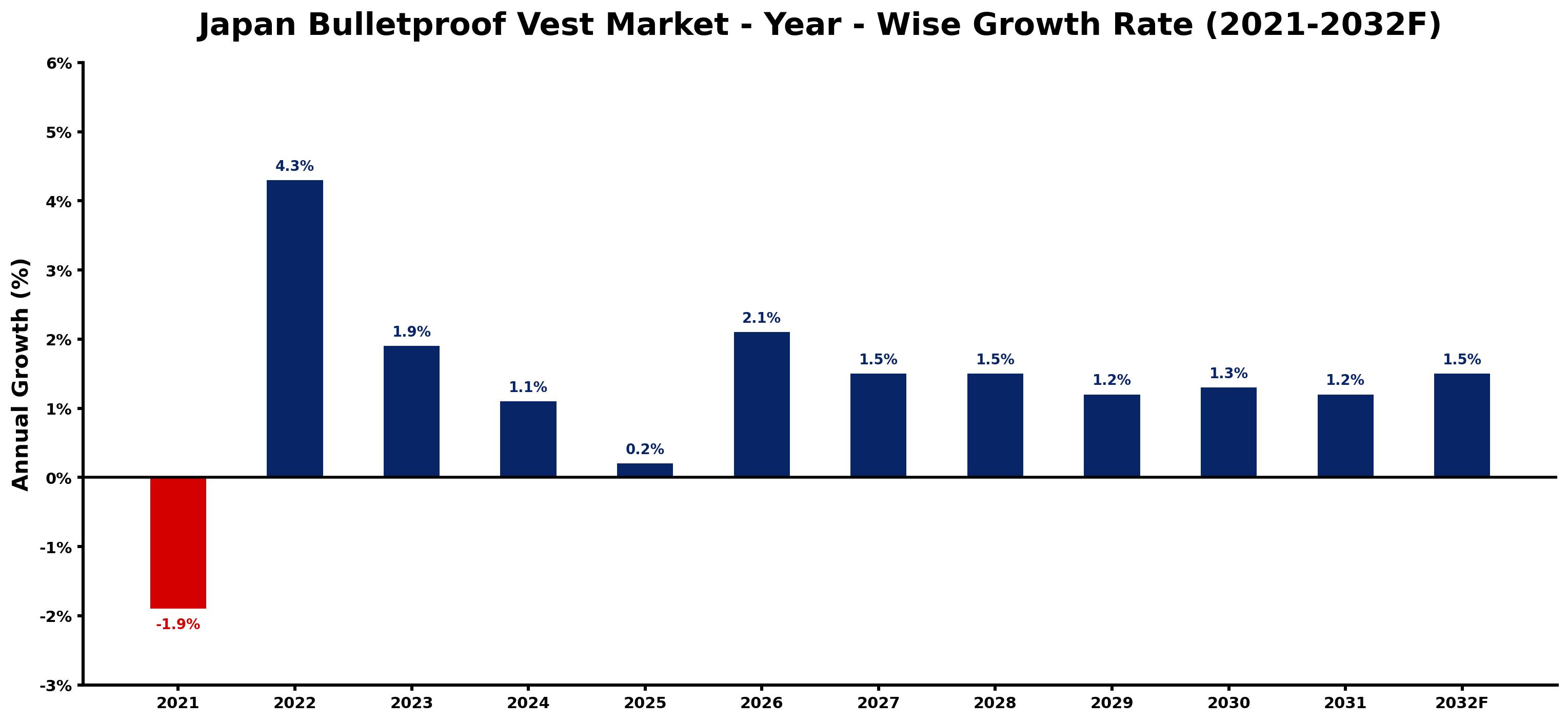
The table below presents the year wise growth rates along with the key drivers influencing the market
| Year | Growth Rate | Major Drivers |
| 2021 | -1.9% | Heightened import tariffs on raw materials hindered production capabilities, negatively impacting market supply and sales. |
| 2022 | 4.3% | Consumer awareness heightened after notable crime incidents spurred discussions on personal security. |
| 2023 | 1.9% | Military and law enforcement agencies expanded their budgets for garment protection solutions. |
| 2024 | 1.1% | Technological innovations in materials enhanced comfort and functionality of bulletproof vests. |
| 2025 | 0.2% | Corporate clients increasingly mandated protective gear amid rising workplace violence concerns. |
| 2026 | 2.1% | Demographic shifts showed younger populations valuing personal safety, affecting market dynamics accordingly. |
| 2027 | 1.5% | Trade partnerships developed, driving local production capabilities and reducing import dependencies. |
| 2028 | 1.5% | Media coverage on security incidents reinforced public interest in protective gear for civilians. |
| 2029 | 1.2% | International events prompted heightened security measures, increasing demand for civilian protective equipment. |
| 2030 | 1.3% | Emerging startups introduced novel designs, appealing to younger, style-conscious consumers seeking protection. |
| 2031 | 1.2% | Sustainability trends led manufacturers to explore eco-friendly materials for bulletproof vest production. |
| 2032 | 1.5% | Technological advancements in smart fabrics improved functionality, attracting tech-savvy customers eagerly. |
Note - Market size estimations and growth projections presented in this report are based on 6Wresearch's advanced forecasting approach, validated with industry datasets as of June 2026.
Japan Bulletproof Vest Market Synopsis
The Japan Bulletproof Vest Market is projected to reach 2.1% and witness significant growth during the forecast period (2026-2032). This sector is experiencing heightened demand driven by various security concerns, including rising crime rates and geopolitical tensions. As a result, both domestic and international manufacturers are keen to supply a diverse range of products tailored to different end-user segments, including law enforcement agencies, military personnel, and civilians. The market dynamics are shaped by significant technological advancements in materials and design, prioritizing lightweight and flexible armor solutions that provide superior protection while enhancing comfort.
Japan Bulletproof Vest Market Growth Drivers
Several key factors are influencing the growth of the Japan Bulletproof Vest Market. These include:
- Increased security concerns stemming from a rise in violent crimes and incidents of terrorism, necessitating the use of protective gear among law enforcement and civilians alike.
- Technological innovations that have led to the development of lightweight, flexible, and more comfortable bulletproof vests, appealing to a broader user base.
- A focus on personal safety, particularly following high-profile violent incidents, which has bolstered the willingness of individuals and businesses to invest in protective equipment.
- Government initiatives to modernize defense and security infrastructure, promoting the adoption of advanced protective gear among public and private sectors.
- The growing trend towards customization, where consumers seek personalized solutions that cater to their specific needs while ensuring effective protection.
Japan Bulletproof Vest Market Trends and Opportunities
In recent years, the Japan Bulletproof Vest Market has undergone notable transformations driven by evolving consumer preferences and technological advancements. Key trends include:
- A rising demand for vests that combine comfort with advanced ballistic protection, leading manufacturers to invest in the development of cutting-edge materials.
- An increasing inclination towards sustainable production practices, with manufacturers exploring eco-friendly materials to align their offerings with the growing environmental consciousness among consumers.
- The emergence of smart technology integration in bulletproof vests, such as the incorporation of wearable tech to enhance situational awareness and communication.
- A surge in interest for tactical and specialized vests, driven by the diverse needs of various end-user segments, including military and private security firms.
- Enhanced collaborative efforts between manufacturers and regulatory bodies focused on improving standards and addressing compliance challenges faced by the industry.
Japan Bulletproof Vest Market Challenges and Restraints
Despite the positive growth trajectory, the Japan Bulletproof Vest Market faces several hurdles, including:
- Strict regulations governing the sale and possession of bulletproof vests, complicating market entry for new manufacturers and increasing compliance costs for existing players.
- Cultural stigma associated with body armor in Japan, which may hinder broader acceptance and uptake among the general populace.
- High import tariffs on bulletproof vests that elevate product prices, making them less accessible to potential consumers.
- Concerns surrounding the overall effectiveness of protective gear and the necessity for ongoing education to inform users about safety and security benefits.
- The challenge of maintaining consistent innovation in product offerings amidst rapidly evolving technologies and consumer expectations.
Japan Bulletproof Vest Market Government Investment and Initiatives
The Japanese government plays a crucial role in shaping the market landscape for bulletproof vests through various regulations and initiatives aimed at enhancing public safety. Key points include:
- Establishment of stringent regulations governing the production, distribution, and acquisition of bulletproof vests, aimed at preventing misuse and ensuring public safety.
- Licensing requirements for individuals wishing to purchase bulletproof vests, strictly enforced to ensure that only those with legitimate needs, such as law enforcement personnel, gain access.
- Investment in modernizing law enforcement equipment standards to elevate officer safety and operational effectiveness, thereby stimulating demand for advanced protective gear.
- Development of public awareness campaigns focused on the importance of personal safety, potentially increasing consumer interest in protective equipment.
- Collaborative efforts between government and industry stakeholders to streamline certification processes and reduce unnecessary regulatory burdens on manufacturers.
Japan Bulletproof Vest Market Latest Developments (May 2025 - June 2026)
Recent developments within the Japan Bulletproof Vest Market from May 2025 to June 2026 reflect a period of adaptive growth fueled by shifting consumer demands and technological advancements. Noteworthy trends include a marked increase in research and development activities aimed at exploring novel materials and designs for bulletproof vests. Furthermore, there has been an uptick in partnerships between technology firms and manufacturers to incorporate smart features, enhancing the functionality and appeal of the products. The government's ongoing commitment to improving public safety through better protection gear has also led to strengthened regulatory frameworks, which facilitate innovation while ensuring compliance with safety standards. Overall, this period has shown a proactive approach from both industry players and government bodies to address evolving security needs.
Japan Bulletproof Vest Market - Key Attractiveness of the Report
- 10 Years of Market Numbers
- Historical Data Starting from 2022 to 2025
- Base Year: 2025
- Forecast Data until 2032
- Key Performance Indicators Impacting the Market
- Major Upcoming Developments and Projects
How is the Japanese government involved in the bulletproof vest market?
What challenges does the Japan Bulletproof Vest Market face?
What are the expected trends in the Japan Bulletproof Vest Market?
Key Highlights of the Report:
- Japan Bulletproof Vest Market Outlook
- Market Size of Japan Bulletproof Vest Market, 2025
- Forecast of Japan Bulletproof Vest Market, 2032F
- Historical Data and Forecast of Japan Bulletproof Vest Revenues & Volume for the Period 2022-2032F
- Japan Bulletproof Vest Market Trend Evolution
- Japan Bulletproof Vest Market Drivers and Challenges
- Japan Bulletproof Vest Price Trends
- Japan Bulletproof Vest Porter's Five Forces
- Japan Bulletproof Vest Industry Life Cycle
- Historical Data and Forecast of Japan Bulletproof Vest Market Revenues & Volume By Type for the Period 2022-2032F
- Historical Data and Forecast of Japan Bulletproof Vest Market Revenues & Volume By Soft Vest for the Period 2022-2032F
- Historical Data and Forecast of Japan Bulletproof Vest Market Revenues & Volume By Hard Vest for the Period 2022-2032F
- Historical Data and Forecast of Japan Bulletproof Vest Market Revenues & Volume By Purpose for the Period 2022-2032F
- Historical Data and Forecast of Japan Bulletproof Vest Market Revenues & Volume By Military for the Period 2022-2032F
- Historical Data and Forecast of Japan Bulletproof Vest Market Revenues & Volume By Civilian for the Period 2022-2032F
- Japan Bulletproof Vest Import Export Trade Statistics
- Market Opportunity Assessment By Type
- Market Opportunity Assessment By Purpose
- Japan Bulletproof Vest Top Companies Market Share
- Japan Bulletproof Vest Competitive Benchmarking By Technical and Operational Parameters
- Japan Bulletproof Vest Company Profiles
- Japan Bulletproof Vest Key Strategic Recommendations






































