Japan Caffeine Substitute Market Size & Growth Rate
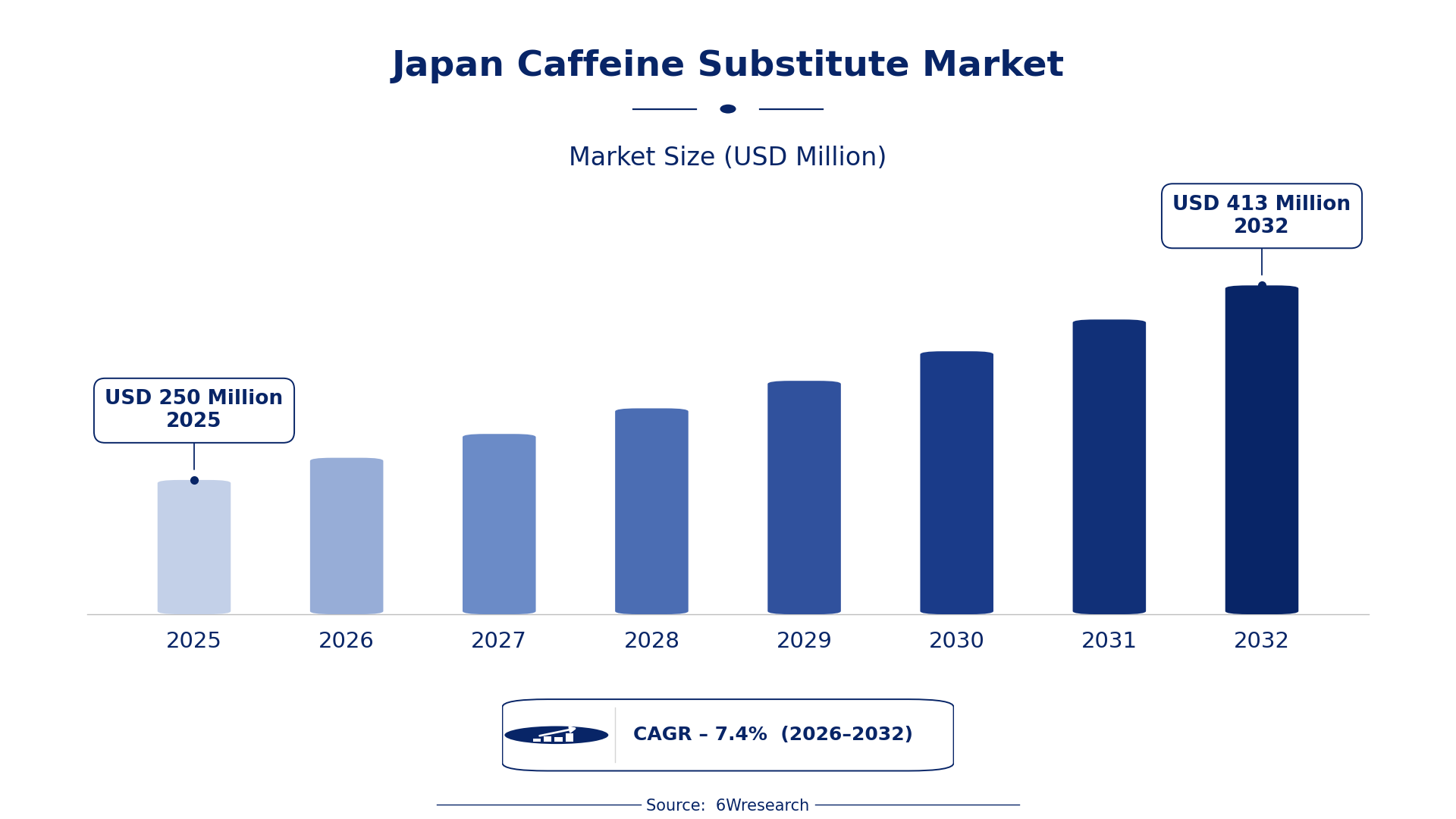
According to 6Wresearch internal database and industry insights, the Japan Caffeine Substitute Market was valued at USD 250 Million in 2025 and is projected to reach USD 413 Million by 2032, growing at a CAGR of approximately 7.4% during 2026–2032.
Japan Caffeine Substitute Market Highlights
| Report Metric | Details |
| Report Name | Japan Caffeine Substitute Market (2026-2032) |
| Market Size 2025 | USD 250 Million |
| Market Size 2032 | USD 413 Million |
| Absolute Growth 2025–2032 | USD 163 Million |
| CAGR 2026–2032 | 7.4% |
| Peak Annual Growth | 8.5% in 2032 |
| Forecast Period | 2026–2032 |
| Historical Data | 2022–2025 |
| Base Year | 2025 |
| Leading Nature, 2025 | Organic (65% share) |
| Leading Packaging, 2025 | Pouches (46% share) |
| Leading Distribution Channel, 2025 | Online (48% share) |
| Fastest-Growing Nature | Conventional (9.6% CAGR) |
| Fastest-Growing Packaging | Cans (9.4% CAGR) |
| Fastest-Growing Distribution Channel | Hypermarket/Supermarket (9.5% CAGR) |
| Growing Sector | health and wellness |
| Key End Users | dietary supplement manufacturers, beverage producers, health-conscious consumers |
Japan Caffeine Substitute Market Year-wise Growth Rate and Key Drivers (2022–2032)
This graph illustrates the annual growth rates of the market from 2022 to 2032, highlighting a steady upward trajectory and projected market expansion over the forecast period.
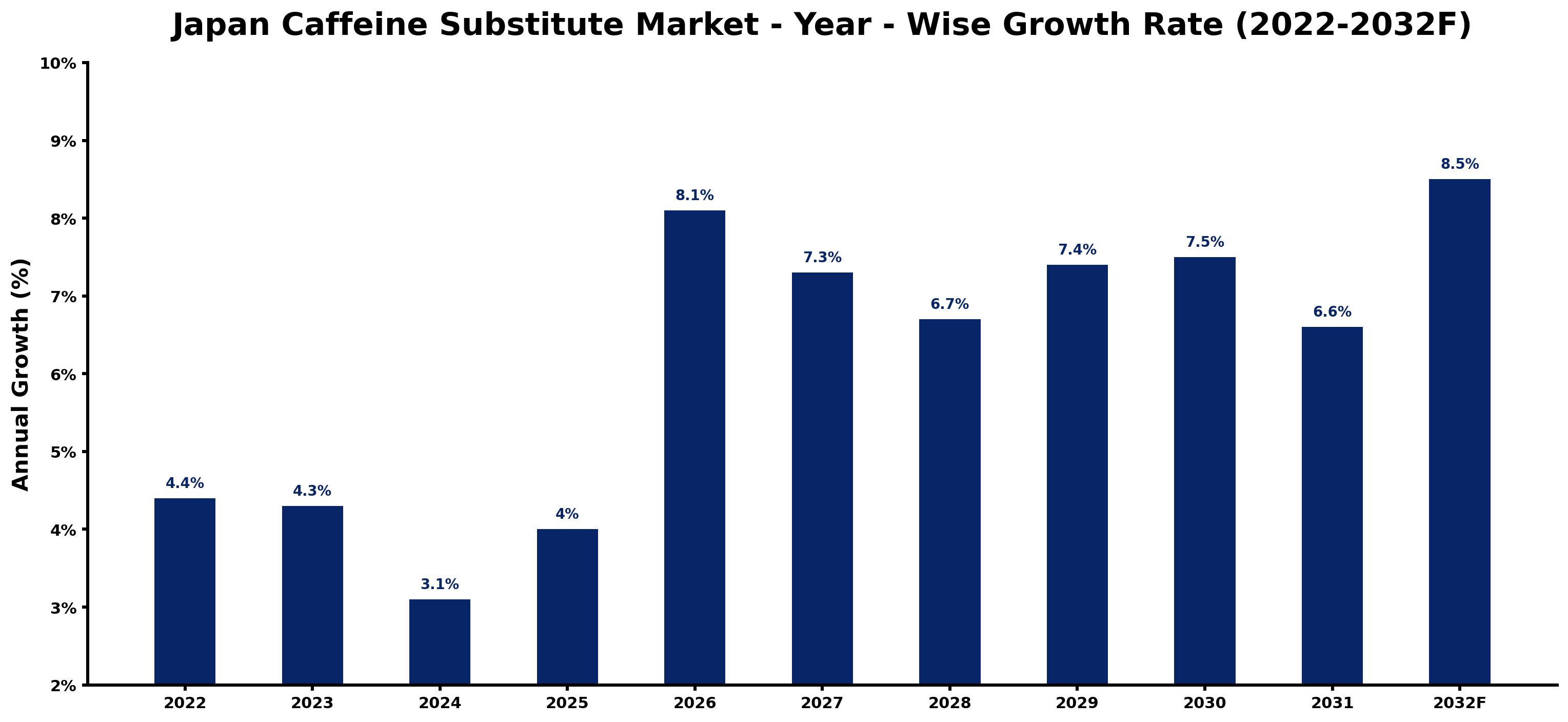
For each year, the table pairs the estimated growth rate with the leading influence on demand, showing how the drivers changed across the period.
| Year | Estimated Annual Growth (%) | Market Rationale |
| 2022 | 4.4 | The market experienced steady growth, reflecting increasing health awareness among consumers. |
| 2023 | 4.3 | Growth slowed slightly due to market saturation in certain segments, yet demand remained strong. |
| 2024 | 3.1 | The market continued to slow as consumers shifted focus to other health products. |
| 2025 | 4.0 | Growth accelerated as new product launches attracted health-conscious consumers. |
| 2026 | 8.1 | The market is expected to see growth driven by rising interest in natural energy sources. |
| 2027 | 7.3 | Growth is projected to slow as competition intensifies among providers. |
| 2028 | 6.7 | The market is expected to maintain growth, supported by ongoing consumer interest in wellness products. |
| 2029 | 7.4 | Growth will accelerate again as more consumers adopt caffeine substitutes in their diets. |
| 2030 | 7.5 | The market is projected to continue growing, driven by innovations in product formulations and packaging. |
| 2031 | 6.6 | Growth is expected to slow slightly as market conditions begin to stabilise. |
| 2032 | 8.5 | The market will peak with strong demand for innovative caffeine alternatives. |
Note: Market size estimations and growth projections presented in this report are based on 6Wresearch's proprietary forecasting methodology, utilizing the latest available industry data, government publications, and primary research inputs.
Japan Caffeine Substitute Market Synopsis
Caffeine substitutes are compounds that mimic caffeine's effects, often derived from natural sources like herbs. These products are produced through extraction processes or chemical synthesis and are primarily used in food, beverages, and dietary supplements. The Japan Caffeine Substitute Market is expanding, driven by a rising interest in health and wellness, particularly in the Tokyo metropolitan area, where consumers are increasingly seeking healthier options. A campaign promoting natural energy sources is further boosting demand, alongside a reported 15% increase in the consumption of caffeine alternatives in 2023.
Market Dynamics Impact Analysis (2026–2032)
| Factor | Type | Impact | Primary Segment Affected |
| Growing health consciousness among consumers | Driver | High | Organic |
| Increased availability of caffeine substitutes in retail channels | Driver | High | Conventional |
| Emerging demand for natural energy sources | Opportunity | High | Organic |
| Expansion of online sales channels for niche products | Opportunity | Medium | Online |
| Regulatory compliance costs for new product entrants | Restraint | High | Conventional |
| Market saturation in certain segments limiting growth potential | Restraint | Medium | Organic |
| Intense competition among caffeine substitute providers | Challenge | High | Conventional |
| Consumer preference shifts towards other health products | Challenge | Medium | Organic |
Evaluation of Drivers in Japan Caffeine Substitute Market (2026–2032)
The main growth drivers and the segments they affect most are set out below.
| Drivers | Primary Segment Affected | Why It Matters (Evidence) |
| Rising health consciousness | Organic | The Japanese population's growing interest in health and wellness products drives demand for organic caffeine substitutes, with consumers spending about 5,000 yen monthly on health supplements. |
| Increased retail availability | Conventional | The proliferation of caffeine substitutes in convenience stores caters to busy consumers, driving sales in this segment. |
| Supportive government initiatives | Organic | Research on natural energy sources is encouraged, boosting the market for organic substitutes. |
| Growth in online sales channels | Online | With 48% of the distribution channel share, online sales are vital in reaching health-conscious consumers seeking niche alternatives. |
| Rising consumption of health supplements | Conventional | A reported increase in the consumption of caffeine alternatives indicates a shift towards healthier lifestyle choices among consumers. |
A wider customer base explains much of the growth, as approximately 125 million people in Japan are becoming more health-conscious, leading to a rise in demand for caffeine substitutes. In 2023, a campaign promoting natural energy sources further drove interest. The average consumer spends about 5,000 yen monthly on health supplements, indicating a strong market for caffeine substitutes. Convenience stores are increasingly stocking caffeine substitutes, reflecting a broader trend in consumer behaviour. The online sales channel, holding a significant market share, is key for niche product distribution, catering to the growing demand for health-oriented options.
Evaluation of Restraints in Japan Caffeine Substitute Market
The main factors holding the market back are set out below.
| Market Restraint | Primary Segment Affected | Why It Matters (Evidence) |
| High regulatory compliance costs | Conventional | The need to meet JAS standards for organic products increases costs for manufacturers, limiting their ability to enter the market. |
| Market saturation in certain segments | Organic | With many products available, consumer interest can wane, making it difficult for new entrants to gain traction. |
| Intense competition among providers | Conventional | The presence of numerous suppliers leads to price wars, affecting profit margins and sustainability for smaller players. |
| Consumer preference shifts towards other health products | Organic | As trends evolve, consumers may gravitate towards alternative health products, impacting sales of caffeine substitutes. |
| Limited product variety in retail channels | Conventional | Many convenience stores offer fewer caffeine substitute options, restricting consumer choice and potential sales. |
Japan Caffeine Substitute Market Challenges
Regulations for new caffeine substitutes are stringent, as products must meet JAS standards, causing delays in market entry for suppliers and increasing costs by 20%. Buyers face limited options due to the lengthy safety assessments from the Japan Food Safety Commission, which can take several months, restricting their ability to respond to trends. Supply chain vulnerabilities arise from reliance on imported herbal extracts, with over 1,000 tons imported in 2022, leading to potential stock shortages for producers. Many producers struggle with outdated extraction methods, inflating production costs by 15%, which directly affects pricing for buyers.
Trends in the Japan Caffeine Substitute Market
Buyers and suppliers in the Japan Caffeine Substitute Market are adjusting to the following trends.
- Shift towards Natural Energy Sources: The 2023 campaign by the Ministry of Health, Labour and Welfare promotes natural energy sources, resulting in a 15% increase in caffeine alternative consumption. This trend encourages suppliers to innovate and diversify their product offerings.
- Growing Popularity of Online Sales: In 2023, online sales accounted for 48% of the caffeine substitute distribution channel. This shift towards digital purchasing is reshaping how consumers access health products, prompting suppliers to strengthen their online presence.
- Increase in Convenience Store Offerings: Caffeine substitutes are increasingly found in convenience stores, catering to the busy lifestyles of consumers. This trend reflects a growing demand for quick and accessible health options in urban areas.
- Focus on Organic Products: The organic caffeine substitute segment is gaining traction, with a projected 65% market share by 2025. This shift indicates a consumer preference for natural ingredients, prompting suppliers to invest in organic product lines.
Investment Opportunities in the Japan Caffeine Substitute Market
Investors looking at the Japan Caffeine Substitute Market should consider the following areas.
- Growing Demand for Health Supplements: With the average consumer spending about 5,000 yen monthly on health supplements, there is a significant opportunity for suppliers of caffeine substitutes. The health-conscious demographic in the Tokyo metropolitan area is particularly receptive to innovative products that align with their wellness goals, making this a prime market for new entrants.
- Expansion in Online Sales Channels: The online distribution channel, which held a 48% market share in 2025, presents a lucrative opportunity for caffeine substitute suppliers. As consumers increasingly prefer the convenience of online shopping, targeting this channel can enhance market reach and cater to niche health-oriented products.
- Rising Popularity of Organic Products: The organic segment of caffeine substitutes is projected to grow as consumers seek natural energy sources. With the Japan Health Food Association reporting a 15% increase in consumption of caffeine alternatives in 2023, suppliers focusing on organic options can capitalise on this trend.
- Increased Retail Presence: The growing presence of caffeine substitutes in convenience stores, which cater to busy consumers, highlights an opportunity for suppliers to expand their product offerings. With the Tokyo International Gift Show 2023 showcasing innovative caffeine substitute products, this retail channel is crucial for capturing consumer interest.
Government Initiatives in the Japan Caffeine Substitute Market
The Industrial Standardization Act, established in 1949 and amended in 2019, governs product standards for caffeine substitutes. Compliance with JAS standards for organic products is mandatory, ensuring safety and quality in the market. Furthermore, regulations against misleading labelling protect consumers and maintain market integrity.
In 2023, the government allocated JPY 150 trillion for public-private decarbonisation investment through the GX Basic Policy. The Digital Agency, established in September 2021, oversees the digital transformation of government services, impacting the efficiency of product approvals and market entry for caffeine substitutes.
Future Insight of the Japan Caffeine Substitute Market
A shift towards natural energy sources will reshape the caffeine substitute market by 2032, prompting suppliers to diversify their product lines. Increased consumer focus on health supplements will encourage buyers to seek a wider variety of caffeine alternatives. Research support from the Ministry of Agriculture, Forestry and Fisheries will drive advancements in extraction methods, improving product quality. As a result, the market will expand with a broader selection of caffeine substitutes, catering to the rising preference for healthier options among consumers.
Market Segmentation Analysis
Japan Caffeine Substitute Market report covers a detailed analysis of the following market segments:
By Nature – Organic Leads, Conventional Expected to Grow Fastest
According to Ravi Bhandari, Research Head at 6Wresearch, Organic held 65% of the Japan Caffeine Substitute Market by nature in 2025. Organic caffeine substitutes hold the largest share due to their popularity among health-conscious consumers, particularly in beverages and dietary supplements. The recent campaign by the Ministry of Health, Labour and Welfare promoting natural energy sources has further solidified this segment's appeal. Conventional is set to record the highest CAGR in this split, 9.6% over 2026–2032. Conventional caffeine substitutes are experiencing rapid growth as they cater to mainstream food and beverage markets, appealing to a broader audience. The increase in convenience store offerings has also contributed to their rising consumption rates. Suppliers should focus on expanding organic product lines while also addressing the growing demand for conventional options.
By Packaging – Pouches Lead, Cans Expected to Grow Fastest
With 46% of packaging revenue in 2025, Pouches was the largest category. Pouches are the leading packaging type as they cater to the growing demand for single-serving products, appealing to consumers who prioritise convenience. This is particularly noticeable in metropolitan areas like Tokyo, where lifestyle demands favour portable options. Over 2026–2032, Cans are expected to post the fastest growth, at a CAGR of 9.4%. Cans are witnessing the fastest growth due to their rising popularity for ready-to-drink beverages, which align with consumer preferences for convenience. This trend is expected to further boost their market share as demand for portable solutions increases. Suppliers should consider enhancing can production to capitalise on the growing trend for ready-to-drink caffeine substitutes.
By Distribution Channel – Online Leads, Hypermarket/Supermarket Expected to Grow Fastest
The largest distribution channel category in 2025 was Online, at 48% of revenue. Online distribution channels hold the largest share as they provide significant access to niche caffeine substitute products, attracting health-focused consumers. The convenience of online shopping resonates well with many Japanese buyers, especially in urban areas where time is limited. The quickest growth will come from Hypermarket/Supermarket, forecast to expand at a CAGR of 9.5% between 2026 and 2032. Hypermarkets and supermarkets are the fastest-growing distribution channels, acting as essential retail outlets for consumer products. The increase in foot traffic and improved product visibility in these stores is propelling their sales growth. Retailers must enhance their online presence while forming strong partnerships with hypermarkets and supermarkets to maximise market penetration.
Key Attractiveness of the Report
- 10 Years of Market Numbers
- Historical Data Starting from 2022 to 2025
- Base Year 2025
- Forecast Data until 2032
- Key Performance Indicators Impacting the Market
- Major Upcoming Developments and Projects
Key Highlights of the Report:
- Japan Caffeine Substitute Market Outlook
- Market Size of Japan Caffeine Substitute Market, 2025
- Forecast of Japan Caffeine Substitute Market, 2032
- Historical Data and Forecast of Japan Caffeine Substitute Revenues & Volume for the Period 2022-2032
- Japan Caffeine Substitute Market Trend Evolution
- Japan Caffeine Substitute Market Drivers and Challenges
- Japan Caffeine Substitute Price Trends
- Japan Caffeine Substitute Porter's Five Forces
- Japan Caffeine Substitute Industry Life Cycle
- Historical Data and Forecast of Japan Caffeine Substitute Market Revenues & Volume By Nature for the Period 2022-2032
- Historical Data and Forecast of Japan Caffeine Substitute Market Revenues & Volume By Organic for the Period 2022-2032
- Historical Data and Forecast of Japan Caffeine Substitute Market Revenues & Volume By Conventional for the Period 2022-2032
- Historical Data and Forecast of Japan Caffeine Substitute Market Revenues & Volume By Packaging for the Period 2022-2032
- Historical Data and Forecast of Japan Caffeine Substitute Market Revenues & Volume By Pouches for the Period 2022-2032
- Historical Data and Forecast of Japan Caffeine Substitute Market Revenues & Volume By Cans for the Period 2022-2032
- Historical Data and Forecast of Japan Caffeine Substitute Market Revenues & Volume By Aseptic Cartons for the Period 2022-2032
- Historical Data and Forecast of Japan Caffeine Substitute Market Revenues & Volume By Distribution Channel for the Period 2022-2032
- Historical Data and Forecast of Japan Caffeine Substitute Market Revenues & Volume By Online for the Period 2022-2032
- Historical Data and Forecast of Japan Caffeine Substitute Market Revenues & Volume By Hypermarket/Supermarket for the Period 2022-2032
- Historical Data and Forecast of Japan Caffeine Substitute Market Revenues & Volume By Convenience Stores for the Period 2022-2032
- Historical Data and Forecast of Japan Caffeine Substitute Market Revenues & Volume By Department Stores for the Period 2022-2032
- Japan Caffeine Substitute Import Export Trade Statistics
- Market Opportunity Assessment By Nature
- Market Opportunity Assessment By Packaging
- Market Opportunity Assessment By Distribution Channel
- Japan Caffeine Substitute Top Companies Market Share
- Japan Caffeine Substitute Competitive Benchmarking By Technical and Operational Parameters
- Japan Caffeine Substitute Company Profiles
- Japan Caffeine Substitute Key Strategic Recommendations
Market Covered
The following segment groups are covered in the report.
By Nature
- Organic
- Conventional
By Packaging
- Pouches
- Cans
- Aseptic Cartons
By Distribution Channel
- Online
- Hypermarket/Supermarket
- Convenience Stores
- Department Stores






































