Japan Coffee Beans Market Import Shipment by Countries (Top 5) & Competition (HHI)
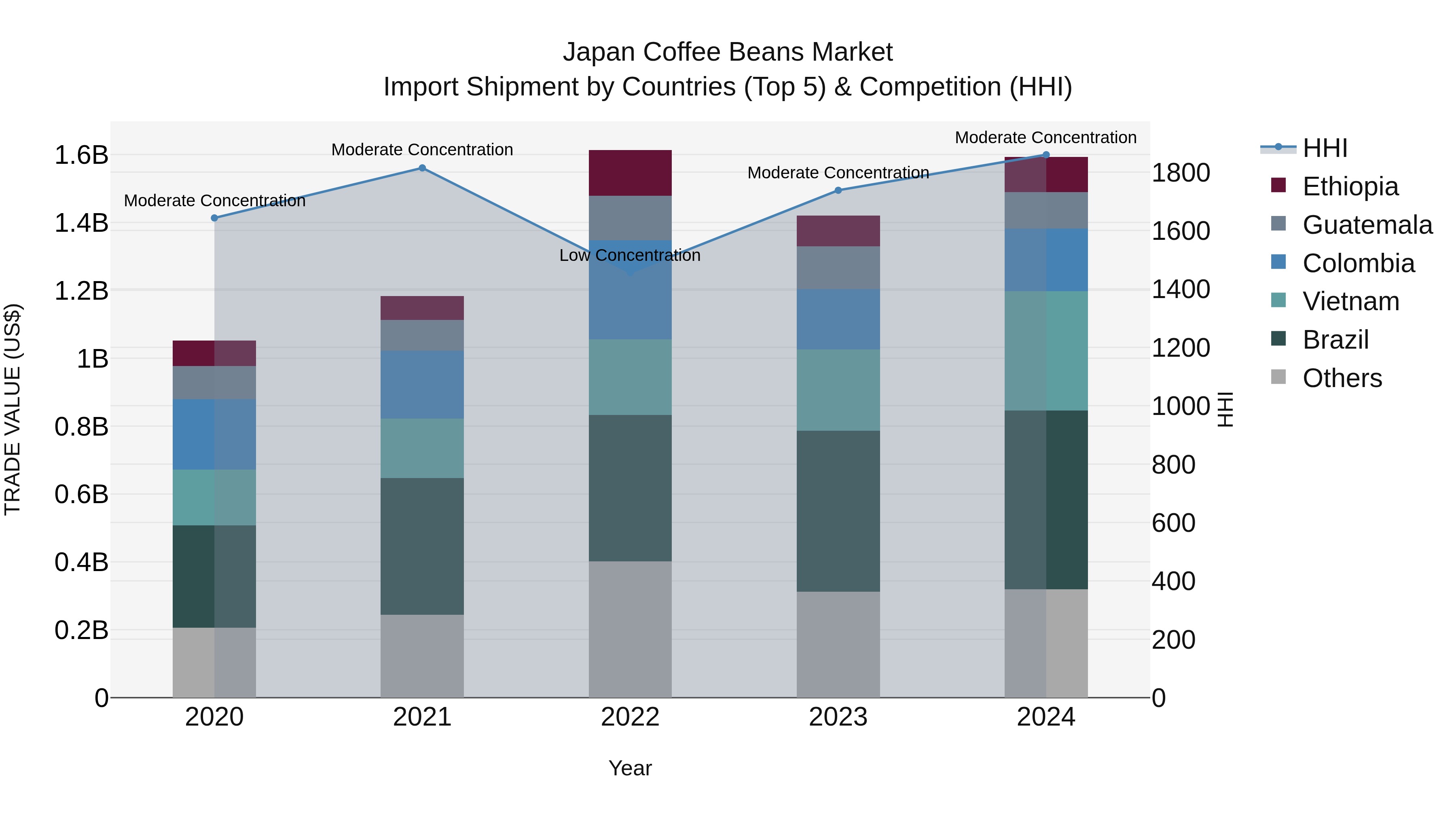
Japan's coffee bean import market continued to thrive in 2024, with Brazil, Vietnam, Colombia, Guatemala, and Ethiopia leading the pack as top exporting countries. Despite the moderate concentration indicated by the Herfindahl-Hirschman Index (HHI), the market experienced a robust Compound Annual Growth Rate (CAGR) of 10.94% from 2020 to 2024. The impressive growth momentum was sustained in 2024, with a notable growth rate of 12.14% compared to the previous year. This data underscores the increasing popularity and demand for quality coffee beans in Japan.
Japan Coffee Beans Market Overview
The Japan Coffee Beans Market is experiencing significant growth driven by an increasing coffee culture and demand for specialty coffee among the younger population. The market is characterized by a shift towards high-quality, single-origin beans, with consumers showing a preference for ethically sourced and sustainable products. Local coffee shops and cafes are gaining popularity, offering unique blends and brewing methods to cater to diverse consumer preferences. Key players in the market are focusing on innovation, introducing new flavors and products to attract customers. The market is also witnessing a rise in online coffee bean sales, providing convenience and accessibility to consumers. Overall, the Japan Coffee Beans Market is dynamic, with a growing emphasis on quality, sustainability, and innovation to meet the evolving demands of consumers.
Japan Coffee Beans Market Trends
The Japan coffee beans market is experiencing a growing demand for specialty and high-quality coffee beans. Consumers are increasingly seeking unique and premium coffee experiences, leading to a rise in the popularity of single-origin and organic coffee beans. There is also a trend towards sustainability and ethical sourcing practices, with consumers showing a preference for beans that are sourced responsibly. Additionally, the increasing popularity of home brewing methods such as pour-over and espresso machines has boosted the sales of coffee beans in the retail sector. The market is also witnessing a rise in online coffee bean purchases, driven by convenience and the availability of a wide variety of beans from around the world. Overall, the Japan coffee beans market is evolving to cater to the changing preferences and demands of discerning coffee enthusiasts.
Japan Coffee Beans Market Challenges
In the Japan Coffee Beans Market, some key challenges include the high level of competition among both domestic and international coffee brands, leading to pricing pressures and the need for strong marketing strategies to differentiate products. Additionally, Japan`s aging population presents a challenge as younger consumers increasingly favor alternative beverages over coffee. Another obstacle is the country`s limited land availability for coffee cultivation, resulting in a heavy reliance on imports and vulnerability to supply chain disruptions. Moreover, fluctuations in currency exchange rates and global coffee prices can impact profitability for businesses operating in the market. Overall, companies in the Japan Coffee Beans Market must navigate these challenges by focusing on innovation, sustainability, and customer engagement to stay competitive and drive growth.
Japan Coffee Beans Market Investment Opportunities
Investment opportunities in the Japan coffee beans market present potential for growth due to the increasing coffee consumption trend in the country. With a growing coffee culture and rising demand for high-quality beans, there is a market for specialty and premium coffee beans sourced from various origins around the world. Investors can consider opportunities in importing and distributing specialty coffee beans to cater to the evolving preferences of Japanese consumers. Additionally, investing in sustainable and ethically sourced coffee beans could appeal to the environmentally conscious Japanese market. Collaborating with local cafes, roasters, and retailers to supply unique and exclusive coffee beans could also be a lucrative investment strategy in the Japan coffee market.
Japan Coffee Beans Market Government Policy
The government policies related to the Japan Coffee Beans Market focus on ensuring quality standards, sustainability, and fair trade practices. The Ministry of Agriculture, Forestry, and Fisheries (MAFF) oversees regulations regarding the import and distribution of coffee beans to uphold quality and safety standards. Additionally, the government encourages sustainable production practices and supports initiatives to reduce the environmental impact of coffee cultivation. There are also efforts to promote fair trade practices in the coffee industry to ensure that producers receive fair compensation for their products. Overall, the government policies in Japan aim to foster a competitive and sustainable coffee beans market that benefits both consumers and producers.
Japan Coffee Beans Market Future Outlook
The Japan Coffee Beans Market is expected to witness steady growth in the coming years due to increasing consumer demand for high-quality and specialty coffee products. Factors such as the growing popularity of coffee culture, rising disposable incomes, and a shift towards premium and sustainable coffee options are driving market expansion. Additionally, the growing trend of home brewing and the emergence of artisanal coffee shops are further boosting market growth. Despite facing challenges such as competition from other beverages and potential supply chain disruptions, the Japan Coffee Beans Market is poised for continued growth, with opportunities for innovation in product offerings and marketing strategies to cater to evolving consumer preferences.
Key Highlights of the Report:
- Japan Coffee Beans Market Outlook
- Market Size of Japan Coffee Beans Market, 2024
- Forecast of Japan Coffee Beans Market, 2031
- Historical Data and Forecast of Japan Coffee Beans Revenues & Volume for the Period 2021-2031
- Japan Coffee Beans Market Trend Evolution
- Japan Coffee Beans Market Drivers and Challenges
- Japan Coffee Beans Price Trends
- Japan Coffee Beans Porter's Five Forces
- Japan Coffee Beans Industry Life Cycle
- Historical Data and Forecast of Japan Coffee Beans Market Revenues & Volume By Product Type for the Period 2021-2031
- Historical Data and Forecast of Japan Coffee Beans Market Revenues & Volume By Arabica for the Period 2021-2031
- Historical Data and Forecast of Japan Coffee Beans Market Revenues & Volume By Robusta for the Period 2021-2031
- Historical Data and Forecast of Japan Coffee Beans Market Revenues & Volume By Others for the Period 2021-2031
- Historical Data and Forecast of Japan Coffee Beans Market Revenues & Volume By Applications for the Period 2021-2031
- Historical Data and Forecast of Japan Coffee Beans Market Revenues & Volume By Personal Care for the Period 2021-2031
- Historical Data and Forecast of Japan Coffee Beans Market Revenues & Volume By Food for the Period 2021-2031
- Historical Data and Forecast of Japan Coffee Beans Market Revenues & Volume By Pharmaceutical for the Period 2021-2031
- Japan Coffee Beans Import Export Trade Statistics
- Market Opportunity Assessment By Product Type
- Market Opportunity Assessment By Applications
- Japan Coffee Beans Top Companies Market Share
- Japan Coffee Beans Competitive Benchmarking By Technical and Operational Parameters
- Japan Coffee Beans Company Profiles
- Japan Coffee Beans Key Strategic Recommendations






































