Japan Double Glazing Glass Market Size, Share & Growth Rate
The Japan Double Glazing Glass Market was estimated at USD 161 Million in 2025 and is projected to reach USD 172 Million by 2032, growing at a CAGR of 0.9% from 2026 to 2032. This growth trajectory is largely influenced by heightened energy efficiency standards in construction and a cultural shift towards sustainable living. The rising awareness of environmental sustainability, combined with innovations in glazing technologies, solidifies double glazing glass as a critical component in modern building designs.
Japan Double Glazing Glass Market Year-wise Growth Rate and Key Drivers
This graph highlights how the Japan Double Glazing Glass Market has steadily grown over the years, supported by major growth factors.
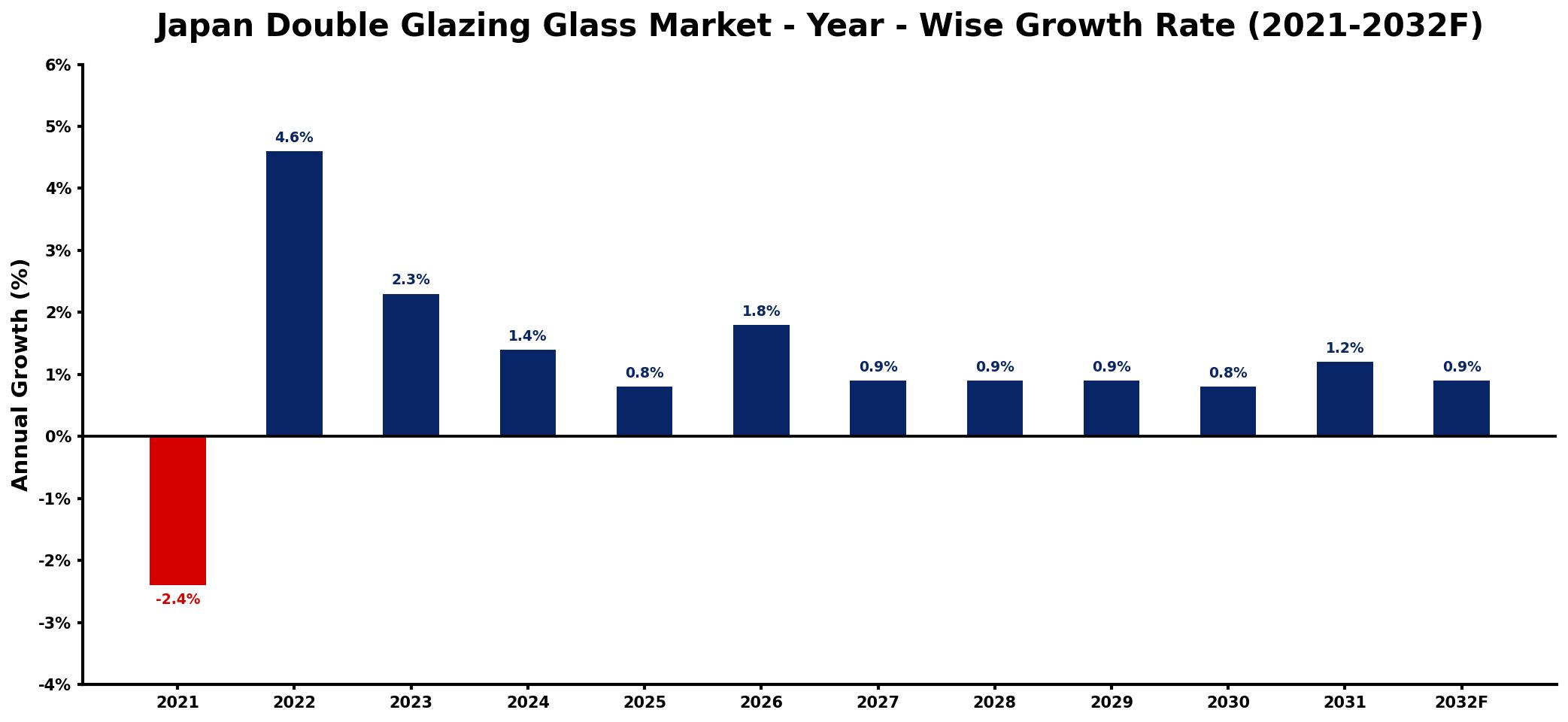
The table below presents the year‑wise growth rates along with the key drivers influencing the market
| Year | Growth Rate | Major Drivers |
| 2021 | -2.4% | decreased residential construction activities |
| 2022 | 4.6% | growing energy efficiency awareness |
| 2023 | 2.3% | increased investment in renovations |
| 2024 | 1.4% | rising demand for sustainable buildings |
| 2025 | 0.8% | expansion of commercial projects |
| 2026 | 1.8% | enhanced focus on noise reduction |
| 2027 | 0.9% | increased adoption of smart technologies |
| 2028 | 0.9% | growing preference for modern aesthetics |
| 2029 | 0.9% | strengthened regulations on energy efficiency |
| 2030 | 0.8% | higher demand for eco-friendly materials |
| 2031 | 1.2% | increased renovation of aging infrastructure |
| 2032 | 0.9% | growing interest in urban development |
Note: Market size estimations and growth projections presented in this report are based on 6Wresearch's proprietary forecasting methodology, utilizing the latest available industry data, government publications, and primary research inputs.
Japan Double Glazing Glass Market Synopsis
In Japan, the adoption of double glazing glass is becoming increasingly prevalent, as consumers and builders seek solutions that offer both performance and aesthetic appeal. Double glazing not only enhances thermal insulation but also significantly mitigates noise pollution, addressing the challenges of urban living.
As urbanization continues to accelerate, the demand for high-quality building materials is on the rise. The double glazing glass market is poised to benefit from ongoing infrastructure projects and residential developments that prioritize energy conservation and sustainability.
Japan Double Glazing Glass Market Key Takeaways
- The market is influenced by a growing emphasis on energy-efficient building solutions.
- Consumer preferences are shifting towards customizable and aesthetically pleasing glazing options.
- Government regulations are enhancing the adoption of energy-efficient materials in construction.
- Technological advancements are paving the way for innovative glazing solutions.
- Challenges such as high installation costs and limited consumer awareness persist.
Evaluation of Restraints in Japan Double Glazing Glass Market
Despite the promising growth, the Japan Double Glazing Glass Market faces several restraints that could impede its progress. High initial costs for installation can deter potential customers who are accustomed to traditional construction methods. Moreover, the lack of comprehensive consumer awareness regarding the benefits of double glazing often leads to hesitation in adoption. The regulatory environment also poses challenges, as existing building codes may not prioritize energy efficiency, limiting the market penetration of double glazing products. These factors necessitate concerted efforts to educate consumers and to foster partnerships aimed at enhancing product appeal and reducing costs.
Japan Double Glazing Glass Market Trends
Current trends in the Japan Double Glazing Glass Market are leaning towards advanced technologies such as vacuum glazing and smart glass solutions. These innovations not only meet the evolving demands for energy efficiency but also cater to aesthetic preferences in architectural design. Additionally, as sustainability becomes a central theme in construction, customization options for double glazing glass are becoming more prevalent, allowing for greater alignment with varied architectural styles.
Japan Double Glazing Glass Market Opportunities
Opportunities for growth in the Japan Double Glazing Glass Market are abundant, particularly as the demand for energy-efficient building materials escalates. Investors have the chance to engage in partnerships with manufacturers and technology providers to develop innovative products that enhance performance. Furthermore, as green building practices gain momentum, companies that specialize in installation services are well-positioned to capture market share by promoting the advantages of double glazing glass in residential and commercial projects.
Government Initiatives in the Japan Double Glazing Glass Market
The Japanese government plays a crucial role in shaping the Double Glazing Glass Market through various policies aimed at promoting energy efficiency and sustainability. Regulations have been instituted to ensure that new buildings meet specific energy efficiency standards, creating a favorable environment for the adoption of double glazing products. Moreover, government incentives and subsidies are available to encourage the integration of energy-efficient materials in construction, further propelling market growth.
Future Insights of the Japan Double Glazing Glass Market
Looking ahead to 2026-2032, the Japan Double Glazing Glass Market is anticipated to experience significant expansion, driven by increasing urbanization and heightened focus on environmental conservation. The rise in infrastructure development projects will further amplify the demand for high-performance glazing solutions. Additionally, continuous advancements in glazing technologies will likely offer innovative products that align with evolving consumer expectations, ensuring sustained market growth in this sector.
Japan Double Glazing Glass Market Latest Developments (2025 - 2026)
In recent months, the Japan Double Glazing Glass Market has seen a surge in activities focused on innovation and product development. Companies are increasingly investing in research to enhance the thermal performance of glazing solutions while reducing production costs. Additionally, collaborations between manufacturers and government bodies are paving the way for more robust promotion of energy-efficient building practices, thereby strengthening the market's foundation.
Japan Double Glazing Glass Market - Key Attractiveness of the Report
- 10 Years of Market Numbers
- Historical Data Starting from 2022 to 2025
- Base Year: 2025
- Forecast Data until 2032
- Key Performance Indicators Impacting the Market
- Major Upcoming Developments and Projects
Key Highlights of the Report:
- Japan Double Glazing Glass Market Outlook
- Market Size of Japan Double Glazing Glass Market, 2025
- Forecast of Japan Double Glazing Glass Market, 2032
- Historical Data and Forecast of Japan Double Glazing Glass Revenues & Volume for the Period 2022-2032F
- Japan Double Glazing Glass Market Trend Evolution
- Japan Double Glazing Glass Market Drivers and Challenges
- Japan Double Glazing Glass Price Trends
- Japan Double Glazing Glass Porter's Five Forces
- Japan Double Glazing Glass Industry Life Cycle
- Historical Data and Forecast of Japan Double Glazing Glass Market Revenues & Volume By Material for the Period 2022-2032F
- Historical Data and Forecast of Japan Double Glazing Glass Market Revenues & Volume By Glass for the Period 2022-2032F
- Historical Data and Forecast of Japan Double Glazing Glass Market Revenues & Volume By Frame and Spacer for the Period 2022-2032F
- Historical Data and Forecast of Japan Double Glazing Glass Market Revenues & Volume By Sealant for the Period 2022-2032F
- Historical Data and Forecast of Japan Double Glazing Glass Market Revenues & Volume By Others for the Period 2022-2032F
- Historical Data and Forecast of Japan Double Glazing Glass Market Revenues & Volume By Thickness for the Period 2022-2032F
- Historical Data and Forecast of Japan Double Glazing Glass Market Revenues & Volume By Less than 10mm for the Period 2022-2032F
- Historical Data and Forecast of Japan Double Glazing Glass Market Revenues & Volume By 10mm to 12mm for the Period 2022-2032F
- Historical Data and Forecast of Japan Double Glazing Glass Market Revenues & Volume By More than 12mm for the Period 2022-2032F
- Historical Data and Forecast of Japan Double Glazing Glass Market Revenues & Volume By Application for the Period 2022-2032F
- Historical Data and Forecast of Japan Double Glazing Glass Market Revenues & Volume By Window and Door for the Period 2022-2032F
- Historical Data and Forecast of Japan Double Glazing Glass Market Revenues & Volume By Faade for the Period 2022-2032F
- Historical Data and Forecast of Japan Double Glazing Glass Market Revenues & Volume By Applications for the Period 2022-2032F
- Japan Double Glazing Glass Import Export Trade Statistics
- Market Opportunity Assessment By Material
- Market Opportunity Assessment By Thickness
- Market Opportunity Assessment By Application
- Japan Double Glazing Glass Top Companies Market Share
- Japan Double Glazing Glass Competitive Benchmarking By Technical and Operational Parameters
- Japan Double Glazing Glass Company Profiles
- Japan Double Glazing Glass Key Strategic Recommendations






































