Japan Ergonomic Chair Market Size, Share & Growth Rate
The Japan Ergonomic Chair Market was estimated at USD 476 Million in 2025 and is projected to reach USD 592 Million by 2032, growing at a CAGR of 3.2% from 2026 to 2032. This growth trajectory is primarily driven by the increasing awareness of health and well-being in work environments, as more individuals recognize the detrimental effects of poor posture. Additionally, the shift towards flexible work arrangements has further emphasized the need for ergonomic solutions that cater to both home and office settings.
Japan Ergonomic Chair Market Year-wise Growth Rate and Key Drivers
This graph highlights how the Japan Ergonomic Chair Market has steadily grown over the years, supported by major growth factors.
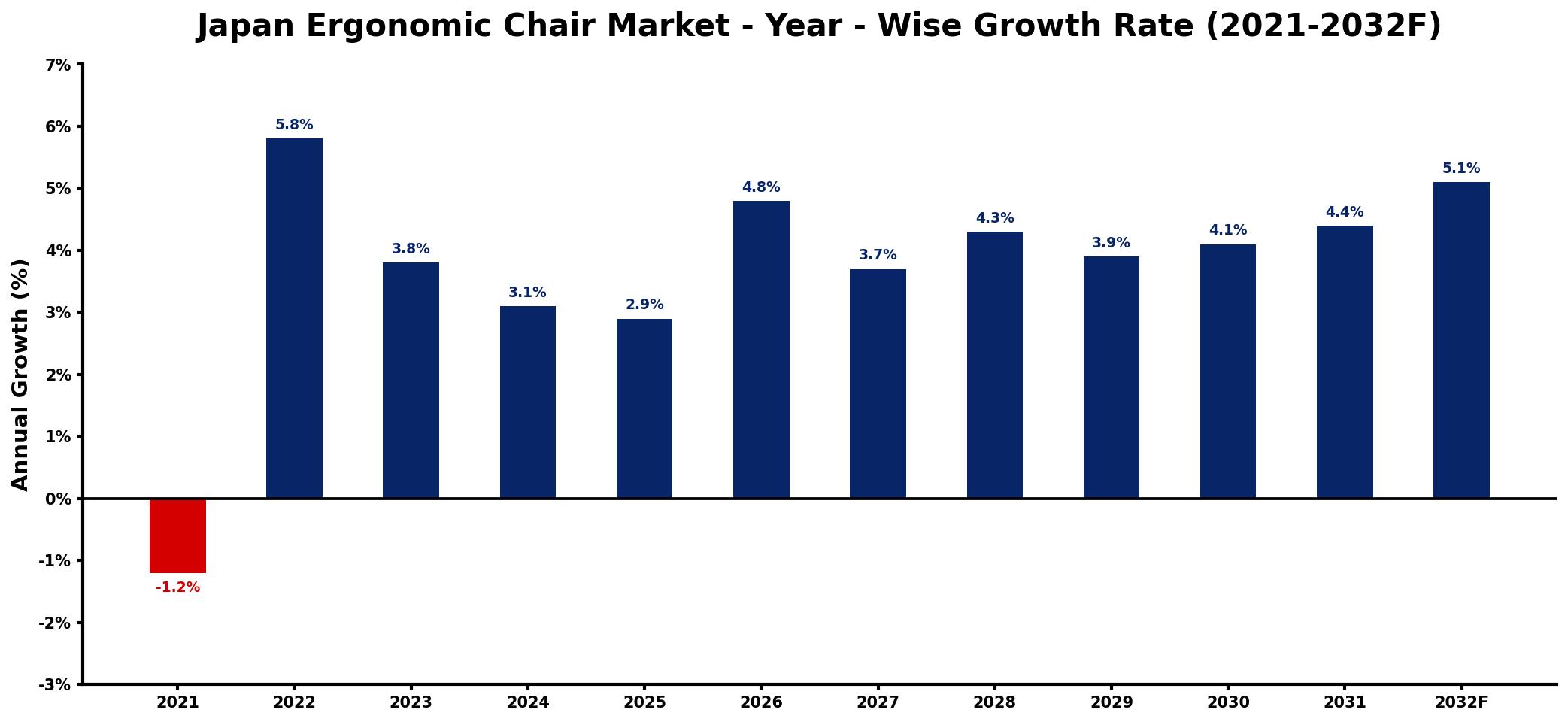
The table below presents the year‑wise growth rates along with the key drivers influencing the market
| Year | Growth Rate | Major Drivers |
| 2021 | -1.2% | decreased demand from corporate sector |
| 2022 | 5.8% | rising awareness of health benefits |
| 2023 | 3.8% | increased remote work adoption rates |
| 2024 | 3.1% | growing focus on workplace comfort |
| 2025 | 2.9% | expansion of e-commerce platforms |
| 2026 | 4.8% | increased investments in workplace wellness |
| 2027 | 3.7% | rising consumer preference for quality |
| 2028 | 4.3% | enhanced marketing strategies effectiveness |
| 2029 | 3.9% | growth in home office setups |
| 2030 | 4.1% | increased product innovation and variety |
| 2031 | 4.4% | expanding distribution channels efficiency |
| 2032 | 5.1% | heightened demand for sustainable options |
Note: Market size estimations and growth projections presented in this report are based on 6Wresearch's proprietary forecasting methodology, utilizing the latest available industry data, government publications, and primary research inputs.
Japan Ergonomic Chair Market Synopsis
The most significant force currently shaping the Japan Ergonomic Chair Market is the heightened awareness of the health benefits associated with ergonomic furniture. As the prevalence of musculoskeletal disorders rises, fueled by long hours of sitting, consumers are prioritizing comfort and support in their seating choices.
Moreover, the growing emphasis on employee well-being within corporate environments has led organizations to seek out ergonomic chairs as a necessary investment. As remote work becomes more common, the demand for versatile ergonomic chairs that can adapt to various work settings is on the rise, creating a thriving market landscape.
Japan Ergonomic Chair Market Key Takeaways
- The market is witnessing a transition towards technologically advanced ergonomic solutions.
- Consumer demand is increasingly favoring customizable and eco-friendly chair designs.
- There is a strong focus on promoting employee wellness as a key driver for market growth.
- Remote work trends are reshaping the types of ergonomic solutions that are in demand.
- Education efforts are vital to raising consumer awareness about the benefits of ergonomic chairs.
Evaluation of Restraints in Japan Ergonomic Chair Market
Despite the promising growth trajectory, the Japan Ergonomic Chair Market faces several restraints that could impede its full potential. Intense competition from both local and international manufacturers results in pricing pressure, making it challenging for premium products to stand out. Additionally, consumer awareness about the advantages of ergonomic seating remains relatively low compared to global standards, necessitating targeted educational campaigns. Traditional seating preferences in Japanese culture may also hinder the acceptance of ergonomic chairs as essential items. Finally, economic fluctuations, particularly those stemming from the COVID-19 pandemic, could affect discretionary spending on office furniture.
Japan Ergonomic Chair Market Trends
The market is currently experiencing a trend towards greater innovation in design and functionality. Features such as adjustable lumbar support, dynamic seating mechanisms, and sleek aesthetics are becoming increasingly popular. Additionally, an emphasis on sustainability is leading manufacturers to explore eco-friendly materials in production. As more individuals transition to hybrid work environments, the demand for ergonomic chairs that offer seamless transitions between home and office use is growing, driving product development further.
Japan Ergonomic Chair Market Opportunities
Investors in the Japan Ergonomic Chair Market have a unique opportunity to capitalize on rising consumer interest in ergonomic solutions. With health and productivity becoming top priorities in both corporate and home environments, businesses that focus on innovative designs and customizable features will likely thrive. Moreover, tapping into the demand for eco-friendly materials can differentiate products in a crowded marketplace. Understanding the specific preferences of Japanese consumers will be critical to successfully penetrating this niche market, which is rich with potential for growth.
Government Initiatives in the Japan Ergonomic Chair Market
Government policies in Japan actively promote workplace safety and ergonomic standards to improve overall worker comfort. Regulations dictate specific requirements for chair design, adjustability, and materials to ensure they prevent health issues, including musculoskeletal disorders. Furthermore, the government often provides incentives for businesses to invest in ergonomic furniture, which can include tax breaks or subsidies. These initiatives not only promote healthier workspaces but also encourage the adoption of ergonomic solutions across various industries.
Future Insights of the Japan Ergonomic Chair Market
Looking forward to 2026-2032, the Japan Ergonomic Chair Market is poised for sustained growth, driven by ongoing trends in remote work and increased awareness of health issues. The continuous evolution of ergonomic product features, such as technological integration and sustainable designs, will likely play a pivotal role in market dynamics. As organizations increasingly prioritize employee wellness, the demand for quality ergonomic chairs is expected to rise, paving the way for innovation and market expansion.
Japan Ergonomic Chair Market Latest Developments (2025 - 2026)
In recent months, the Japan Ergonomic Chair Market has witnessed a surge in interest toward advanced ergonomic solutions, with manufacturers focusing on integrating smart technology into their products. Innovative designs that offer customizable features and aesthetic appeal are gaining traction among consumers. Additionally, market participants are engaging in strategic partnerships to enhance product offerings and expand their reach. These developments are indicative of a vibrant market responding effectively to evolving consumer demands and workplace trends.
Japan Ergonomic Chair Market - Key Attractiveness of the Report
- 10 Years of Market Numbers
- Historical Data Starting from 2022 to 2025
- Base Year: 2025
- Forecast Data until 2032
- Key Performance Indicators Impacting the Market
- Major Upcoming Developments and Projects
Key Highlights of the Report:
- Japan Ergonomic Chair Market Outlook
- Market Size of Japan Ergonomic Chair Market, 2025
- Forecast of Japan Ergonomic Chair Market, 2032
- Historical Data and Forecast of Japan Ergonomic Chair Revenues & Volume for the Period 2022-2032F
- Japan Ergonomic Chair Market Trend Evolution
- Japan Ergonomic Chair Market Drivers and Challenges
- Japan Ergonomic Chair Price Trends
- Japan Ergonomic Chair Porter's Five Forces
- Japan Ergonomic Chair Industry Life Cycle
- Historical Data and Forecast of Japan Ergonomic Chair Market Revenues & Volume By Application for the Period 2022-2032F
- Historical Data and Forecast of Japan Ergonomic Chair Market Revenues & Volume By Enterprise Procurement for the Period 2022-2032F
- Historical Data and Forecast of Japan Ergonomic Chair Market Revenues & Volume By Government Procurement for the Period 2022-2032F
- Historical Data and Forecast of Japan Ergonomic Chair Market Revenues & Volume By School Procurement for the Period 2022-2032F
- Historical Data and Forecast of Japan Ergonomic Chair Market Revenues & Volume By Individual Procurement for the Period 2022-2032F
- Historical Data and Forecast of Japan Ergonomic Chair Market Revenues & Volume By Other for the Period 2022-2032F
- Japan Ergonomic Chair Import Export Trade Statistics
- Market Opportunity Assessment By Application
- Japan Ergonomic Chair Top Companies Market Share
- Japan Ergonomic Chair Competitive Benchmarking By Technical and Operational Parameters
- Japan Ergonomic Chair Company Profiles
- Japan Ergonomic Chair Key Strategic Recommendations






































