Japan Identity and Access Management Market Size & Growth Rate (2026-2032)
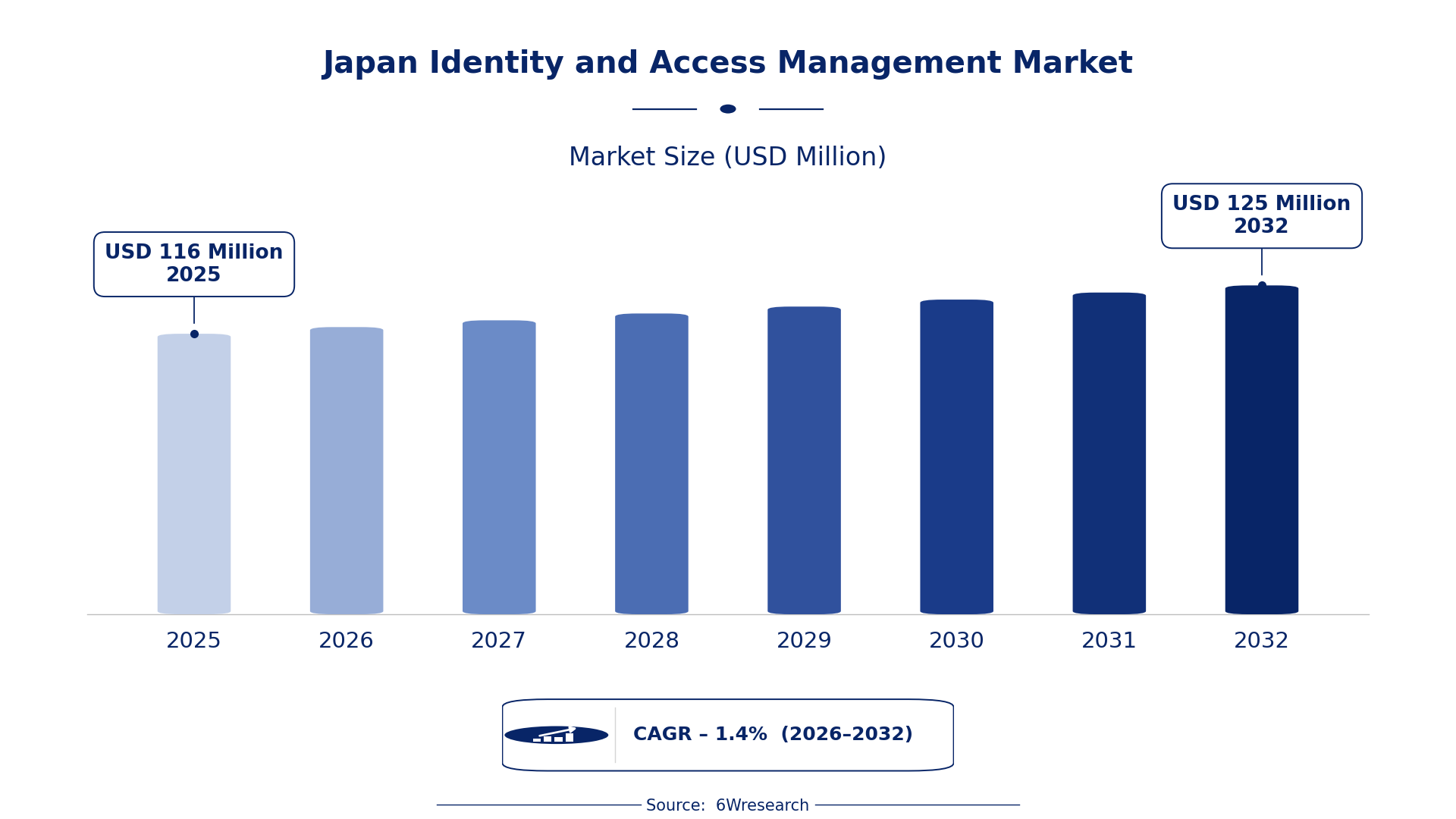
The Japan Identity and Access Management Market was estimated at USD 116 Million in 2025 and is projected to reach USD 125 Million by 2032, growing at a CAGR of 1.4% from 2026 to 2032.
Japan Identity and Access Management Market Synopsis
The Japan Identity and Access Management (IAM) market is witnessing robust growth as businesses scramble to bolster their defenses against escalating cybersecurity threats. While recent years have seen rapid adoption of IAM solutions, the next phase promises further evolution as organizations refine their strategies to meet stringent regulatory compliance and user experience demands.
As companies transition to cloud-based environments and embrace digital transformation, the focus shifts toward comprehensive IAM frameworks that support dynamic access control and identity governance. This evolution comes at a crucial time, as compliance with regulations like GDPR and Japan's Personal Information Protection Act takes center stage in corporate risk management.
Japan Identity and Access Management Market Year-wise Growth Rate and Key Drivers
This graph illustrates the annual growth rates of the Japan Identity and Access Management Market from 2021 to 2032, highlighting a steady upward trajectory and projected expansion over the forecast period.
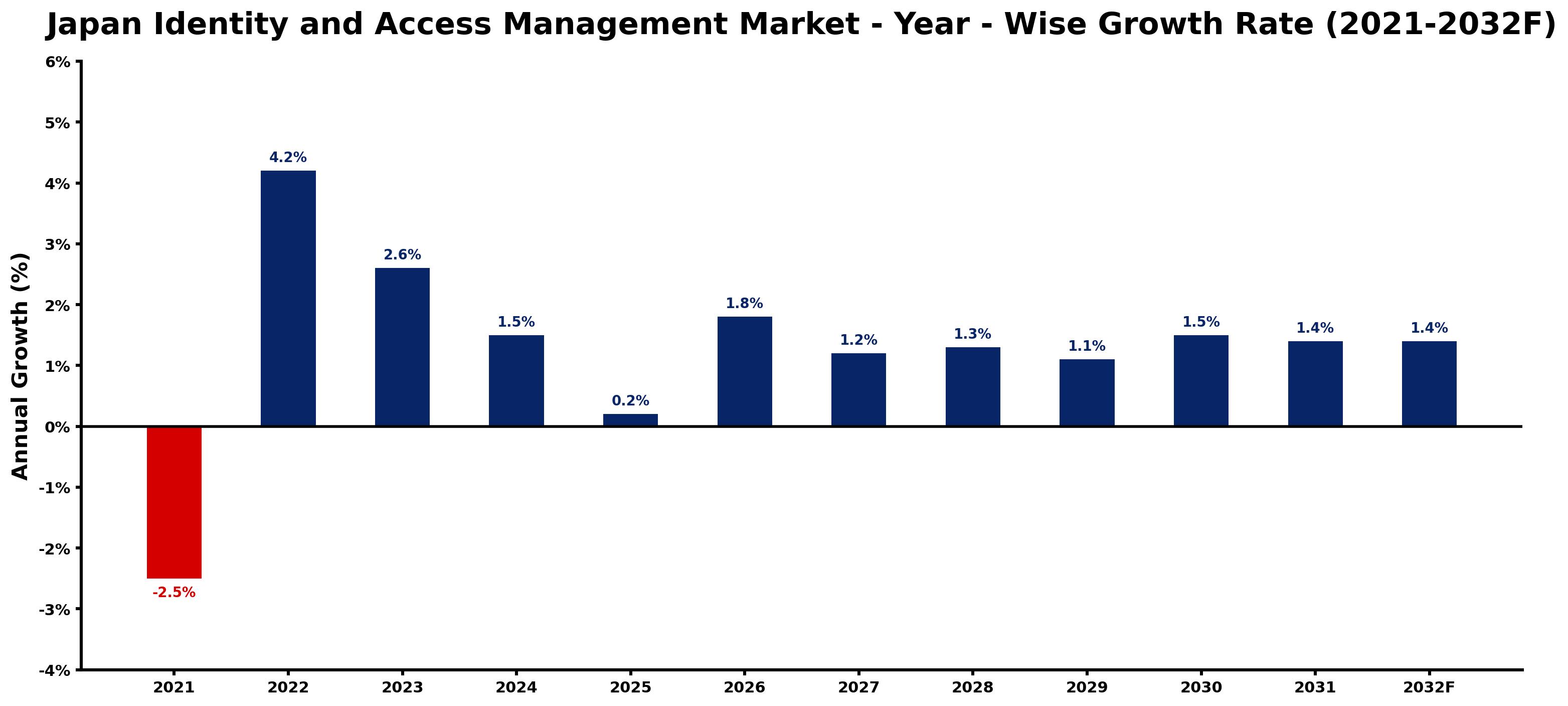
The table below presents the year‑wise growth rates along with the key drivers influencing the market
| Year | Growth Rate | Major Drivers |
| 2021 | -2.5% | Fewer enterprise spending due to Japan's pandemic restrictions. |
| 2022 | 4.2% | Rising cybersecurity regulations from Japan's Financial Services Agency |
| 2023 | 2.6% | Increased adoption of biometrics in mobile payment systems |
| 2024 | 1.5% | Government initiative promoting digital identity verification standards |
| 2025 | 0.2% | Focus on personal data protection under Japan's Data Act |
| 2026 | 1.8% | Growing investments in KYC processes by financial institutions |
| 2027 | 1.2% | Emergence of AI-driven identity verification solutions in Japan |
| 2028 | 1.3% | Demand for improved authentication in governmental digital services |
| 2029 | 1.1% | Rise of IoT devices necessitating advanced access controls |
| 2030 | 1.5% | New local startups enhancing identity management technology solutions |
| 2031 | 1.4% | Increased identity theft awareness driving consumer solutions adoption |
| 2032 | 1.4% | Growing interest in privacy-preserving technologies among enterprises |
Note: Market size estimations and growth projections presented in this report are based on 6Wresearch's proprietary forecasting methodology, utilizing the latest available industry data, government publications, and primary research inputs.
Japan Identity and Access Management Market Key Takeaways
Below are some of the specific key takeaways from the market, including:
- The market is driven by rising cybersecurity threats and regulatory compliance mandates.
- Cloud-based IAM solutions are increasingly favored for their scalability and flexibility.
- Organizations are investing in biometric and multi-factor authentication technologies.
- AI and machine learning integration in IAM is gaining traction to streamline processes.
- Continuous enhancements in identity governance solutions reflect a proactive security approach.
Evaluation of Restraints in Japan Identity and Access Management Market
While the Japan IAM market shows potential, several factors are curtailing its full growth. The challenge of balancing user convenience with stringent security needs often results in compromised user experiences. Additionally, organizations grapple with complex IT environments as they integrate various technologies across platforms.
Compliance with Japan's strict data protection laws further complicates deployment efforts. The persistent shortage of skilled cybersecurity professionals adds to the difficulties businesses face in effectively implementing and maintaining robust IAM solutions.
Japan Identity and Access Management Market Trends
A shift towards biometrics is notable, with more businesses embracing fingerprint and facial recognition technologies to enhance security. Concurrently, multi-factor authentication is becoming a standard practice to thwart unauthorized access. Furthermore, organizations are increasingly recognizing the value of integrating AI and machine learning into IAM systems to bolster security and improve user management.
Identity governance frameworks are also emerging as critical tools for organizations seeking to streamline compliance and management processes. As digital transformation efforts accelerate, the demand for IAM solutions that facilitate seamless identity management across diverse systems will continue to grow.
Japan Identity and Access Management Market Opportunities
The landscape for IAM in Japan is ripe for investment, particularly as digital transformation strategies gain traction. Opportunities abound in the domain of cloud-based IAM solutions, which offer the agility that many organizations are pursuing. Furthermore, multi-factor authentication technologies present a lucrative investment avenue as firms focus on securing sensitive data.
The integration of advanced technologies such as AI into IAM systems opens doors for innovative solutions that enhance security and user management capabilities. Companies looking to make an impact in this space should also consider collaborating with local providers to effectively address unique regional challenges.
Government Initiatives in the Japan Identity and Access Management Market
Government policies in Japan are significantly influencing the IAM market, as authorities prioritize enhancing cybersecurity frameworks and data protection standards. With legislation such as the Act on the Protection of Personal Information (APPI), organizations are compelled to adopt more comprehensive IAM solutions to comply with regulations that safeguard personal data.
- A regulatory framework was introduced in 2025 mandating stricter compliance with data protection protocols across various sectors.
- The Japan Information-technology Promotion Agency (IPA) is currently offering resources and guidelines to assist organizations in strengthening their IAM practices.
- In 2023, a public initiative aimed at boosting cybersecurity education and training for professionals was launched.
- Plans are underway for a national digital infrastructure upgrade program expected to facilitate better security standards by 2026.
Future Insights of the Japan Identity and Access Management Market
Looking ahead to 2026-2032, the Japan IAM market is set for continued expansion driven by technological advancements and evolving security needs. As businesses prioritize securing digital assets, the demand for sophisticated IAM solutions will rise.
The increasing trend of remote work, coupled with growing digital interactions, necessitates efficient identity management practices. Organizations will likely invest heavily in innovative IAM frameworks that can adapt to changing operational models and compliance requirements.
Japan Identity and Access Management Market Latest Developments
Recent months have seen a flurry of activity within the Japan IAM market, reflecting a shift in organizational priorities toward cybersecurity and compliance. As businesses adapt to new digital realities, they are increasingly seeking advanced IAM solutions to fortify their defenses.
- In early 2025, a major technology vendor launched a comprehensive identity governance solution targeting local enterprises.
- A notable partnership was announced in Q2 2025, aimed at integrating AI capabilities into existing IAM frameworks.
- Currently ongoing is an initiative that began in late 2024 to educate corporate leaders on emerging IAM technologies and practices.
- A rollout expected to begin in mid-2026 will introduce updated compliance guidelines for IAM systems, reflecting new regulatory standards.
Japan Identity and Access Management Market - Key Attractiveness of the Report
- 10 Years of Market Numbers
- Historical Data Starting from 2022 to 2025
- Base Year: 2025
- Forecast Data until 2032
- Key Performance Indicators Impacting the Market
- Major Upcoming Developments and Projects
Key Highlights of the Report:
- Japan Identity and Access Management Market Outlook
- Market Size of Japan Identity and Access Management Market, 2025
- Forecast of Japan Identity and Access Management Market, 2032
- Historical Data and Forecast of Japan Identity and Access Management Revenues & Volume for the Period 2022-2032F
- Japan Identity and Access Management Market Trend Evolution
- Japan Identity and Access Management Market Drivers and Challenges
- Japan Identity and Access Management Price Trends
- Japan Identity and Access Management Porter's Five Forces
- Japan Identity and Access Management Industry Life Cycle
- Historical Data and Forecast of Japan Identity and Access Management Market Revenues & Volume By Component for the Period 2022-2032F
- Historical Data and Forecast of Japan Identity and Access Management Market Revenues & Volume By Solutions for the Period 2022-2032F
- Historical Data and Forecast of Japan Identity and Access Management Market Revenues & Volume By Services for the Period 2022-2032F
- Historical Data and Forecast of Japan Identity and Access Management Market Revenues & Volume By Solution for the Period 2022-2032F
- Historical Data and Forecast of Japan Identity and Access Management Market Revenues & Volume By Data Directory for the Period 2022-2032F
- Historical Data and Forecast of Japan Identity and Access Management Market Revenues & Volume By Identity Lifecycle Management for the Period 2022-2032F
- Historical Data and Forecast of Japan Identity and Access Management Market Revenues & Volume By Deployment Mode for the Period 2022-2032F
- Historical Data and Forecast of Japan Identity and Access Management Market Revenues & Volume By Cloud for the Period 2022-2032F
- Historical Data and Forecast of Japan Identity and Access Management Market Revenues & Volume By On-premises for the Period 2022-2032F
- Historical Data and Forecast of Japan Identity and Access Management Market Revenues & Volume By Organization Size for the Period 2022-2032F
- Historical Data and Forecast of Japan Identity and Access Management Market Revenues & Volume By SMEs for the Period 2022-2032F
- Historical Data and Forecast of Japan Identity and Access Management Market Revenues & Volume By Large Enterprises for the Period 2022-2032F
- Historical Data and Forecast of Japan Identity and Access Management Market Revenues & Volume By Vertical for the Period 2022-2032F
- Historical Data and Forecast of Japan Identity and Access Management Market Revenues & Volume By BFSI for the Period 2022-2032F
- Historical Data and Forecast of Japan Identity and Access Management Market Revenues & Volume By Travel and Hospitality for the Period 2022-2032F
- Historical Data and Forecast of Japan Identity and Access Management Market Revenues & Volume By Healthcare for the Period 2022-2032F
- Historical Data and Forecast of Japan Identity and Access Management Market Revenues & Volume By Retail and eCommerce for the Period 2022-2032F
- Historical Data and Forecast of Japan Identity and Access Management Market Revenues & Volume By IT and ITeS for the Period 2022-2032F
- Historical Data and Forecast of Japan Identity and Access Management Market Revenues & Volume By Education for the Period 2022-2032F
- Historical Data and Forecast of Japan Identity and Access Management Market Revenues & Volume By Others (Energy and Utilities, Telecommunication, Other Citizen Services) for the Period 2022-2032F
- Japan Identity and Access Management Import Export Trade Statistics
- Market Opportunity Assessment By Component
- Market Opportunity Assessment By Solution
- Market Opportunity Assessment By Deployment Mode
- Market Opportunity Assessment By Organization Size
- Market Opportunity Assessment By Vertical
- Japan Identity and Access Management Top Companies Market Share
- Japan Identity and Access Management Competitive Benchmarking By Technical and Operational Parameters
- Japan Identity and Access Management Company Profiles
- Japan Identity and Access Management Key Strategic Recommendations






































