Japan Integrated Cloud Management Platform Market Size & Growth Rate (2026-2032)
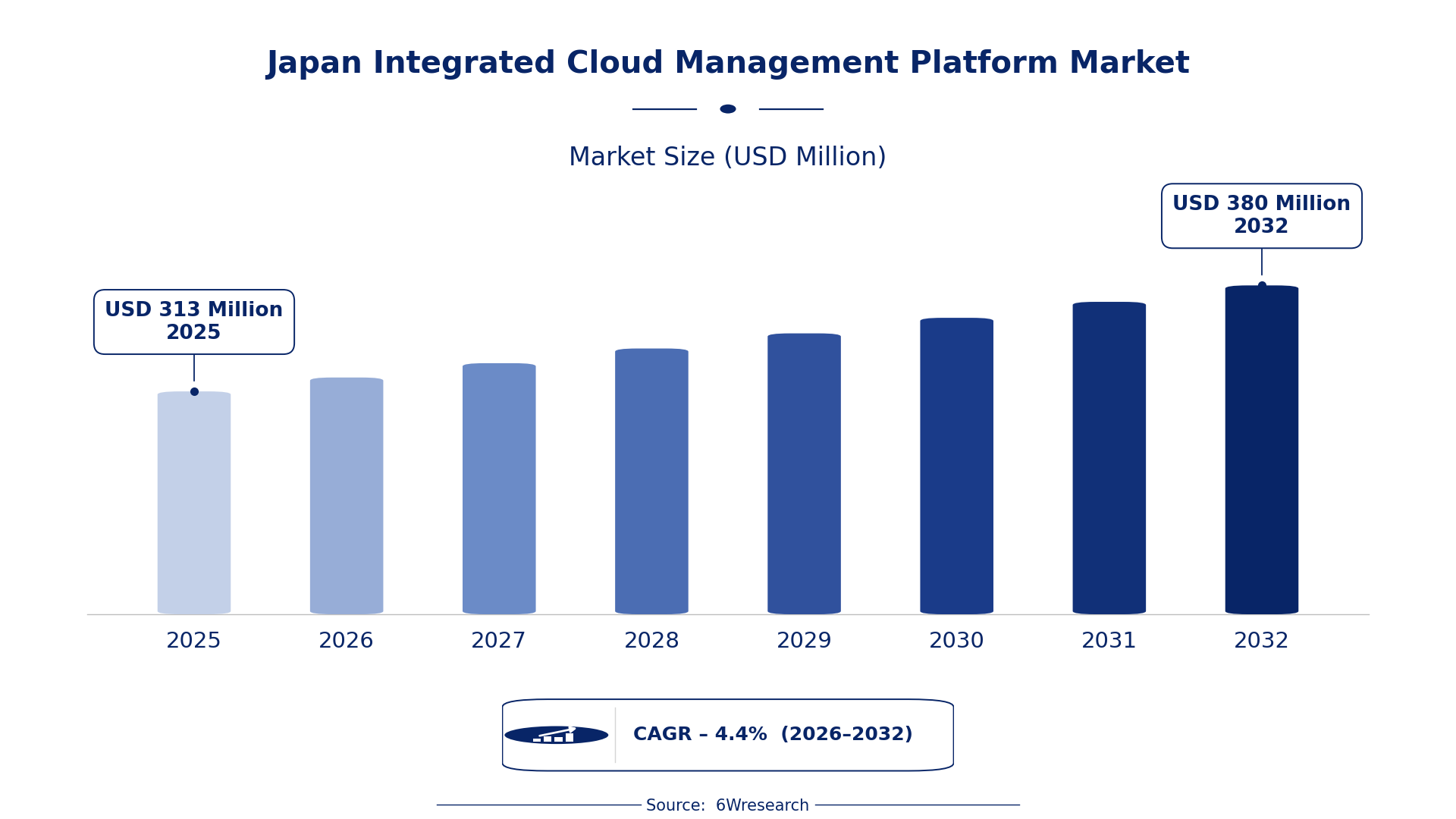
The Japan Integrated Cloud Management Platform Market was estimated at USD 313 Million in 2025 and is projected to reach USD 380 Million by 2032, growing at a CAGR of 4.4% from 2026 to 2032.
Japan Integrated Cloud Management Platform Market Synopsis
The driving force behind the Japan Integrated Cloud Management Platform Market is the rapid adoption of cloud-based services across industries. As companies seek to streamline their operations and enhance IT performance, integrated cloud management solutions have become essential for optimizing resources and ensuring compliance.
Japanese enterprises are increasingly turning to cloud management platforms that offer automation and AI-driven optimization features. This shift not only aids in resource management but also addresses security concerns, reflecting a broader trend towards agile and efficient IT operations.
Japan Integrated Cloud Management Platform Market Year-wise Growth Rate and Key Drivers
This graph illustrates the annual growth rates of the Japan Integrated Cloud Management Platform Market from 2021 to 2032, highlighting a steady upward trajectory and projected expansion over the forecast period.
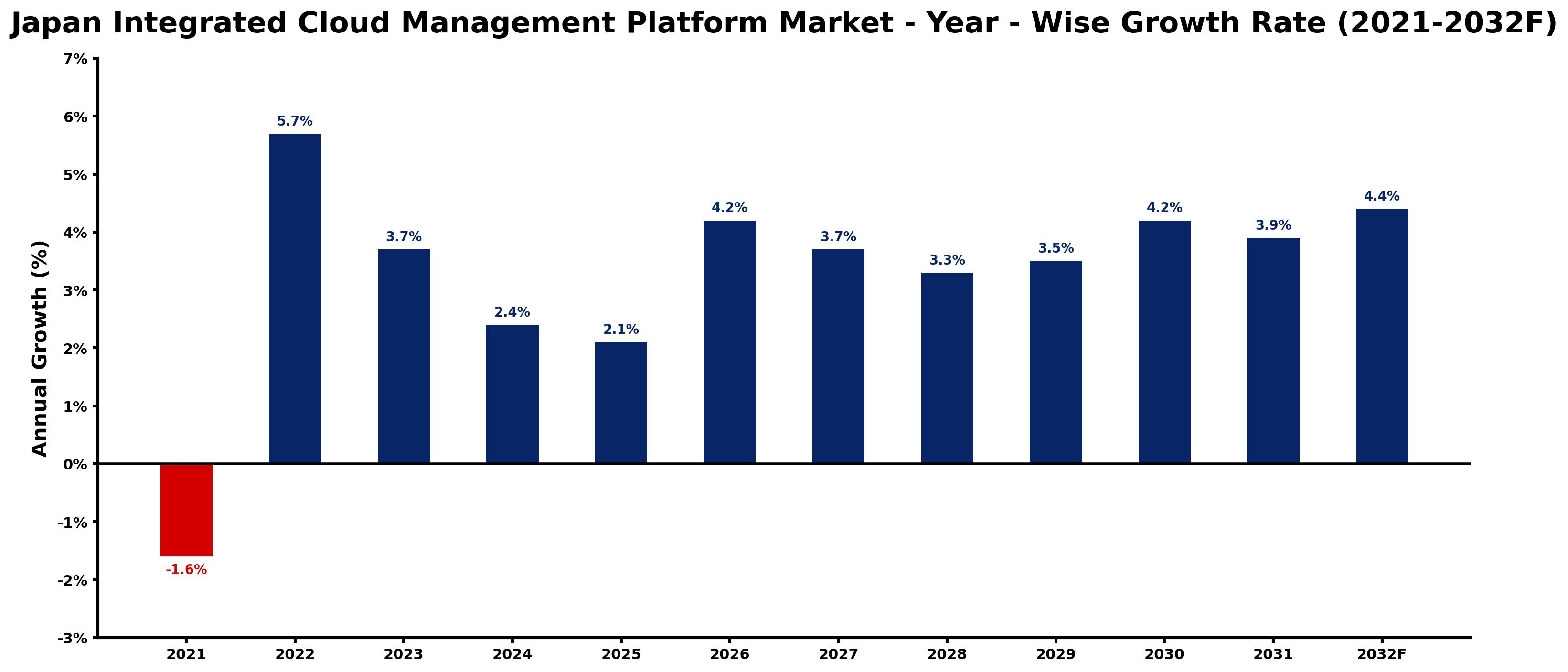
The table below presents the year‑wise growth rates along with the key drivers influencing the market
| Year | Growth Rate | Major Drivers |
| 2021 | -1.6% | Cloud pricing war among Japanese tech giants escalated. |
| 2022 | 5.7% | Rising adoption of digital transformation initiatives by enterprises. |
| 2023 | 3.7% | Increased demand for efficient remote work solutions post-pandemic. |
| 2024 | 2.4% | Government incentives supporting cloud technology implementations. |
| 2025 | 2.1% | Growing need for data security and compliance regulations. |
| 2026 | 4.2% | Enhancements in local 5G infrastructure promoting cloud services. |
| 2027 | 3.7% | Strategic partnerships among tech firms boosting platform capabilities. |
| 2028 | 3.3% | Emerging startup ecosystem driving innovative cloud solutions. |
| 2029 | 3.5% | Widespread enterprise focus on multi-cloud management efficiency. |
| 2030 | 4.2% | Continued investment in AI integration within cloud platforms. |
| 2031 | 3.9% | Heightened consumer awareness of sustainable cloud solutions. |
| 2032 | 4.4% | Regulatory frameworks promoting cloud migration among SMEs. |
Note: Market size estimations and growth projections presented in this report are based on 6Wresearch's proprietary forecasting methodology, utilizing the latest available industry data, government publications, and primary research inputs.
Japan Integrated Cloud Management Platform Market Key Takeaways
Below are some of the specific key takeaways from the market, including:
- The market is driven by the growing need for effective cloud management solutions in various sectors.
- Hybrid and multi-cloud management strategies are gaining traction among Japanese businesses.
- Security and compliance remain top priorities for organizations adopting cloud solutions.
- Investment in AI and automation technologies is critical for future growth.
- Government initiatives are actively promoting cloud adoption and data security measures.
Evaluation of Restraints in Japan Integrated Cloud Management Platform Market
The Japan Integrated Cloud Management Platform Market faces several hurdles that could hinder its growth. One of the most pressing challenges is the complexity involved in integrating diverse cloud services into a unified management framework. Organizations often utilize a mix of public, private, and hybrid clouds, each presenting unique configurations that complicate interoperability. This complexity can deter businesses from fully embracing integrated cloud management solutions. Additionally, concerns regarding data security, compliance issues, and the scarcity of skilled IT professionals proficient in cloud management further complicate the adoption process.
Japan Integrated Cloud Management Platform Market Trends
Several key trends are shaping the Japan Integrated Cloud Management Platform Market. Firstly, there is a noticeable shift towards hybrid cloud management solutions that allow businesses to integrate on-premise and cloud resources effectively. This trend is complemented by the rising preference for multi-cloud environments, enabling organizations to capitalize on the strengths of different cloud providers.
on top of that, the emphasis on security and compliance features is increasingly crucial, as companies prioritize data protection. The integration of AI and automation capabilities within cloud management platforms is also becoming more prominent, streamlining operations and optimizing resource utilization.
Japan Integrated Cloud Management Platform Market Opportunities
The Japan Integrated Cloud Management Platform Market offers substantial investment opportunities, particularly as cloud adoption continues to rise. Companies that provide comprehensive cloud management platforms that enhance security, streamline operations, and optimize costs are well-positioned for growth. The ongoing digital transformation initiatives across various sectors are expected to drive demand further.
Investments in innovative technologies such as AI-driven automation and advanced security features will be critical for capturing market share. Additionally, forming strategic partnerships with local cloud service providers can enhance market presence and capitalize on the expanding cloud management sector.
Government Initiatives in the Japan Integrated Cloud Management Platform Market
Government policy plays a significant role in the growth of the Japan Integrated Cloud Management Platform Market. The Japanese government is actively promoting cloud technology adoption through initiatives designed to enhance data security and privacy. Policies like the "Cloud First" initiative prioritize cloud-based solutions in public sector IT procurement, creating a favorable environment for cloud service adoption.
- A "Cloud First" policy implemented to prioritize cloud services in government IT procurement, enhancing cloud adoption.
- Currently ongoing programs focus on improving data protection regulations and compliance frameworks for cloud services.
- A national digital infrastructure upgrade initiative aimed at enhancing connectivity and access to cloud technologies, expected to roll out in phases over the next few years.
- Recent efforts to establish a regulatory framework that mandates billing transparency for cloud services to protect consumers.
- Plans for public-private partnerships aimed at fostering innovation and collaboration in cloud technology development by 2027.
Future Insights of the Japan Integrated Cloud Management Platform Market
Looking ahead to 2026-2032, the Japan Integrated Cloud Management Platform Market is set for steady expansion. As businesses continue to embrace cloud computing solutions, demand for integrated management platforms that automate processes and optimize costs will rise. The growing need for scalable and flexible IT operations will further fuel this growth. Key players will likely enhance platform capabilities, focusing on security and customization to meet the varied needs of Japanese enterprises.
Japan Integrated Cloud Management Platform Market Latest Developments
Recent developments in the Japan Integrated Cloud Management Platform Market reflect a strong push towards innovation and increased functionality. In the past year, several initiatives have been launched, focusing on enhancing cloud integration and management capabilities.
- A major technology vendor launched a new integrated platform in early 2025 that simplifies cloud management and enhances security features.
- A pilot program for an AI-driven resource optimization tool is currently underway, expected to improve operational efficiency for participating organizations.
- In late 2025, a leading regional operator announced a partnership with local businesses to enhance cloud service offerings and customer support.
- A regulatory framework aimed at improving cloud service compliance was introduced in early 2026, focusing on data protection.
- Upcoming initiatives planned for mid-2026 aim to expand public cloud infrastructure across rural areas to improve accessibility.
Japan Integrated Cloud Management Platform Market - Key Attractiveness of the Report
- 10 Years of Market Numbers
- Historical Data Starting from 2022 to 2025
- Base Year: 2025
- Forecast Data until 2032
- Key Performance Indicators Impacting the Market
- Major Upcoming Developments and Projects
Key Highlights of the Report:
- Japan Integrated Cloud Management Platform Market Outlook
- Market Size of Japan Integrated Cloud Management Platform Market, 2025
- Forecast of Japan Integrated Cloud Management Platform Market, 2032
- Historical Data and Forecast of Japan Integrated Cloud Management Platform Revenues & Volume for the Period 2022-2032F
- Japan Integrated Cloud Management Platform Market Trend Evolution
- Japan Integrated Cloud Management Platform Market Drivers and Challenges
- Japan Integrated Cloud Management Platform Price Trends
- Japan Integrated Cloud Management Platform Porter's Five Forces
- Japan Integrated Cloud Management Platform Industry Life Cycle
- Historical Data and Forecast of Japan Integrated Cloud Management Platform Market Revenues & Volume By Component for the Period 2022-2032F
- Historical Data and Forecast of Japan Integrated Cloud Management Platform Market Revenues & Volume By Solutions for the Period 2022-2032F
- Historical Data and Forecast of Japan Integrated Cloud Management Platform Market Revenues & Volume By Services for the Period 2022-2032F
- Historical Data and Forecast of Japan Integrated Cloud Management Platform Market Revenues & Volume By Vertical for the Period 2022-2032F
- Historical Data and Forecast of Japan Integrated Cloud Management Platform Market Revenues & Volume By BFSI for the Period 2022-2032F
- Historical Data and Forecast of Japan Integrated Cloud Management Platform Market Revenues & Volume By IT and Telecom for the Period 2022-2032F
- Historical Data and Forecast of Japan Integrated Cloud Management Platform Market Revenues & Volume By Government and Public Sector for the Period 2022-2032F
- Historical Data and Forecast of Japan Integrated Cloud Management Platform Market Revenues & Volume By Manufacturing for the Period 2022-2032F
- Historical Data and Forecast of Japan Integrated Cloud Management Platform Market Revenues & Volume By Retail and Consumer Goods for the Period 2022-2032F
- Historical Data and Forecast of Japan Integrated Cloud Management Platform Market Revenues & Volume By Healthcare and Lifesciences for the Period 2022-2032F
- Historical Data and Forecast of Japan Integrated Cloud Management Platform Market Revenues & Volume By Energy and Utilities for the Period 2022-2032F
- Historical Data and Forecast of Japan Integrated Cloud Management Platform Market Revenues & Volume By Others for the Period 2022-2032F
- Historical Data and Forecast of Japan Integrated Cloud Management Platform Market Revenues & Volume By Organization Size for the Period 2022-2032F
- Historical Data and Forecast of Japan Integrated Cloud Management Platform Market Revenues & Volume By SMEs for the Period 2022-2032F
- Historical Data and Forecast of Japan Integrated Cloud Management Platform Market Revenues & Volume By Large Enterprises for the Period 2022-2032F
- Japan Integrated Cloud Management Platform Import Export Trade Statistics
- Market Opportunity Assessment By Component
- Market Opportunity Assessment By Vertical
- Market Opportunity Assessment By Organization Size
- Japan Integrated Cloud Management Platform Top Companies Market Share
- Japan Integrated Cloud Management Platform Competitive Benchmarking By Technical and Operational Parameters
- Japan Integrated Cloud Management Platform Company Profiles
- Japan Integrated Cloud Management Platform Key Strategic Recommendations






































