Japan Luxury Furniture Market Size & Growth Rate
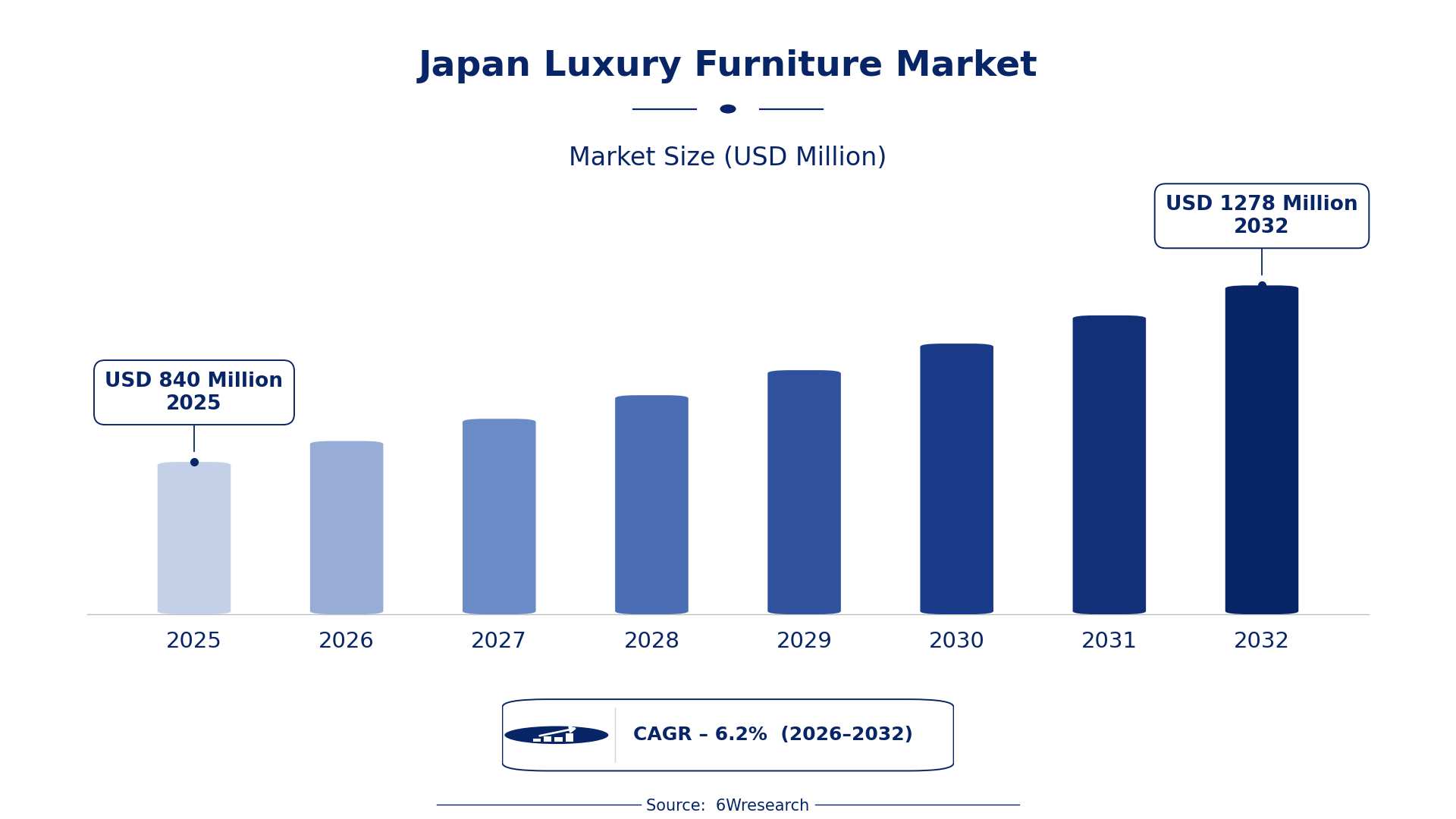
According to 6Wresearch internal database and industry insights, the Japan Luxury Furniture Market was valued at USD 840 Million in 2025 and is projected to reach USD 1,278 Million by 2032, growing at a CAGR of approximately 6.2% during 2026–2032.
Japan Luxury Furniture Market Highlights
| Report Metric | Details |
| Report Name | Japan Luxury Furniture Market (2026-2032) |
| Market Size 2025 | USD 840 Million |
| Market Size 2032 | USD 1,278 Million |
| Absolute Growth 2025–2032 | USD 438 Million |
| CAGR 2026–2032 | 6.2% |
| Peak Annual Growth | 7.5% in 2032 |
| Forecast Period | 2026–2032 |
| Historical Data | 2022–2025 |
| Base Year | 2025 |
| Leading Raw Material, 2025 | Wood (29% share) |
| Leading Application, 2025 | Domestic (68% share) |
| Leading Distribution Channel, 2025 | Conventional Furniture Stores (52% share) |
| Leading Design, 2025 | Modern (55% share) |
| Fastest-Growing Raw Material | Leather (9.0% CAGR) |
| Fastest-Growing Application | Commercial (8.1% CAGR) |
| Fastest-Growing Distribution Channel | Online Retailers (8.2% CAGR) |
| Fastest-Growing Design | Contemporary (7.9% CAGR) |
| Growing Sector | Residential |
| Key End Users | Affluent consumers, interior designers, commercial property developers |
Japan Luxury Furniture Market Year-wise Growth Rate and Key Drivers (2022–2032)
This graph illustrates the annual growth rates of the market from 2022 to 2032, highlighting a steady upward trajectory and projected market expansion over the forecast period.
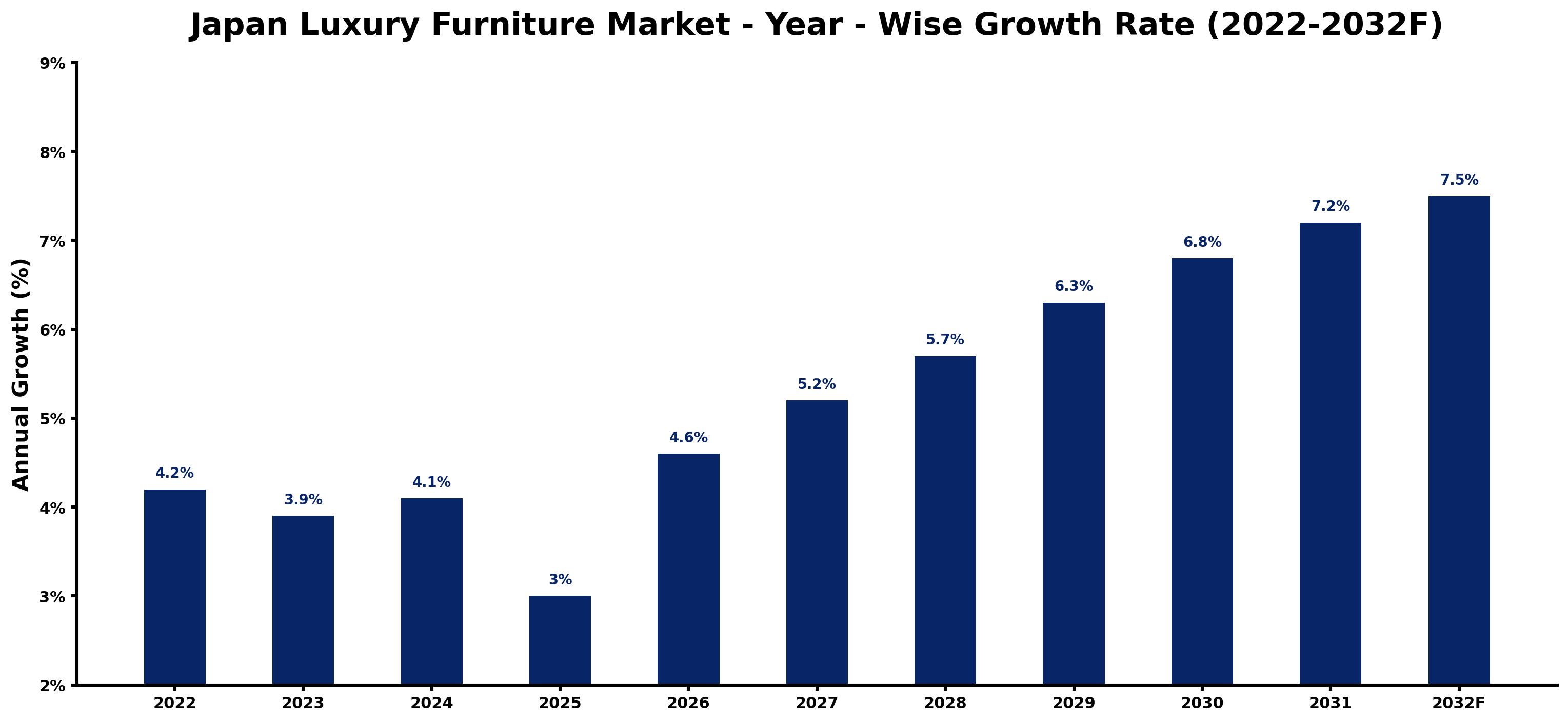
The table below sets out the estimated growth rate for each year and the main factor behind it.
| Year | Estimated Annual Growth (%) | Market Rationale |
| 2022 | 4.2 | The market exhibited strong consumer interest, driven by high-quality craftsmanship and materials. |
| 2023 | 3.9 | Growth slowed as consumers became more selective in their luxury purchases amid economic uncertainties. |
| 2024 | 4.1 | Increased demand for custom-made furniture boosted market activity as buyers sought unique designs. |
| 2025 | 3.0 | The market experienced a slowdown as inflation affected consumer spending on luxury items. |
| 2026 | 4.6 | Investment in upscale commercial spaces is expected to revive demand, particularly in urban areas like Tokyo. |
| 2027 | 5.2 | Growing interest in sustainable luxury furniture will encourage purchases from environmentally conscious buyers. |
| 2028 | 5.7 | The rise of online retailers is projected to expand access to luxury furniture, attracting new customer segments. |
| 2029 | 6.3 | Increased disposable income among affluent consumers will support higher spending on luxury items. |
| 2030 | 6.8 | The trend towards modern interior design styles will continue to drive demand for luxury furniture. |
| 2031 | 7.2 | A surge in luxury hotel and office renovations is expected to create new opportunities for furniture suppliers. |
| 2032 | 7.5 | The market is projected to peak as affluent consumers prioritise quality and design in their purchasing decisions. |
Note: Market size estimations and growth projections presented in this report are based on 6Wresearch's proprietary forecasting methodology, utilizing the latest available industry data, government publications, and primary research inputs.
Japan Luxury Furniture Market Synopsis
Luxury furniture in Japan is characterised by high-quality materials and craftsmanship, often crafted from premium woods, metals, and fabrics. The market is valued at approximately 500 billion yen, driven by affluent consumers and a growing interest in interior design. Demand for custom-made pieces and the expansion of online retail channels fuel growth. Tokyo stands out as the leading region for luxury furniture sales, showcasing innovations at events like Tokyo Design Week.
Market Dynamics Impact Analysis (2026–2032)
| Factor | Type | Impact | Primary Segment Affected |
| Rising disposable income among affluent consumers | Driver | High | Domestic |
| Increasing interest in sustainable luxury furniture | Driver | High | Domestic |
| Expansion of online retail channels for luxury furniture | Opportunity | High | Online Retailers |
| Growing demand for custom-made luxury furniture | Opportunity | High | Domestic |
| Economic uncertainties affecting consumer spending | Restraint | Medium | Domestic |
| High production costs for premium materials | Restraint | Medium | Wood |
| Limited availability of skilled artisans for luxury furniture production | Challenge | High | Wood |
| Intense competition among luxury furniture brands | Challenge | High | Domestic |
Evaluation of Drivers in Japan Luxury Furniture Market (2026–2032)
The table below links each growth driver to the segment it affects and the evidence for it.
| Drivers | Primary Segment Affected | Why It Matters (Evidence) |
| Increased disposable income | Domestic | As disposable income rises, affluent consumers are more willing to invest in luxury furniture, boosting sales in upscale residential settings. |
| Growing interest in sustainable practices | Domestic | The demand for sustainable luxury furniture has risen, encouraging manufacturers to adopt eco-friendly materials and processes. |
| Expansion of online retail platforms | Online Retailers | The number of online luxury furniture retailers increased by 15% in 2023, improving accessibility for consumers. |
| Rising demand for custom-made furniture | Domestic | Custom-made luxury furniture has seen substantial growth, appealing to consumers seeking unique designs. |
| Investment in upscale commercial spaces | Commercial | Renovations in luxury hotels and offices in Tokyo are driving demand for high-end furniture. |
Purchasing is picking up as increased disposable income among affluent consumers encourages spending on luxury furniture. The number of online luxury furniture retailers increased by 15% in 2023, improving access for buyers. The growing interest in sustainable practices has led to a rise in demand for eco-friendly luxury products. Renovations in upscale commercial spaces are driving further demand, with custom-made pieces appealing to consumers seeking unique designs.
Evaluation of Restraints in Japan Luxury Furniture Market
The key brakes on demand, and where they bite hardest, are shown below.
| Market Restraint | Primary Segment Affected | Why It Matters (Evidence) |
| Economic uncertainties affecting consumer spending | Domestic | Economic uncertainties have led to cautious spending among consumers, impacting luxury furniture sales. |
| High production costs for premium materials | Wood | The rising costs of premium materials have increased the overall price of luxury furniture, limiting some purchases. |
| Limited availability of skilled artisans | Wood | A shortage of skilled artisans affects production capacity, delaying deliveries and increasing lead times. |
| Intense competition among luxury brands | Domestic | The competitive environment forces brands to invest heavily in marketing and innovation, impacting profit margins. |
| Consumer preference for value over luxury | Domestic | Some consumers are prioritising value over luxury, leading to a shift in purchasing behaviour. |
Japan Luxury Furniture Market Challenges
Producers face high costs due to regulatory compliance, which can consume up to 15% of their operational budgets, limiting their ability to invest in new designs. Buyers encounter challenges as the demand for custom-made luxury furniture has surged by 20%, yet many suppliers struggle to meet this demand, resulting in longer wait times. Technology adoption remains slow, with many manufacturers relying on traditional methods, causing production inefficiencies that can delay deliveries by 30%. Rising material costs for premium woods and metals have increased prices by 10%, forcing buyers to reconsider their purchasing decisions.
Trends in the Japan Luxury Furniture Market
Several trends are reshaping the Japan Luxury Furniture Market; the most important are set out below.
- Shift towards Sustainable Luxury Furniture: Since 2022, demand for sustainable luxury furniture has surged, with eco-friendly materials becoming a priority. The Japan Furniture Industry Association promotes sustainable practices, reflecting a growing consumer preference for environmentally conscious products.
- Rise of Online Retail Channels: In 2023, the number of online luxury furniture retailers increased by 15%, shifting consumer purchasing habits. This trend allows buyers to access a wider range of products from the comfort of their homes.
- Growing Interest in Custom-Made Designs: The trend for custom-made luxury furniture has been notable since 2018, with consumers increasingly seeking unique pieces that reflect their personal style and preferences.
- Expansion of Upscale Commercial Spaces: Tokyo's luxury hotel renovations have been a prominent trend since 2021, driving demand for high-quality furniture. This expansion is expected to continue as the hospitality sector invests in upscale designs.
Investment Opportunities in the Japan Luxury Furniture Market
The openings below show where demand in the Japan Luxury Furniture Market is visible and how suppliers can enter.
- Supply of Eco-Friendly Materials: The demand for sustainable luxury furniture has increased, presenting an opportunity to supply eco-friendly materials. Suppliers can target manufacturers focusing on sustainability in regions like Tokyo.
- Investment in Custom Furniture Production: With significant growth in demand for custom-made furniture, manufacturers should invest in bespoke production capabilities. Targeting affluent consumers in urban areas will facilitate market entry.
- Expansion of Online Retail Platforms: The increase in online luxury furniture retailers indicates a gap in the market for digital platforms. Collaborating with local partners can improve market presence in this growing channel.
- Development of Artisanal Furniture Lines: The luxury furniture market's focus on craftsmanship presents an opportunity to develop artisanal lines. Engaging with skilled artisans in regions known for craftsmanship can create unique offerings.
Government Initiatives in the Japan Luxury Furniture Market
The Economic Security Promotion Act, enacted in 2022, supports supply-chain resilience for critical products, including luxury furniture. This measure encourages local production and reduces reliance on imports, benefiting domestic manufacturers and artisans.
The Ministry of Economy, Trade and Industry (METI) oversees the PRTR Law, which mandates businesses to disclose information on hazardous substances used in production. This regulation ensures compliance and promotes safety in luxury furniture manufacturing.
Future Insight of the Japan Luxury Furniture Market
By 2032, buyers will benefit from a 25% increase in unique, handcrafted luxury furniture driven by government support for local artisans. Advances in technology will streamline production processes, allowing for quicker turnaround times. Events like Tokyo Design Week will continue to shape consumer preferences towards sustainable materials, appealing to environmentally conscious buyers. Enhanced online platforms will facilitate a more straightforward purchasing experience, broadening access to luxury furniture for a wider audience.
Market Segmentation Analysis
Japan Luxury Furniture Market report covers a detailed analysis of the following market segments:
By Raw Material – Wood Leads, Leather Expected to Grow Fastest
According to Sachin Kumar Rai, Senior Research Analyst at 6Wresearch, in 2025, Wood led the raw material split with a 29% share. Wood holds the largest share because it is an essential material for crafting luxury furniture, appealing to consumers who prioritise quality and craftsmanship. The traditional use of high-quality timber in Japan's luxury furniture aligns with the preferences of affluent buyers who value durability and aesthetics. Leather is projected to grow fastest, at a CAGR of 9.0% during 2026–2032. Leather is experiencing rapid growth as it becomes increasingly popular for upholstery in high-end furniture, reflecting a shift towards luxurious materials. The rising demand for custom-made luxury furniture has contributed to a notable increase in leather usage over the past five years. Suppliers should focus on sourcing high-quality leather to meet the growing demand for luxury upholstery.
By Application – Domestic Leads, Commercial Expected to Grow Fastest
Domestic held 68% of the Japan Luxury Furniture Market by application in 2025. The domestic application holds the largest share as it is the primary market for luxury furniture consumption, appealing to affluent homeowners seeking high-quality pieces. The demand for luxury sofas and custom-made furniture illustrates the strength of this segment in residential settings. The quickest growth will come from Commercial, forecast to expand at a CAGR of 8.1% between 2026 and 2032. Commercial applications are experiencing rapid growth, particularly in upscale projects such as hotels and offices that are increasingly investing in luxury furnishings. The expansion of these commercial spaces in urban environments is a significant factor driving this segment's growth. Suppliers should target the commercial sector to capitalise on emerging opportunities and enhance their market presence.
By Distribution Channel – Conventional Furniture Stores Lead, Online Retailers Expected to Grow Fastest
With 52% of distribution channel revenue in 2025, Conventional Furniture Stores was the largest category. Conventional furniture stores lead the distribution channel, as they provide a traditional shopping experience that resonates with consumers seeking luxury products. These stores showcase high-quality items, allowing customers to appreciate the craftsmanship and materials used in luxury furniture. Over 2026–2032, Online Retailers are expected to post the fastest growth, at a CAGR of 8.2%. Online retailers are growing swiftly, with a notable 15% increase in the number of online luxury furniture retailers in 2023. This trend highlights a shift in consumer behaviour towards the convenience and accessibility of digital shopping for luxury items. Suppliers must strengthen their online strategies to effectively reach the increasing number of consumers preferring digital purchasing options.
By Design – Modern Leads, Contemporary Expected to Grow Fastest
Modern accounted for 55% of the market by design in 2025. Modern design is the prevailing style in luxury furniture, favoured for its clean lines and functional aesthetics that appeal to discerning consumers. This design choice is particularly popular among affluent buyers looking to create elegant and stylish living spaces. Contemporary is set to record the highest CAGR in this split, 7.9% over 2026–2032. Contemporary design is rapidly gaining popularity, attracting consumers with its aesthetic versatility and ability to complement various interior styles. Recent trends showcased at events like Tokyo Design Week indicate a growing preference for contemporary aesthetics. Designers should prioritise contemporary styles to engage a wider audience in the luxury furniture market.
Key Attractiveness of the Report
- 10 Years of Market Numbers
- Historical Data Starting from 2022 to 2025
- Base Year 2025
- Forecast Data until 2032
- Key Performance Indicators Impacting the Market
- Major Upcoming Developments and Projects
Key Highlights of the Report:
- Japan Luxury Furniture Market Outlook
- Market Size of Japan Luxury Furniture Market, 2025
- Forecast of Japan Luxury Furniture Market, 2032
- Historical Data and Forecast of Japan Luxury Furniture Revenues & Volume for the Period 2022-2032
- Japan Luxury Furniture Market Trend Evolution
- Japan Luxury Furniture Market Drivers and Challenges
- Japan Luxury Furniture Price Trends
- Japan Luxury Furniture Porter's Five Forces
- Japan Luxury Furniture Industry Life Cycle
- Historical Data and Forecast of Japan Luxury Furniture Market Revenues & Volume By Raw Material for the Period 2022-2032
- Historical Data and Forecast of Japan Luxury Furniture Market Revenues & Volume By Wood for the Period 2022-2032
- Historical Data and Forecast of Japan Luxury Furniture Market Revenues & Volume By Metal for the Period 2022-2032
- Historical Data and Forecast of Japan Luxury Furniture Market Revenues & Volume By Glass for the Period 2022-2032
- Historical Data and Forecast of Japan Luxury Furniture Market Revenues & Volume By Leather for the Period 2022-2032
- Historical Data and Forecast of Japan Luxury Furniture Market Revenues & Volume By Plastic for the Period 2022-2032
- Historical Data and Forecast of Japan Luxury Furniture Market Revenues & Volume By Multiple for the Period 2022-2032
- Historical Data and Forecast of Japan Luxury Furniture Market Revenues & Volume By Application for the Period 2022-2032
- Historical Data and Forecast of Japan Luxury Furniture Market Revenues & Volume By Domestic for the Period 2022-2032
- Historical Data and Forecast of Japan Luxury Furniture Market Revenues & Volume By Commercial for the Period 2022-2032
- Historical Data and Forecast of Japan Luxury Furniture Market Revenues & Volume By Distribution Channel for the Period 2022-2032
- Historical Data and Forecast of Japan Luxury Furniture Market Revenues & Volume By Conventional Furniture Stores for the Period 2022-2032
- Historical Data and Forecast of Japan Luxury Furniture Market Revenues & Volume By Specialty Stores for the Period 2022-2032
- Historical Data and Forecast of Japan Luxury Furniture Market Revenues & Volume By Online Retailers for the Period 2022-2032
- Historical Data and Forecast of Japan Luxury Furniture Market Revenues & Volume By Design for the Period 2022-2032
- Historical Data and Forecast of Japan Luxury Furniture Market Revenues & Volume By Modern for the Period 2022-2032
- Historical Data and Forecast of Japan Luxury Furniture Market Revenues & Volume By Contemporary for the Period 2022-2032
- Japan Luxury Furniture Import Export Trade Statistics
- Market Opportunity Assessment By Raw Material
- Market Opportunity Assessment By Application
- Market Opportunity Assessment By Distribution Channel
- Market Opportunity Assessment By Design
- Japan Luxury Furniture Top Companies Market Share
- Japan Luxury Furniture Competitive Benchmarking By Technical and Operational Parameters
- Japan Luxury Furniture Company Profiles
- Japan Luxury Furniture Key Strategic Recommendations
Market Covered
The study includes the following segmentation.
By Raw Material
- Wood
- Metal
- Glass
- Leather
- Plastic
- Multiple
By Application
- Domestic
- Commercial
By Distribution Channel
- Conventional Furniture Stores
- Specialty Stores
- Online Retailers
By Design
- Modern
- Contemporary































