Japan Massage Chair Market Growth Rate
According to 6Wresearch internal database and industry insights, the Japan Massage Chair Market is predicted to grow at a compound annual growth rate (CAGR) of 11.2% during the forecast period 2025-2031.
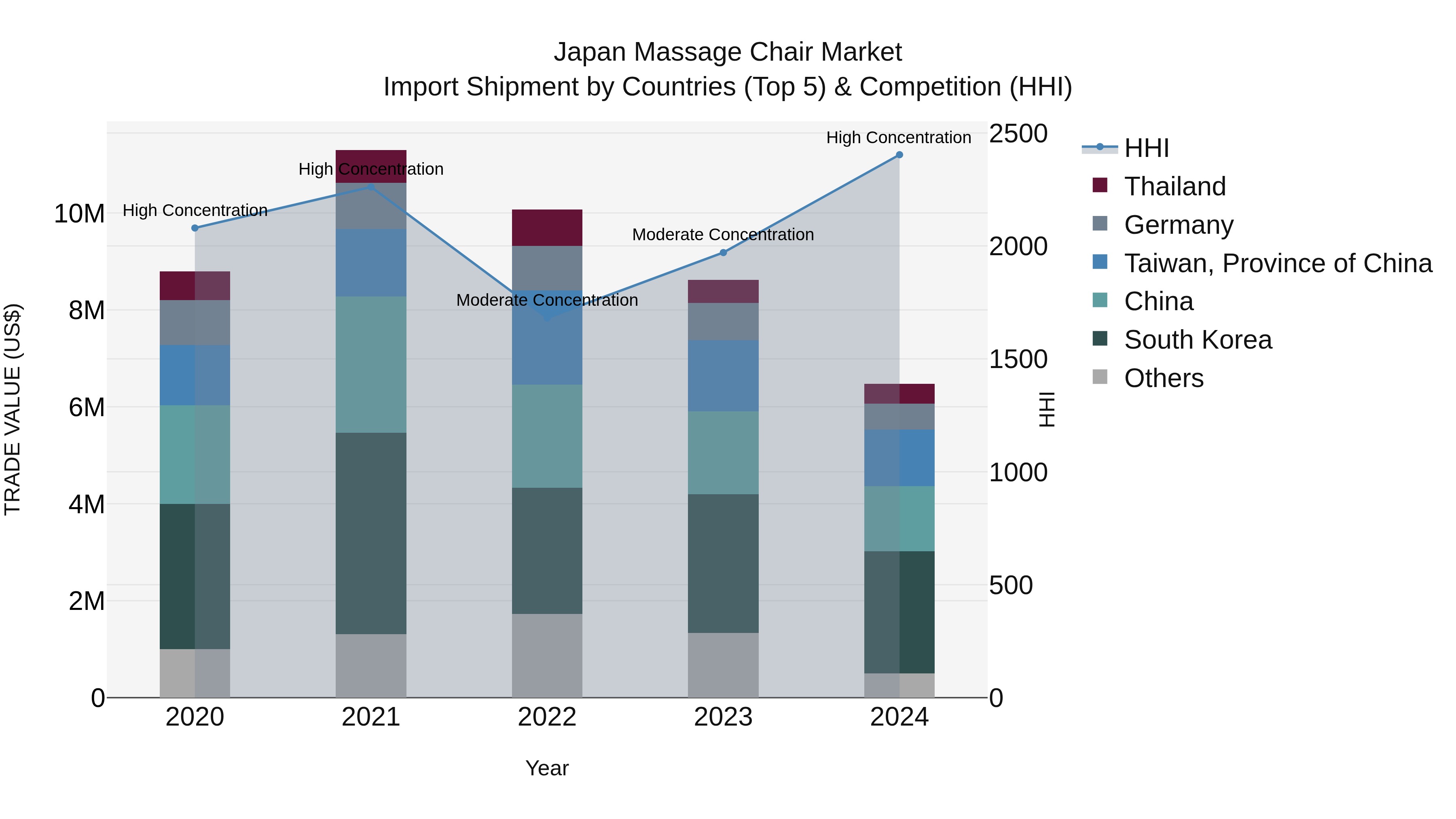
Japan Massage Chair Market Import Shipment by Countries (Top 5) & Competition (HHI)
Japan's import shipments of massage chairs in 2024 saw a significant increase in concentration, with top exporting countries being South Korea, China, Taiwan, Germany, and Thailand. The high Herfindahl-Hirschman Index (HHI) concentration indicates a more competitive market landscape. Despite a negative compound annual growth rate (CAGR) from 2020 to 2024 and a steep decline in growth rate from 2023 to 2024, the market seems to be consolidating with key players dominating the import market. This shift in concentration could lead to interesting developments and strategies among exporters in the coming years.
Five-Year Growth Trajectory of the Japan Massage Chair Market with Core Drivers
Below mentioned are the evaluation of years-wise growth rate along with key growth drivers:
| Year | Est. Annual Growth (%) | Growth Drivers |
| 2020 | 4.8 | The awareness of personal wellness is increasing and stress-relief products in urban households. |
| 2021 | 5.1 | The adoption of home-based relaxation devices is on the rise due to busy lifestyles and aging population. |
| 2022 | 7.9 | Robotic massage technology emerged as advanced technology and strengthened premium product demand. |
| 2023 | 9.6 | Commercial wellness centres were expanding and spas contributed to higher installation rates. |
| 2024 | 10.3 | Consumers have increasingly preferred for zero-gravity and full-body massage systems, results boosted market growth. |
Topics Covered in the Japan Massage Chair Market Report
The Japan Massage Chair Market report thoroughly covers the market by nature, by product type, by distribution channel, and by end-use. The report provides an unbiased and detailed analysis of ongoing market trends, opportunities/high growth areas, and market drivers, which would help stakeholders to devise and align their market strategies according to the current and future market dynamics.
Japan Massage Chair Market Highlights
| Report Name | Japan Massage Chair Market |
| Forecast period | 2025–2031 |
| CAGR | 11.2% |
| Growing Sector | Residential |
Japan Massage Chair Market Synopsis
Japan Massage Chair Market is experiencing robust development over the past few years. This development is occurring due to rising consumer preference for premium home wellness products, continuous technological innovations, and increasing disposable incomes. In Japan, the population of aged people continues to fuel demand for therapeutic massage chairs. These chairs are designed especially to alleviate muscle pain, improve circulation, and enhance relaxation.
Evaluation of Growth Drivers in the Japan Massage Chair Market
Below mentioned are some major growth factors and their impacts on the market dynamics:
| Drivers | Primary Segments Affected | Why it matters (evidence) |
| Aging Population Growth | By End-Use | High prevalence of elderly citizens drives strong demand for therapeutic and pain-relief massage chairs. |
| Technological Innovations | By Product Type | AI-enabled and 4D robotic massage systems enhance precision and comfort, boosting premium segment adoption. |
| Rise of Home Wellness Culture | By Nature | Increasing adoption of at-home relaxation devices strengthens market penetration for robotic chairs. |
| Expanding Retail Ecosystem | By Distribution Channel | Specialty stores offering demonstrations increase consumer engagement and product awareness. |
| Increasing Corporate Wellness Initiatives | By End-Use | Office relaxation zones and wellness rooms incorporate massage chairs to improve employee well-being. |
Japan Massage Chair Market Size is projected to register a strong CAGR of 11.2%during the forecast period 2025-2031. The demand of massage chair is bolstered in Japan due to numbers of growth factors such as growing interest in home wellness solutions, modernization of spas and fitness centres, and the introduction of enhanced robotic massage technologies. Commercial sectors including spas, corporate facilities, and wellness centres majorly contribute to installation rates. Further, the culture of Japan is inclined towards relaxation, therapeutic self-care, and advanced consumer electronics are favourable conditions for Japan Massage Chair Market Growth.
Evaluation of Restraints in the Japan Massage Chair Market
Below mentioned are some major restraints and their influence on the market dynamics:
| Restraints | Primary Segments Affected | What this means (evidence) |
| High Upfront Cost | By Nature | Advanced robotic models are generally expensive, as the result the adoption among low to mid-income households restricted. |
| Space Constraints | By Product Type | Compact homes restrict installation of large zero-gravity chairs. |
| Limited After-Sales Service in Remote Areas | By End-Use | Rural customers are dealing with major challenges in the maintenance and repair support. |
| Growing Preference for Portable Devices | By Product Type | Targeted massage tools are competing with larger chairs, impacting the market share. |
| Low Awareness of Advanced Features | By Distribution Channel | Due to lack of product knowledge among new buyers slows premium category growth. |
Japan Massage Chair Market Challenges
Japan Massage Chair Market faces challenges such as rising competition from alternative wellness devices, space constraints in urban households, and high cost of sophisticated robotic chairs. Limited awareness about long-term health benefits and restricted availability of service centres in semi-urban regions also hinder widespread adoption. Furthermore, the need for continuous technological enhancements increases manufacturing costs and impacts pricing strategies.
Japan Massage Chair Market Trends
There are major trends present in the Japan Massage Chair Market, including:
- AI-Enhanced Massage Systems: Manufacturers are integrating artificial intelligence for personalized massage patterns and automated body-scanning features for precision.
- Compact and Foldable Designs: Space-saving massage chairs are gaining popularity among urban households with limited room availability.
- Zero-Gravity Technology Expansion: The demand for zero-gravity chairs is increasing due to their ability to reduce spinal pressure and enhance relaxation.
- Smart Connectivity Features: Bluetooth speakers, mobile app controls, and voice assistants are being integrated for enhanced user convenience.
- Premium Aesthetic Designs: Luxury finishes, modern upholstery, and minimalist designs appeal to Japan’s style-conscious consumers.
Investment Opportunities in the Japan Massage Chair Industry
There are several potential prospects present in the Japan Massage Chair Industry, including:
- Growth in Luxury Home Wellness Products: Rising interest in high-end wellness equipment encourages investment in premium chair designs.
- Corporate and Commercial Wellness Programs: The adoption is mostly high in offices, gyms, and spas creates substantial installation opportunities.
- Technological Collaborations: Alliances are expanding for AI, sensor technology, and robotics integration strengthen product innovation.
- Expansion of Online Retail Platforms: E-commerce channels provide strong growth prospects through accessibility and competitive pricing.
- Customization and Modular Designs: There are several opportunities exist in developing Japan-specific ergonomic and compact massage chair models.
Top 5 Leading Players in the Japan Massage Chair Market
Here is the list of top companies dominate the market, including:
1. Panasonic Corporation
| Company Name | Panasonic Corporation |
| Established Year | 1918 |
| Headquarters | Osaka, Japan |
| Official Website | Click Here |
This company offers high-end robotic massage chairs with deep-tissue techniques, intelligent body scanning, and advanced relaxation programs tailored for consumers.
2. FUJIIRYOKI
| Company Name | FUJIIRYOKI |
| Established Year | 1954 |
| Headquarters | Osaka, Japan |
| Official Website | Click Here |
This company specializes in therapeutic massage chairs with medical-grade functions, combining precision engineering and health-focused massage technology.
3. INADA Co., Ltd.
| Company Name | INADA Co., Ltd. |
| Established Year | 1962 |
| Headquarters | Osaka, Japan |
| Official Website | Click Here |
This company is known for pioneering massage chair innovations, offering full-body robotic models emphasizing posture correction and deep muscle relief.
4. OG Wellness Technologies Co., Ltd.
| Company Name | OG Wellness Technologies Co., Ltd. |
| Established Year | 1949 |
| Headquarters | Fukuoka, Japan |
| Official Website | Click Here |
This company delivers premium rehabilitation-grade massage chairs designed to support therapeutic treatments and user comfort.
5. Otokogi Japan
| Company Name | Otokogi Japan |
| Established Year | 2008 |
| Headquarters | Tokyo, Japan |
| Official Website | Click Here |
This company provides luxury and customizable massage chairs integrating IoT features, ergonomic designs, and advanced Japanese engineering.
Government Regulations Introduced in the Japan Massage Chair Market
According to Japanese Government Data, there are many regulations and initiatives are enforced by regulatory bodies such as Ministry of Health, Labour and Welfare, massage chairs must obey with national safety and medical device standards, ensuring user protection and operational reliability. Regulations require strict adherence to ergonomic design guidelines, electrical safety norms, and technology certification. Government programs promoting healthy aging and home-based wellness indirectly support adoption of massage chairs across the country.
Future Insights of the Japan Massage Chair Market
Japan Massage Chair Market Share is expected to increase significantly in the upcoming years with emphasizing the focus on AI-assisted massage systems, compact ergonomic designs, and premium home wellness products. Also, the focus is emphasized aging population, growing adoption of relaxation devices, and innovations in automated therapy systems are likely to drive market expansion. Further, retail networks are developing and consumer awareness are enhancing which will boost product penetration across both commercial and residential sectors.
Market Segmentation Analysis
The report offers a comprehensive study of the following market segments and their leading categories:
Robotic to Dominate the Market – By Nature
According to Anjali, Senior Research Analyst, 6Wresearch, robotic massage chairs are expected to dominate the market due to their advanced automation, precision body scanning, and ability to deliver personalized therapies. Their widespread adoption in households and commercial relaxation facilities makes them the leading category.
Zero Gravity Massage Chairs to Dominate the Market– By Product Type
Zero Gravity Massage Chairs are anticipated to hold the largest Japan Massage Chair Market Share as they provide superior spine alignment, pressure relief, and enhanced comfort. Their therapeutic benefits and popularity among aging consumers play a key role in their market dominance.
Specialty Stores to Dominate the Market – By Distribution Channel
Specialty Stores are projected to dominate due to the availability of product demonstrations, personalized consultations, and premium model displays. This channel builds customer confidence, leading to higher sales conversions.
Residential to Dominate the Dominate the Market – By End-Use
Residential end-use is expected to dominate the market owing to Japan’s strong demand for at-home relaxation solutions. Consumers prioritize convenience, privacy, and long-term wellness benefits, driving the adoption of full-body massage chairs in households.
Key attractiveness of the Report
- 10 Years Market Numbers.
- Historical Data Starting from 2021 to 2024.
- Base Year: 2024.
- Forecast Data until 2031.
- Key Performance Indicators Impacting the Market.
- Major Upcoming Developments and Projects.
Key Highlights of the Report:
- Japan Massage Chair Market Outlook
- Market Size of Japan Massage Chair Market, 2024
- Forecast of Japan Massage Chair Market, 2031
- Historical Data and Forecast of Japan Massage Chair Revenues & Volume for the Period 2021- 2031
- Japan Massage Chair Market Trend Evolution
- Japan Massage Chair Market Drivers and Challenges
- Japan Massage Chair Price Trends
- Japan Massage Chair Porter's Five Forces
- Japan Massage Chair Industry Life Cycle
- Historical Data and Forecast of Japan Massage Chair Market Revenues & Volume By Nature for the Period 2021- 2031
- Historical Data and Forecast of Japan Massage Chair Market Revenues & Volume By Conventional for the Period 2021- 2031
- Historical Data and Forecast of Japan Massage Chair Market Revenues & Volume By Robotic for the Period 2021- 2031
- Historical Data and Forecast of Japan Massage Chair Market Revenues & Volume By Product Type for the Period 2021- 2031
- Historical Data and Forecast of Japan Massage Chair Market Revenues & Volume By Inversion Massage Chairs for the Period 2021- 2031
- Historical Data and Forecast of Japan Massage Chair Market Revenues & Volume By Zero Gravity Massage Chairs for the Period 2021- 2031
- Historical Data and Forecast of Japan Massage Chair Market Revenues & Volume By Targeted Massage Products for the Period 2021- 2031
- Historical Data and Forecast of Japan Massage Chair Market Revenues & Volume By Distribution Channel for the Period 2021- 2031
- Historical Data and Forecast of Japan Massage Chair Market Revenues & Volume By Specialty Stores for the Period 2021- 2031
- Historical Data and Forecast of Japan Massage Chair Market Revenues & Volume By Online for the Period 2021- 2031
- Historical Data and Forecast of Japan Massage Chair Market Revenues & Volume By Supermarkets and Hypermarkets for the Period 2021- 2031
- Historical Data and Forecast of Japan Massage Chair Market Revenues & Volume By End-Use for the Period 2021- 2031
- Historical Data and Forecast of Japan Massage Chair Market Revenues & Volume By Commercial for the Period 2021- 2031
- Historical Data and Forecast of Japan Massage Chair Market Revenues & Volume By Residential for the Period 2021- 2031
- Japan Massage Chair Import Export Trade Statistics
- Market Opportunity Assessment By Nature
- Market Opportunity Assessment By Product Type
- Market Opportunity Assessment By Distribution Channel
- Market Opportunity Assessment By End-Use
- Japan Massage Chair Top Companies Market Share
- Japan Massage Chair Competitive Benchmarking By Technical and Operational Parameters
- Japan Massage Chair Company Profiles
- Japan Massage Chair Key Strategic Recommendations
Market Covered
The report provides a detailed analysis of the following market segments:
By Nature
- Conventional
- Robotic
By Product Type
- Inversion Massage Chairs
- Zero Gravity Massage Chairs
- Targeted Massage Products
By Distribution Channel
- Specialty Stores
- Online
- Supermarkets and Hypermarkets
By End-Use
- Commercial
- Residential






































