Japan Motorcycle Suspension System Market Size Growth Rate
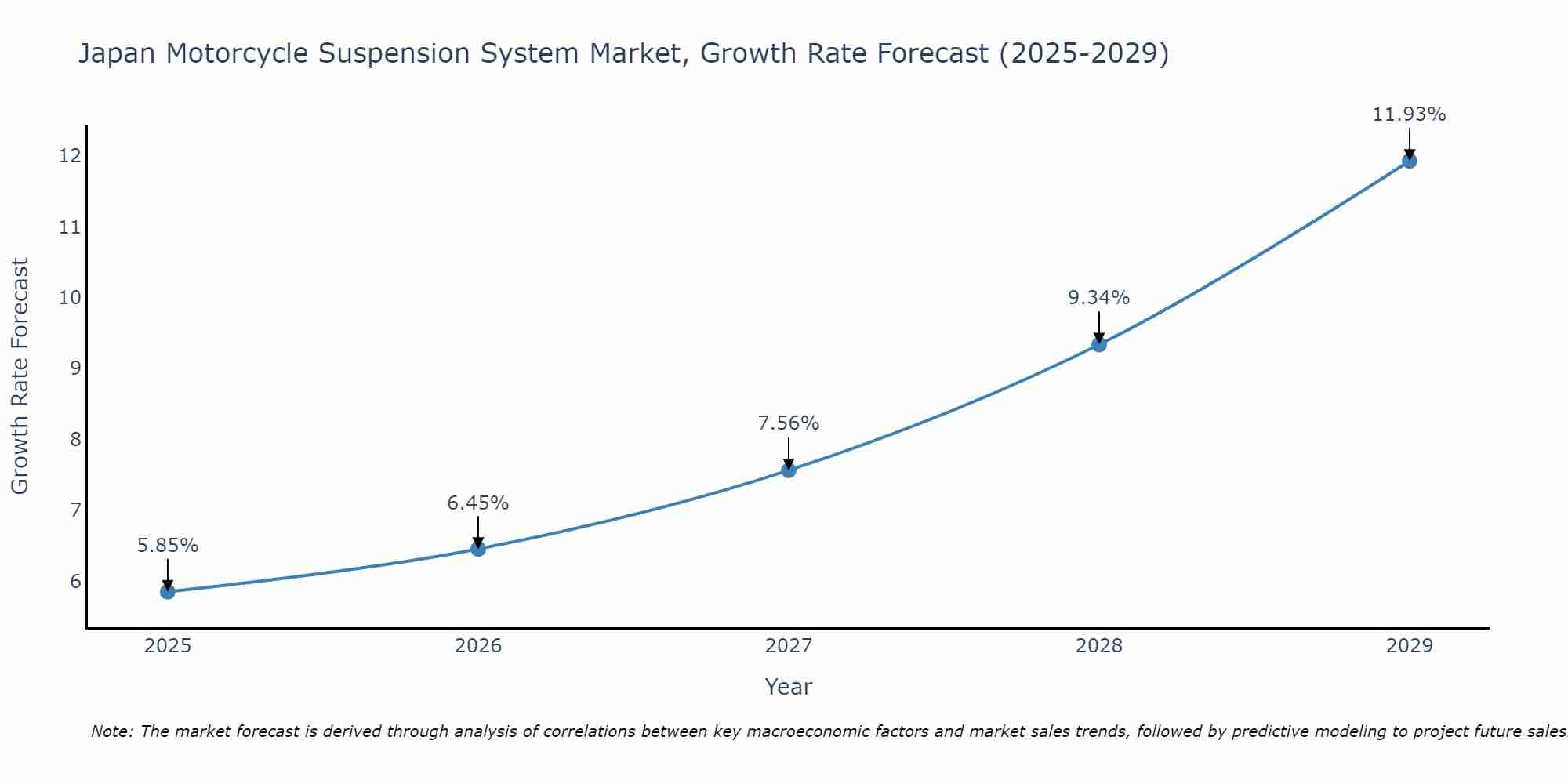
The Japan Motorcycle Suspension System Market is likely to experience consistent growth rate gains over the period 2025 to 2029. The growth rate starts at 5.85% in 2025 and reaches 11.93% by 2029.
Japan Motorcycle Suspension System Market Overview
The Japan Motorcycle Suspension System Market is witnessing steady growth due to the increasing demand for high-performance motorcycles in the country. Factors such as technological advancements in suspension systems, rising disposable income, and a growing interest in sports and adventure biking are driving market growth. Key players in the market are focusing on developing innovative suspension systems to enhance ride quality, stability, and overall performance of motorcycles. Additionally, the trend towards customization and aftermarket upgrades is further boosting the market. The market is highly competitive with players such as Showa Corporation, KYB Corporation, and Ãhlins Racing AB dominating the landscape. With the continuous evolution of motorcycle technology and increasing consumer preferences for premium riding experiences, the Japan Motorcycle Suspension System Market is expected to continue its growth trajectory in the coming years.
Japan Motorcycle Suspension System Market Trends
In the Japan Motorcycle Suspension System Market, a prominent trend is the increasing demand for advanced suspension technologies that offer improved comfort, stability, and performance for riders. Manufacturers are focusing on developing innovative suspension systems with features like adjustable damping, electronic control systems, and lightweight materials to enhance the overall riding experience. Additionally, there is a growing preference for suspension systems that cater to specific riding styles, such as sport, touring, or off-road. Consumers are also showing interest in environmentally friendly suspension solutions that reduce emissions and improve fuel efficiency. Overall, the market is witnessing a shift towards sophisticated suspension systems that prioritize rider comfort and safety while also meeting regulatory standards and environmental concerns.
Japan Motorcycle Suspension System Market Challenges
In the Japan Motorcycle Suspension System Market, one of the key challenges faced is the increasing competition from international brands. Japanese manufacturers have traditionally dominated the market with their high-quality suspension systems, but they are now facing stiff competition from foreign companies offering innovative technologies and competitive pricing. Another challenge is the rapidly changing consumer preferences and demands for more advanced and customizable suspension systems, putting pressure on manufacturers to continuously innovate and upgrade their products. Additionally, the industry is also grappling with fluctuating raw material prices and supply chain disruptions, impacting production costs and overall profitability. To stay competitive, Japanese motorcycle suspension system manufacturers need to focus on research and development, cost optimization, and customer-centric strategies to overcome these challenges and maintain their market position.
Japan Motorcycle Suspension System Market Investment Opportunities
The Japan Motorcycle Suspension System Market presents lucrative investment opportunities due to the increasing demand for high-performance motorcycles in the country. With a growing emphasis on comfort, stability, and safety among motorcycle enthusiasts, there is a rising need for advanced suspension systems that offer superior handling and ride quality. Investing in innovative suspension technologies, such as electronically controlled systems or adaptive damping systems, can cater to the evolving preferences of Japanese riders. Additionally, collaborations with motorcycle manufacturers to develop customized suspension solutions or aftermarket upgrades can be a strategic approach to tap into this market. Overall, the Japan Motorcycle Suspension System Market offers potential for growth and profitability for investors looking to capitalize on the demand for premium motorcycle components.
Japan Motorcycle Suspension System Market Government Policy
In Japan, the government has implemented stringent safety regulations and standards for motorcycle suspension systems to ensure road safety and quality control. These regulations encompass requirements for shock absorbers, springs, and other components to meet specific performance criteria. Additionally, the government encourages research and development in the motorcycle suspension system market to promote innovation and technological advancements. Environmental protection is also a key focus, with policies in place to promote the use of eco-friendly materials and manufacturing processes. Overall, the government`s policies in Japan aim to enhance the overall quality, safety, and sustainability of motorcycle suspension systems while fostering growth and competitiveness in the market.
Japan Motorcycle Suspension System Market Future Outlook
The future outlook for the Japan Motorcycle Suspension System Market is positive, with steady growth expected in the coming years. Factors driving this growth include technological advancements in suspension system design, increasing demand for high-performance motorcycles, and a growing trend towards customization and aftermarket upgrades among motorcycle enthusiasts. Additionally, the rising popularity of motorcycling as a recreational activity and the increasing number of motorcycle events and competitions in Japan are expected to contribute to the market`s expansion. Manufacturers are likely to focus on developing innovative suspension systems that offer improved performance, comfort, and handling characteristics to cater to the evolving needs of consumers. Overall, the Japan Motorcycle Suspension System Market is anticipated to experience sustained growth and offer opportunities for market players to capitalize on the changing dynamics of the industry.
Key Highlights of the Report:
- Japan Motorcycle Suspension System Market Outlook
- Market Size of Japan Motorcycle Suspension System Market, 2024
- Forecast of Japan Motorcycle Suspension System Market, 2031
- Historical Data and Forecast of Japan Motorcycle Suspension System Revenues & Volume for the Period 2018 - 2031
- Japan Motorcycle Suspension System Market Trend Evolution
- Japan Motorcycle Suspension System Market Drivers and Challenges
- Japan Motorcycle Suspension System Price Trends
- Japan Motorcycle Suspension System Porter's Five Forces
- Japan Motorcycle Suspension System Industry Life Cycle
- Historical Data and Forecast of Japan Motorcycle Suspension System Market Revenues & Volume By Product Type for the Period 2018 - 2031
- Historical Data and Forecast of Japan Motorcycle Suspension System Market Revenues & Volume By Endless Self-Contained Glass for the Period 2018 - 2031
- Historical Data and Forecast of Japan Motorcycle Suspension System Market Revenues & Volume By Endless Remote Control Glass for the Period 2018 - 2031
- Historical Data and Forecast of Japan Motorcycle Suspension System Market Revenues & Volume By Technology for the Period 2018 - 2031
- Historical Data and Forecast of Japan Motorcycle Suspension System Market Revenues & Volume By Retail Outlets for the Period 2018 - 2031
- Historical Data and Forecast of Japan Motorcycle Suspension System Market Revenues & Volume By Commercial Complexes for the Period 2018 - 2031
- Historical Data and Forecast of Japan Motorcycle Suspension System Market Revenues & Volume By Commercial Kitchens for the Period 2018 - 2031
- Historical Data and Forecast of Japan Motorcycle Suspension System Market Revenues & Volume By Airport and Stations for the Period 2018 - 2031
- Historical Data and Forecast of Japan Motorcycle Suspension System Market Revenues & Volume By Institutional Facilities and Establishments for the Period 2018 - 2031
- Japan Motorcycle Suspension System Import Export Trade Statistics
- Market Opportunity Assessment By Product Type
- Market Opportunity Assessment By Technology
- Japan Motorcycle Suspension System Top Companies Market Share
- Japan Motorcycle Suspension System Competitive Benchmarking By Technical and Operational Parameters
- Japan Motorcycle Suspension System Company Profiles
- Japan Motorcycle Suspension System Key Strategic Recommendations






































