Japan Ornamental Fish Market Size, Share & Growth Rate
The Japan Ornamental Fish Market was estimated at USD 250 Million in 2025 and is projected to reach USD 268 Million by 2032, growing at a CAGR of 1.0% from 2026 to 2032. This trajectory is fueled by a rising passion for aquarium keeping, particularly among younger generations eager to personalize their spaces with vibrant aquatic life. As technology in aquaculture evolves, the availability of exotic and ethically sourced fish continues to capture consumer interest, reinforcing the markets growth.
Japan Ornamental Fish Market Year-wise Growth Rate and Key Drivers
This graph highlights how the Japan Ornamental Fish Market has steadily grown over the years, supported by major growth factors.
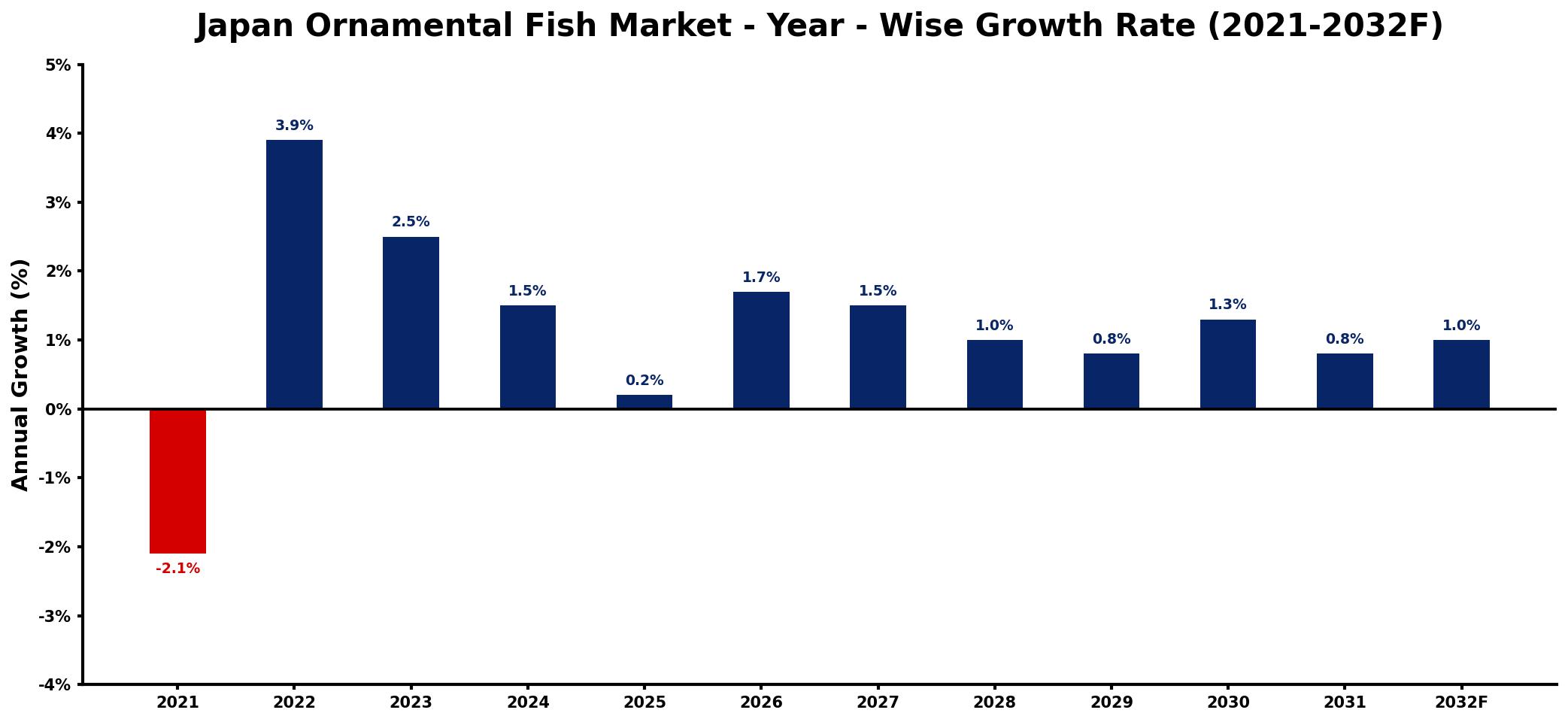
The table below presents the year‑wise growth rates along with the key drivers influencing the market
| Year | Growth Rate | Major Drivers |
| 2021 | -2.1% | Consumer interest sees downturn |
| 2022 | 3.9% | Rising home aquarium popularity |
| 2023 | 2.5% | Increased disposable income growth |
| 2024 | 1.5% | Expansion of pet care services |
| 2025 | 0.2% | Boost in online retail sales |
| 2026 | 1.7% | Growing eco-friendly product demand |
| 2027 | 1.5% | Surge in hobbyist communities |
| 2028 | 1.0% | Enhancement in supply chain efficiency |
| 2029 | 0.8% | Development of innovative technologies |
| 2030 | 1.3% | Growing awareness of biodiversity |
| 2031 | 0.8% | Increase in lifestyle spending habits |
| 2032 | 1.0% | Strengthening of local breeding programs |
Note: Market size estimations and growth projections presented in this report are based on 6Wresearch's proprietary forecasting methodology, utilizing the latest available industry data, government publications, and primary research inputs.
Japan Ornamental Fish Market Synopsis
Currently, the Japan ornamental fish market is bustling with enthusiasts drawn to both freshwater and marine species. The market thrives on a rich culture that deeply appreciates aesthetics and the natural world, fueling demand for specialized retailers and diverse online platforms.
With an increasing focus on sustainable practices and ethical sourcing, consumers are showing a marked preference for fish bred in captivity. This shift is paving the way for innovative breeding techniques and the establishment of a conscientious community of aquarium keepers.
Japan Ornamental Fish Market Key Takeaways
- Growing demand for unique and exotic fish species, particularly among younger consumers.
- Increasing emphasis on sustainability and ethical practices within the ornamental fish community.
- Technological advancements in aquaculture leading to healthier and more diverse fish offerings.
- Shift towards online sales platforms, reflecting changing consumer purchasing habits.
- Government initiatives promoting responsible breeding practices and biodiversity conservation.
Evaluation of Restraints in Japan Ornamental Fish Market
Despite its growth potential, the Japan Ornamental Fish Market grapples with certain restraints. A notable decline in traditional pet ownership among younger generations has led to reduced interest in ornamental fish as pets. Furthermore, strict regulations surrounding the importation of various fish species can hinder businesses' ability to diversify their offerings. Coupled with competition from alternative leisure activities, these factors necessitate a reevaluation of strategies to engage potential hobbyists.
Japan Ornamental Fish Market Trends
Current trends in the Japan ornamental fish market reveal a significant shift towards unique and exotic species that offer distinct personalization for aquarium enthusiasts. Moreover, theres an emerging inclination towards sustainable practices as consumers increasingly prioritize fish bred in captivity. Advances in aquaculture technology not only provide healthier fish options but also enhance the overall consumer experience. Notably, a growing digital presence enables easy access to specialized retailers, making it simpler for hobbyists to explore their options.
Japan Ornamental Fish Market Opportunities
The landscape of the Japan Ornamental Fish Market is rife with investment opportunities. Establishing breeding facilities focused on unique and high-quality species presents a lucrative avenue for interested stakeholders. Moreover, investing in aquaculture technology and water quality maintenance can cater to a market eager for healthier fish. Collaborations with local breeders and retailers, along with a robust online sales strategy, can further enhance market reach and capitalize on the growing interest in aquascaping.
Government Initiatives in the Japan Ornamental Fish Market
The Japanese government actively regulates the ornamental fish market to support sustainability and conserve aquatic resources. It enforces strict import regulations to curb the entry of invasive species while promoting responsible breeding practices to maintain genetic diversity. Additionally, the government is committed to environmentally friendly practices, providing grants and subsidies that encourage breeders and retailers to adopt more sustainable methods, thus balancing economic benefits with ecological preservation.
Future Insights of the Japan Ornamental Fish Market
Looking ahead to 2026-2032, the Japan Ornamental Fish Market is expected to continue on its growth trajectory. The trend towards unique and rare species will likely intensify, especially with consumer preferences shifting towards sustainable and ethically sourced options. Ongoing advancements in breeding techniques and aquaculture practices will expand the diversity of healthy ornamental fish available, ensuring that the market adapts to evolving consumer demands. As eco-friendly and low-maintenance aquarium setups gain popularity, the industry is poised to embrace responsible practices that resonate with conscientious consumers.
Japan Ornamental Fish Market Latest Developments (2025 - 2026)
Recent developments in the Japan Ornamental Fish Market highlight a growing digital transformation, with online platforms increasingly becoming the preferred channels for purchasing ornamental fish. Innovations in breeding technology are also emerging, enabling local breeders to offer a broader range of species. Environmental sustainability initiatives are gaining traction, with more retailers adopting eco-friendly practices and promoting responsible fishkeeping, reflecting consumer preferences for ethical sourcing.
Japan Ornamental Fish Market - Key Attractiveness of the Report
- 10 Years of Market Numbers
- Historical Data Starting from 2022 to 2025
- Base Year: 2025
- Forecast Data until 2032
- Key Performance Indicators Impacting the Market
- Major Upcoming Developments and Projects
Key Highlights of the Report:
- Japan Ornamental Fish Market Outlook
- Market Size of Japan Ornamental Fish Market, 2025
- Forecast of Japan Ornamental Fish Market, 2032
- Historical Data and Forecast of Japan Ornamental Fish Revenues & Volume for the Period 2022-2032F
- Japan Ornamental Fish Market Trend Evolution
- Japan Ornamental Fish Market Drivers and Challenges
- Japan Ornamental Fish Price Trends
- Japan Ornamental Fish Porter's Five Forces
- Japan Ornamental Fish Industry Life Cycle
- Historical Data and Forecast of Japan Ornamental Fish Market Revenues & Volume By Product for the Period 2022-2032F
- Historical Data and Forecast of Japan Ornamental Fish Market Revenues & Volume By Tropical Freshwater for the Period 2022-2032F
- Historical Data and Forecast of Japan Ornamental Fish Market Revenues & Volume By Temperate for the Period 2022-2032F
- Historical Data and Forecast of Japan Ornamental Fish Market Revenues & Volume By Marine for the Period 2022-2032F
- Historical Data and Forecast of Japan Ornamental Fish Market Revenues & Volume By Application for the Period 2022-2032F
- Historical Data and Forecast of Japan Ornamental Fish Market Revenues & Volume By Commercial for the Period 2022-2032F
- Historical Data and Forecast of Japan Ornamental Fish Market Revenues & Volume By Household for the Period 2022-2032F
- Japan Ornamental Fish Import Export Trade Statistics
- Market Opportunity Assessment By Product
- Market Opportunity Assessment By Application
- Japan Ornamental Fish Top Companies Market Share
- Japan Ornamental Fish Competitive Benchmarking By Technical and Operational Parameters
- Japan Ornamental Fish Company Profiles
- Japan Ornamental Fish Key Strategic Recommendations






































