Japan Plant-based Butter Market Import Shipment by Countries (Top 5) & Competition (HHI)
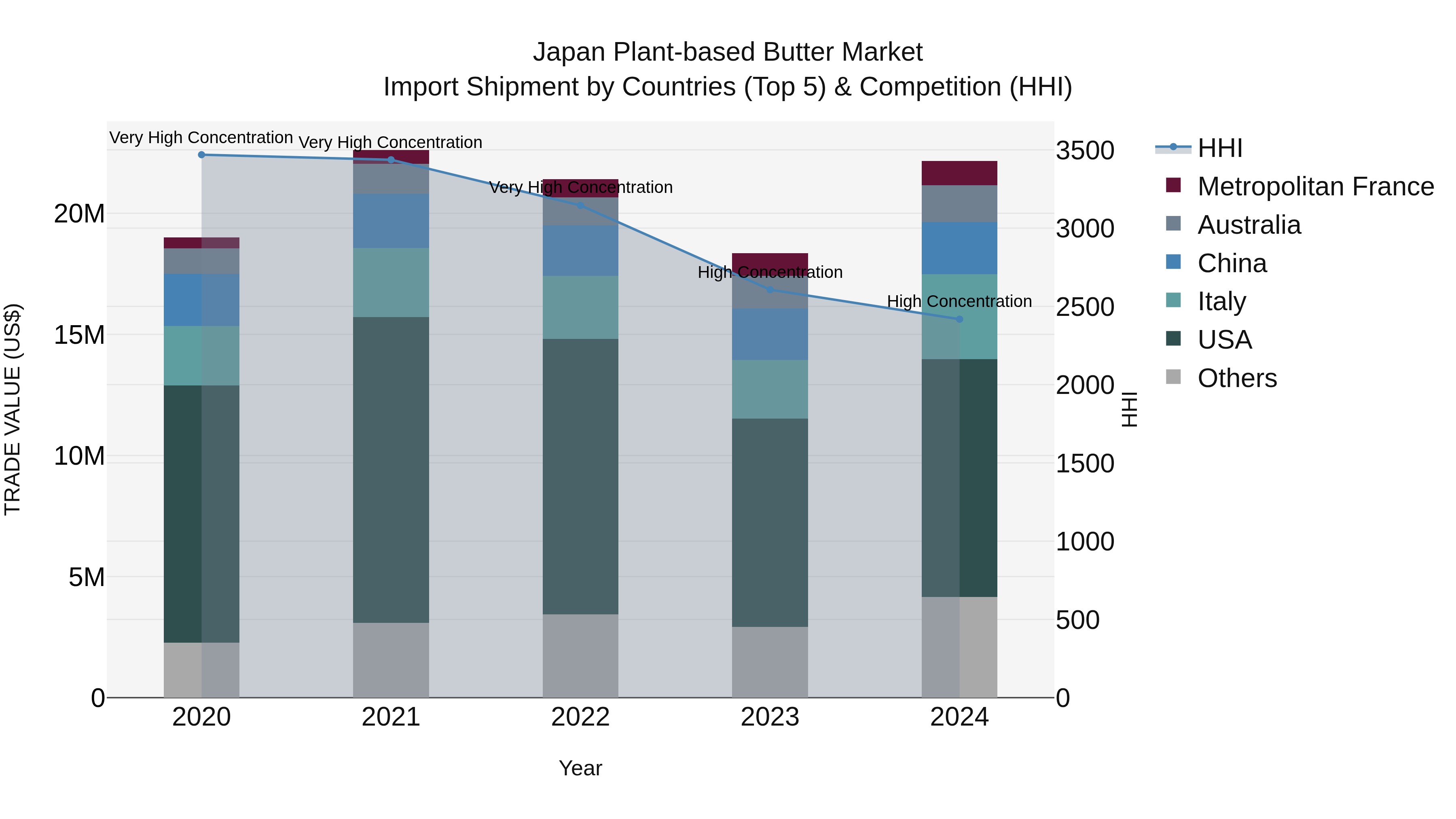
Japan's plant-based butter import market continues to thrive in 2024, with top exporting countries such as the USA, Italy, China, Australia, and Spain dominating the shipments. The high Herfindahl-Hirschman Index (HHI) indicates a concentrated market, while the impressive Compound Annual Growth Rate (CAGR) of 3.92% from 2020 to 2024 showcases sustained growth. Notably, the growth rate spiked to 20.79% from 2023 to 2024, indicating a significant uptick in demand for plant-based butter in Japan. This trend reflects the increasing popularity and acceptance of plant-based alternatives in the Japanese market.
Key Highlights of the Report:
- Japan Plant-Based Butter Market Outlook
- Market Size of Japan Plant-Based Butter Market, 2024
- Forecast of Japan Plant-Based Butter Market, 2031
- Historical Data and Forecast of Japan Plant-Based Butter Revenues & Volume for the Period 2021- 2031
- Japan Plant-Based Butter Market Trend Evolution
- Japan Plant-Based Butter Market Drivers and Challenges
- Japan Plant-Based Butter Price Trends
- Japan Plant-Based Butter Porter's Five Forces
- Japan Plant-Based Butter Industry Life Cycle
- Historical Data and Forecast of Japan Plant-Based Butter Market Revenues & Volume By Nature for the Period 2021- 2031
- Historical Data and Forecast of Japan Plant-Based Butter Market Revenues & Volume By Organic for the Period 2021- 2031
- Historical Data and Forecast of Japan Plant-Based Butter Market Revenues & Volume By Conventional for the Period 2021- 2031
- Historical Data and Forecast of Japan Plant-Based Butter Market Revenues & Volume By Source Of The Product for the Period 2021- 2031
- Historical Data and Forecast of Japan Plant-Based Butter Market Revenues & Volume By Nuts for the Period 2021- 2031
- Historical Data and Forecast of Japan Plant-Based Butter Market Revenues & Volume By Avocados for the Period 2021- 2031
- Historical Data and Forecast of Japan Plant-Based Butter Market Revenues & Volume By Coconut for the Period 2021- 2031
- Historical Data and Forecast of Japan Plant-Based Butter Market Revenues & Volume By Olive Oil for the Period 2021- 2031
- Historical Data and Forecast of Japan Plant-Based Butter Market Revenues & Volume By Canola for the Period 2021- 2031
- Historical Data and Forecast of Japan Plant-Based Butter Market Revenues & Volume By Palm Fruit for the Period 2021- 2031
- Historical Data and Forecast of Japan Plant-Based Butter Market Revenues & Volume By Others for the Period 2021- 2031
- Historical Data and Forecast of Japan Plant-Based Butter Market Revenues & Volume By Distribution Channels for the Period 2021- 2031
- Historical Data and Forecast of Japan Plant-Based Butter Market Revenues & Volume By Hypermarkets/supermarkets for the Period 2021- 2031
- Historical Data and Forecast of Japan Plant-Based Butter Market Revenues & Volume By Convenience Store for the Period 2021- 2031
- Historical Data and Forecast of Japan Plant-Based Butter Market Revenues & Volume By Specialty Stores for the Period 2021- 2031
- Historical Data and Forecast of Japan Plant-Based Butter Market Revenues & Volume By Online for the Period 2021- 2031
- Historical Data and Forecast of Japan Plant-Based Butter Market Revenues & Volume By Others for the Period 2021- 2031
- Japan Plant-Based Butter Import Export Trade Statistics
- Market Opportunity Assessment By Nature
- Market Opportunity Assessment By Source Of The Product
- Market Opportunity Assessment By Distribution Channels
- Japan Plant-Based Butter Top Companies Market Share
- Japan Plant-Based Butter Competitive Benchmarking By Technical and Operational Parameters
- Japan Plant-Based Butter Company Profiles
- Japan Plant-Based Butter Key Strategic Recommendations






































