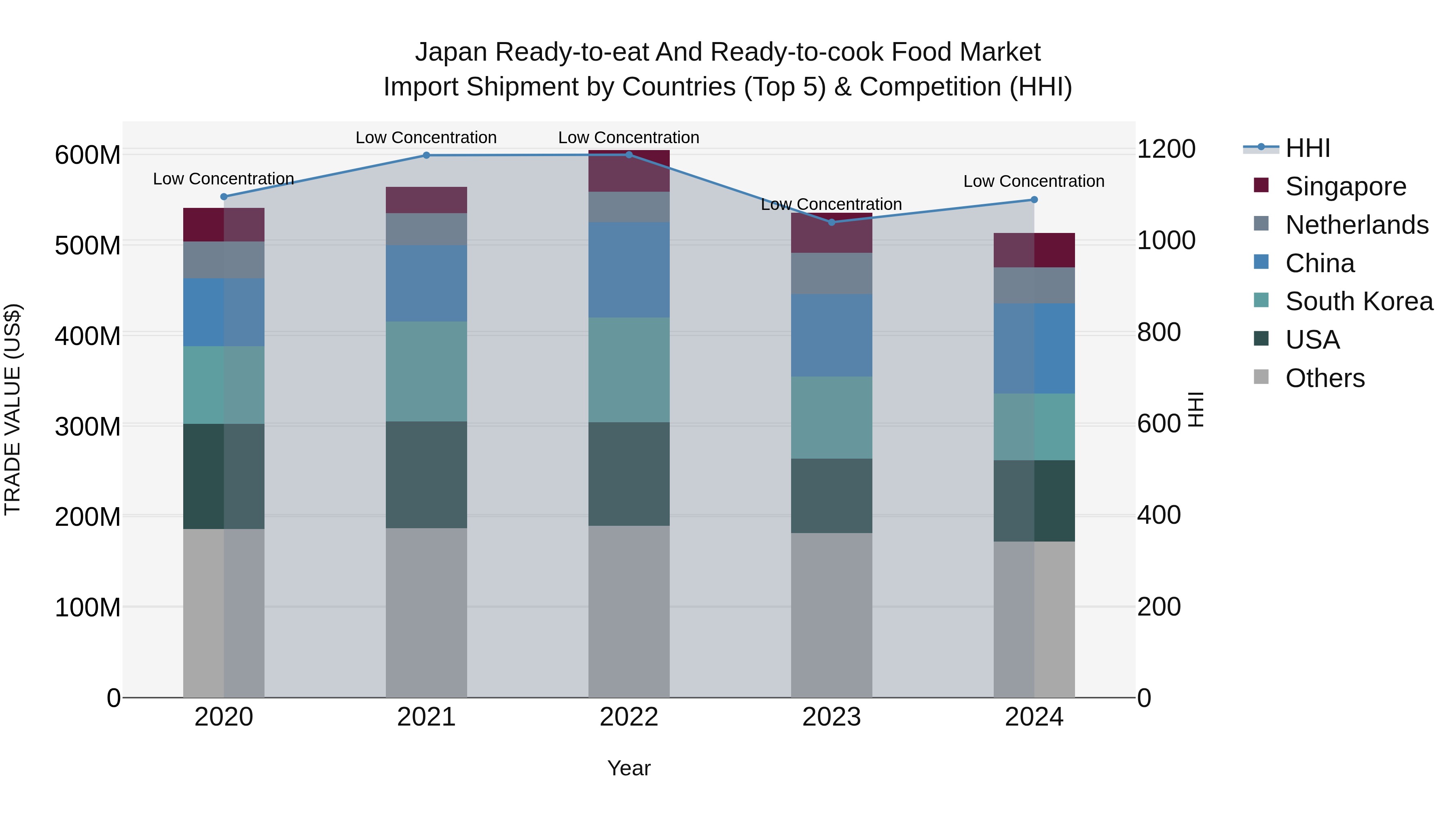
Japan Ready-to-eat And Ready-to-cook Food Market Import Shipment by Countries (Top 5) & Competition (HHI)
Despite a decline in growth rate, Japan's import market for ready-to-eat and ready-to-cook foods maintained a diverse supplier base in 2024, with top exporters including China, USA, South Korea, Netherlands, and Singapore. The low Herfindahl-Hirschman Index (HHI) indicates a competitive landscape. The negative compound annual growth rate (CAGR) from 2020 to 2024 suggests a challenging environment, further compounded by a decrease in growth rate from 2023 to 2024. To succeed in this market, stakeholders may need to focus on innovation, quality, and competitive pricing strategies.
Key Highlights of the Report:
- Japan Ready-to-Eat and Ready-to-Cook Food Market Outlook
- Market Size of Japan Ready-to-Eat and Ready-to-Cook Food Market,2024
- Forecast of Japan Ready-to-Eat and Ready-to-Cook Food Market, 2031
- Historical Data and Forecast of Japan Ready-to-Eat and Ready-to-Cook Food Revenues & Volume for the Period 2021-2031
- Japan Ready-to-Eat and Ready-to-Cook Food Market Trend Evolution
- Japan Ready-to-Eat and Ready-to-Cook Food Market Drivers and Challenges
- Japan Ready-to-Eat and Ready-to-Cook Food Price Trends
- Japan Ready-to-Eat and Ready-to-Cook Food Porter's Five Forces
- Japan Ready-to-Eat and Ready-to-Cook Food Industry Life Cycle
- Historical Data and Forecast of Japan Ready-to-Eat and Ready-to-Cook Food Market Revenues & Volume By Type for the Period 2021-2031
- Historical Data and Forecast of Japan Ready-to-Eat and Ready-to-Cook Food Market Revenues & Volume By Frozen Meals for the Period 2021-2031
- Historical Data and Forecast of Japan Ready-to-Eat and Ready-to-Cook Food Market Revenues & Volume By Canned Meals for the Period 2021-2031
- Historical Data and Forecast of Japan Ready-to-Eat and Ready-to-Cook Food Market Revenues & Volume By Ready-to-Cook Kits for the Period 2021-2031
- Historical Data and Forecast of Japan Ready-to-Eat and Ready-to-Cook Food Market Revenues & Volume By Instant Meals for the Period 2021-2031
- Historical Data and Forecast of Japan Ready-to-Eat and Ready-to-Cook Food Market Revenues & Volume By Dehydrated Meals for the Period 2021 - 2029
- Historical Data and Forecast of Japan Ready-to-Eat and Ready-to-Cook Food Market Revenues & Volume By Cuisine for the Period 2021-2031
- Historical Data and Forecast of Japan Ready-to-Eat and Ready-to-Cook Food Market Revenues & Volume By Asian for the Period 2021-2031
- Historical Data and Forecast of Japan Ready-to-Eat and Ready-to-Cook Food Market Revenues & Volume By Western for the Period 2021-2031
- Historical Data and Forecast of Japan Ready-to-Eat and Ready-to-Cook Food Market Revenues & Volume By Indian for the Period 2021-2031
- Historical Data and Forecast of Japan Ready-to-Eat and Ready-to-Cook Food Market Revenues & Volume By Italian for the Period 2021-2031
- Historical Data and Forecast of Japan Ready-to-Eat and Ready-to-Cook Food Market Revenues & Volume By Middle Eastern for the Period 2021 - 2029
- Historical Data and Forecast of Japan Ready-to-Eat and Ready-to-Cook Food Market Revenues & Volume By Packaging Type for the Period 2021-2031
- Historical Data and Forecast of Japan Ready-to-Eat and Ready-to-Cook Food Market Revenues & Volume By Trays for the Period 2021-2031
- Historical Data and Forecast of Japan Ready-to-Eat and Ready-to-Cook Food Market Revenues & Volume By Cans for the Period 2021-2031
- Historical Data and Forecast of Japan Ready-to-Eat and Ready-to-Cook Food Market Revenues & Volume By Pouches for the Period 2021-2031
- Historical Data and Forecast of Japan Ready-to-Eat and Ready-to-Cook Food Market Revenues & Volume By Cartons for the Period 2021-2031
- Historical Data and Forecast of Japan Ready-to-Eat and Ready-to-Cook Food Market Revenues & Volume By Bags for the Period 2021 - 2029
- Historical Data and Forecast of Japan Ready-to-Eat and Ready-to-Cook Food Market Revenues & Volume By Distribution Channel for the Period 2021-2031
- Historical Data and Forecast of Japan Ready-to-Eat and Ready-to-Cook Food Market Revenues & Volume By Supermarkets/Hypermarkets for the Period 2021-2031
- Historical Data and Forecast of Japan Ready-to-Eat and Ready-to-Cook Food Market Revenues & Volume By Online Retail for the Period 2021-2031
- Historical Data and Forecast of Japan Ready-to-Eat and Ready-to-Cook Food Market Revenues & Volume By Convenience Stores for the Period 2021-2031
- Historical Data and Forecast of Japan Ready-to-Eat and Ready-to-Cook Food Market Revenues & Volume By Specialty Stores for the Period 2021-2031
- Historical Data and Forecast of Japan Ready-to-Eat and Ready-to-Cook Food Market Revenues & Volume By Restaurants for the Period 2021 - 2029
- Historical Data and Forecast of Japan Ready-to-Eat and Ready-to-Cook Food Market Revenues & Volume By End User for the Period 2021-2031
- Historical Data and Forecast of Japan Ready-to-Eat and Ready-to-Cook Food Market Revenues & Volume By Working Professionals for the Period 2021-2031
- Historical Data and Forecast of Japan Ready-to-Eat and Ready-to-Cook Food Market Revenues & Volume By Students for the Period 2021-2031
- Historical Data and Forecast of Japan Ready-to-Eat and Ready-to-Cook Food Market Revenues & Volume By Families for the Period 2021-2031
- Historical Data and Forecast of Japan Ready-to-Eat and Ready-to-Cook Food Market Revenues & Volume By Travelers for the Period 2021 - 2029
- Historical Data and Forecast of Japan Ready-to-Eat and Ready-to-Cook Food Market Revenues & Volume By Campers for the Period 2021 - 2029
- Japan Ready-to-Eat and Ready-to-Cook Food Import Export Trade Statistics
- Market Opportunity Assessment By Type
- Market Opportunity Assessment By Cuisine
- Market Opportunity Assessment By Packaging Type
- Market Opportunity Assessment By Distribution Channel
- Market Opportunity Assessment By End User
- Japan Ready-to-Eat and Ready-to-Cook Food Top Companies Market Share
- Japan Ready-to-Eat and Ready-to-Cook Food Competitive Benchmarking By Technical and Operational Parameters
- Japan Ready-to-Eat and Ready-to-Cook Food Company Profiles
- Japan Ready-to-Eat and Ready-to-Cook Food Key Strategic Recommendations






































