Japan Retail Bubble Tea Kits Market Size & Growth Rate
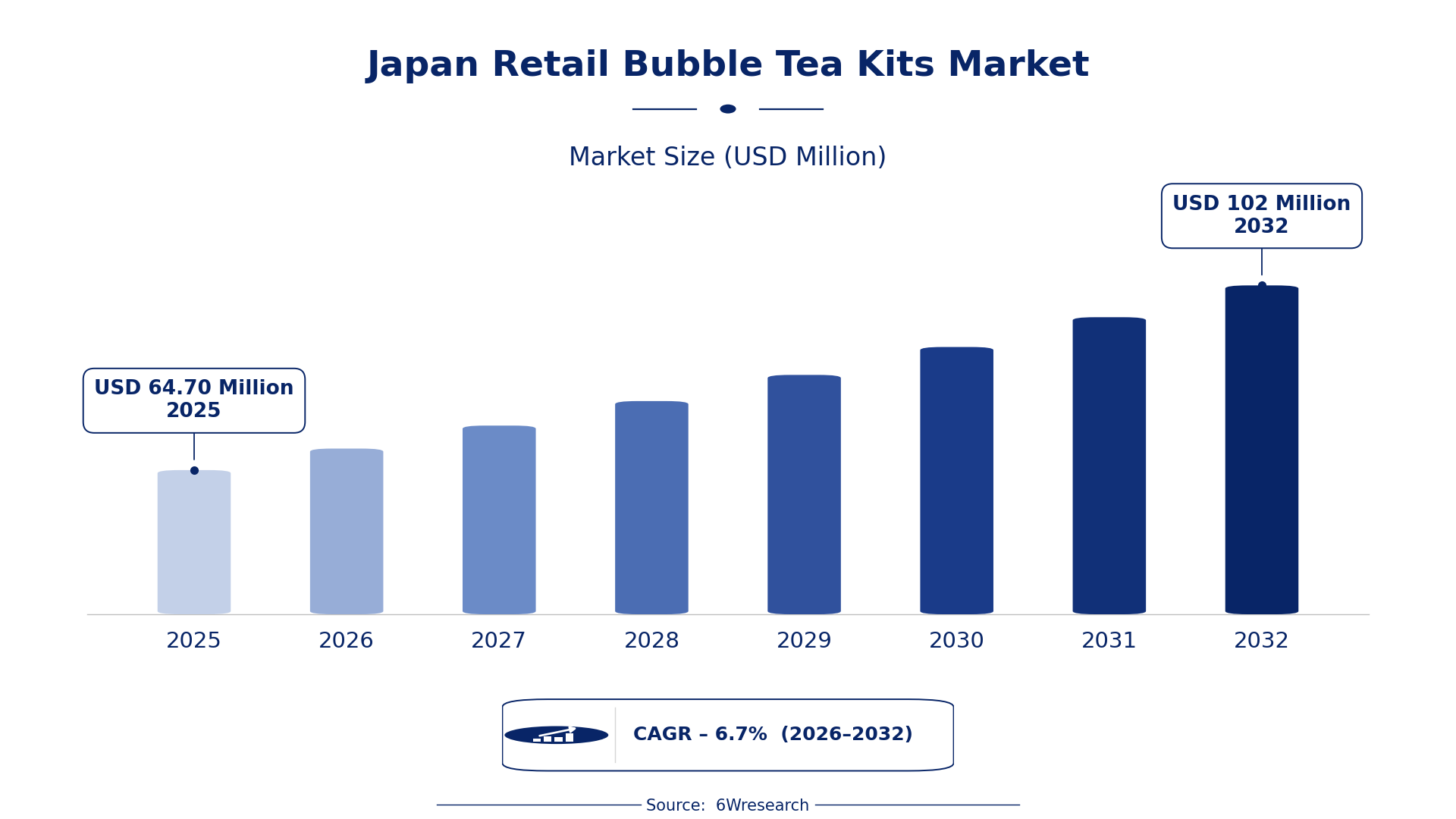
According to 6Wresearch internal database and industry insights, the Japan Retail Bubble Tea Kits Market was valued at USD 64.70 Million in 2025 and is projected to reach USD 102 Million by 2032, growing at a CAGR of approximately 6.7% during 2026–2032.
Japan Retail Bubble Tea Kits Market Highlights
| Report Metric | Details |
| Report Name | Japan Retail Bubble Tea Kits Market (2026-2032) |
| Market Size 2025 | USD 64.70 Million |
| Market Size 2032 | USD 102 Million |
| Absolute Growth 2025–2032 | USD 37.30 Million |
| CAGR 2026–2032 | 6.7% |
| Peak Annual Growth | 7.5% in 2032 |
| Forecast Period | 2026–2032 |
| Historical Data | 2022–2025 |
| Base Year | 2025 |
| Leading Type, 2025 | DIY Bubble Tea Kits (54% share) |
| Leading Ingredients, 2025 | Tapioca Pearls (33% share) |
| Leading Packaging, 2025 | Individual Pack (51% share) |
| Leading End Use, 2025 | Home Use (41% share) |
| Fastest-Growing Type | Ready-to-Drink Kits (9.8% CAGR) |
| Fastest-Growing Ingredients | Organic (9.5% CAGR) |
| Fastest-Growing Packaging | Bottled (8.6% CAGR) |
| Fastest-Growing End Use | Specialty Stores (9.1% CAGR) |
| Growing Sector | Home Use |
| Key End Users | Households, Specialty Stores, Supermarkets |
Japan Retail Bubble Tea Kits Market Year-wise Growth Rate and Key Drivers (2022–2032)
This graph illustrates the annual growth rates of the market from 2022 to 2032, highlighting a steady upward trajectory and projected market expansion over the forecast period.
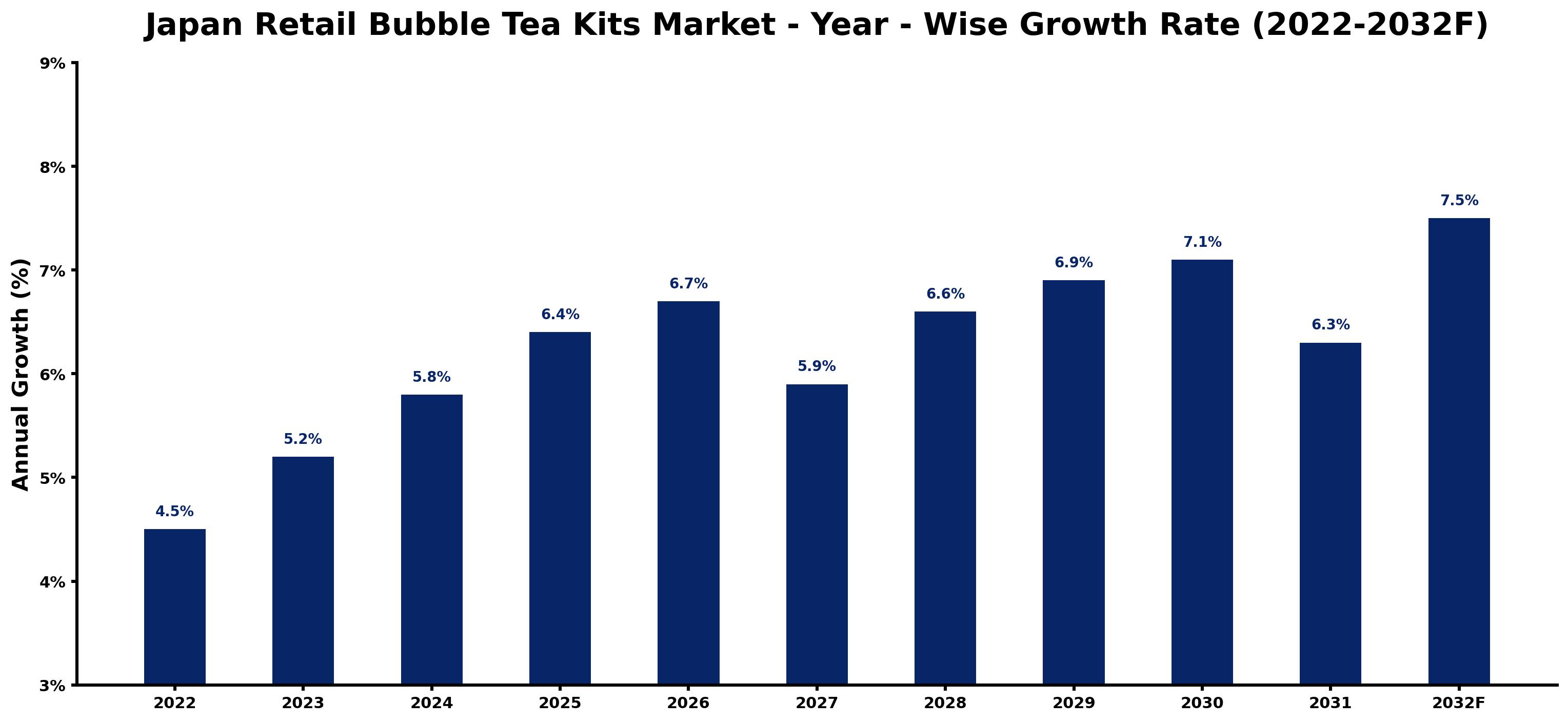
The following figures match every annual growth estimate with the main market development of that year, giving the reasoning behind each rise or slowdown.
| Year | Estimated Annual Growth (%) | Market Rationale |
| 2022 | 4.5 | The market showed steady growth, driven by increasing consumer interest in DIY beverages. |
| 2023 | 5.2 | Growth accelerated as more households embraced bubble tea preparation at home. |
| 2024 | 5.8 | Consumer spending on bubble tea products continued to rise, boosting market performance. |
| 2025 | 6.4 | The market reached a historical peak, supported by expanding retail offerings and consumer engagement. |
| 2026 | 6.7 | Growth is expected to remain strong as new product launches attract a wider audience. |
| 2027 | 5.9 | The market is projected to slow in growth, yet demand for bubble tea kits will persist. |
| 2028 | 6.6 | Consumer interest is expected to rebound, leading to faster growth as new flavours emerge. |
| 2029 | 6.9 | Growth is projected to strengthen, driven by new product offerings and marketing. |
| 2030 | 7.1 | The market is expected to maintain momentum, with rising household spending on bubble tea products. |
| 2031 | 6.3 | Growth is projected to slow again, reflecting market saturation and changing consumer preferences. |
| 2032 | 7.5 | The market is expected to peak, driven by heightened demand for premium and convenient options. |
Note: Market size estimations and growth projections presented in this report are based on 6Wresearch's proprietary forecasting methodology, utilizing the latest available industry data, government publications, and primary research inputs.
Japan Retail Bubble Tea Kits Market Synopsis
Retail Bubble Tea Kits enable consumers to create bubble tea at home, consisting of ingredients like tapioca pearls and tea powders. The Japan Retail Bubble Tea Kits Market is thriving, primarily driven by a youthful demographic that values convenience and quality. In 2023, the average household spent ¥3,000 monthly on bubble tea products, while DIY kits accounted for 40% of sales. The Tokyo region leads in bubble tea consumption, with specialty stores reporting a 25% increase in offerings, reflecting a growing trend towards home preparation and unique flavours.
Market Dynamics Impact Analysis (2026–2032)
| Factor | Type | Impact | Primary Segment Affected |
| Rising consumer interest in DIY beverages | Driver | High | DIY Bubble Tea Kits |
| Expansion of retail channels and product variety | Driver | High | Ready-to-Drink Kits |
| Growing demand for premium ingredients | Opportunity | Medium | Premium Kits |
| Increased focus on health-conscious options | Opportunity | Medium | Organic |
| Regulatory compliance costs for food safety | Restraint | High | DIY Bubble Tea Kits |
| Market saturation in urban areas | Restraint | Medium | DIY Bubble Tea Kits |
| Fluctuating ingredient prices affecting profitability | Challenge | High | Tapioca Pearls |
| Capacity constraints in production and distribution | Challenge | Medium | DIY Bubble Tea Kits |
Evaluation of Drivers in Japan Retail Bubble Tea Kits Market (2026–2032)
The table below links each growth driver to the segment it affects and the evidence for it.
| Drivers | Primary Segment Affected | Why It Matters (Evidence) |
| Increasing household spending on bubble tea products | DIY Bubble Tea Kits | The average household spends ¥3,000 monthly on bubble tea products, driving demand for DIY kits. |
| Growing popularity of bubble tea among younger consumers | Ready-to-Drink Kits | 60% of bubble tea consumers are aged 18-34, boosting demand for convenient options. |
| Expansion of specialty stores offering unique flavours | Premium Kits | Specialty stores reported a 25% increase in bubble tea kit offerings in 2023. |
| Rising interest in home-based beverage preparation | Tapioca Pearls | DIY kits accounted for 40% of bubble tea kit sales, reflecting consumer preferences. |
| Emphasis on high-quality ingredients in bubble tea | Tea Powder | The Japan Tea Association promotes the use of high-quality tea in bubble tea. |
Volumes grow on the back of rising household spending on bubble tea products, with the average household investing ¥3,000 monthly in these items. The youth demographic, comprising 60% of consumers, increasingly opts for convenient Ready-to-Drink Kits. Specialty stores have expanded their offerings, reporting a 25% increase in bubble tea kit options, which fuels demand for Premium Kits. The trend towards home preparation drives sales of DIY kits, which account for a substantial portion of the market. The Japan Tea Association's promotion of high-quality ingredients further increases the appeal of these products.
Evaluation of Restraints in Japan Retail Bubble Tea Kits Market
The key brakes on demand, and where they bite hardest, are shown below.
| Market Restraint | Primary Segment Affected | Why It Matters (Evidence) |
| Regulatory compliance costs for food safety standards | DIY Bubble Tea Kits | Compliance with the Food Sanitation Act increases operational costs for producers, impacting pricing. |
| Market saturation in urban areas limiting growth potential | DIY Bubble Tea Kits | As urban markets become saturated, acquiring new customers becomes increasingly challenging. |
| Fluctuating prices of key ingredients like tapioca pearls | Tapioca Pearls | Rising costs of tapioca pearls can squeeze margins for producers, affecting pricing strategies. |
| Limited production capacity to meet rising demand | DIY Bubble Tea Kits | Manufacturers face challenges scaling production to keep up with growing consumer interest. |
| Stringent food safety regulations impacting small producers | DIY Bubble Tea Kits | Smaller producers struggle to meet compliance standards, limiting their market presence. |
Japan Retail Bubble Tea Kits Market Challenges
Intense rivalry among retailers pressures prices, compelling producers to cut corners on quality. This situation stems from a surge in new market entrants, leading to a potential 15% drop in profit margins for these producers. Rapid advancements in food technology create a knowledge gap for local suppliers, resulting in a 25% slower product development cycle that delays their ability to meet consumer preferences. Disruptions in the supply chain, particularly for tapioca pearls, can lead to delays of up to three weeks for retailers, affecting stock levels and sales. Shortages in skilled workers for food safety compliance raise certification costs by 20% for new suppliers, obstructing their market entry.
Trends in the Japan Retail Bubble Tea Kits Market
The following changes are redrawing the Japan Retail Bubble Tea Kits Market.
- Shift from Traditional to DIY Bubble Tea Kits: Since 2022, consumers have increasingly turned to DIY Bubble Tea Kits, allowing them to create customised drinks at home. In 2023, DIY kits accounted for 40% of bubble tea kit sales, reflecting a growing preference for personalised experiences.
- Rise of Premium Ingredients in Bubble Tea: The trend towards premium ingredients began in 2023, with 30% of bubble tea kits sold being premium options. This shift caters to consumers seeking higher quality and unique flavours, increasing the overall market appeal.
- Increased Focus on Health-Conscious Options: From 2023, non-dairy options have gained traction among health-conscious consumers, with a growing number of lactose-free products available. This shift reflects the changing preferences of consumers prioritising health and dietary needs.
- Expansion of Specialty Stores Offering Unique Flavours: In 2023, specialty stores reported a 25% increase in bubble tea kit offerings, indicating a shift towards unique flavour profiles. This trend caters to adventurous consumers looking for new and exciting beverage experiences.
Investment Opportunities in the Japan Retail Bubble Tea Kits Market
Investors looking at the Japan Retail Bubble Tea Kits Market should consider the following areas.
- Growing Demand for Home Preparation: With 40% of bubble tea kit sales coming from DIY kits, there is an opportunity to supply high-quality ingredients. Home Use consumers are increasingly seeking convenient options, making this an ideal time for suppliers to enter the market.
- Expansion of Premium Product Lines: In 2023, 30% of bubble tea kits sold were premium options, indicating a gap for suppliers to introduce high-quality products. Specialty stores are ideal partners for launching these premium lines, appealing to discerning consumers.
- Health-Conscious Product Development: The rising interest in non-dairy options presents an opportunity to develop lactose-free bubble tea kits. This trend is particularly relevant for health-conscious consumers, making it a timely investment for suppliers.
- Improving Distribution Channels: The average household spends ¥3,000 monthly on bubble tea products, highlighting the need for improved distribution. Collaborating with local specialty stores can enhance market reach and cater to growing consumer demand.
Government Initiatives in the Japan Retail Bubble Tea Kits Market
The Food Sanitation Act amendment (2018) introduced a positive list system for synthetic resins used in food packaging, enhancing safety standards for bubble tea kits. This measure, in force since June 2020, mandates that producers ensure their packaging materials meet safety criteria, thereby increasing consumer confidence in these products. Additionally, the HACCP-based hygiene management system, fully applied in June 2021, requires food businesses to implement strict hygiene protocols, further ensuring the quality and safety of bubble tea kits.
In 2023, local government initiatives aimed at promoting small food businesses allocated ¥500 million to support food startups, including those producing bubble tea kits. The Ministry of Health, Labour and Welfare oversees these efforts, which include funding for training programs and resources to help new entrants comply with food safety regulations. This support is crucial for enhancing the market presence of bubble tea kits, particularly among emerging producers.
Future Insight of the Japan Retail Bubble Tea Kits Market
Emerging technologies will transform the bubble tea market by 2032, allowing suppliers to introduce healthier and more varied options that align with evolving consumer tastes. The integration of smart packaging will improve product freshness and extend shelf life, benefiting both retailers and consumers. Local government initiatives will support the expansion of small food businesses, boosting market competition and diversity. Households are projected to spend ¥3,000 monthly on bubble tea products, prompting suppliers to adapt their offerings to meet rising consumer expectations.
Market Segmentation Analysis
Japan Retail Bubble Tea Kits Market report covers a detailed analysis of the following market segments:
By Type – DIY Bubble Tea Kits Lead, Ready-to-Drink Kits Expected to Grow Fastest
According to Vasudha, AM at 6Wresearch, DIY Bubble Tea Kits held 54% of the Japan Retail Bubble Tea Kits Market by type in 2025. DIY Bubble Tea Kits dominate the market because they provide consumers with the opportunity to create bubble tea at home, appealing to those who enjoy hands-on experiences. This segment is particularly popular among the 18-34 age group, which constitutes 60% of the consumer base. Ready-to-Drink Kits are set to record the highest CAGR in this split, 9.8% over 2026–2032. Ready-to-Drink Kits are rapidly gaining traction as they offer convenience for consumers who prefer immediate enjoyment without preparation. The average household's monthly expenditure of ¥3,000 on bubble tea products highlights the increasing preference for these ready-to-consume options. Suppliers should focus on enhancing the availability of Ready-to-Drink Kits to meet the growing consumer demand for convenience.
By Ingredients – Tapioca Pearls Lead, Organic Expected to Grow Fastest
Tapioca Pearls took 33% of ingredients revenue in 2025, more than any other category. Tapioca Pearls hold the largest share as they are a crucial ingredient for bubble tea, making them indispensable for DIY kits. Their widespread use in bubble tea recipes ensures a steady demand from consumers seeking authentic experiences. Over 2026–2032, Organic is expected to post the fastest growth, at a CAGR of 9.5%. Organic ingredients are seeing accelerated growth as health-conscious consumers increasingly gravitate towards premium options. This trend towards organic reflects a broader consumer preference for healthier food choices and sustainable practices, indicating a shift in market dynamics. Suppliers should consider expanding their offerings of organic ingredients to cater to the rising demand for healthier bubble tea alternatives.
By Packaging – Individual Pack Leads, Bottled Expected to Grow Fastest
The largest packaging category in 2025 was Individual Pack, at 51% of revenue. Individual Packs are the dominant packaging format due to their convenience for single servings, appealing to consumers who prefer portion control. This format is well-suited to the increasing trend of home preparation of bubble tea. Bottled is projected to grow fastest, at a CAGR of 8.6% during 2026–2032. Bottled packaging is rapidly gaining traction as it offers a ready-to-drink format, ideal for consumers with busy lifestyles. The growing preference for convenient beverage solutions is driving the demand for this packaging type. Suppliers should invest in bottled packaging solutions to attract consumers seeking convenient options for bubble tea.
By End Use – Home Use Leads, Specialty Stores Expected to Grow Fastest
Home Use accounted for 41% of the market by end use in 2025. Home Use is the primary market for bubble tea kits, with consumers enjoying the flexibility of preparing their favourite drinks at home. This segment reflects the strong DIY culture prevalent in Japan. The quickest growth will come from Specialty Stores, forecast to expand at a CAGR of 9.1% between 2026 and 2032. Specialty Stores are seeing the fastest growth as they cater to niche and premium offerings that appeal to discerning consumers. The increase in bubble tea kit offerings in these stores indicates a shift towards more specialised products. Suppliers should strengthen partnerships with specialty stores to tap into the growing demand for premium bubble tea kits.
Key Attractiveness of the Report
- 10 Years of Market Numbers
- Historical Data Starting from 2022 to 2025
- Base Year 2025
- Forecast Data until 2032
- Key Performance Indicators Impacting the Market
- Major Upcoming Developments and Projects
Key Highlights of the Report:
- Japan Retail Bubble Tea Kits Market Outlook
- Market Size of Japan Retail Bubble Tea Kits Market,2025
- Forecast of Japan Retail Bubble Tea Kits Market, 2032
- Historical Data and Forecast of Japan Retail Bubble Tea Kits Revenues & Volume for the Period 2022-2032
- Japan Retail Bubble Tea Kits Market Trend Evolution
- Japan Retail Bubble Tea Kits Market Drivers and Challenges
- Japan Retail Bubble Tea Kits Price Trends
- Japan Retail Bubble Tea Kits Porter's Five Forces
- Japan Retail Bubble Tea Kits Industry Life Cycle
- Historical Data and Forecast of Japan Retail Bubble Tea Kits Market Revenues & Volume By Type for the Period 2022-2032
- Historical Data and Forecast of Japan Retail Bubble Tea Kits Market Revenues & Volume By DIY Bubble Tea Kits for the Period 2022-2032
- Historical Data and Forecast of Japan Retail Bubble Tea Kits Market Revenues & Volume By Ready-to-Drink Kits for the Period 2022-2032
- Historical Data and Forecast of Japan Retail Bubble Tea Kits Market Revenues & Volume By Premium Kits for the Period 2022-2032
- Historical Data and Forecast of Japan Retail Bubble Tea Kits Market Revenues & Volume By Ingredients for the Period 2022-2032
- Historical Data and Forecast of Japan Retail Bubble Tea Kits Market Revenues & Volume By Tapioca Pearls, Tea Powder for the Period 2022-2032
- Historical Data and Forecast of Japan Retail Bubble Tea Kits Market Revenues & Volume By Pre-Mixed Tea, Syrups for the Period 2022-2032
- Historical Data and Forecast of Japan Retail Bubble Tea Kits Market Revenues & Volume By Organic, Non-Dairy Options for the Period 2022-2032
- Historical Data and Forecast of Japan Retail Bubble Tea Kits Market Revenues & Volume By Packaging for the Period 2022-2032
- Historical Data and Forecast of Japan Retail Bubble Tea Kits Market Revenues & Volume By Individual Pack for the Period 2022-2032
- Historical Data and Forecast of Japan Retail Bubble Tea Kits Market Revenues & Volume By Bottled for the Period 2022-2032
- Historical Data and Forecast of Japan Retail Bubble Tea Kits Market Revenues & Volume By Gift Box for the Period 2022-2032
- Historical Data and Forecast of Japan Retail Bubble Tea Kits Market Revenues & Volume By End Use for the Period 2022-2032
- Historical Data and Forecast of Japan Retail Bubble Tea Kits Market Revenues & Volume By Home Use for the Period 2022-2032
- Historical Data and Forecast of Japan Retail Bubble Tea Kits Market Revenues & Volume By Supermarkets for the Period 2022-2032
- Historical Data and Forecast of Japan Retail Bubble Tea Kits Market Revenues & Volume By Specialty Stores for the Period 2022-2032
- Japan Retail Bubble Tea Kits Import Export Trade Statistics
- Market Opportunity Assessment By Type
- Market Opportunity Assessment By Ingredients
- Market Opportunity Assessment By Packaging
- Market Opportunity Assessment By End Use
- Japan Retail Bubble Tea Kits Top Companies Market Share
- Japan Retail Bubble Tea Kits Competitive Benchmarking By Technical and Operational Parameters
- Japan Retail Bubble Tea Kits Company Profiles
- Japan Retail Bubble Tea Kits Key Strategic Recommendations
Market Covered
The study includes the following segmentation.
By Type
- DIY Bubble Tea Kits
- Ready-to-Drink Kits
- Premium Kits
By Ingredients
- Tapioca Pearls
- Tea Powder
- Pre-Mixed Tea
- Syrups
- Organic
- Non-Dairy Options
By Packaging
- Individual Pack
- Bottled
- Gift Box
By End Use
- Home Use
- Supermarkets
- Specialty Stores































