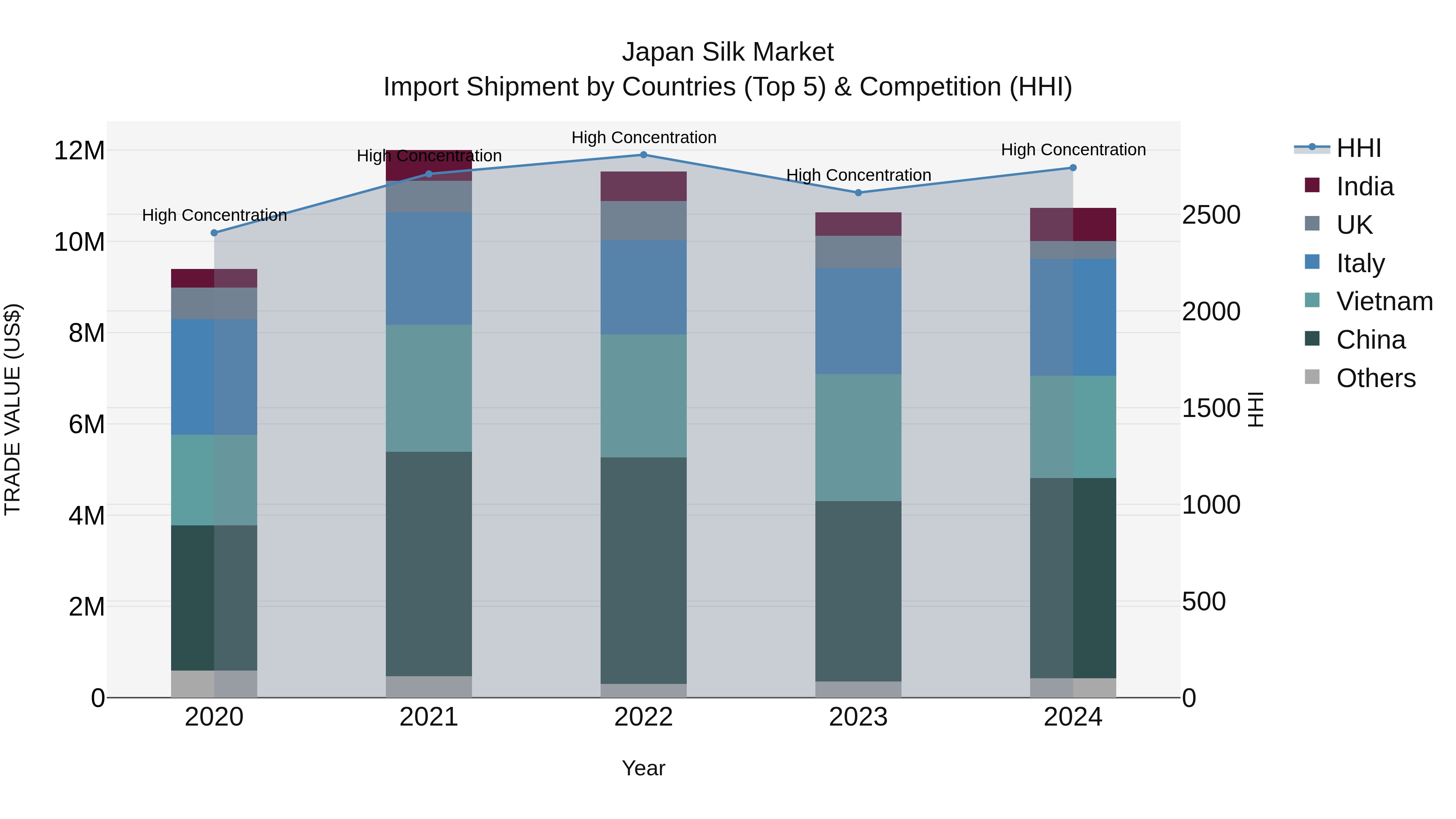
Japan Silk Market Import Shipment by Countries (Top 5) & Competition (HHI)
Japan's silk import shipments in 2024 continued to see strong concentration with top exporting countries being China, Italy, Vietnam, India, and the UK. The Herfindahl-Hirschman Index (HHI) remained at high levels, indicating a consolidated market. The compound annual growth rate (CAGR) from 2020 to 2024 stood at 3.39%, showing steady expansion. Although the growth rate from 2023 to 2024 slowed slightly to 0.92%, the overall trend suggests a stable and growing market for silk imports in Japan.
Japan Silk Market Overview
The Japan Silk Market is characterized by its rich history and tradition of producing high-quality silk products. Known for its exquisite craftsmanship and attention to detail, the market offers a wide range of silk products including kimono, obi belts, and accessories. Japanese silk is highly sought after for its luxurious texture, vibrant colors, and intricate designs, making it a popular choice for both traditional and contemporary fashion. The market is also driven by a strong domestic demand for silk products, as well as a growing interest from international markets. With a focus on sustainability and innovation, the Japan Silk Market continues to uphold its reputation as a global leader in the silk industry.
Japan Silk Market Trends
The Japan Silk Market is witnessing several trends currently. One prominent trend is the increasing demand for sustainable and eco-friendly silk products. Consumers are becoming more conscious of the environmental impact of their purchases, leading to a rise in the popularity of silk produced using environmentally friendly practices. Another trend is the growing popularity of luxury silk items, such as bedding, clothing, and accessories, driven by the increasing disposable income and interest in high-quality products among Japanese consumers. Additionally, there is a rising interest in innovative silk blends that offer enhanced performance attributes, such as moisture-wicking properties and durability. Overall, the Japan Silk Market is evolving to cater to the changing preferences and demands of consumers, with a focus on sustainability, luxury, and innovation.
Japan Silk Market Challenges
The Japan Silk Market faces several challenges including competition from synthetic fabrics, declining interest in traditional silk products among younger generations, and increasing production costs. The rise of fast fashion and the availability of cheaper alternatives have impacted the demand for silk products. Additionally, the aging workforce in the silk industry and the lack of skilled labor pose challenges for maintaining quality standards and innovation in the sector. The market also struggles with issues related to sustainability and ethical sourcing practices, as consumers are becoming more conscious about environmental and social responsibility. Overall, the Japan Silk Market must adapt to changing consumer preferences, invest in technological advancements, and address sustainability concerns to remain competitive in the global textile industry.
Japan Silk Market Investment Opportunities
Investment opportunities in the Japan Silk Market include investing in silk production companies, silk textile manufacturers, or companies that specialize in silk-related products such as clothing, accessories, and home furnishings. With Japan`s reputation for high-quality silk products, there is a growing demand both domestically and internationally for Japanese silk, presenting opportunities for growth and profitability in the industry. Additionally, investing in research and development of new silk technologies or sustainable silk production methods could also be a promising avenue for investment in the Japan Silk Market. Overall, the Japan Silk Market offers diverse investment opportunities for those looking to capitalize on the country`s rich heritage in silk production and innovation in the industry.
Japan Silk Market Government Policy
The Japan Silk Market is heavily influenced by government policies aimed at promoting the silk industry and supporting silk producers. The Japanese government provides subsidies and financial incentives to silk farmers to encourage production and maintain the quality of silk products. Additionally, there are regulations in place to ensure the authenticity and quality of silk products, including labeling requirements and quality standards. The government also plays a role in promoting the use of silk in various industries, such as fashion and textiles, to boost domestic consumption and exports. Overall, government policies in Japan are focused on supporting the silk market through financial support, quality control measures, and promotion efforts to sustain the industry`s growth and competitiveness in the global market.
Japan Silk Market Future Outlook
The future outlook for the Japan Silk Market appears promising, driven by increasing demand for high-quality silk products globally. Consumer preferences for sustainable and ethically sourced fabrics are expected to boost the market, as silk is a natural and luxurious material known for its softness and durability. Additionally, advancements in silk production techniques and innovative uses of silk in various industries such as fashion, cosmetics, and healthcare are likely to drive market growth. However, challenges such as competition from synthetic fabrics and fluctuations in raw material prices may impact market dynamics. Overall, the Japan Silk Market is poised for steady growth, with opportunities for expansion through diversification of product offerings and strategic partnerships with key industry players.
Key Highlights of the Report:
- Japan Silk Market Outlook
- Market Size of Japan Silk Market, 2021
- Forecast of Japan Silk Market, 2027
- Historical Data and Forecast of Japan Silk Revenues & Volume for the Period 2018 - 2027
- Japan Silk Market Trend Evolution
- Japan Silk Market Drivers and Challenges
- Japan Silk Price Trends
- Japan Silk Porter's Five Forces
- Japan Silk Industry Life Cycle
- Historical Data and Forecast of Japan Silk Market Revenues & Volume By Production process for the Period 2018 - 2027
- Historical Data and Forecast of Japan Silk Market Revenues & Volume By Cocoon Production for the Period 2018 - 2027
- Historical Data and Forecast of Japan Silk Market Revenues & Volume By Reeling for the Period 2018 - 2027
- Historical Data and Forecast of Japan Silk Market Revenues & Volume By Throwing for the Period 2018 - 2027
- Historical Data and Forecast of Japan Silk Market Revenues & Volume By Weaving for the Period 2018 - 2027
- Historical Data and Forecast of Japan Silk Market Revenues & Volume By Dyeing for the Period 2018 - 2027
- Historical Data and Forecast of Japan Silk Market Revenues & Volume By Type for the Period 2018 - 2027
- Historical Data and Forecast of Japan Silk Market Revenues & Volume By Mulberry Silk for the Period 2018 - 2027
- Historical Data and Forecast of Japan Silk Market Revenues & Volume By Tussar Silk for the Period 2018 - 2027
- Historical Data and Forecast of Japan Silk Market Revenues & Volume By Eri Silk for the Period 2018 - 2027
- Historical Data and Forecast of Japan Silk Market Revenues & Volume By Spider Silk for the Period 2018 - 2027
- Historical Data and Forecast of Japan Silk Market Revenues & Volume By Application for the Period 2018 - 2027
- Historical Data and Forecast of Japan Silk Market Revenues & Volume By Textile for the Period 2018 - 2027
- Historical Data and Forecast of Japan Silk Market Revenues & Volume By Cosmetics for the Period 2018 - 2027
- Historical Data and Forecast of Japan Silk Market Revenues & Volume By Medicine for the Period 2018 - 2027
- Japan Silk Import Export Trade Statistics
- Market Opportunity Assessment By Production process
- Market Opportunity Assessment By Type
- Market Opportunity Assessment By Application
- Japan Silk Top Companies Market Share
- Japan Silk Competitive Benchmarking By Technical and Operational Parameters
- Japan Silk Company Profiles
- Japan Silk Key Strategic Recommendations






































