Japan Television Advertising Market Size & Growth Rate
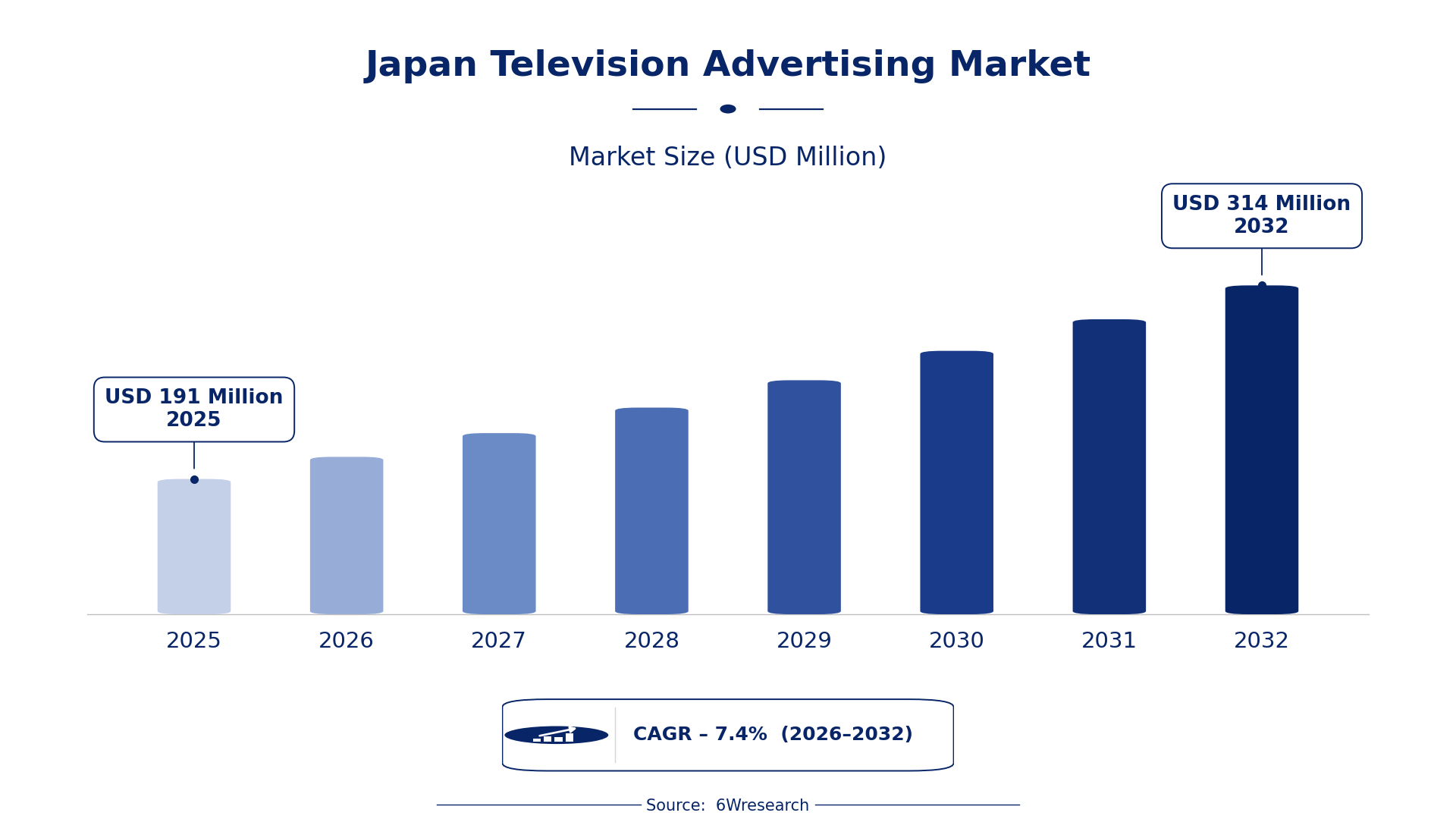
According to 6Wresearch internal database and industry insights, the Japan Television Advertising Market was valued at USD 191 Million in 2025 and is projected to reach USD 314 Million by 2032, growing at a CAGR of approximately 7.4% during 2026–2032.
Japan Television Advertising Market Highlights
| Report Metric | Details |
| Report Name | Japan Television Advertising Market (2026-2032) |
| Market Size 2025 | USD 191 Million |
| Market Size 2032 | USD 314 Million |
| Absolute Growth 2025–2032 | USD 123 Million |
| CAGR 2026–2032 | 7.4% |
| Peak Annual Growth | 8.5% in 2026 |
| Forecast Period | 2026–2032 |
| Historical Data | 2022–2025 |
| Base Year | 2025 |
| Leading Type, 2025 | Terrestrial Advertisement (45% share) |
| Leading Application, 2025 | Companies (44% share) |
| Fastest-Growing Type | Online Advertisement (10.5% CAGR) |
| Fastest-Growing Application | Government (9.4% CAGR) |
| Growing Sector | Government |
| Key End Users | Companies, Government |
Japan Television Advertising Market Year-wise Growth Rate and Key Drivers (2022–2032)
This graph illustrates the annual growth rates of the market from 2022 to 2032, highlighting a steady upward trajectory and projected market expansion over the forecast period.
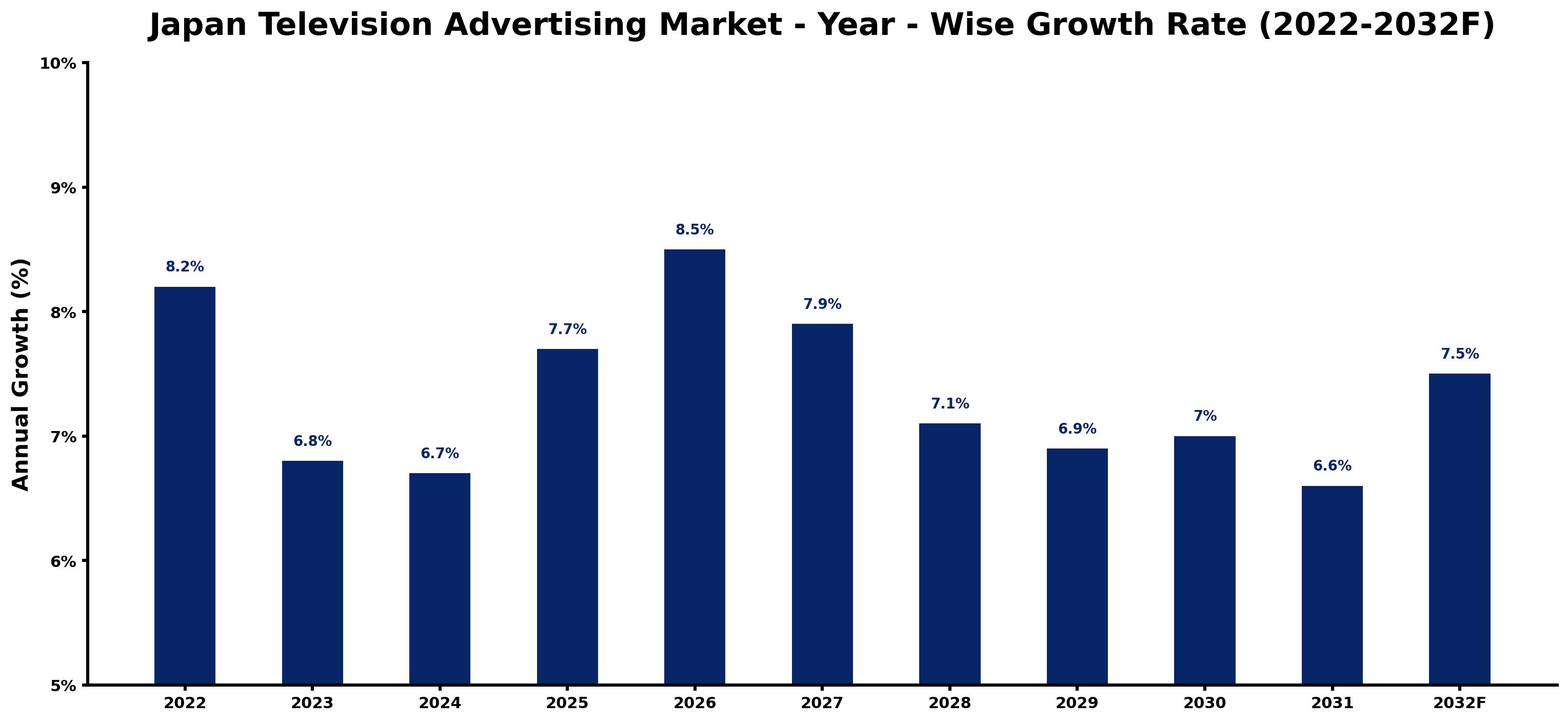
Below, each year's estimated growth is shown next to the factor that most influenced it.
| Year | Estimated Annual Growth (%) | Market Rationale |
| 2022 | 8.2 | Television advertising spending was strong, driven by major events like the Tokyo Olympics. |
| 2023 | 6.8 | Spending growth slowed due to economic uncertainties affecting advertising budgets. |
| 2024 | 6.7 | The market continued to grow, albeit at a slower rate, as companies adjusted strategies. |
| 2025 | 7.7 | An increase in brand visibility initiatives led to faster growth in advertising investments. |
| 2026 | 8.5 | The peak growth rate is expected to be achieved as advertisers capitalise on new digital integration trends. |
| 2027 | 7.9 | Growth is projected to slow as advertisers face challenges in maintaining audience engagement levels. |
| 2028 | 7.1 | The market is expected to experience further slowdown as competition intensifies among advertising platforms. |
| 2029 | 6.9 | Spending growth is anticipated to remain steady, supported by ongoing brand campaigns and promotions. |
| 2030 | 7.0 | An uptick in advertising budgets is expected as companies prepare for new product launches. |
| 2031 | 6.6 | Growth is projected to slow again as market saturation begins to impact advertising effectiveness. |
| 2032 | 7.5 | A resurgence in tourism campaigns is expected to boost spending, leading to faster growth. |
Note: Market size estimations and growth projections presented in this report are based on 6Wresearch's proprietary forecasting methodology, utilizing the latest available industry data, government publications, and primary research inputs.
Japan Television Advertising Market Synopsis
Television advertising serves as a key communication tool in Japan, promoting products and services through creative content and strategic media buying. The Japan Television Advertising Market is primarily driven by domestic companies and government initiatives, with strong demand from sectors such as consumer goods and services. In 2022, the market was valued at approximately 1.2 trillion yen, and Tokyo accounted for over 40% of total ad spend. The integration of digital elements into TV ads is also gaining traction, with 30% of advertisers adopting interactive features that boost viewer engagement.
Market Dynamics Impact Analysis (2026–2032)
| Factor | Type | Impact | Primary Segment Affected |
| Growing demand for brand visibility among companies drives television advertising investments. | Driver | High | Companies |
| Government initiatives for public awareness campaigns increase advertising budgets. | Driver | High | Government |
| The rise of online advertisement complements traditional TV advertising, creating new opportunities. | Opportunity | Medium | Online Advertisement |
| Increasing integration of interactive elements in TV ads presents new avenues for engagement. | Opportunity | Medium | Multichannel Advertisement |
| High costs for prime-time spots limit access for smaller advertisers. | Restraint | High | Terrestrial Advertisement |
| Market saturation in traditional advertising channels restricts growth potential. | Restraint | Medium | Terrestrial Advertisement |
| Intense competition among advertising platforms challenges market players. | Challenge | High | Online Advertisement |
| Evolving consumer preferences necessitate constant adaptation in advertising strategies. | Challenge | Medium | Multichannel Advertisement |
Evaluation of Drivers in Japan Television Advertising Market (2026–2032)
The main growth drivers and the segments they affect most are set out below.
| Drivers | Primary Segment Affected | Why It Matters (Evidence) |
| Increased spending on brand visibility initiatives by companies fuels demand for television ads. | Companies | In 2022, television advertising accounted for about 30% of total advertising expenditure in Japan. |
| Government campaigns for public awareness drive advertising budgets higher. | Government | In 2023, the Japanese government launched a campaign to promote local tourism through television ads. |
| The rise of digital integration in ads attracts advertisers and improves viewer engagement. | Multichannel Advertisement | 30% of advertisers are now using interactive elements in their campaigns. |
| The Tokyo Olympics boosted advertising spending, especially for sports brands. | Terrestrial Advertisement | The event led to a notable increase in television ad spending during 2021. |
| The average viewer's three hours of daily television consumption provides a large audience. | Terrestrial Advertisement | This extensive viewing time creates a substantial platform for advertisers. |
Digital integration in ads attracts advertisers, with 30% of them incorporating interactive elements in their campaigns. The average viewer's three hours of daily television consumption provides a large audience, creating a substantial platform for advertisers to effectively reach potential customers.
Evaluation of Restraints in Japan Television Advertising Market
The main factors holding the market back are set out below.
| Market Restraint | Primary Segment Affected | Why It Matters (Evidence) |
| High advertising costs limit producers' ability to reach broader audiences. | Terrestrial Advertisement | The average cost for a 30-second TV spot during prime time can exceed 1 million yen. |
| Intense competition in Tokyo forces smaller producers to invest heavily. | Multichannel Advertisement | Tokyo accounts for over 40% of total ad spend, impacting smaller producers. |
| Skills shortages in creative content production hinder advertisement quality. | Companies | Limited talent affects the effectiveness of advertising campaigns for buyers. |
| Regulatory compliance adds complexity to ad launches. | Government | Producers must navigate stringent content standards, delaying ad launches. |
| Market saturation impacts advertising effectiveness, limiting growth potential. | Terrestrial Advertisement | As the market matures, reaching new audiences becomes increasingly challenging. |
Japan Television Advertising Market Challenges
Producers face intense competition, as Tokyo accounts for over 40% of total ad spend, which pressures them to invest heavily or risk being overshadowed. Skills shortages in creative content production hinder the quality of advertisements, leading to ineffective campaigns that fail to attract buyers. Buyers experience rising costs due to the average price of a 30-second prime time spot exceeding 1 million yen, which limits their advertising reach and effectiveness. Regulatory compliance adds complexity, causing delays and extra expenses for producers who must navigate strict advertising standards set by the Japan Advertising Agencies Association.
Trends in the Japan Television Advertising Market
The following changes are redrawing the Japan Television Advertising Market.
- Growth of Interactive Advertising: In 2023, 30% of advertisers began incorporating interactive elements into their campaigns, improving viewer engagement and effectiveness. This shift is particularly evident in Tokyo, where brands are using digital integration to attract younger audiences.
- Increased Focus on Local Tourism: The Japanese government has initiated campaigns to promote local tourism, leading to a surge in television advertising spending. In 2023, this focus resulted in a notable rise in ad budgets allocated to tourism-related content.
- Shift Towards Multichannel Strategies: Advertisers are increasingly adopting multichannel strategies to reach diverse demographics. In 2022, a significant percentage of companies began utilising various platforms to enhance their advertising reach and effectiveness.
- Rise of Sports Advertising: The Tokyo Olympics in 2021 sparked a notable increase in sports-related television advertising, with brands investing heavily to capitalise on the event's visibility. This trend continues as sports events remain popular among viewers.
Investment Opportunities in the Japan Television Advertising Market
The openings below show where demand in the Japan Television Advertising Market is visible and how suppliers can enter.
- Expansion of Digital Advertising: Tokyo's growing digital advertising sector presents opportunities for suppliers to provide effective solutions. With 30% of advertisers adopting interactive elements, there is a demand for technology partners to improve viewer engagement.
- Investment in Tourism Campaigns: The government's focus on local tourism creates a timely opportunity for advertisers to invest in targeted campaigns. In 2023, increased budgets for tourism-related ads are expected to drive demand for creative content.
- Growth in Sports Advertising: The rise of sports events as advertising platforms offers opportunities for brands to engage with audiences. Advertisers can capitalise on the popularity of sports by investing in targeted campaigns during major events.
- Development of Multichannel Strategies: The shift towards multichannel advertising strategies allows suppliers to offer integrated solutions. Companies are seeking partners to enhance their outreach across various platforms, creating investment opportunities.
Government Initiatives in the Japan Television Advertising Market
The Broadcasting Act, established in 1950, regulates television advertising content and practices in Japan, ensuring compliance with established standards. This law mandates that producers adhere to guidelines, affecting how advertisements are created and presented to the public. The Act against Unjustifiable Premiums and Misleading Representations, enacted in 1962, prohibits misleading advertising, further shaping the environment for producers and advertisers.
The Digital Agency oversees government digital transformation and common system standards. It funds initiatives aimed at improving digital integration in advertising, supporting the industry's shift towards more interactive and engaging content.
Future Insight of the Japan Television Advertising Market
The rollout of local tourism promotion initiatives will enhance television advertising strategies by 2032, providing fresh opportunities for regional businesses. Digital integration in television advertising will expand, with a significant increase in interactive campaign elements expected. As the average viewer continues to watch over 3 hours of television daily, advertisers will find ample opportunities to engage with audiences. Enhanced advertising standards will likely emerge, ensuring higher quality and effectiveness in campaigns.
Market Segmentation Analysis
Japan Television Advertising Market report covers a detailed analysis of the following market segments:
By Type – Terrestrial Advertisement Leads, Online Advertisement Expected to Grow Fastest
According to Sumit Sagar, AM at 6Wresearch, Terrestrial Advertisement held 45% of the Japan Television Advertising Market by type in 2025. Terrestrial advertisement holds the largest share due to its effectiveness in reaching a wide audience across Japan. For instance, Tokyo, which accounts for over 40% of total ad spend, heavily relies on terrestrial ads for brand promotion. The quickest growth will come from Online Advertisement, forecast to expand at a CAGR of 10.5% between 2026 and 2032. Online advertisement is experiencing rapid growth as advertisers increasingly integrate interactive elements into their campaigns. In fact, 30% of advertisers are now utilising digital integration, which is appealing to a tech-savvy audience. Suppliers should consider expanding their offerings to include more digital solutions to meet the evolving demands of advertisers.
By Application – Companies Lead, Government Expected to Grow Fastest
With 44% of application revenue in 2025, Companies was the largest category. Companies dominate the television advertising market as they are the primary clients investing heavily for brand visibility and product launches. This is exemplified by their contribution of about 30% to total advertising expenditure in Japan in 2022, highlighting their pivotal role in the sector. Government is projected to grow fastest, at a CAGR of 9.4% during 2026–2032. The government is the fastest growing segment in television advertising, driven by initiatives like the recent campaign to promote local tourism through TV ads. This focus on public service messaging is expected to further boost the volume of government advertising. This trend indicates that suppliers should consider tailoring their services to meet the increasing demand for government-focused advertising.
Key Attractiveness of the Report
- 10 Years of Market Numbers
- Historical Data Starting from 2022 to 2025
- Base Year 2025
- Forecast Data until 2032
- Key Performance Indicators Impacting the Market
- Major Upcoming Developments and Projects
Key Highlights of the Report:
- Japan Television Advertising Market Outlook
- Market Size of Japan Television Advertising Market, 2025
- Forecast of Japan Television Advertising Market, 2032
- Historical Data and Forecast of Japan Television Advertising Revenues & Volume for the Period 2022-2032
- Japan Television Advertising Market Trend Evolution
- Japan Television Advertising Market Drivers and Challenges
- Japan Television Advertising Price Trends
- Japan Television Advertising Porter's Five Forces
- Japan Television Advertising Industry Life Cycle
- Historical Data and Forecast of Japan Television Advertising Market Revenues & Volume By Type for the Period 2022-2032
- Historical Data and Forecast of Japan Television Advertising Market Revenues & Volume By Terrestrial Advertisement for the Period 2022-2032
- Historical Data and Forecast of Japan Television Advertising Market Revenues & Volume By Multichannel Advertisement for the Period 2022-2032
- Historical Data and Forecast of Japan Television Advertising Market Revenues & Volume By Online Advertisement for the Period 2022-2032
- Historical Data and Forecast of Japan Television Advertising Market Revenues & Volume By Application for the Period 2022-2032
- Historical Data and Forecast of Japan Television Advertising Market Revenues & Volume By Companies for the Period 2025
- Historical Data and Forecast of Japan Television Advertising Market Revenues & Volume By Government for the Period 2025
- Historical Data and Forecast of Japan Television Advertising Market Revenues & Volume By Other for the Period 2025
- Japan Television Advertising Import Export Trade Statistics
- Market Opportunity Assessment By Type
- Market Opportunity Assessment By Application
- Japan Television Advertising Top Companies Market Share
- Japan Television Advertising Competitive Benchmarking By Technical and Operational Parameters
- Japan Television Advertising Company Profiles
- Japan Television Advertising Key Strategic Recommendations
Market Covered
Segments analysed in this report are listed below.
By Type
- Terrestrial Advertisement
- Multichannel Advertisement
- Online Advertisement
By Application
- Companies
- Government
- Other































