Japan Textured Soy Protein Market Size & Growth Rate
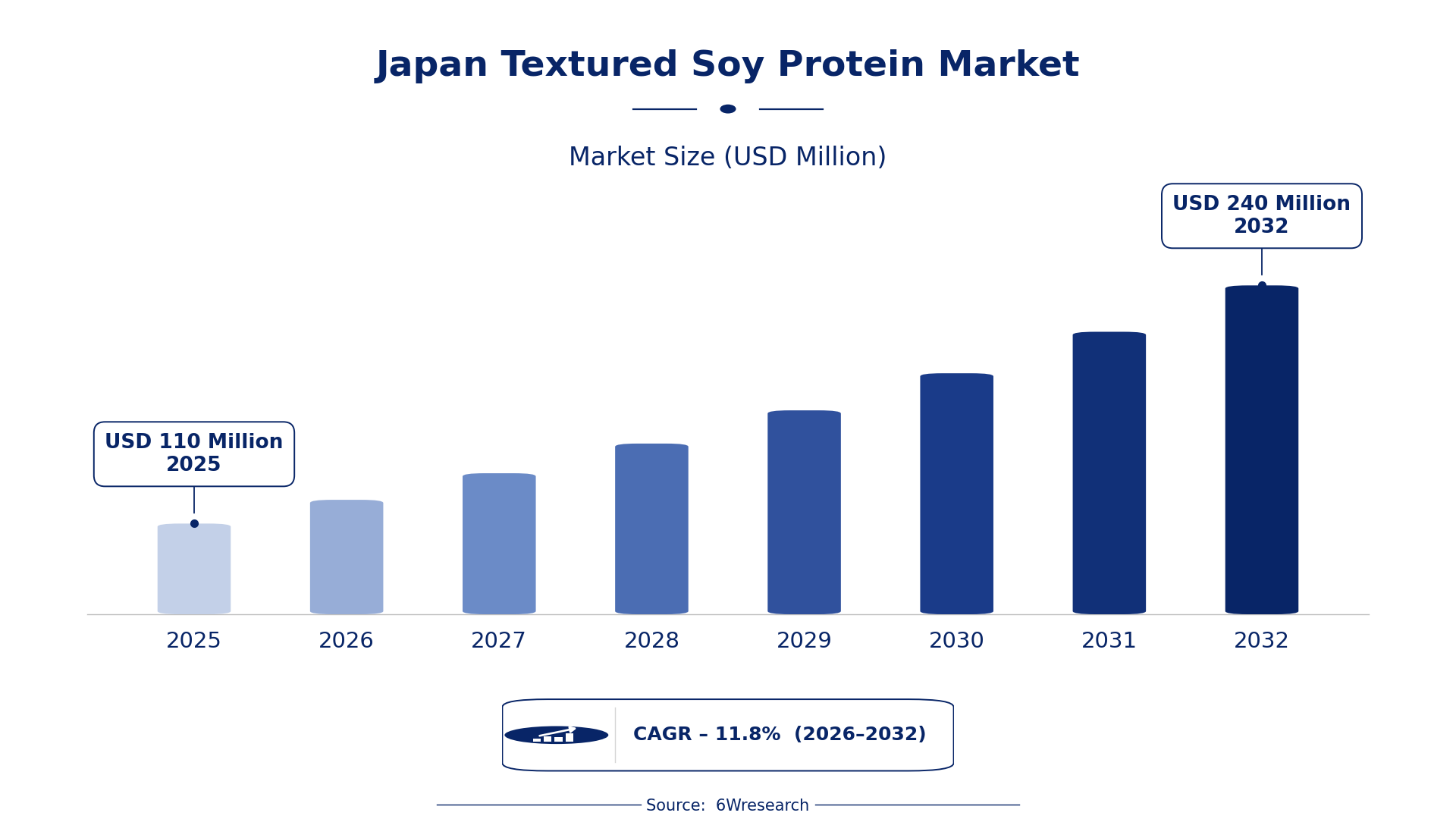
According to 6Wresearch internal database and industry insights, the Japan Textured Soy Protein Market was valued at USD 110 Million in 2025 and is projected to reach USD 240 Million by 2032, growing at a CAGR of approximately 11.8% during 2026–2032.
Japan Textured Soy Protein Market Highlights
| Report Metric | Details |
| Report Name | Japan Textured Soy Protein Market (2026-2032) |
| Market Size 2025 | USD 110 Million |
| Market Size 2032 | USD 240 Million |
| Absolute Growth 2025–2032 | USD 130 Million |
| CAGR 2026–2032 | 11.8% |
| Peak Annual Growth | 13.2% in 2031 |
| Forecast Period | 2026–2032 |
| Historical Data | 2022–2025 |
| Base Year | 2025 |
| Leading Type, 2025 | Non-GMO (44% share) |
| Leading Application, 2025 | Food Meat Substitutes (49% share) |
| Leading Source Concentrates, 2025 | Soy protein concentrates (41% share) |
| Fastest-Growing Type | Conventional (14.4% CAGR) |
| Fastest-Growing Application | Dairy Alternatives (15.8% CAGR) |
| Fastest-Growing Source Concentrates | Soy protein isolates (16.3% CAGR) |
| Growing Sector | Plant-based food alternatives |
| Key End Users | Food manufacturers, health-conscious consumers, vegetarian and vegan markets, infant nutrition producers |
Japan Textured Soy Protein Market Year-wise Growth Rate and Key Drivers (2022–2032)
This graph illustrates the annual growth rates of the market from 2022 to 2032, highlighting a steady upward trajectory and projected market expansion over the forecast period.
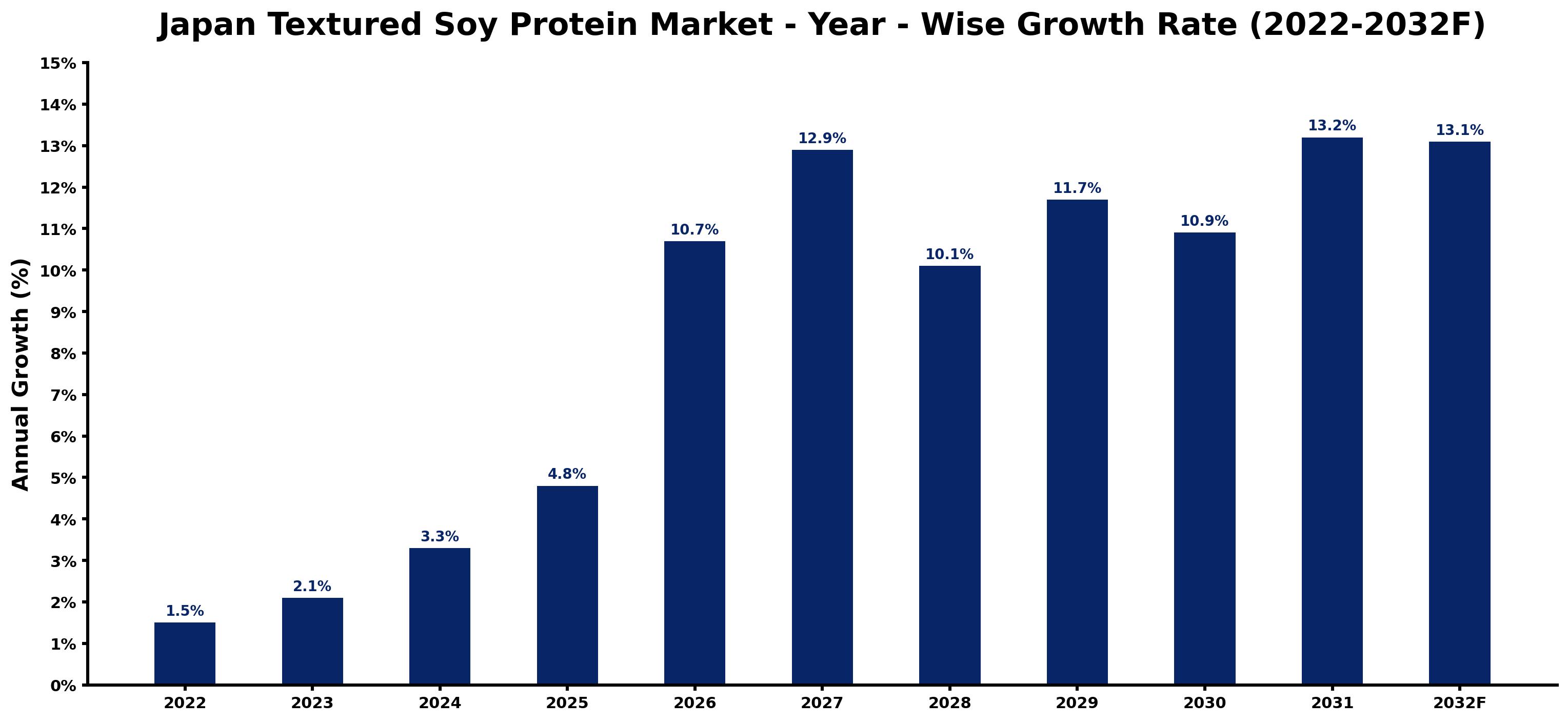
Year by year, the estimates below pair each growth rate with the development that shaped it.
| Year | Estimated Annual Growth (%) | Market Rationale |
| 2022 | 1.5 | The market showed moderate growth, reflecting increased consumer interest in plant-based diets. |
| 2023 | 2.1 | Demand accelerated as more consumers adopted vegetarian and vegan lifestyles. |
| 2024 | 3.3 | Growth continued as food manufacturers expanded their plant-based product lines. |
| 2025 | 4.8 | The market reached a historical peak due to heightened health awareness among consumers. |
| 2026 | 10.7 | Growth surged as investment in plant-based food innovation is expected to increase. |
| 2027 | 12.9 | Demand is projected to rise further, driven by the popularity of meat substitutes in various sectors. |
| 2028 | 10.1 | The growth rate is expected to slow slightly, but the market will remain strong with ongoing consumer interest. |
| 2029 | 11.7 | Demand is anticipated to increase again as new product launches attract health-conscious buyers. |
| 2030 | 10.9 | The market growth rate is expected to stabilise, driven by consistent demand for dairy alternatives. |
| 2031 | 13.2 | The market is projected to peak again, reflecting sustained interest in plant-based nutrition. |
| 2032 | 13.1 | Growth is expected to slow slightly, but the market will continue to expand with evolving consumer preferences. |
Note: Market size estimations and growth projections presented in this report are based on 6Wresearch's proprietary forecasting methodology, utilizing the latest available industry data, government publications, and primary research inputs.
Japan Textured Soy Protein Market Synopsis
Textured Soy Protein is a plant-based protein derived from soybeans, created through extrusion cooking and primarily used as a meat substitute in vegetarian and vegan diets. The Japan Textured Soy Protein Market is expanding due to increasing health awareness and a shift towards plant-based consumption, supported by government initiatives that encourage plant-based diets. The Tokyo region has emerged as a centre for food innovation, while demand from health-focused consumers and food manufacturers propels investment in this sector.
Market Dynamics Impact Analysis (2026–2032)
| Factor | Type | Impact | Primary Segment Affected |
| Rising health consciousness among consumers | Driver | High | Food Meat Substitutes |
| Increased investment in plant-based food innovation | Driver | High | Dairy Alternatives |
| Growing demand for organic products | Opportunity | Medium | Organic |
| Expansion of plant-based dairy alternatives | Opportunity | High | Dairy Alternatives |
| Limited awareness of textured soy protein benefits | Restraint | Medium | Food Meat Substitutes |
| Competition from other protein sources | Restraint | High | Conventional |
| Supply chain disruptions affecting availability | Challenge | High | Soy protein concentrates |
| High production costs for organic options | Challenge | Medium | Organic |
Evaluation of Drivers in Japan Textured Soy Protein Market (2026–2032)
The table below links each growth driver to the segment it affects and the evidence for it.
| Drivers | Primary Segment Affected | Why It Matters (Evidence) |
| Health trends driving demand for plant-based diets | Food Meat Substitutes | Approximately 126 million people in Japan are increasingly adopting vegetarian and vegan lifestyles. |
| Investment in food innovation | Dairy Alternatives | Numerous startups focusing on plant-based products are emerging in the Tokyo region. |
| Consumer preference for non-GMO products | Non-GMO | Health-conscious consumers increasingly prefer non-GMO options, with 44% of the market share in 2022. |
| Rising popularity of meat substitutes | Conventional | Soy protein isolates are used in over 30% of plant-based meat products in Japan, reflecting growing acceptance. |
| Regulatory support for sustainable protein sources | Organic | Government initiatives promote sustainable protein sources, creating market opportunities for organic products. |
Purchasing is picking up as health trends drive consumers towards plant-based diets. The Tokyo region has become a hub for food innovation, with numerous startups focusing on plant-based products. Investment in food innovation is rising, particularly in dairy alternatives, where health-conscious consumers are increasingly preferring non-GMO options. The growing popularity of meat substitutes is clear, as soy protein isolates are key ingredients in over 30% of plant-based meat products. Support for sustainable protein sources further boosts market growth.
Evaluation of Restraints in Japan Textured Soy Protein Market
The main factors holding the market back are set out below.
| Market Restraint | Primary Segment Affected | Why It Matters (Evidence) |
| Limited consumer awareness of textured soy protein benefits | Food Meat Substitutes | Many consumers lack knowledge about the nutritional advantages of textured soy protein, which restricts its market penetration. |
| Competition from alternative protein sources | Conventional | The presence of various protein sources in the market poses challenges for textured soy protein's market share. |
| Supply chain disruptions affecting availability | Soy protein concentrates | Recent global supply chain issues have impacted the availability of soy protein concentrates for manufacturers. |
| High production costs for organic options | Organic | Organic textured soy protein production is often more expensive, limiting its accessibility to consumers. |
| Regulatory hurdles for new product approvals | Dairy Alternatives | Stringent regulations can delay the introduction of new textured soy protein products into the market. |
Japan Textured Soy Protein Market Challenges
Producers encounter high raw material costs due to fluctuating soybean prices, which can inflate production expenses by up to 15% and squeeze profit margins. Strict regulations for infant nutrition products necessitate extensive testing, causing delays in product launches by several months for manufacturers. A shortage of skilled professionals in food technology hampers innovation, restricting producers from developing new textured soy protein applications, which could impede market expansion. Buyers face limited product availability as demand for plant-based options surges, leading to longer lead times and potential stock shortages.
Trends in the Japan Textured Soy Protein Market
Several trends are reshaping the Japan Textured Soy Protein Market; the most important are set out below.
- Shift towards Organic Textured Soy Protein: Organic textured soy protein is gaining traction among health-focused consumers, with approximately 20% of consumers in Japan preferring organic options, driving demand.
- Transition from Conventional to Non-GMO: The preference for non-GMO textured soy protein is increasing, particularly among health-conscious buyers. In 2022, non-GMO products accounted for 44% of the market, reflecting changing consumer preferences.
- Emergence of Plant-Based Dairy Alternatives: The market for dairy alternatives is expanding, with the Japanese government launching a program in 2022 to promote plant-based diets, supporting food security initiatives.
- Growing Popularity of Meat Substitutes: The demand for meat substitutes is rising as more consumers adopt vegetarian diets. The Japanese market for dairy alternatives is projected to grow, reflecting this trend.
Investment Opportunities in the Japan Textured Soy Protein Market
Below are the investment opportunities with the strongest case in the Japan Textured Soy Protein Market.
- Timing for Investment in Organic Products: With organic textured soy protein gaining traction, now is the ideal moment for investment. The organic segment is expected to grow, appealing to health-focused consumers in urban areas.
- Dairy Alternatives Demand Surge: The dairy alternatives market is expanding rapidly, presenting opportunities for suppliers. The Japan Plant-Based Food Association promotes the use of textured soy protein in various applications, creating pathways for market entry.
- Focus on Food Meat Substitutes: The food meat substitutes sector is thriving, driven by consumer demand for plant-based options. Collaborating with local manufacturers in urban areas can facilitate market entry.
- Entry into Soy Protein Isolates Market: Investing in soy protein isolates presents a substantial opportunity, as they are widely used in plant-based products. Partnering with food manufacturers can strengthen market presence.
Government Initiatives in the Japan Textured Soy Protein Market
The Food Sanitation Act amendment in 2018 established a positive list system for synthetic resins, ensuring that only safe materials are used in food packaging and utensils, which supports quality standards for textured soy protein products. The Food Recycling Law mandates food businesses to reduce waste and recycle it into feed, fertiliser, and energy, promoting sustainable practices in the textured soy protein industry.
Various initiatives support textured soy protein producers, with funding for projects aimed at promoting sustainable protein sources and ensuring compliance with safety standards. This benefits both producers and consumers, increasing the market's growth potential.
Future Insight of the Japan Textured Soy Protein Market
The investment pipeline for plant-based food innovation will grow, driven by government initiatives that promote sustainable diets. By 2032, the Tokyo region will see an increase in facilities dedicated to plant-based products, improving supply chain efficiency. The market for dairy alternatives will expand, encouraging suppliers to diversify their offerings for health-conscious consumers. Enhanced safety standards will ensure higher quality products, benefiting buyers seeking reliable options and suppliers aiming to meet evolving consumer expectations.
Market Segmentation Analysis
Japan Textured Soy Protein Market report covers a detailed analysis of the following market segments:
By Type – Non-GMO Leads, Conventional Expected to Grow Fastest
According to Shubham Padhi, Research Analyst at 6Wresearch, Non-GMO accounted for 44% of the market by type in 2025. Non-GMO options are increasingly preferred by health-conscious consumers, reflecting a shift towards natural and sustainable food choices. This trend is particularly strong in urban centres like Tokyo, where the demand for Non-GMO products is substantial. Conventional is set to record the highest CAGR in this split, 14.4% over 2026–2032. Conventional products are widely accessible and utilised in numerous applications, appealing to a diverse consumer demographic. Their affordability and availability are key factors contributing to their rapid growth in the market. Suppliers must prioritise the expansion of Non-GMO offerings to align with consumer preferences.
By Application – Food Meat Substitutes Lead, Dairy Alternatives Expected to Grow Fastest
The largest application category in 2025 was Food Meat Substitutes, at 49% of revenue. Food meat substitutes represent the largest application of textured soy protein, catering to Japan's growing vegetarian and vegan population. This segment benefits from a strong demand for healthier alternatives, particularly in urban areas like Tokyo, which is a hub for food innovation. The quickest growth will come from Dairy Alternatives, forecast to expand at a CAGR of 15.8% between 2026 and 2032. Dairy alternatives are experiencing rapid growth, largely due to their increasing incorporation in plant-based dairy products, reflecting a shift in consumer preferences towards healthier options. This trend is expected to continue as health consciousness rises among the population. Suppliers should consider expanding their offerings to include more dairy alternative products to meet changing consumer demands.
By Source Concentrates – Soy protein concentrates Lead, Soy protein isolates Expected to Grow Fastest
In 2025, Soy protein concentrates led the source concentrates split with a 41% share. Soy protein concentrates are commonly used as a base for textured soy protein products, making them a staple in food manufacturing. Their versatility in various applications solidifies their leading position in the market. Soy protein isolates are projected to grow fastest, at a CAGR of 16.3% during 2026–2032. Soy protein isolates are often utilized for high-protein formulations in various food products, catering to the rising demand for protein-rich diets. This trend is likely to accelerate as health awareness continues to grow. Suppliers should invest in developing high-protein formulations to capture emerging market opportunities.
Key Attractiveness of the Report
- 10 Years of Market Numbers
- Historical Data Starting from 2022 to 2025
- Base Year 2025
- Forecast Data until 2032
- Key Performance Indicators Impacting the Market
- Major Upcoming Developments and Projects
Key Highlights of the Report:
- Japan Textured Soy Protein Market Outlook
- Market Size of Japan Textured Soy Protein Market, 2025
- Forecast of Japan Textured Soy Protein Market, 2032
- Historical Data and Forecast of Japan Textured Soy Protein Revenues & Volume for the Period 2022-2032
- Japan Textured Soy Protein Market Trend Evolution
- Japan Textured Soy Protein Market Drivers and Challenges
- Japan Textured Soy Protein Price Trends
- Japan Textured Soy Protein Porter's Five Forces
- Japan Textured Soy Protein Industry Life Cycle
- Historical Data and Forecast of Japan Textured Soy Protein Market Revenues & Volume By Type for the Period 2022-2032
- Historical Data and Forecast of Japan Textured Soy Protein Market Revenues & Volume By Non-GMO for the Period 2022-2032
- Historical Data and Forecast of Japan Textured Soy Protein Market Revenues & Volume By Conventional for the Period 2022-2032
- Historical Data and Forecast of Japan Textured Soy Protein Market Revenues & Volume By Organic for the Period 2022-2032
- Historical Data and Forecast of Japan Textured Soy Protein Market Revenues & Volume By Application for the Period 2022-2032
- Historical Data and Forecast of Japan Textured Soy Protein Market Revenues & Volume By Food Meat Substitutes for the Period 2022-2032
- Historical Data and Forecast of Japan Textured Soy Protein Market Revenues & Volume By Dairy Alternatives for the Period 2022-2032
- Historical Data and Forecast of Japan Textured Soy Protein Market Revenues & Volume By Infant Nutrition for the Period 2022-2032
- Historical Data and Forecast of Japan Textured Soy Protein Market Revenues & Volume By Bakery for the Period 2022-2032
- Historical Data and Forecast of Japan Textured Soy Protein Market Revenues & Volume By Source Concentrates for the Period 2022-2032
- Historical Data and Forecast of Japan Textured Soy Protein Market Revenues & Volume By Soy protein concentrates for the Period 2022-2032
- Historical Data and Forecast of Japan Textured Soy Protein Market Revenues & Volume By Soy protein isolates for the Period 2022-2032
- Historical Data and Forecast of Japan Textured Soy Protein Market Revenues & Volume By Soy flour for the Period 2022-2032
- Japan Textured Soy Protein Import Export Trade Statistics
- Market Opportunity Assessment By Type
- Market Opportunity Assessment By Application
- Market Opportunity Assessment By Source Concentrates
- Japan Textured Soy Protein Top Companies Market Share
- Japan Textured Soy Protein Competitive Benchmarking By Technical and Operational Parameters
- Japan Textured Soy Protein Company Profiles
- Japan Textured Soy Protein Key Strategic Recommendations
Market Covered
The following segment groups are covered in the report.
By Type
- Non-GMO
- Conventional
- Organic
By Application
- Food Meat Substitutes
- Dairy Alternatives
- Infant Nutrition
- Bakery
By Source Concentrates
- Soy protein concentrates
- Soy protein isolates
- Soy flour































