Japan Vitamin D Market Import Shipment by Countries (Top 5) & Competition (HHI)
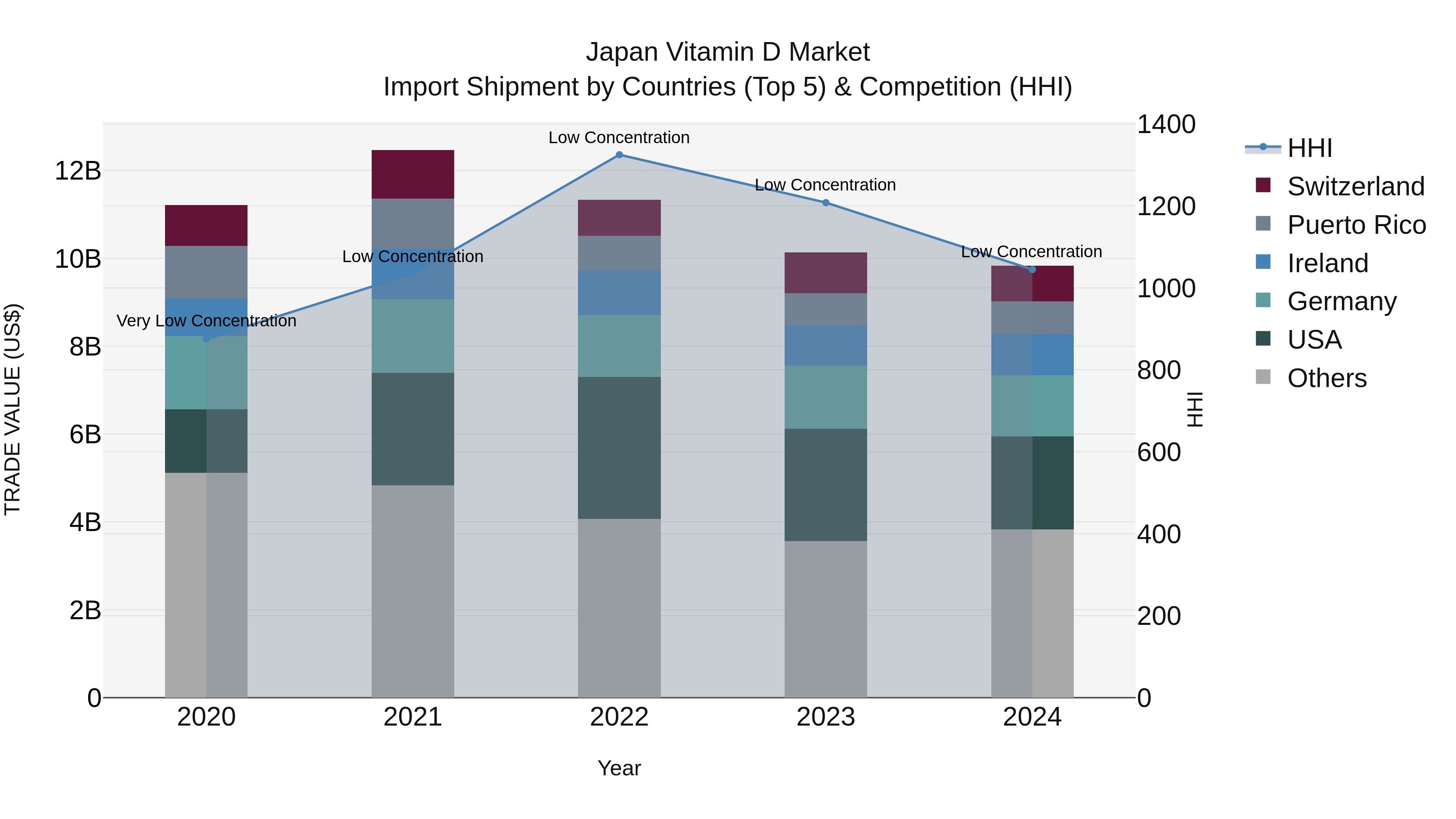
In 2024, Japan continued to rely on key vitamin D imports from the USA, Germany, Ireland, Switzerland, and Sweden. Despite a slight decline in the growth rate, the market remains relatively diverse with low concentration, as indicated by the Herfindahl-Hirschman Index (HHI). The negative compound annual growth rate (CAGR) from 2020 to 2024 could be attributed to various factors, but the consistent shipments from these top exporting countries demonstrate a stable supply chain for vitamin D products in the Japanese market.
Japan Vitamin D Market Synopsis
The Japan Vitamin D market is witnessing steady growth due to increasing awareness about the health benefits of vitamin D, coupled with a rising incidence of vitamin D deficiency among the population. The market is driven by factors such as a growing aging population, changing dietary habits, and a shift towards preventive healthcare measures. Key market players are focusing on product innovation, marketing campaigns, and strategic partnerships to expand their market presence. The market is segmented into supplements, fortified foods, and pharmaceuticals, with supplements holding the largest market share. Government initiatives promoting vitamin D supplementation further contribute to market growth. With a trend towards health-conscious consumers and a proactive approach towards well-being, the Japan Vitamin D market is expected to continue its upward trajectory in the coming years.
Japan Vitamin D Market Trends
In the Japan Vitamin D market, there is a growing awareness among consumers about the importance of Vitamin D in maintaining overall health and immunity, especially in light of the ongoing COVID-19 pandemic. This awareness has led to an increase in demand for Vitamin D supplements and fortified foods. Additionally, the aging population in Japan has also contributed to the rising interest in Vitamin D products due to its role in bone health and preventing osteoporosis. Manufacturers are focusing on developing innovative and convenient delivery formats such as gummies, drinks, and sprays to cater to diverse consumer preferences. The market is expected to continue witnessing steady growth as consumers prioritize preventive healthcare and wellness, driving the demand for Vitamin D products in various forms.
Japan Vitamin D Market Challenges
In the Japan Vitamin D market, some key challenges include low consumer awareness about the importance of Vitamin D supplementation, limited availability of natural food sources rich in Vitamin D, and strict regulations on health claims for supplements. Additionally, there is competition from other popular health supplements in the market, making it challenging for Vitamin D products to stand out. The aging population in Japan also presents a unique challenge as older individuals typically require higher levels of Vitamin D, leading to a growing demand for supplements. Overall, addressing these challenges will require targeted marketing strategies to educate consumers, developing innovative products that cater to specific needs, and navigating the regulatory landscape effectively to promote the benefits of Vitamin D supplementation in Japan.
Japan Vitamin D Market Investment Opportunities
The Japan Vitamin D market presents promising investment opportunities due to several factors. The increasing awareness about the health benefits of Vitamin D, coupled with a growing aging population in Japan, is driving the demand for Vitamin D supplements and fortified foods. The market is also witnessing a shift towards preventive healthcare practices, with consumers actively seeking products that support immune health and overall well-being. Furthermore, the government`s initiatives to promote healthy aging and combat vitamin deficiencies are likely to further boost the market growth. Investing in the Japan Vitamin D market could be lucrative, especially for companies offering innovative formulations, targeted marketing strategies, and collaborations with healthcare professionals to educate consumers about the importance of Vitamin D supplementation.
Jordan Agar Market Government Policies
The Japanese government has implemented various policies related to the Vitamin D market to address the country`s aging population and the increasing prevalence of Vitamin D deficiency. These policies focus on promoting the consumption of Vitamin D-fortified foods, encouraging manufacturers to fortify commonly consumed products like milk and soy products, and imposing regulations on the labeling and advertising of Vitamin D supplements to ensure consumer safety and transparency. Additionally, the government has been conducting awareness campaigns to educate the public about the importance of Vitamin D for overall health and offering guidelines for healthcare professionals to assess and address Vitamin D deficiency in their patients. Overall, these policies aim to improve public health outcomes by increasing Vitamin D intake and reducing deficiency rates in the population.
Japan Vitamin D Market Future Outlook
The Japan Vitamin D market is expected to witness steady growth in the coming years due to increasing awareness about the health benefits of Vitamin D, rising prevalence of Vitamin D deficiency among the population, and a growing aging demographic. The market is likely to be driven by the rising demand for Vitamin D supplements, fortified foods, and beverages. Additionally, the government`s initiatives to promote Vitamin D intake and its role in preventing various diseases are expected to further fuel market growth. With a shift towards preventive healthcare and a greater emphasis on overall wellness, the Japan Vitamin D market is poised for expansion as consumers seek to adopt healthier lifestyles and address nutritional deficiencies.
Key Highlights of the Report:
- Japan Vitamin D Market Outlook
- Market Size of Japan Vitamin D Market, 2024
- Forecast of Japan Vitamin D Market, 2031
- Historical Data and Forecast of Japan Vitamin D Revenues & Volume for the Period 2018 - 2031
- Japan Vitamin D Market Trend Evolution
- Japan Vitamin D Market Drivers and Challenges
- Japan Vitamin D Price Trends
- Japan Vitamin D Porter's Five Forces
- Japan Vitamin D Industry Life Cycle
- Historical Data and Forecast of Japan Vitamin D Market Revenues & Volume By Analog for the Period 2018 - 2031
- Historical Data and Forecast of Japan Vitamin D Market Revenues & Volume By Vitamin D3 for the Period 2018 - 2031
- Historical Data and Forecast of Japan Vitamin D Market Revenues & Volume By Vitamin D2 for the Period 2018 - 2031
- Historical Data and Forecast of Japan Vitamin D Market Revenues & Volume By Iu Strength for the Period 2018 - 2031
- Historical Data and Forecast of Japan Vitamin D Market Revenues & Volume By 500,000 IU for the Period 2018 - 2031
- Historical Data and Forecast of Japan Vitamin D Market Revenues & Volume By 100,000 IU for the Period 2018 - 2031
- Historical Data and Forecast of Japan Vitamin D Market Revenues & Volume By 40 Miu for the Period 2018 - 2031
- Historical Data and Forecast of Japan Vitamin D Market Revenues & Volume By Others for the Period 2018 - 2031
- Historical Data and Forecast of Japan Vitamin D Market Revenues & Volume By Form for the Period 2018 - 2031
- Historical Data and Forecast of Japan Vitamin D Market Revenues & Volume By Dry for the Period 2018 - 2031
- Historical Data and Forecast of Japan Vitamin D Market Revenues & Volume By Liquid for the Period 2018 - 2031
- Historical Data and Forecast of Japan Vitamin D Market Revenues & Volume By Application for the Period 2018 - 2031
- Historical Data and Forecast of Japan Vitamin D Market Revenues & Volume By Feed & Pet Food for the Period 2018 - 2031
- Historical Data and Forecast of Japan Vitamin D Market Revenues & Volume By Animal Feed for the Period 2018 - 2031
- Historical Data and Forecast of Japan Vitamin D Market Revenues & Volume By Pet Food for the Period 2018 - 2031
- Historical Data and Forecast of Japan Vitamin D Market Revenues & Volume By Pharmaceuticals for the Period 2018 - 2031
- Historical Data and Forecast of Japan Vitamin D Market Revenues & Volume By Functional Food & Beverages for the Period 2018 - 2031
- Historical Data and Forecast of Japan Vitamin D Market Revenues & Volume By Personal Care for the Period 2018 - 2031
- Historical Data and Forecast of Japan Vitamin D Market Revenues & Volume By End User for the Period 2018 - 2031
- Historical Data and Forecast of Japan Vitamin D Market Revenues & Volume By Adults for the Period 2018 - 2031
- Historical Data and Forecast of Japan Vitamin D Market Revenues & Volume By Pregnant Women for the Period 2018 - 2031
- Historical Data and Forecast of Japan Vitamin D Market Revenues & Volume By Children for the Period 2018 - 2031
- Japan Vitamin D Import Export Trade Statistics
- Market Opportunity Assessment By Analog
- Market Opportunity Assessment By Iu Strength
- Market Opportunity Assessment By Form
- Market Opportunity Assessment By Application
- Market Opportunity Assessment By End User
- Japan Vitamin D Top Companies Market Share
- Japan Vitamin D Competitive Benchmarking By Technical and Operational Parameters
- Japan Vitamin D Company Profiles
- Japan Vitamin D Key Strategic Recommendations






































