Japan Winding Wire Market Size Growth Rate
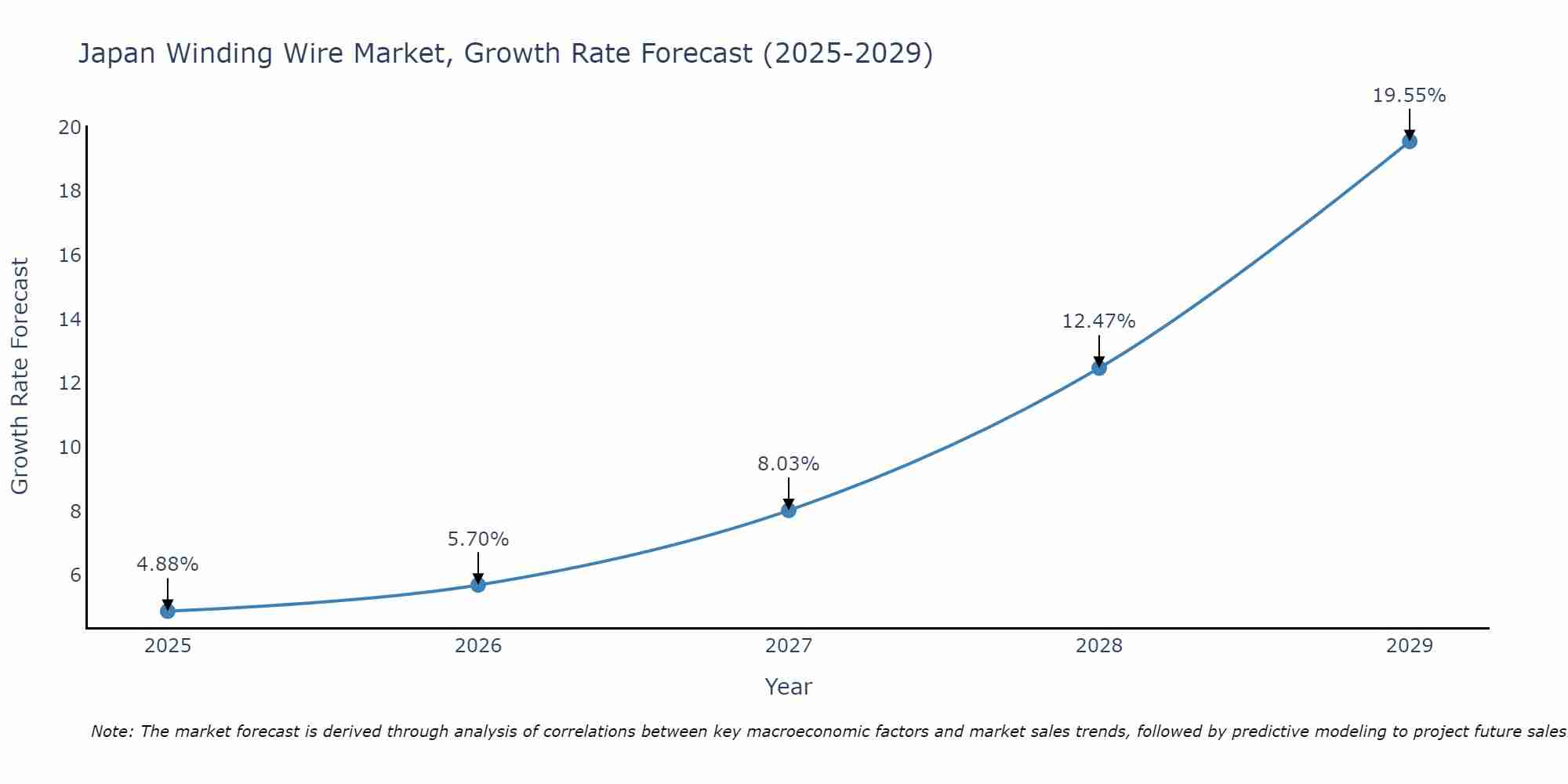
The Japan Winding Wire Market is poised for steady growth rate improvements from 2025 to 2029. The growth rate starts at 4.88% in 2025 and reaches 19.55% by 2029.
Japan Winding Wire Market Overview
The Japan winding wire market is a mature and competitive industry driven by the increasing demand for electrical components in various sectors such as automotive, electronics, and industrial machinery. The market is characterized by a high level of technological advancements and strict quality standards, with key players focusing on product innovation and sustainability. Copper winding wire remains the most commonly used material due to its superior conductivity and reliability. However, there is a growing trend towards the adoption of aluminum winding wire for its cost-effectiveness and lighter weight. The market is expected to witness steady growth attributed to the expanding manufacturing sector and the increasing emphasis on energy efficiency in Japan. Key players in the market include Fujikura Ltd., Hitachi Metals Ltd., and Sumitomo Electric Industries Ltd.
Japan Winding Wire Market Trends
The Japan Winding Wire Market is currently experiencing steady growth driven by the increasing demand for electrical components in various sectors such as automotive, electronics, and energy. The market is witnessing a shift towards environmentally friendly and energy-efficient winding wire materials, such as copper-clad aluminum and aluminum winding wires, in line with the country`s focus on sustainability. Technological advancements in the manufacturing process, such as the development of high-performance and high-temperature resistant winding wires, are also shaping the market trends. Additionally, the growing adoption of electric vehicles and renewable energy sources is expected to further drive the demand for winding wires in Japan. Overall, the market is poised for continued growth with a focus on innovation and sustainability.
Japan Winding Wire Market Challenges
In the Japan Winding Wire Market, some of the key challenges include intense competition among manufacturers leading to pricing pressures, stringent regulations related to quality and safety standards, fluctuations in raw material costs, and a growing focus on sustainability and environmental concerns. Additionally, the market is influenced by technological advancements and the increasing demand for high-performance and energy-efficient winding wires, requiring manufacturers to continuously innovate and invest in research and development. Moreover, the aging workforce in the industry poses a challenge in terms of knowledge transfer and skill development, highlighting the need for talent management strategies to ensure a skilled workforce for the future. Overall, navigating these challenges while meeting customer demands and maintaining profitability remains a complex task for players in the Japan Winding Wire Market.
Japan Winding Wire Market Investment Opportunities
The Japan Winding Wire Market offers several investment opportunities due to increasing demand in sectors such as automotive, electronics, and industrial machinery. With Japan being a major manufacturing hub, the market for winding wire used in motors, transformers, and generators is poised for growth. Investing in companies that manufacture winding wire or supply raw materials to this industry could be lucrative. Furthermore, technological advancements in the sector, such as the development of high-performance and eco-friendly winding wire materials, present opportunities for innovation and market expansion. Additionally, investing in research and development to improve the efficiency and performance of winding wire products could be a strategic move to capitalize on the growing demand for energy-efficient solutions in various applications.
Japan Winding Wire Market Government Policy
The Japan Winding Wire Market is subject to various government policies aimed at promoting sustainable development and ensuring product quality. The Ministry of Economy, Trade and Industry (METI) regulates the market through measures such as setting standards for product quality and safety, promoting energy efficiency in wire production, and encouraging innovation in the industry. Additionally, the Japanese government provides incentives for companies that adopt eco-friendly practices and invest in research and development for advanced winding wire technologies. Overall, these policies aim to drive growth in the market, enhance competitiveness, and contribute to the overall economic and environmental goals of Japan.
Japan Winding Wire Market Future Outlook
The Japan winding wire market is expected to witness steady growth in the coming years, driven by the increasing demand for energy-efficient electrical components in various industries such as automotive, electronics, and power generation. The market is likely to benefit from advancements in technology leading to the development of high-performance and lightweight winding wires that offer improved conductivity and thermal resistance. Additionally, the growing emphasis on renewable energy sources and the expansion of electric vehicle production are anticipated to further boost the demand for winding wires in Japan. However, challenges such as fluctuating raw material prices and stringent regulations regarding environmental sustainability may impact market growth. Overall, the Japan winding wire market is poised for expansion, supported by ongoing innovation and evolving industry trends.
Key Highlights of the Report:
- Japan Winding Wire Market Outlook
- Market Size of Japan Winding Wire Market, 2021
- Forecast of Japan Winding Wire Market, 2031
- Historical Data and Forecast of Japan Winding Wire Revenues & Volume for the Period 2018 - 2031
- Japan Winding Wire Market Trend Evolution
- Japan Winding Wire Market Drivers and Challenges
- Japan Winding Wire Price Trends
- Japan Winding Wire Porter's Five Forces
- Japan Winding Wire Industry Life Cycle
- Historical Data and Forecast of Japan Winding Wire Market Revenues & Volume By Product for the Period 2018 - 2031
- Historical Data and Forecast of Japan Winding Wire Market Revenues & Volume By Copper Winding Wire for the Period 2018 - 2031
- Historical Data and Forecast of Japan Winding Wire Market Revenues & Volume By Aluminum Winding Wire for the Period 2018 - 2031
- Japan Winding Wire Import Export Trade Statistics
- Market Opportunity Assessment By Product
- Japan Winding Wire Top Companies Market Share
- Japan Winding Wire Competitive Benchmarking By Technical and Operational Parameters
- Japan Winding Wire Company Profiles
- Japan Winding Wire Key Strategic Recommendations






































