Jordan Bromine Market Size Growth Rate
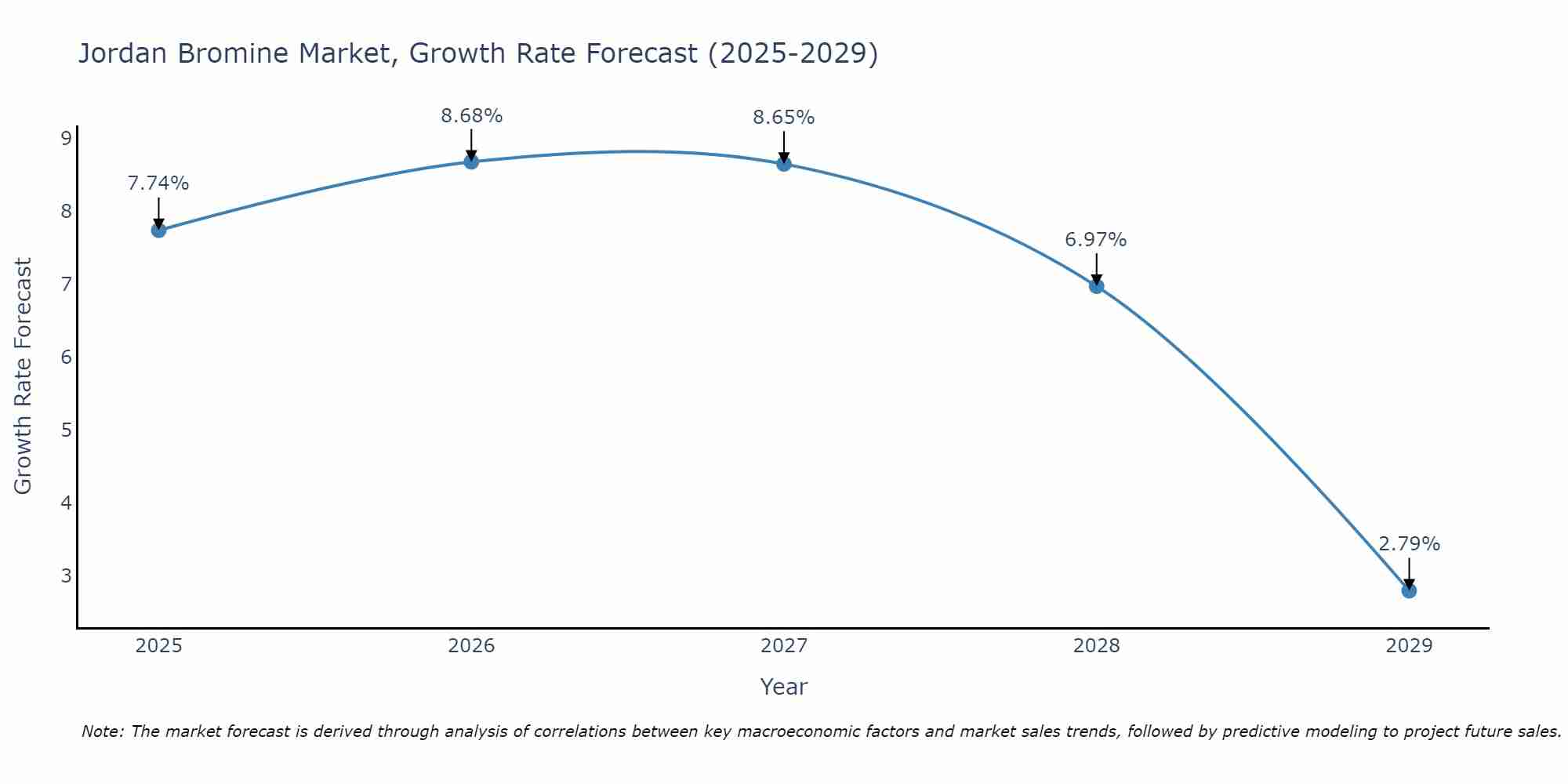
The Jordan Bromine Market is projected to witness mixed growth rate patterns during 2025 to 2029. The growth rate begins at 7.74% in 2025, climbs to a high of 8.68% in 2026, and moderates to 2.79% by 2029.
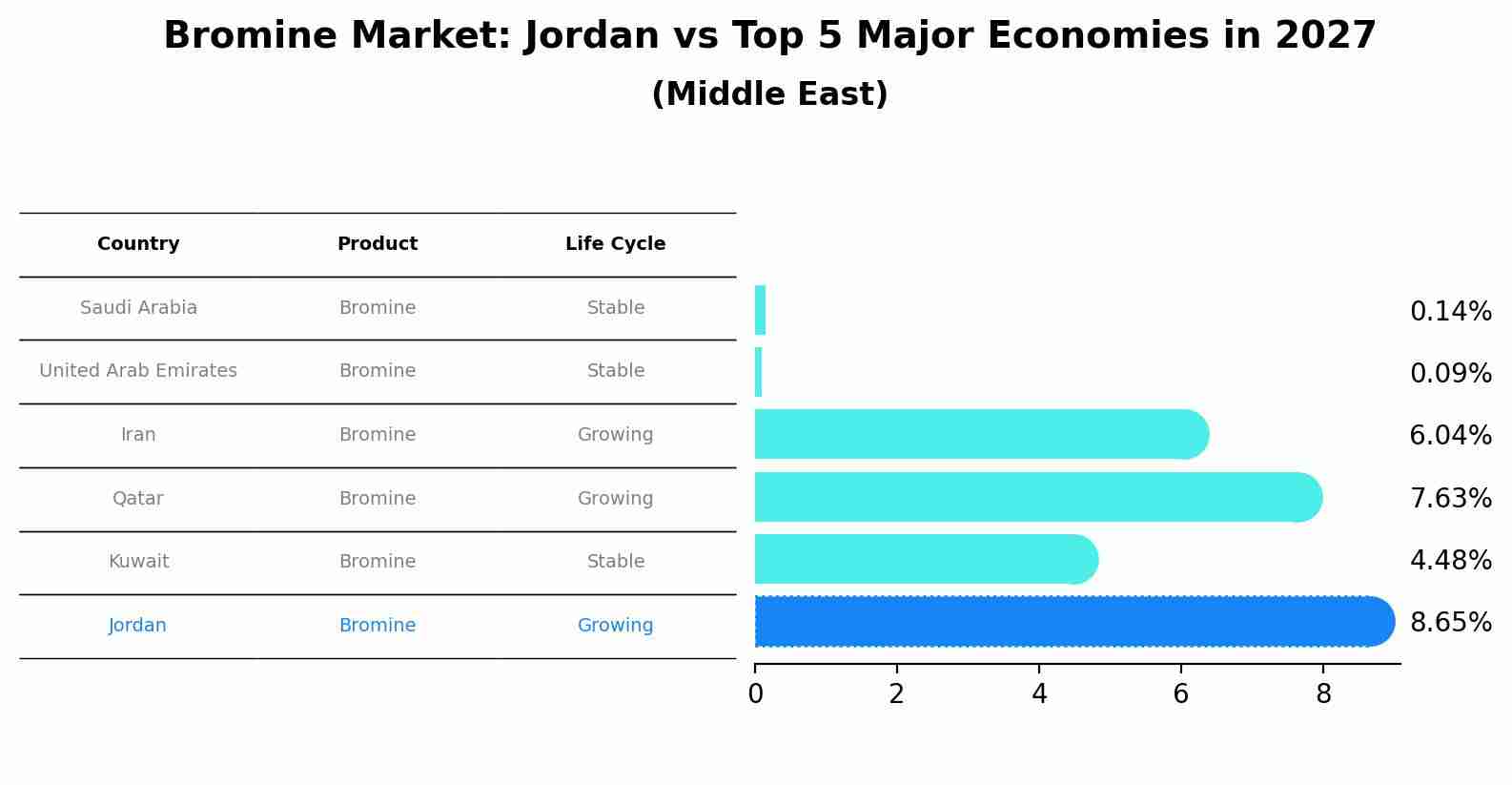
Bromine Market: Jordan vs Top 5 Major Economies in 2027 (Middle East)
The Bromine market in Jordan is projected to grow at a growing growth rate of 8.65% by 2027, within the Middle East region led by Saudi Arabia, along with other countries like United Arab Emirates, Iran, Qatar and Kuwait, collectively shaping a dynamic and evolving market environment driven by innovation and increasing adoption of emerging technologies.
Jordan Bromine Market Overview
The Jordan Bromine Market is a significant player in the global bromine industry, with Jordan being one of the largest producers of bromine in the world. Bromine is primarily extracted from the Dead Sea region in Jordan, which is known for its rich reserves of bromine salts. The country`s bromine production is primarily used in various industries such as flame retardants, oil and gas drilling fluids, pharmaceuticals, and agriculture. Jordan`s strategic location and abundant natural resources make it a key supplier of bromine to both domestic and international markets. The market is expected to witness steady growth due to increasing demand for bromine-based products globally, coupled with Jordan`s focus on expanding its chemical industry and exports.
Jordan Bromine Market Trends
The Jordan Bromine Market is currently experiencing a growing demand due to its widespread application in various industries such as flame retardants, oil and gas drilling fluids, pharmaceuticals, and agriculture. The market is seeing a shift towards eco-friendly bromine-based products as companies focus on sustainability and environmental regulations. Additionally, the increasing use of bromine compounds in water treatment and mercury emissions control is driving market growth. Technological advancements and research in bromine production methods are also influencing the market landscape, with a focus on improving efficiency and reducing production costs. Overall, the Jordan Bromine Market is expected to continue its upward trajectory, driven by expanding end-user industries and a shift towards sustainable practices.
Jordan Bromine Market Challenges
The Jordan Bromine Market faces several challenges, including fluctuating global demand for bromine-based products, competition from other countries with lower production costs, regulatory hurdles related to environmental concerns and safety regulations, and the need for continuous innovation to remain competitive in the market. Additionally, geopolitical tensions in the region can impact the supply chain and market stability. Ensuring sustainable production practices and maintaining high product quality standards are also crucial challenges for the Jordan Bromine Market. Overall, navigating these challenges requires strategic planning, investment in research and development, and proactive engagement with stakeholders to adapt to changing market dynamics and ensure long-term growth and profitability.
Jordan Bromine Market Investment Opportunities
The Jordan Bromine Market presents several investment opportunities due to the country`s significant reserves of bromine, a key element in various industries such as pharmaceuticals, oil and gas drilling, flame retardants, and water treatment. Investing in bromine production facilities or bromine derivative manufacturing plants in Jordan can be lucrative due to the country`s favorable regulatory environment and access to low-cost raw materials. Additionally, the growing demand for bromine-based products globally provides a conducive market for potential investors in the Jordan Bromine Market. It is essential for investors to conduct thorough market research and feasibility studies to capitalize on the opportunities available and mitigate risks associated with the industry.
Jordan Bromine Market Government Policy
The Jordanian government has implemented policies to regulate and support the bromine market in the country. This includes the establishment of the Jordan Bromine Company (JBC) to oversee the extraction and production of bromine, as well as the implementation of environmental regulations to ensure sustainable mining practices. The government has also offered incentives to attract investment in the bromine sector, such as tax breaks and subsidies for companies operating in the industry. Additionally, there are regulations in place to ensure the safety and quality of bromine products, with monitoring and enforcement mechanisms to uphold these standards. Overall, the government`s policies aim to promote the growth and competitiveness of the Jordanian bromine market while ensuring environmental sustainability and product quality.
Jordan Bromine Market Future Outlook
The Jordan Bromine Market is expected to experience steady growth in the coming years, driven by increasing demand from various industries such as pharmaceuticals, flame retardants, and oil & gas. The country`s abundant natural resources of bromine, coupled with its strategic location for export, position Jordan as a key player in the global bromine market. Additionally, advancements in technology and innovation in bromine-based products are likely to further boost market growth. However, challenges such as fluctuating raw material prices and environmental concerns regarding bromine production may impact the market. Overall, with the growing demand for bromine across multiple sectors, the future outlook for the Jordan Bromine Market appears positive, presenting opportunities for expansion and investment.
Key Highlights of the Report:
- Jordan Bromine Market Outlook
- Market Size of Jordan Bromine Market, 2021
- Forecast of Jordan Bromine Market, 2031
- Historical Data and Forecast of Jordan Bromine Revenues & Volume for the Period 2021 - 2031
- Jordan Bromine Market Trend Evolution
- Jordan Bromine Market Drivers and Challenges
- Jordan Bromine Price Trends
- Jordan Bromine Porter's Five Forces
- Jordan Bromine Industry Life Cycle
- Historical Data and Forecast of Jordan Bromine Market Revenues & Volume By Derivative for the Period 2021 - 2031
- Historical Data and Forecast of Jordan Bromine Market Revenues & Volume By Organobromine for the Period 2021 - 2031
- Historical Data and Forecast of Jordan Bromine Market Revenues & Volume By Clear Brine Fluids for the Period 2021 - 2031
- Historical Data and Forecast of Jordan Bromine Market Revenues & Volume By Hydrogen Bromide for the Period 2021 - 2031
- Historical Data and Forecast of Jordan Bromine Market Revenues & Volume By Application for the Period 2021 - 2031
- Historical Data and Forecast of Jordan Bromine Market Revenues & Volume By Flame Retardants for the Period 2021 - 2031
- Historical Data and Forecast of Jordan Bromine Market Revenues & Volume By Oil & Gas Drilling for the Period 2021 - 2031
- Historical Data and Forecast of Jordan Bromine Market Revenues & Volume By PTA Synthesis for the Period 2021 - 2031
- Historical Data and Forecast of Jordan Bromine Market Revenues & Volume By Water Treatment & Biocides for the Period 2021 - 2031
- Historical Data and Forecast of Jordan Bromine Market Revenues & Volume By Pesticides for the Period 2021 - 2031
- Historical Data and Forecast of Jordan Bromine Market Revenues & Volume By HBr Flow Batteries for the Period 2021 - 2031
- Historical Data and Forecast of Jordan Bromine Market Revenues & Volume By Pharmaceuticals for the Period 2021 - 2031
- Historical Data and Forecast of Jordan Bromine Market Revenues & Volume By Others for the Period 2021 - 2031
- Jordan Bromine Import Export Trade Statistics
- Market Opportunity Assessment By Derivative
- Market Opportunity Assessment By Application
- Jordan Bromine Top Companies Market Share
- Jordan Bromine Competitive Benchmarking By Technical and Operational Parameters
- Jordan Bromine Company Profiles
- Jordan Bromine Key Strategic Recommendations






































