Kazakhstan Aerosol Market: Import Trend Analysis
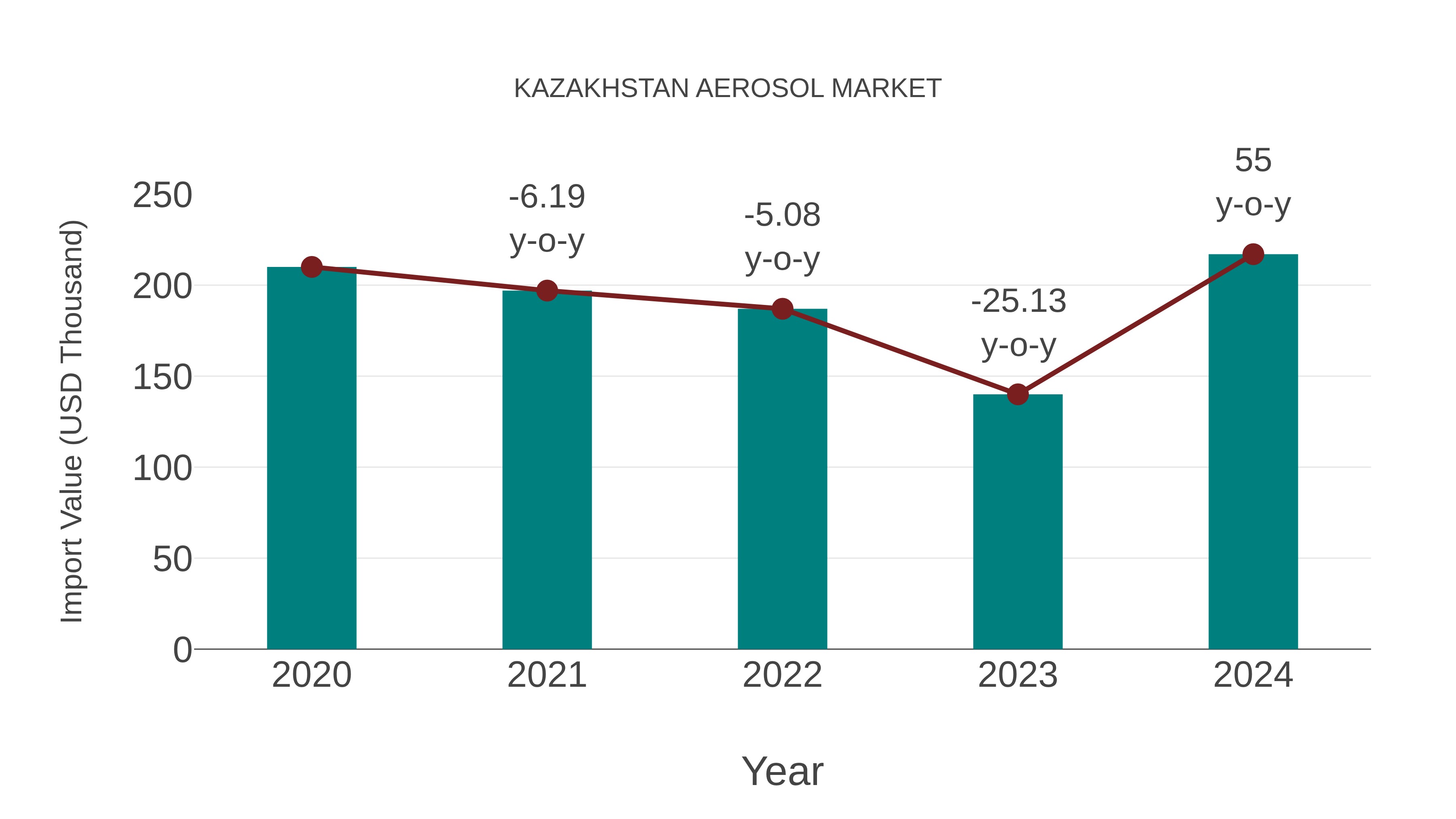
In the Kazakhstan aerosol market, import momentum notably increased from 2023 to 2024, with a growth rate of 55.0%. The compound annual growth rate (CAGR) for imports from 2020 to 2024 stood at 0.82%. This surge in imports can be attributed to shifting consumer preferences towards aerosol products, indicating a potential rise in demand and market stability during the period analyzed.
Kazakhstan Aerosol Market Synopsis
The Kazakhstan aerosol market is experiencing steady growth driven by increasing consumer demand for convenient and easy-to-use products across various industries such as personal care, household, automotive, and industrial sectors. The market is characterized by a wide range of aerosol products including deodorants, air fresheners, insecticides, paints, and lubricants. Key factors contributing to market growth include rising disposable incomes, urbanization, and changing lifestyle preferences. Manufacturers in the region are focusing on product innovation, eco-friendly formulations, and attractive packaging designs to cater to evolving consumer needs. Regulatory initiatives to promote sustainable practices and reduce environmental impact are also shaping the market landscape. Overall, the Kazakhstan aerosol market presents opportunities for both domestic and international players to capitalize on the growing demand for aerosol products in the country.
Kazakhstan Aerosol Market Trends
The Kazakhstan aerosol market is experiencing growth driven by increasing demand for convenience and hygiene products. There is a rising awareness among consumers regarding the ease of use and effectiveness of aerosol products in various applications such as personal care, household cleaning, and automotive maintenance. Key trends in the market include a shift towards eco-friendly and sustainable aerosol formulations, as well as innovations in packaging design and functionality to enhance user experience. Market players are also focusing on expanding their product portfolios to cater to evolving consumer preferences and lifestyle changes. Overall, the Kazakhstan aerosol market is expected to continue growing as manufacturers invest in research and development to meet the changing demands of consumers.
Kazakhstan Aerosol Market Challenges
In the Kazakhstan aerosol market, some of the key challenges faced include regulatory hurdles related to environmental concerns and safety standards, which can affect production processes and product formulations. Additionally, the market may be influenced by fluctuating raw material prices and currency exchange rates, impacting manufacturing costs and pricing strategies. Distribution and logistics challenges in the vast geography of Kazakhstan can also pose difficulties in reaching remote or rural areas efficiently. Furthermore, competition from international aerosol brands and changing consumer preferences towards more environmentally-friendly products present challenges for local aerosol manufacturers to stay relevant and competitive in the market. Overall, navigating these obstacles requires strategic planning, innovation, and adaptability for companies operating in the Kazakhstan aerosol market.
Kazakhstan Aerosol Market Investment Opportunities
Investment opportunities in the Kazakhstan aerosol market are promising due to the growing demand for aerosol products in various sectors such as personal care, household, automotive, and industrial applications. With a rising population and increasing disposable income levels, there is a growing trend towards convenience products, which bodes well for the aerosol market. Additionally, the government`s focus on industrial development and the country`s strategic location for exports to neighboring markets present favorable conditions for investors. Potential areas for investment in the Kazakhstan aerosol market include manufacturing facilities, research and development for innovative products, distribution networks, and partnerships with local retailers. Investing in this market offers the potential for growth and profitability in a rapidly expanding industry.
Jordan Agar Market Government Policies
The Kazakhstan government has implemented several policies related to the aerosol market to regulate the industry and protect public health and the environment. These policies include restrictions on the use of certain chemicals in aerosol products to minimize environmental impact and ensure consumer safety. Additionally, there are regulations in place to monitor the labeling and packaging of aerosol products to provide accurate information to consumers. The government also encourages the adoption of environmentally friendly practices in aerosol production and distribution through incentives and support programs. Overall, these policies aim to promote sustainable growth in the aerosol market while safeguarding the well-being of the population and the environment in Kazakhstan.
Kazakhstan Aerosol Market Future Outlook
The future outlook for the Kazakhstan Aerosol Market appears promising, with steady growth expected in the coming years. Factors contributing to this positive outlook include increasing consumer awareness about personal hygiene and the convenience of aerosol products, as well as the rising demand for eco-friendly and sustainable aerosol options. Additionally, the expanding middle-class population and improving economic conditions in Kazakhstan are likely to drive market growth further. Key players in the industry are anticipated to focus on product innovation, such as introducing advanced formulations and packaging designs to cater to evolving consumer preferences. Overall, the Kazakhstan Aerosol Market is poised for expansion, offering opportunities for both domestic and international manufacturers to capitalize on the growing demand for aerosol products in the region.
Key Highlights of the Report:
- Kazakhstan Aerosol Market Outlook
- Market Size of Kazakhstan Aerosol Market, 2025
- Forecast of Kazakhstan Aerosol Market, 2032
- Historical Data and Forecast of Kazakhstan Aerosol Revenues & Volume for the Period 2022 - 2032F
- Kazakhstan Aerosol Market Trend Evolution
- Kazakhstan Aerosol Market Drivers and Challenges
- Kazakhstan Aerosol Price Trends
- Kazakhstan Aerosol Porter's Five Forces
- Kazakhstan Aerosol Industry Life Cycle
- Historical Data and Forecast of Kazakhstan Aerosol Market Revenues & Volume By Material for the Period 2022 - 2032F
- Historical Data and Forecast of Kazakhstan Aerosol Market Revenues & Volume By Steel for the Period 2022 - 2032F
- Historical Data and Forecast of Kazakhstan Aerosol Market Revenues & Volume By Aluminum for the Period 2022 - 2032F
- Historical Data and Forecast of Kazakhstan Aerosol Market Revenues & Volume By Others for the Period 2022 - 2032F
- Historical Data and Forecast of Kazakhstan Aerosol Market Revenues & Volume By Type for the Period 2022 - 2032F
- Historical Data and Forecast of Kazakhstan Aerosol Market Revenues & Volume By Bag-In-Valve for the Period 2022 - 2032F
- Historical Data and Forecast of Kazakhstan Aerosol Market Revenues & Volume By Standard for the Period 2022 - 2032F
- Historical Data and Forecast of Kazakhstan Aerosol Market Revenues & Volume By Application for the Period 2022 - 2032F
- Historical Data and Forecast of Kazakhstan Aerosol Market Revenues & Volume By Personal Care for the Period 2022 - 2032F
- Historical Data and Forecast of Kazakhstan Aerosol Market Revenues & Volume By Household for the Period 2022 - 2032F
- Historical Data and Forecast of Kazakhstan Aerosol Market Revenues & Volume By Automotive & Industrial for the Period 2022 - 2032F
- Historical Data and Forecast of Kazakhstan Aerosol Market Revenues & Volume By Food for the Period 2022 - 2032F
- Historical Data and Forecast of Kazakhstan Aerosol Market Revenues & Volume By Paints for the Period 2022 - 2032F
- Historical Data and Forecast of Kazakhstan Aerosol Market Revenues & Volume By Medical for the Period 2022 - 2032F
- Historical Data and Forecast of Kazakhstan Aerosol Market Revenues & Volume By Others for the Period 2022 - 2032F
- Kazakhstan Aerosol Import Export Trade Statistics
- Market Opportunity Assessment By Material
- Market Opportunity Assessment By Type
- Market Opportunity Assessment By Application
- Kazakhstan Aerosol Top Companies Market Share
- Kazakhstan Aerosol Competitive Benchmarking By Technical and Operational Parameters
- Kazakhstan Aerosol Company Profiles
- Kazakhstan Aerosol Key Strategic Recommendations






































