Kazakhstan Algorithmic Trading Market Size & Growth Rate (2026-2032)
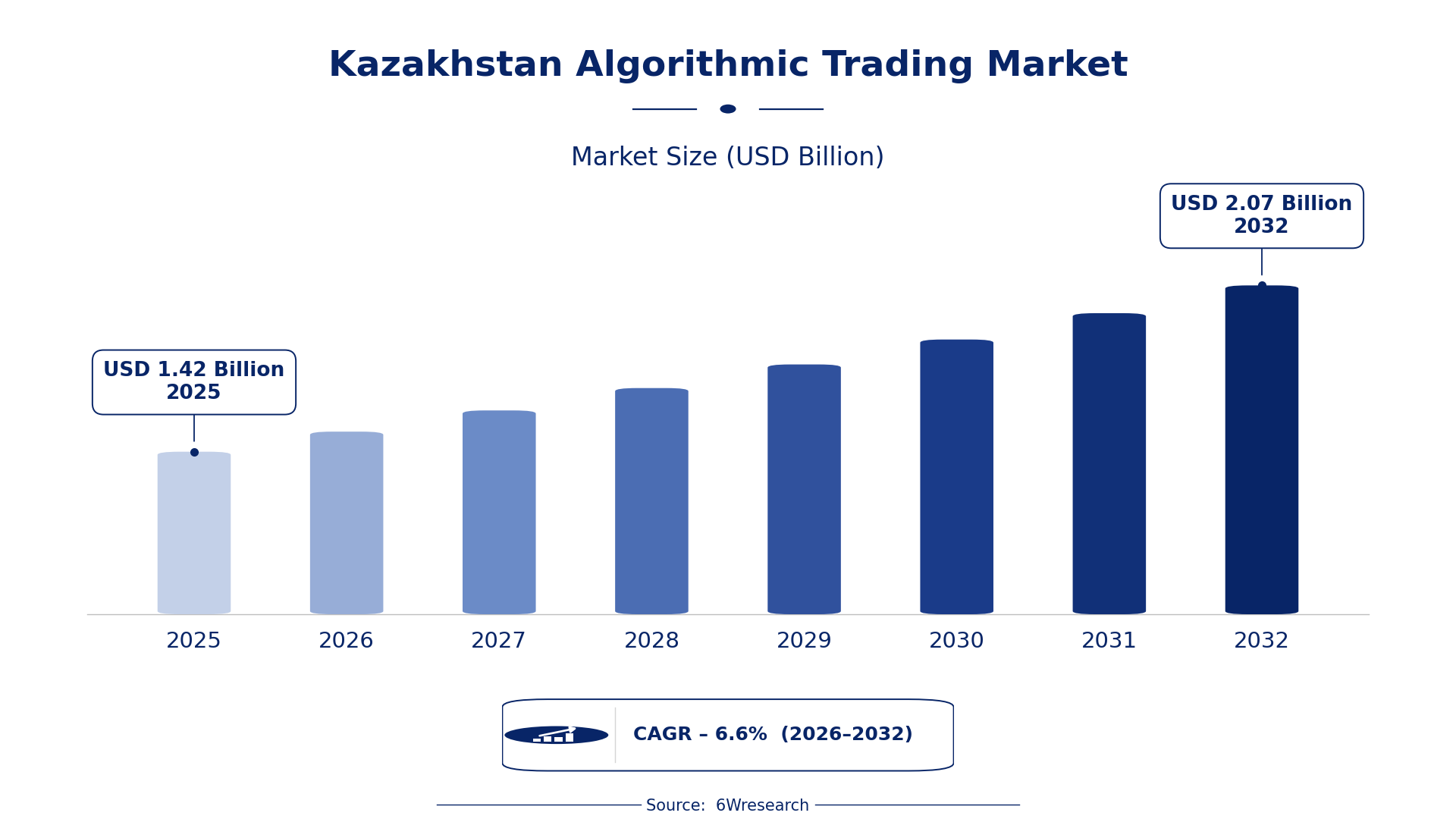
The Kazakhstan Algorithmic Trading Market was estimated at USD 1416 Million in 2025 and is projected to reach USD 2068 Million by 2032, growing at a CAGR of 6.6% from 2026 to 2032.
Kazakhstan Algorithmic Trading Market Synopsis
The Kazakhstan Algorithmic Trading Market is gaining momentum, reflecting a shift toward more efficient trading methodologies. As local and international firms increasingly adopt algorithmic trading technologies, the market is set for expansive growth driven by innovation and demand for quick, precise execution.
Looking ahead, the market will likely see an influx of sophisticated trading solutions, shaped by advancements in AI and machine learning. As regulatory frameworks evolve, more financial institutions will embrace algorithmic trading, pushing the boundaries of what’s possible in the Kazakh financial sector.
Kazakhstan Algorithmic Trading Market Year-wise Growth Rate and Key Drivers
This graph illustrates the annual growth rates of the Kazakhstan Algorithmic Trading Market from 2021 to 2032, highlighting a steady upward trajectory and projected expansion over the forecast period.
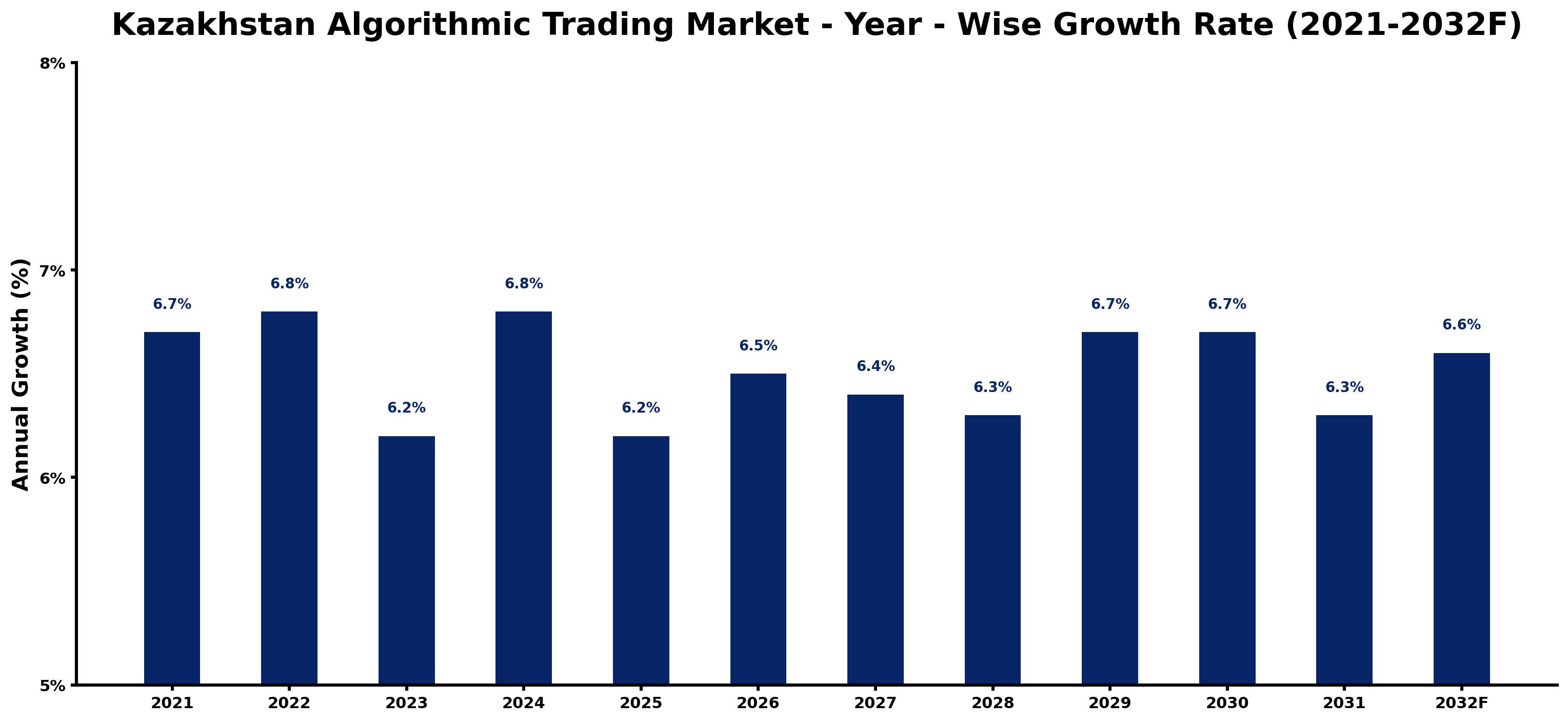
The table below presents the year‑wise growth rates along with the key drivers influencing the market
| Year | Growth Rate | Major Drivers |
| 2021 | 6.7% | Nazarbayev University launches fintech innovation center. |
| 2022 | 6.8% | Astana International Financial Centre enhances digital trading platform. |
| 2023 | 6.2% | Increased foreign investment in Kazakhstan's fintech sector. |
| 2024 | 6.8% | Government incentives for algorithmic trading startups introduced. |
| 2025 | 6.2% | Kazakhstan's young population embraces digital trading technologies. |
| 2026 | 6.5% | New regulations promote transparency in trading algorithms. |
| 2027 | 6.4% | Local banks offer algorithmic trading services to clients. |
| 2028 | 6.3% | Partnerships formed between fintech firms and universities. |
| 2029 | 6.7% | Growing interest in cryptocurrency trading among investors. |
| 2030 | 6.7% | Kazakhstan's stock exchange implements advanced trading technologies. |
| 2031 | 6.3% | International traders attracted by Kazakhstan's competitive market. |
| 2032 | 6.6% | Increased educational programs on algorithmic trading launched. |
Note: Market size estimations and growth projections presented in this report are based on 6Wresearch's proprietary forecasting methodology, utilizing the latest available industry data, government publications, and primary research inputs.
Kazakhstan Algorithmic Trading Market Key Takeaways
Below are some of the specific key takeaways from the market, including:
- The market is experiencing a steady increase in algorithmic trading adoption across various financial institutions.
- Technological advancements, particularly in AI and machine learning, are driving the development of sophisticated trading strategies.
- Regulatory reforms are promoting a more transparent and efficient trading environment.
- Investment opportunities abound in tailored algorithmic trading solutions and training programs for professionals.
- Data quality and availability remain critical for the success of algorithmic trading strategies in Kazakhstan.
Evaluation of Restraints in Kazakhstan Algorithmic Trading Market
Despite its potential, the Kazakhstan Algorithmic Trading Market faces certain restraints that hinder its growth. A significant barrier is the limited awareness and understanding of algorithmic trading among local market participants. This lack of familiarity can lead to hesitance in adopting these advanced technologies.
Regulatory uncertainties further complicate the situation, as firms navigate a still-evolving legal framework. Coupled with issues related to technological infrastructure and data quality, these factors create challenges that need addressing for the market to flourish fully.
Kazakhstan Algorithmic Trading Market Trends
Several trends are currently shaping the Kazakhstan Algorithmic Trading Market. The integration of AI and machine learning into trading algorithms stands out, allowing for more refined strategies that can adapt to changing market conditions. Blockchain technology is also gaining traction, promising enhanced security and transaction transparency.
Additionally, there is a growing focus on regulatory compliance, with firms seeking to align their practices with government guidelines. This compliance drive is not merely a response to regulations but a proactive approach to build investor confidence in algorithmic trading systems.
Kazakhstan Algorithmic Trading Market Opportunities
The opportunities within the Kazakhstan Algorithmic Trading Market are plentiful. There is a clear demand for bespoke algorithmic trading solutions tailored to the specific needs of local financial institutions. The market also requires comprehensive training programs to enhance the skill sets of professionals, paving the way for greater adoption of algorithmic trading practices.
Partnerships with regulatory bodies present a further avenue for growth, allowing firms to ensure compliance while contributing to the evolution of regulatory standards. The increasing sophistication of trading platforms creates additional investment opportunities, particularly for technology providers.
Government Initiatives in the Kazakhstan Algorithmic Trading Market
The government of Kazakhstan is actively shaping the algorithmic trading market through various initiatives aimed at enhancing regulatory clarity and fostering a secure trading environment. The National Bank of Kazakhstan plays a crucial role in monitoring and overseeing algorithmic trading activities to mitigate risks and ensure market stability.
- A regulatory framework introduced in 2025 mandates that algorithmic trading firms register with financial authorities and adhere to strict risk management guidelines.
- Ongoing initiatives focus on cybersecurity measures, ensuring that algorithmic trading systems are protected against potential threats.
- A recent public-private partnership has been launched to enhance digital infrastructure supporting algorithmic trading capabilities.
- Plans are in place for further regulatory reforms aimed at promoting transparency and preventing market manipulation by 2027.
- Future training programs are being developed to upskill professionals in compliance with evolving regulations.
Future Insights of the Kazakhstan Algorithmic Trading Market
The Kazakhstan Algorithmic Trading Market is on track for substantial growth from 2026 to 2032. As the financial sector continues to embrace automation, the demand for advanced algorithmic trading solutions will intensify. This growth will be fueled by both the sophistication of trading strategies and the technological infrastructure improvements being implemented.
Regulatory reforms aimed at fostering an efficient trading environment will likely attract new market participants, further driving innovation. With the integration of emerging technologies, the market holds promise for those willing to invest in the right tools and training to harness its potential.
Kazakhstan Algorithmic Trading Market Latest Developments
Recent developments in the Kazakhstan Algorithmic Trading Market indicate a strong push towards modernization and compliance. In the past year, several firms have begun adopting advanced algorithmic trading solutions to enhance their operational efficiency and execution capabilities.
- A leading technology vendor launched a new AI-driven trading platform in Q3 2025, aimed at providing users with enhanced analytical capabilities.
- Ongoing collaborations between local banks and technology firms are underway to develop customized algorithmic trading solutions tailored to the Kazakh market.
- A significant initiative focused on improving data quality and accessibility for algorithmic trading was initiated in early 2025 and remains active.
- Plans for a comprehensive training program for financial professionals, aimed at increasing familiarity with algorithmic trading strategies, are expected to kick off in mid-2026.
- Upcoming regulations promoting fair competition and transparency are set to be finalized by late 2025.
Kazakhstan Algorithmic Trading Market - Key Attractiveness of the Report
- 10 Years of Market Numbers
- Historical Data Starting from 2022 to 2025
- Base Year: 2025
- Forecast Data until 2032
- Key Performance Indicators Impacting the Market
- Major Upcoming Developments and Projects
Key Highlights of the Report:
- Kazakhstan Algorithmic Trading Market Outlook
- Market Size of Kazakhstan Algorithmic Trading Market, 2025
- Forecast of Kazakhstan Algorithmic Trading Market, 2032
- Historical Data and Forecast of Kazakhstan Algorithmic Trading Revenues & Volume for the Period 2022-2032F
- Kazakhstan Algorithmic Trading Market Trend Evolution
- Kazakhstan Algorithmic Trading Market Drivers and Challenges
- Kazakhstan Algorithmic Trading Price Trends
- Kazakhstan Algorithmic Trading Porter's Five Forces
- Kazakhstan Algorithmic Trading Industry Life Cycle
- Historical Data and Forecast of Kazakhstan Algorithmic Trading Market Revenues & Volume By Trading Type for the Period 2022-2032F
- Historical Data and Forecast of Kazakhstan Algorithmic Trading Market Revenues & Volume By Foreign Exchange (FOREX) for the Period 2022-2032F
- Historical Data and Forecast of Kazakhstan Algorithmic Trading Market Revenues & Volume By Stock Markets for the Period 2022-2032F
- Historical Data and Forecast of Kazakhstan Algorithmic Trading Market Revenues & Volume By Exchange-Traded Fund (ETF) for the Period 2022-2032F
- Historical Data and Forecast of Kazakhstan Algorithmic Trading Market Revenues & Volume By Bonds for the Period 2022-2032F
- Historical Data and Forecast of Kazakhstan Algorithmic Trading Market Revenues & Volume By Cryptocurrencies for the Period 2022-2032F
- Historical Data and Forecast of Kazakhstan Algorithmic Trading Market Revenues & Volume By Others for the Period 2022-2032F
- Historical Data and Forecast of Kazakhstan Algorithmic Trading Market Revenues & Volume By Deployment Mode for the Period 2022-2032F
- Historical Data and Forecast of Kazakhstan Algorithmic Trading Market Revenues & Volume By Cloud for the Period 2022-2032F
- Historical Data and Forecast of Kazakhstan Algorithmic Trading Market Revenues & Volume By On-premises for the Period 2022-2032F
- Historical Data and Forecast of Kazakhstan Algorithmic Trading Market Revenues & Volume By Component for the Period 2022-2032F
- Historical Data and Forecast of Kazakhstan Algorithmic Trading Market Revenues & Volume By Solutions for the Period 2022-2032F
- Historical Data and Forecast of Kazakhstan Algorithmic Trading Market Revenues & Volume By Services for the Period 2022-2032F
- Historical Data and Forecast of Kazakhstan Algorithmic Trading Market Revenues & Volume By Enterprise Size for the Period 2022-2032F
- Historical Data and Forecast of Kazakhstan Algorithmic Trading Market Revenues & Volume By Small and Medium-sized Enterprises (SMEs) for the Period 2022-2032F
- Historical Data and Forecast of Kazakhstan Algorithmic Trading Market Revenues & Volume By Large Enterprises for the Period 2022-2032F
- Kazakhstan Algorithmic Trading Import Export Trade Statistics
- Market Opportunity Assessment By Trading Type
- Market Opportunity Assessment By Deployment Mode
- Market Opportunity Assessment By Component
- Market Opportunity Assessment By Enterprise Size
- Kazakhstan Algorithmic Trading Top Companies Market Share
- Kazakhstan Algorithmic Trading Competitive Benchmarking By Technical and Operational Parameters
- Kazakhstan Algorithmic Trading Company Profiles
- Kazakhstan Algorithmic Trading Key Strategic Recommendations






































