Kazakhstan Ammonia Market: Import Trend Analysis
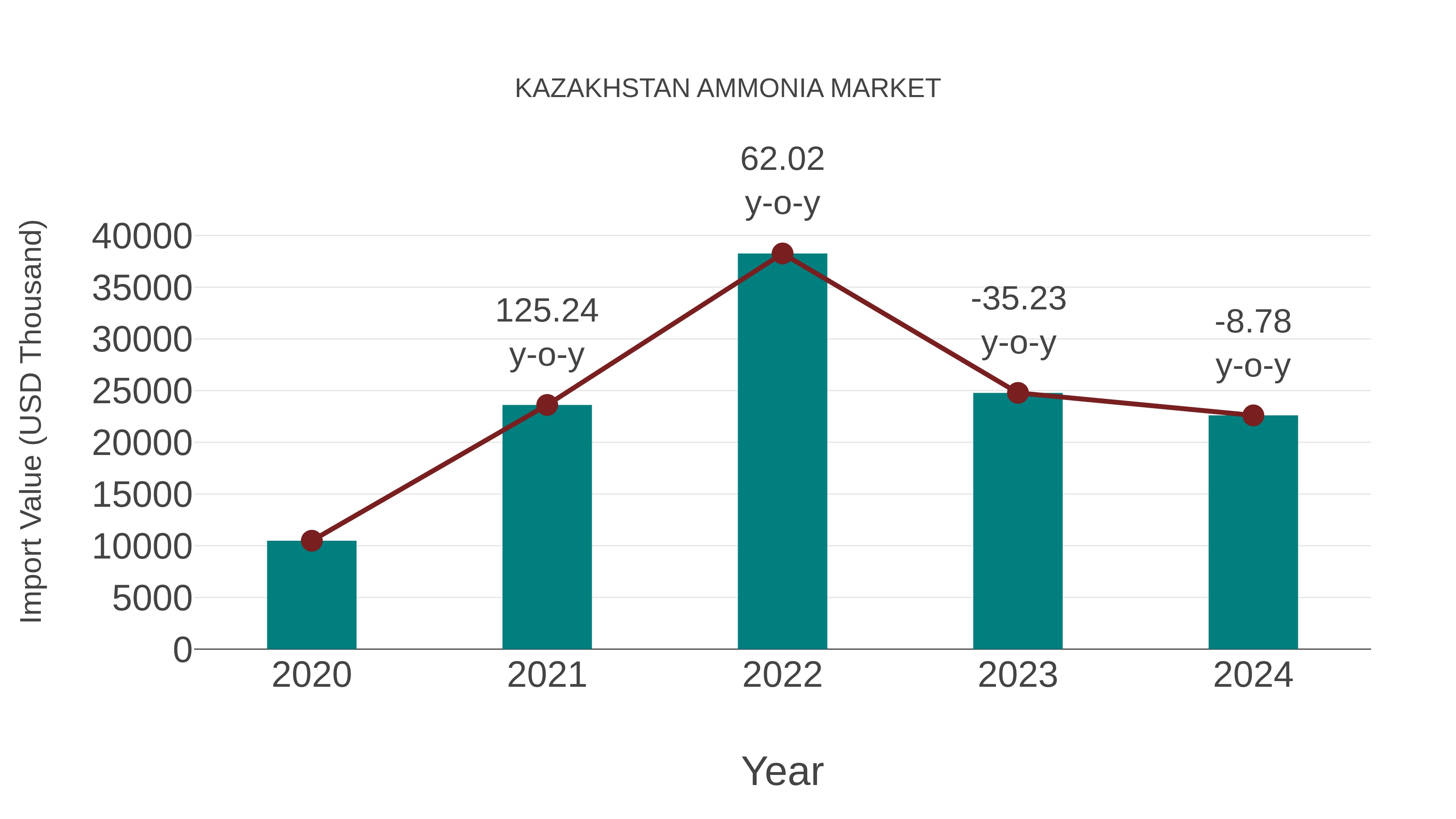
In the Kazakhstan ammonia market, the import trend experienced a decline from 2023 to 2024, with a growth rate of -8.78%. However, the compound annual growth rate (CAGR) for imports between 2020 and 2024 stood at a notable 21.18%. This downward shift in import momentum in 2024 could be attributed to various factors such as changes in demand dynamics, evolving trade policies, or market stabilization efforts.
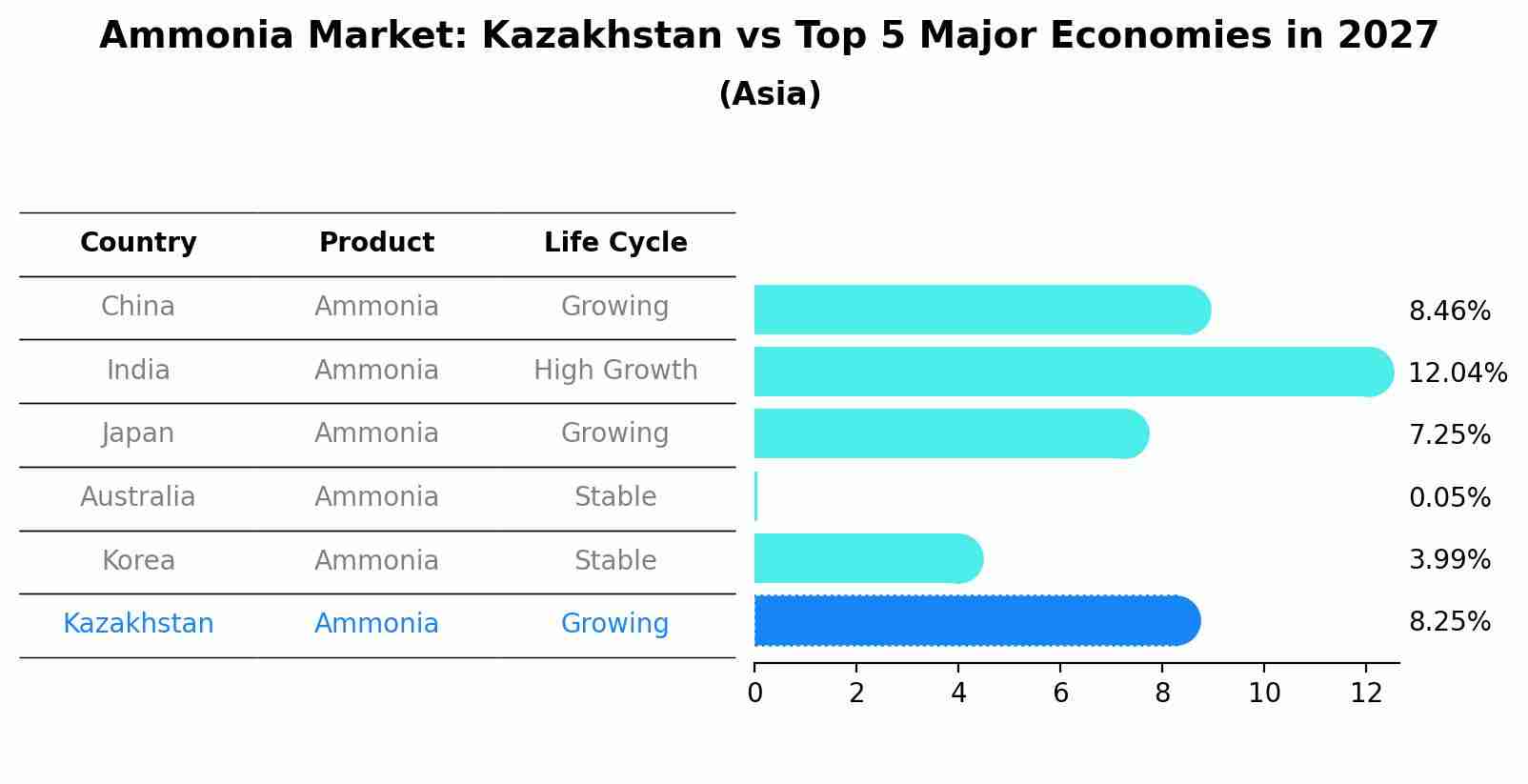
Ammonia Market: Kazakhstan vs Top 5 Major Economies in 2027 (Asia)
By 2027, the Ammonia market in Kazakhstan is anticipated to reach a growth rate of 8.25%, as part of an increasingly competitive Asia region, where China remains at the forefront, supported by India, Japan, Australia and South Korea, driving innovations and market adoption across sectors.
Kazakhstan Ammonia Market Overview
The Kazakhstan Ammonia market is a crucial component of the country`s economy, with a strong focus on production and export. The market is driven by factors such as the presence of abundant natural gas reserves, which serve as a primary feedstock for ammonia production, and the strategic geographical location of Kazakhstan, allowing for easy access to key export markets. Major players in the market include enterprises like KazAzot, which operate large-scale ammonia production facilities. The market is characterized by increasing investments in technology and infrastructure to enhance production efficiency and meet growing global demand for ammonia-based products like fertilizers and industrial chemicals. Government initiatives to promote the development of the ammonia industry further support market growth, making Kazakhstan a key player in the global ammonia market.
Kazakhstan Ammonia Market Trends
The Kazakhstan Ammonia Market is currently experiencing growth driven by factors such as increasing demand for agricultural fertilizers, growing industrial applications, and government initiatives to boost the chemical industry. The country`s abundant natural gas reserves, a key raw material for ammonia production, have also played a significant role in expanding the market. Additionally, technological advancements in ammonia production processes have improved efficiency and reduced production costs, making Kazakhstan a competitive player in the global ammonia market. Sustainability and environmental concerns are emerging as key trends, leading to a shift towards cleaner and more energy-efficient production methods. Overall, the Kazakhstan Ammonia Market is poised for further expansion and innovation in the coming years.
Kazakhstan Ammonia Market Challenges
In the Kazakhstan Ammonia Market, several challenges are faced, including fluctuating global ammonia prices, competition from other ammonia-producing countries, infrastructure limitations in remote production areas, and regulatory uncertainties. The market is heavily reliant on global demand and prices, making it vulnerable to external market forces beyond the control of local producers. Additionally, competition from countries with lower production costs and more established infrastructure poses a threat to Kazakhstan`s market share. Infrastructure challenges, such as limited transportation networks and access to key resources like natural gas, can hinder production efficiency and increase costs. Regulatory uncertainties, including changes in government policies or trade agreements, can also impact market stability and investor confidence in the industry. Addressing these challenges will be crucial for the sustainable growth and competitiveness of the Kazakhstan Ammonia Market.
Kazakhstan Ammonia Market Investment Opportunities
The Kazakhstan Ammonia Market presents promising investment opportunities due to the country`s significant ammonia production capacity and strategic location for exporting to global markets, particularly in Asia. Key factors driving growth include abundant natural gas reserves, which serve as a primary feedstock for ammonia production, as well as government support for industrial development and diversification. With increasing demand for ammonia in agriculture, chemicals, and other industries, investing in Kazakhstan`s ammonia sector could offer attractive returns. Additionally, ongoing infrastructure projects and trade agreements are further enhancing the market`s potential for expansion. Potential investment avenues include partnering with local producers, establishing ammonia trading operations, or participating in infrastructure development projects to capitalize on the country`s growing role as a key ammonia supplier in the region.
Kazakhstan Ammonia Market Government Policy
The Kazakhstan government has implemented various policies to support the ammonia market in the country. These include granting tax incentives and subsidies to ammonia producers to promote growth and investment in the sector. Additionally, the government has put in place regulations to ensure environmental sustainability and compliance with safety standards in ammonia production facilities. Furthermore, Kazakhstan has been actively engaging in international trade agreements to expand its ammonia market reach and establish partnerships with other countries. Overall, the government`s policies aim to foster a competitive and sustainable ammonia market in Kazakhstan while promoting economic development and industry growth.
Kazakhstan Ammonia Market Future Outlook
The future outlook for the Kazakhstan ammonia market appears promising, driven by factors such as the country`s abundant natural gas reserves, strategic geographical location, and growing global demand for ammonia in various industries including agriculture and chemicals. Kazakhstan`s focus on expanding its ammonia production capacity through investment in new projects and modernization of existing facilities is expected to enhance its competitiveness in the international market. Additionally, the government`s initiatives to promote industrial growth and attract foreign investments in the ammonia sector are likely to further boost market expansion. However, challenges such as fluctuating raw material prices and environmental concerns may pose a threat to the market`s growth trajectory, necessitating sustainable practices and technological advancements to ensure long-term success.
Key Highlights of the Report:
- Kazakhstan Ammonia Market Outlook
- Market Size of Kazakhstan Ammonia Market, 2025
- Forecast of Kazakhstan Ammonia Market, 2032
- Historical Data and Forecast of Kazakhstan Ammonia Revenues & Volume for the Period 2022 - 2032F
- Kazakhstan Ammonia Market Trend Evolution
- Kazakhstan Ammonia Market Drivers and Challenges
- Kazakhstan Ammonia Price Trends
- Kazakhstan Ammonia Porter's Five Forces
- Kazakhstan Ammonia Industry Life Cycle
- Historical Data and Forecast of Kazakhstan Ammonia Market Revenues & Volume By Type for the Period 2022 - 2032F
- Historical Data and Forecast of Kazakhstan Ammonia Market Revenues & Volume By Liquid for the Period 2022 - 2032F
- Historical Data and Forecast of Kazakhstan Ammonia Market Revenues & Volume By Gas for the Period 2022 - 2032F
- Historical Data and Forecast of Kazakhstan Ammonia Market Revenues & Volume By End-user Industry for the Period 2022 - 2032F
- Historical Data and Forecast of Kazakhstan Ammonia Market Revenues & Volume By Agriculture for the Period 2022 - 2032F
- Historical Data and Forecast of Kazakhstan Ammonia Market Revenues & Volume By Textiles for the Period 2022 - 2032F
- Historical Data and Forecast of Kazakhstan Ammonia Market Revenues & Volume By Mining for the Period 2022 - 2032F
- Historical Data and Forecast of Kazakhstan Ammonia Market Revenues & Volume By Pharmaceutical for the Period 2022 - 2032F
- Historical Data and Forecast of Kazakhstan Ammonia Market Revenues & Volume By Refrigeration for the Period 2022 - 2032F
- Historical Data and Forecast of Kazakhstan Ammonia Market Revenues & Volume By Others for the Period 2022 - 2032F
- Kazakhstan Ammonia Import Export Trade Statistics
- Market Opportunity Assessment By Type
- Market Opportunity Assessment By End-user Industry
- Kazakhstan Ammonia Top Companies Market Share
- Kazakhstan Ammonia Competitive Benchmarking By Technical and Operational Parameters
- Kazakhstan Ammonia Company Profiles
- Kazakhstan Ammonia Key Strategic Recommendations






































