Kazakhstan Apiculture Market: Import Trend Analysis
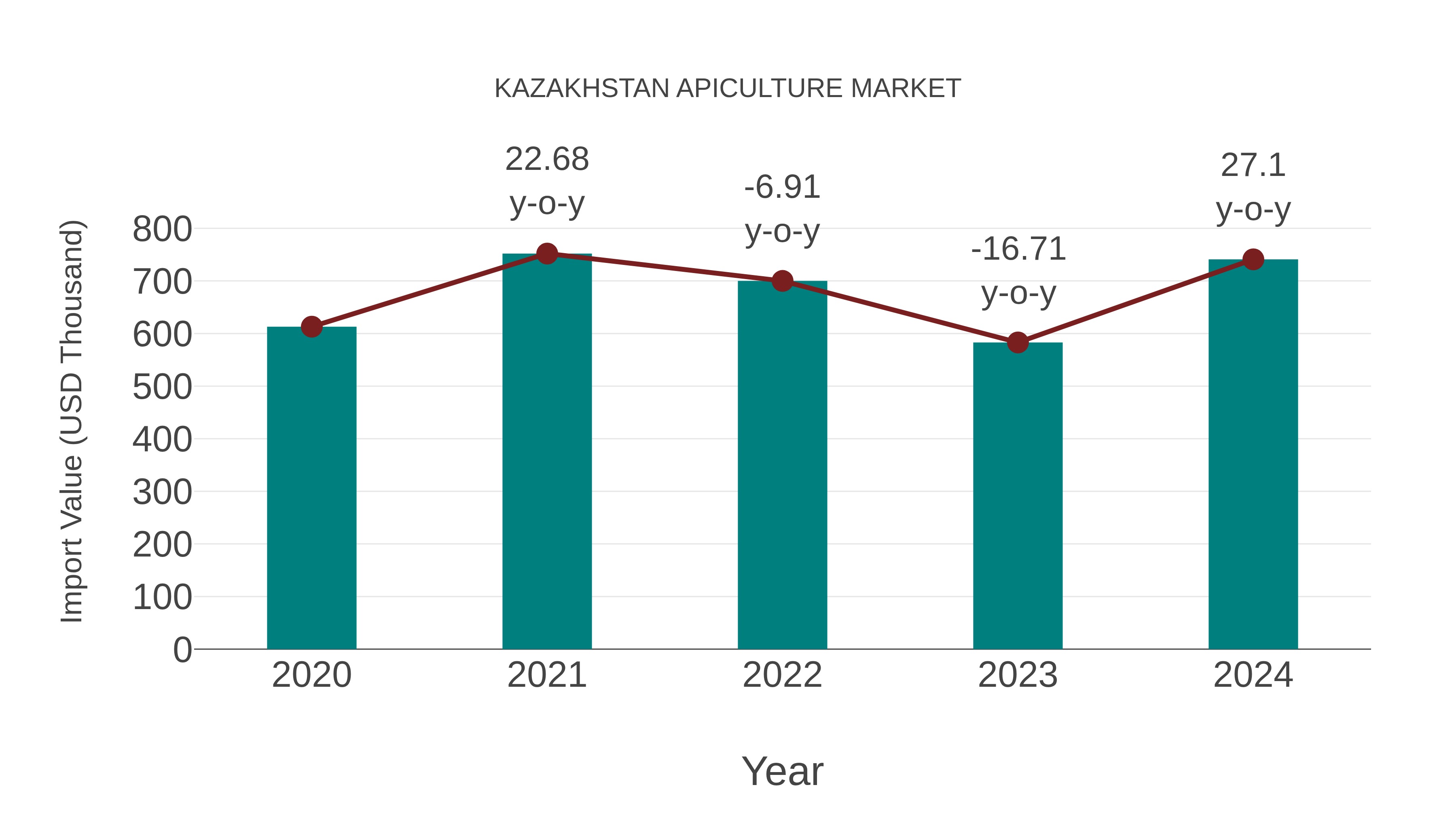
In the Kazakhstan apiculture market, the import trend showed robust growth from 2023 to 2024, with a notable 27.1% increase. The compound annual growth rate (CAGR) for the period from 2020 to 2024 stood at 4.86%. This import momentum can be attributed to a notable demand shift towards high-quality honey products, indicating market stability and a favorable trade environment for apiculture imports in Kazakhstan.
Kazakhstan Apiculture Market Synopsis
The Kazakhstan apiculture market is characterized by a growing demand for honey and bee products fueled by increasing health consciousness among consumers. The country`s diverse flora and favorable climatic conditions provide a conducive environment for beekeeping, leading to a steady expansion of bee farms across the region. Kazakhstan`s vast landmass allows for the production of a variety of honey types, including acacia, buckwheat, and wildflower honey, catering to different tastes and preferences. The government`s support for the apiculture sector through initiatives such as training programs and financial assistance has further boosted the market`s growth. As a result, Kazakhstan has emerged as a key player in the global honey market, with opportunities for further expansion and innovation in beekeeping practices.
Kazakhstan Apiculture Market Trends
The Kazakhstan Apiculture Market is experiencing a growing demand for high-quality honey products, driven by increasing consumer awareness of the health benefits of natural honey. There is a rising interest among consumers for organic and specialty honey varieties, such as acacia, buckwheat, and chestnut honey. Additionally, the market is seeing a shift towards sustainable and eco-friendly beekeeping practices, with beekeepers adopting modern techniques to improve honey production efficiency and quality. Export opportunities are also expanding, with Kazakhstan honey gaining recognition for its unique flavor profiles and high purity levels. Overall, the apiculture market in Kazakhstan is evolving to meet the changing preferences of consumers both domestically and internationally, with a focus on premium honey products and sustainable beekeeping practices.
Kazakhstan Apiculture Market Challenges
In the Kazakhstan apiculture market, some challenges that beekeepers face include harsh weather conditions that can affect honey production, limited access to modern beekeeping technology and equipment, and the prevalence of diseases affecting bee populations. Additionally, there is a lack of standardized quality control measures in place, leading to inconsistency in honey quality. Market fragmentation and lack of strong marketing strategies also pose challenges for beekeepers in reaching a wider consumer base and obtaining fair prices for their products. Addressing these challenges through investment in technology, training programs, disease management, and marketing initiatives could help improve the overall competitiveness and sustainability of the Kazakhstan apiculture market.
Kazakhstan Apiculture Market Investment Opportunities
The Kazakhstan Apiculture Market offers several investment opportunities due to the country`s rich biodiversity and favorable climatic conditions for beekeeping. Potential investment areas include establishing commercial apiaries for honey production, beeswax processing facilities, and pollen collection operations. Additionally, there is growing demand for high-quality honey and other bee products both domestically and internationally, presenting opportunities for export-oriented businesses. Investing in modern beekeeping technologies and practices can enhance productivity and ensure the sustainability of the industry. Collaboration with local beekeepers and farmers can also provide opportunities for partnerships and joint ventures. Overall, the Kazakhstan Apiculture Market offers a promising investment landscape for those looking to capitalize on the increasing demand for natural and sustainable bee products.
Kazakhstan Apiculture Market Future Outlook
The future outlook for the Kazakhstan Apiculture Market appears promising due to several factors. The increasing awareness about the health benefits of honey and other bee products is driving consumer demand. Additionally, the growing focus on sustainable and organic products is creating opportunities for the apiculture industry in Kazakhstan. With the government`s support for beekeeping initiatives and the favorable climate conditions for beekeeping in the region, the market is poised for growth. Investments in technology and modern beekeeping practices are expected to enhance productivity and quality, leading to further expansion of the apiculture sector in Kazakhstan. Overall, the market is projected to experience steady growth in the coming years as it taps into both domestic and international demand for high-quality honey and bee products.
Key Highlights of the Report:
- Kazakhstan Apiculture Market Outlook
- Market Size of Kazakhstan Apiculture Market, 2025
- Forecast of Kazakhstan Apiculture Market, 2032
- Historical Data and Forecast of Kazakhstan Apiculture Revenues & Volume for the Period 2022 - 2032F
- Kazakhstan Apiculture Market Trend Evolution
- Kazakhstan Apiculture Market Drivers and Challenges
- Kazakhstan Apiculture Price Trends
- Kazakhstan Apiculture Porter's Five Forces
- Kazakhstan Apiculture Industry Life Cycle
- Historical Data and Forecast of Kazakhstan Apiculture Market Revenues & Volume By Product Type for the Period 2022 - 2032F
- Historical Data and Forecast of Kazakhstan Apiculture Market Revenues & Volume By Honey for the Period 2022 - 2032F
- Historical Data and Forecast of Kazakhstan Apiculture Market Revenues & Volume By Beeswax for the Period 2022 - 2032F
- Historical Data and Forecast of Kazakhstan Apiculture Market Revenues & Volume By Live-bees for the Period 2022 - 2032F
- Historical Data and Forecast of Kazakhstan Apiculture Market Revenues & Volume By Others for the Period 2022 - 2032F
- Historical Data and Forecast of Kazakhstan Apiculture Market Revenues & Volume By Application for the Period 2022 - 2032F
- Historical Data and Forecast of Kazakhstan Apiculture Market Revenues & Volume By Medical for the Period 2022 - 2032F
- Historical Data and Forecast of Kazakhstan Apiculture Market Revenues & Volume By Food Beverages for the Period 2022 - 2032F
- Historical Data and Forecast of Kazakhstan Apiculture Market Revenues & Volume By Cosmetics for the Period 2022 - 2032F
- Historical Data and Forecast of Kazakhstan Apiculture Market Revenues & Volume By Others for the Period 2022 - 2032F
- Kazakhstan Apiculture Import Export Trade Statistics
- Market Opportunity Assessment By Product Type
- Market Opportunity Assessment By Application
- Kazakhstan Apiculture Top Companies Market Share
- Kazakhstan Apiculture Competitive Benchmarking By Technical and Operational Parameters
- Kazakhstan Apiculture Company Profiles
- Kazakhstan Apiculture Key Strategic Recommendations






































