Kazakhstan Commercial Printing Market: Import Trend Analysis
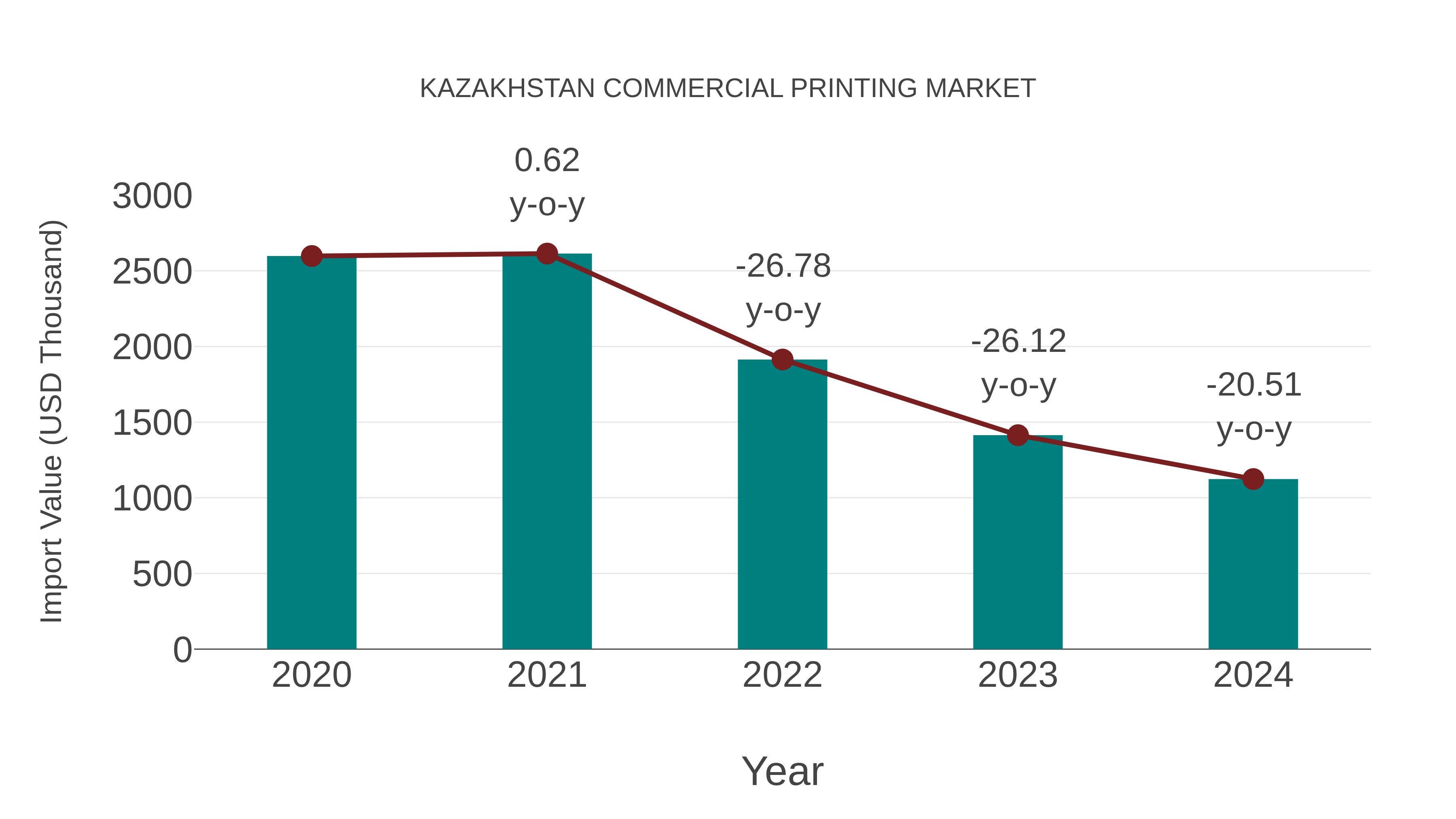
In the Kazakhstan commercial printing market, the import trend witnessed a decline from 2023 to 2024, with a growth rate of -20.51%. The compound annual growth rate (CAGR) for imports over the period of 2020-2024 stood at -18.9%. This significant downturn in import momentum could be attributed to shifts in demand patterns or changes in trade policies affecting the market`s stability.
Commercial Printing Market: Kazakhstan vs Top 5 Major Economies in 2027 (Asia)
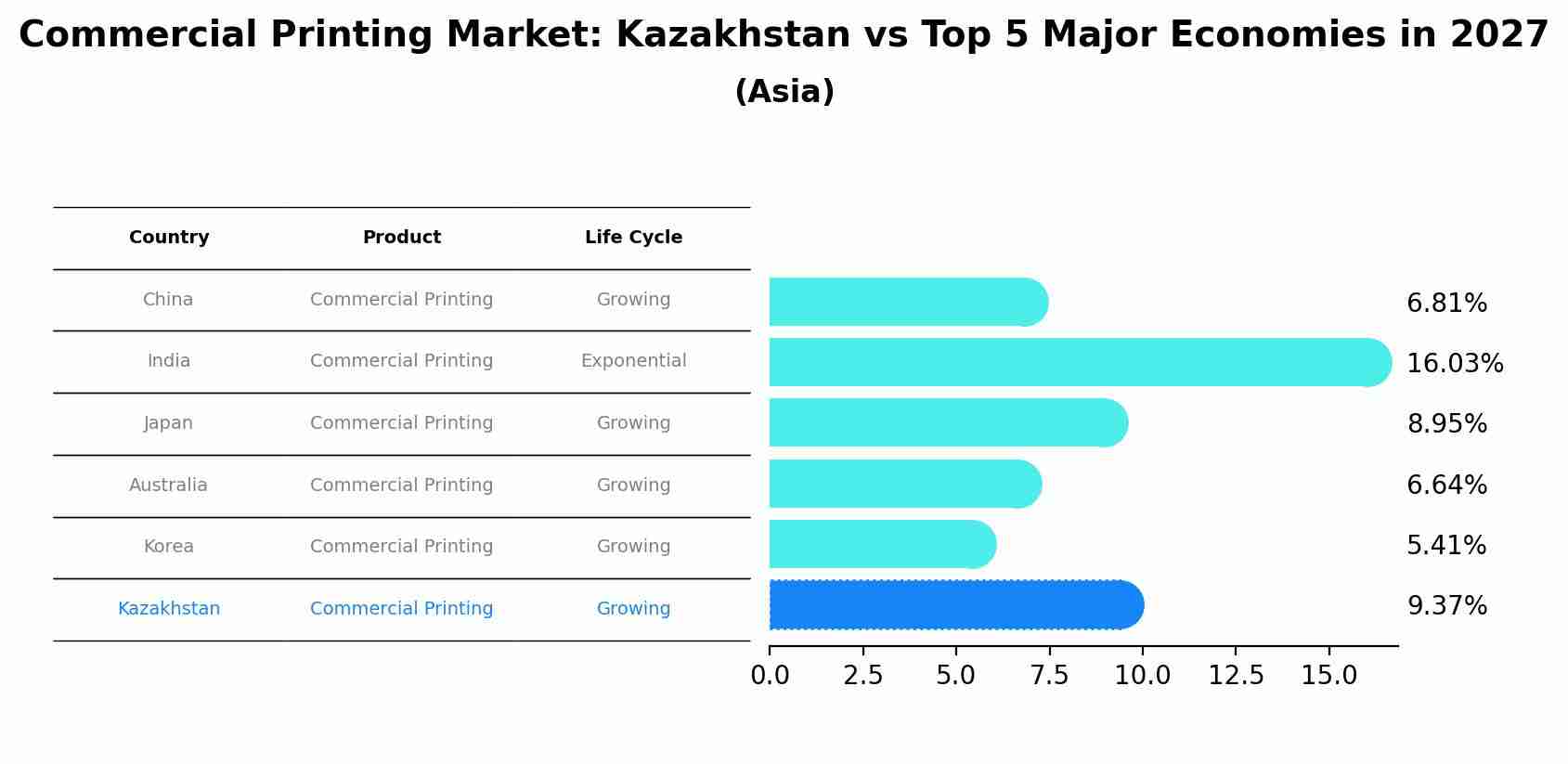
The Commercial Printing market in Kazakhstan is projected to grow at a growing growth rate of 9.37% by 2027, within the Asia region led by China, along with other countries like India, Japan, Australia and South Korea, collectively shaping a dynamic and evolving market environment driven by innovation and increasing adoption of emerging technologies.
Kazakhstan Commercial Printing Market Overview
The commercial printing industry in Kazakhstan has witnessed steady growth in recent years, driven by increasing demand from various sectors such as advertising, publishing, packaging, and education. With the country`s expanding economy and rising disposable income levels, businesses are increasingly investing in printed materials for marketing, branding, and communication purposes. Additionally, advancements in printing technology have led to improved efficiency, quality, and customization options, further fueling market growth.
Drivers of the market
The Kazakhstan commercial printing market is witnessing growth driven by several factors, including the expanding advertising and marketing sectors, increasing demand for packaging materials, and the adoption of digital printing technologies. Commercial printing services, including offset printing, digital printing, and flexography, play a crucial role in producing a wide range of printed materials, such as brochures, labels, and packaging boxes. With the growing competition among businesses and the need for effective brand promotion, there is a rising demand for high-quality printing services in Kazakhstan. Additionally, technological advancements in printing equipment and materials are driving innovation and market growth in the country.
Challenges of the market
In the commercial printing market in Kazakhstan, one of the primary challenges is the transition to digitalization and online publishing platforms. Print media faces competition from digital alternatives, leading to declining demand for traditional printing services. Adapting to changing consumer preferences and investing in digital printing technologies require significant investments and restructuring for printing businesses. Additionally, environmental concerns related to paper waste and ink usage present sustainability challenges for the industry.
Government Policy of the market
Kazakhstan government has implemented policies to support the commercial printing market by encouraging digitalization and reducing import taxes on printing equipment. These measures aim to enhance local printing capabilities and support various industries relying on printed materials.
Key Highlights of the Report:
- Kazakhstan Commercial Printing Market Outlook
- Market Size of Kazakhstan Commercial Printing Market, 2025
- Forecast of Kazakhstan Commercial Printing Market, 2032
- Historical Data and Forecast of Kazakhstan Commercial Printing Revenues & Volume for the Period 2022-2032F
- Kazakhstan Commercial Printing Market Trend Evolution
- Kazakhstan Commercial Printing Market Drivers and Challenges
- Kazakhstan Commercial Printing Price Trends
- Kazakhstan Commercial Printing Porter's Five Forces
- Kazakhstan Commercial Printing Industry Life Cycle
- Historical Data and Forecast of Kazakhstan Commercial Printing Market Revenues & Volume By Type for the Period 2022-2032F
- Historical Data and Forecast of Kazakhstan Commercial Printing Market Revenues & Volume By Offset Lithography for the Period 2022-2032F
- Historical Data and Forecast of Kazakhstan Commercial Printing Market Revenues & Volume By Inkjet for the Period 2022-2032F
- Historical Data and Forecast of Kazakhstan Commercial Printing Market Revenues & Volume By Flexographic for the Period 2022-2032F
- Historical Data and Forecast of Kazakhstan Commercial Printing Market Revenues & Volume By Screen for the Period 2022-2032F
- Historical Data and Forecast of Kazakhstan Commercial Printing Market Revenues & Volume By Gravure for the Period 2022-2032F
- Historical Data and Forecast of Kazakhstan Commercial Printing Market Revenues & Volume By Other for the Period 2022-2032F
- Historical Data and Forecast of Kazakhstan Commercial Printing Market Revenues & Volume By Applications for the Period 2022-2032F
- Historical Data and Forecast of Kazakhstan Commercial Printing Market Revenues & Volume By Packaging for the Period 2022-2032F
- Historical Data and Forecast of Kazakhstan Commercial Printing Market Revenues & Volume By Advertising for the Period 2022-2032F
- Historical Data and Forecast of Kazakhstan Commercial Printing Market Revenues & Volume By Publishing for the Period 2022-2032F
- Historical Data and Forecast of Kazakhstan Commercial Printing Market Revenues & Volume By Other for the Period 2022-2032F
- Kazakhstan Commercial Printing Import Export Trade Statistics
- Market Opportunity Assessment By Type
- Market Opportunity Assessment By Applications
- Kazakhstan Commercial Printing Top Companies Market Share
- Kazakhstan Commercial Printing Competitive Benchmarking By Technical and Operational Parameters
- Kazakhstan Commercial Printing Company Profiles
- Kazakhstan Commercial Printing Key Strategic Recommendations






































