Kazakhstan Dairy Cream Market: Import Trend Analysis
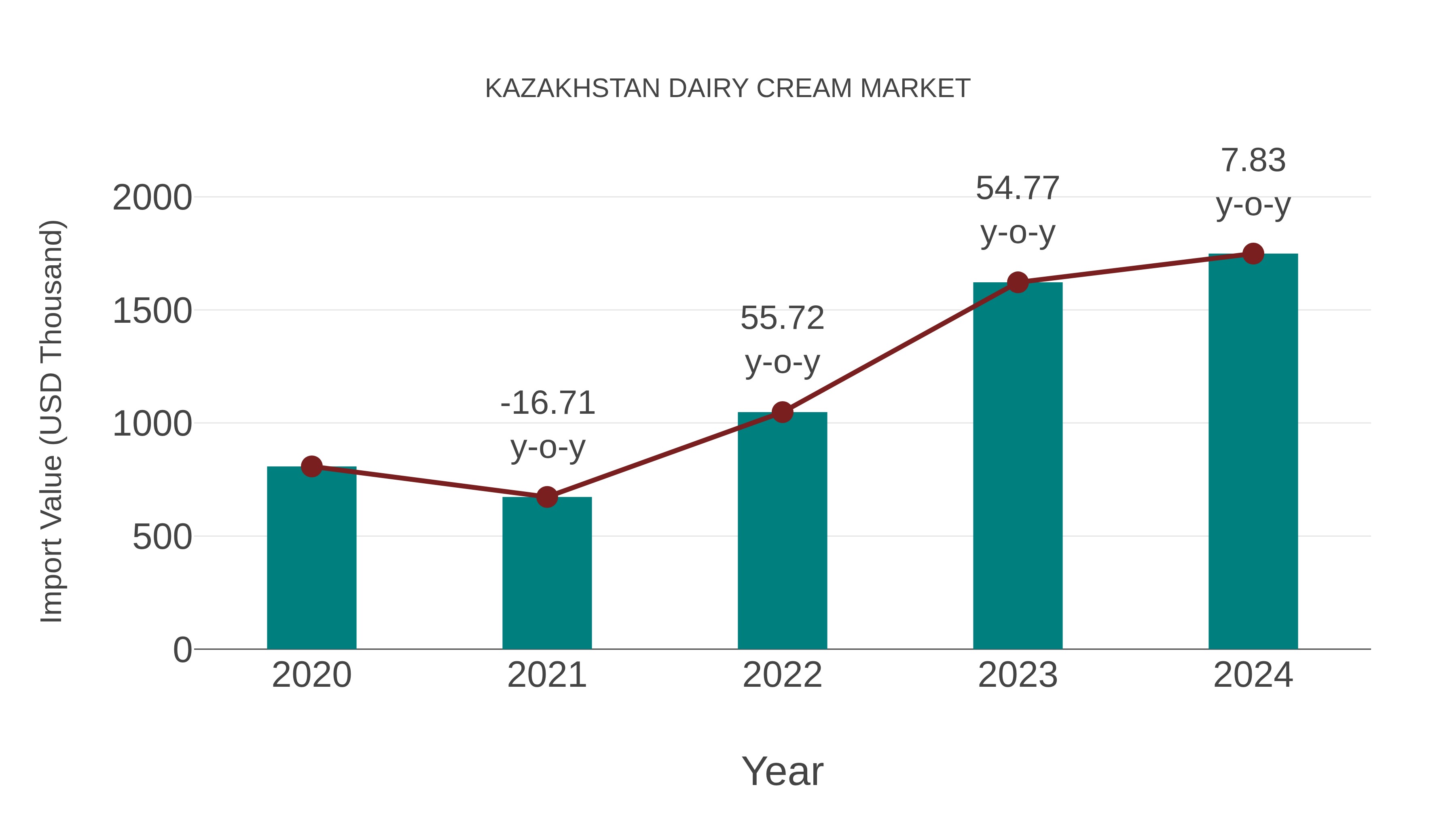
In the Kazakhstan dairy cream market, the import trend showed a notable growth rate of 7.83% from 2023 to 2024, with a compound annual growth rate (CAGR) of 21.3% for the period 2020-2024. This significant uptrend in imports can be attributed to a shift in consumer preferences towards higher-quality dairy products, indicating a strengthening demand for imported dairy cream within the market.
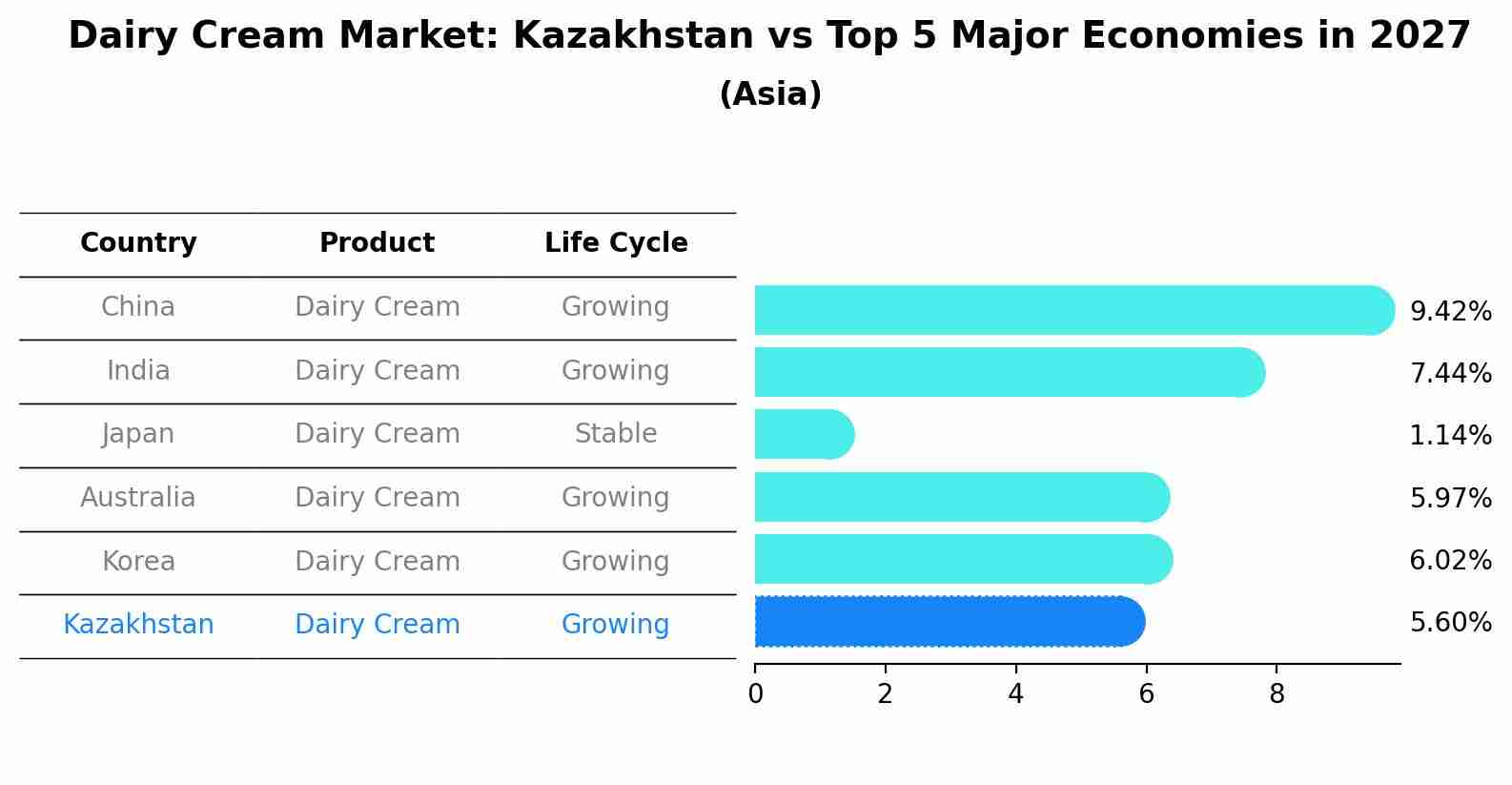
Dairy Cream Market: Kazakhstan vs Top 5 Major Economies in 2027 (Asia)
In the Asia region, the Dairy Cream market in Kazakhstan is projected to expand at a growing growth rate of 5.60% by 2027. The largest economy is China, followed by India, Japan, Australia and South Korea.
Kazakhstan Dairy Cream Market Overview
The Kazakhstan Dairy Cream Market is experiencing steady growth due to increasing consumer demand for dairy products and a growing trend towards premium and high-quality food products. The market is characterized by a mix of domestic and international players offering a variety of dairy cream products, including whipping cream, cooking cream, and flavored creams. Key factors driving market growth include rising disposable incomes, changing consumer preferences, and a growing awareness of the health benefits associated with dairy products. The market is competitive, with players focusing on product innovation, quality, and branding to differentiate themselves in the market. Additionally, the growing foodservice sector in Kazakhstan is also driving demand for dairy cream products, particularly in the hospitality and bakery industries.
Kazakhstan Dairy Cream Market Trends
The Kazakhstan Dairy Cream Market is experiencing several key trends. Firstly, there is a growing demand for premium and value-added dairy cream products, driven by increasing disposable incomes and a preference for higher quality products. Health and wellness trends have also influenced the market, leading to a rise in demand for dairy cream alternatives such as plant-based cream. Convenience is another important trend, with consumers seeking ready-to-use dairy cream products that offer ease of use and storage. Additionally, sustainability and eco-consciousness are becoming more significant factors, prompting dairy cream manufacturers to focus on environmentally friendly packaging and sourcing practices. Overall, the Kazakhstan Dairy Cream Market is evolving to cater to changing consumer preferences and demands.
Kazakhstan Dairy Cream Market Challenges
The Kazakhstan Dairy Cream Market faces challenges such as increasing competition from imported dairy products, fluctuating raw material prices, and changing consumer preferences towards healthier or plant-based alternatives. The market is also challenged by limited innovation in product offerings and distribution channels, hindering growth opportunities. Additionally, regulatory issues and quality control standards pose challenges for both domestic producers and importers. To succeed in this market, companies need to focus on product differentiation, quality assurance, and market expansion strategies to stay competitive and meet the evolving demands of consumers.
Kazakhstan Dairy Cream Market Investment Opportunities
Investment opportunities in the Kazakhstan Dairy Cream Market are attractive due to the growing demand for dairy products in the region. With increasing disposable income and shifting consumer preferences towards higher-quality and healthier food options, there is a significant market potential for dairy cream products. Investors can consider opportunities in dairy cream production facilities, distribution networks, and product innovation to cater to the evolving consumer needs. Additionally, expanding into value-added products such as flavored creams or organic options can help companies differentiate themselves in the market and capture a larger share. Collaborating with local dairy farmers to ensure a stable and quality milk supply can also be a strategic investment approach in this sector. Overall, the Kazakhstan Dairy Cream Market presents promising avenues for investment and growth.
Kazakhstan Dairy Cream Market Government Policy
The Kazakhstan government has implemented various policies to support and regulate the Dairy Cream Market. These policies include quality control measures to ensure the safety and standards of dairy products, subsidies and financial support for dairy farmers to encourage production, and trade agreements to facilitate exports and imports. Additionally, the government has set up marketing and promotional campaigns to increase consumer awareness and stimulate demand for dairy cream products domestically and internationally. Overall, these policies aim to boost the growth of the Kazakhstan Dairy Cream Market, enhance competitiveness, and ensure sustainable development in the sector.
Kazakhstan Dairy Cream Market Future Outlook
The future outlook for the Kazakhstan Dairy Cream Market appears promising, driven by factors such as increasing consumer disposable income, changing dietary preferences towards dairy products, and growing awareness about the health benefits of dairy cream. The market is expected to witness steady growth as the demand for premium quality dairy products rises among the population. Additionally, technological advancements in dairy processing and packaging are likely to improve product quality and shelf life, further boosting market growth. However, challenges such as fluctuations in raw material prices and competition from alternative non-dairy cream products may impact the market. Overall, the Kazakhstan Dairy Cream Market is anticipated to expand in the coming years, offering opportunities for both domestic and international dairy cream manufacturers to capitalize on the growing demand.
Key Highlights of the Report:
- Kazakhstan Dairy Cream Market Outlook
- Market Size of Kazakhstan Dairy Cream Market, 2021
- Forecast of Kazakhstan Dairy Cream Market, 2031
- Historical Data and Forecast of Kazakhstan Dairy Cream Revenues & Volume for the Period 2018 - 2031
- Kazakhstan Dairy Cream Market Trend Evolution
- Kazakhstan Dairy Cream Market Drivers and Challenges
- Kazakhstan Dairy Cream Price Trends
- Kazakhstan Dairy Cream Porter's Five Forces
- Kazakhstan Dairy Cream Industry Life Cycle
- Historical Data and Forecast of Kazakhstan Dairy Cream Market Revenues & Volume By Type for the Period 2018 - 2031
- Historical Data and Forecast of Kazakhstan Dairy Cream Market Revenues & Volume By Fresh Cream for the Period 2018 - 2031
- Historical Data and Forecast of Kazakhstan Dairy Cream Market Revenues & Volume By Thickened Cream/Heavy Cream for the Period 2018 - 2031
- Historical Data and Forecast of Kazakhstan Dairy Cream Market Revenues & Volume By Whipping Cream for the Period 2018 - 2031
- Historical Data and Forecast of Kazakhstan Dairy Cream Market Revenues & Volume By Sour Cream for the Period 2018 - 2031
- Historical Data and Forecast of Kazakhstan Dairy Cream Market Revenues & Volume By Other Types for the Period 2018 - 2031
- Historical Data and Forecast of Kazakhstan Dairy Cream Market Revenues & Volume By Distribution Channel for the Period 2018 - 2031
- Historical Data and Forecast of Kazakhstan Dairy Cream Market Revenues & Volume By Supermarkets/ Hypermarkets for the Period 2018 - 2031
- Historical Data and Forecast of Kazakhstan Dairy Cream Market Revenues & Volume By Convenince Stores for the Period 2018 - 2031
- Historical Data and Forecast of Kazakhstan Dairy Cream Market Revenues & Volume By Online Retail Stores for the Period 2018 - 2031
- Historical Data and Forecast of Kazakhstan Dairy Cream Market Revenues & Volume By Other Distribution Channels for the Period 2018 - 2031
- Kazakhstan Dairy Cream Import Export Trade Statistics
- Market Opportunity Assessment By Type
- Market Opportunity Assessment By Distribution Channel
- Kazakhstan Dairy Cream Top Companies Market Share
- Kazakhstan Dairy Cream Competitive Benchmarking By Technical and Operational Parameters
- Kazakhstan Dairy Cream Company Profiles
- Kazakhstan Dairy Cream Key Strategic Recommendations






































