Kazakhstan Deli Meat Market Size, Share & Growth Rate
The Kazakhstan Deli Meat Market was estimated at USD 1185 Million in 2025 and is projected to reach USD 1733 Million by 2032, growing at a CAGR of 5.6% from 2026 to 2032. This growth trajectory is predominantly fueled by an evolving consumer base that increasingly favors convenience in their dietary choices. As urban populations expand and disposable incomes rise, deli meats are becoming a preferred option for quick meals and snacks, further solidifying their role in both homes and food service establishments.
Kazakhstan Deli Meat Market Year-wise Growth Rate and Key Drivers
This graph highlights how the Kazakhstan Deli Meat Market has steadily grown over the years, supported by major growth factors.
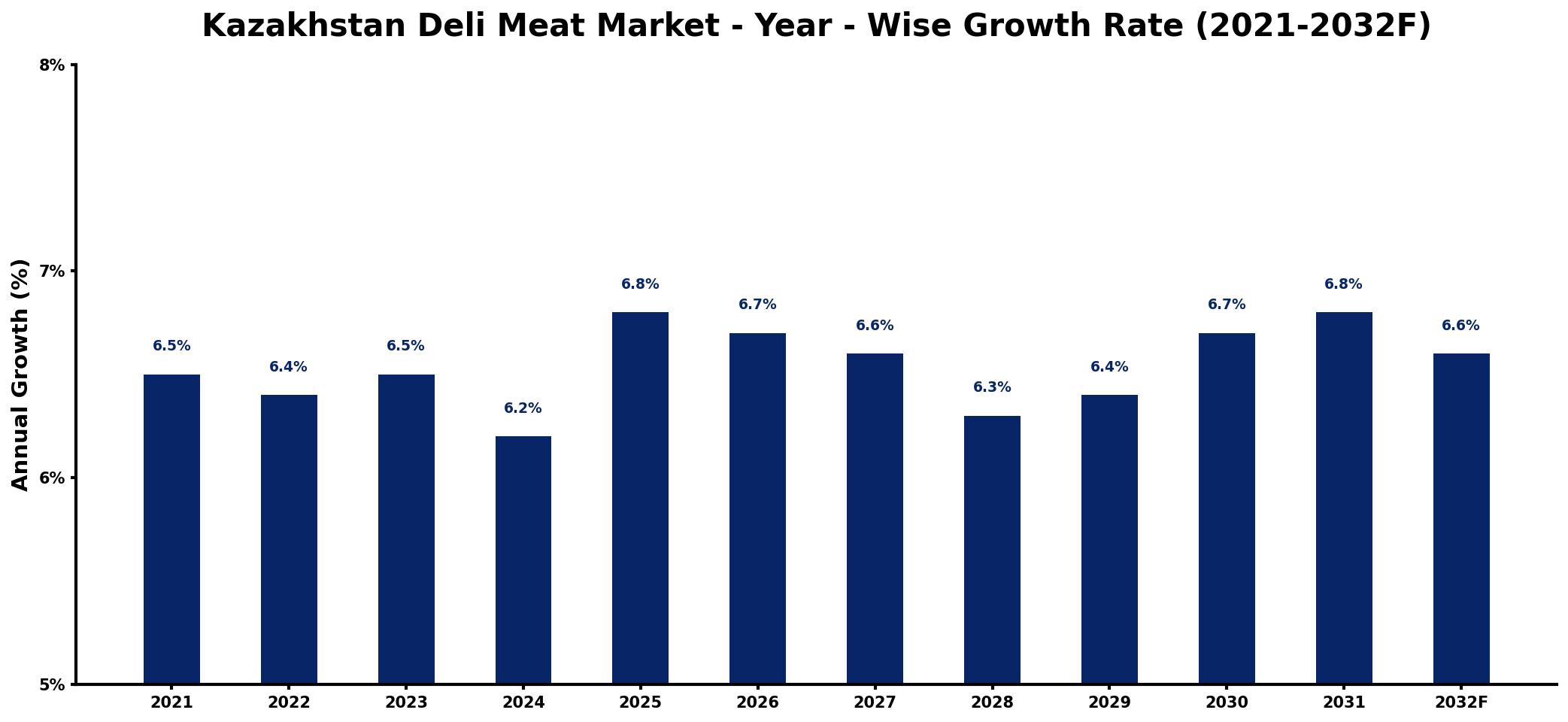
The table below presents the year‑wise growth rates along with the key drivers influencing the market
| Year | Growth Rate | Major Drivers |
| 2021 | 6.5% | Rising consumer health consciousness |
| 2022 | 6.4% | Expansion of retail distribution channels |
| 2023 | 6.5% | Increasing popularity of convenience foods |
| 2024 | 6.2% | Growth in online grocery shopping |
| 2025 | 6.8% | Innovations in product offerings |
| 2026 | 6.7% | Higher disposable income levels |
| 2027 | 6.6% | Strengthening of local supply chains |
| 2028 | 6.3% | Emergence of premium product segments |
| 2029 | 6.4% | Increased focus on sustainability practices |
| 2030 | 6.7% | improved processing technologies adoption |
| 2031 | 6.8% | Growing trends in gourmet experiences |
| 2032 | 6.6% | Investment in food technology advancements |
Note: Market size estimations and growth projections presented in this report are based on 6Wresearch's proprietary forecasting methodology, utilizing the latest available industry data, government publications, and primary research inputs.
Kazakhstan Deli Meat Market Synopsis
Deli meats are now frequently featured in the culinary landscape of Kazakhstan, where modern dining trends are incorporating them into traditional dishes and contemporary fare alike. Notably, the rising interest in Western cuisines has also enhanced the demand for diverse deli meat products, leading to innovative offerings within the market.
Furthermore, convenience-oriented lifestyles are reshaping consumer expectations, resulting in a significant uptick in the consumption of ready-to-eat options. This paradigm shift is compelling manufacturers to prioritize quality and flavor in their deli meat lines, catering to a more discerning customer base.
Kazakhstan Deli Meat Market Key Takeaways
- The market is projected to grow significantly due to rising disposable incomes and urbanization.
- Changing consumer preferences towards convenience foods drive demand for deli meats.
- Health consciousness among consumers is steering the market towards natural and preservative-free options.
- Government policies supporting meat production modernization are positively influencing market growth.
- The popularity of Western cuisines continues to expand the deli meat consumption landscape.
Evaluation of Restraints in Kazakhstan Deli Meat Market
While the Kazakhstan deli meat market shows promising growth, there are notable restraints that could impede its trajectory. A rising preference for fresh and minimally processed food products poses challenges, as health-conscious consumers are increasingly wary of additives, preservatives, and high sodium content traditionally associated with deli meats. This shift in consumer perception necessitates that market players innovate and adapt their product lines to meet the demand for healthier options, which may require significant investment in reformulation and marketing strategies. Additionally, navigating food safety regulations remains critical, as compliance is paramount in maintaining consumer trust and ensuring product viability.
Kazakhstan Deli Meat Market Trends
Current trends in the Kazakhstan deli meat market highlight an increasing inclination towards gourmet and artisanal products. Consumers are looking for quality over quantity, prompting manufacturers to enhance flavor profiles and invest in premium packaging. Furthermore, the rise of online grocery shopping has created new avenues for reaching consumers, offering them greater access to a variety of deli meat options.
On a technological front, advancements in preservation methods are emerging, allowing for longer shelf life without compromising on taste or nutritional value. This focus on innovation is crucial as brands vie for consumer loyalty in an increasingly competitive marketplace.
Kazakhstan Deli Meat Market Opportunities
The market presents lucrative growth opportunities, particularly in the segment of healthy deli meat alternatives. As consumer awareness about nutrition increases, there is a growing demand for lower-sodium and organic products. Additionally, as international travel and culinary exchange become more prevalent, there's a potential to introduce diverse global flavors that appeal to the adventurous palate of Kazakh consumers. Companies that strategically align their product offerings with these trends stand to capture significant market share.
Government Initiatives in the Kazakhstan Deli Meat Market
The government of Kazakhstan has recognized the importance of the meat processing industry and is actively promoting policies aimed at modernization and adherence to food safety standards. Initiatives include funding for upgrading production facilities and enhancing quality control measures. These actions not only bolster industry credibility but also aim to protect consumer health, thus fostering a more robust environment for growth within the deli meat market.
Future Insights of the Kazakhstan Deli Meat Market
Looking ahead to 2026-2032, the Kazakhstan deli meat market is poised for transformative growth. With the dual influence of modernization in food production and evolving consumer tastes, the industry is likely to witness a diversification of product offerings. As consumers continue to gravitate towards convenience, innovation in packaging and flavors will be paramount. Furthermore, the integration of technology in supply chain processes could lead to improved distribution and availability, ultimately enhancing the market's resilience against external economic factors.
Kazakhstan Deli Meat Market Latest Developments (2025 - 2026)
Recent trends indicate a strategic pivot among manufacturers towards premium and health-oriented deli meat products. Innovations in processing techniques have also been observed, with companies prioritizing the use of natural preservatives. Concurrently, a noticeable increase in partnerships between local producers and international brands is helping to elevate product quality and expand market reach, signaling a collaborative spirit in the pursuit of market advancement.
Kazakhstan Deli Meat Market - Key Attractiveness of the Report
- 10 Years of Market Numbers
- Historical Data Starting from 2022 to 2025
- Base Year: 2025
- Forecast Data until 2032
- Key Performance Indicators Impacting the Market
- Major Upcoming Developments and Projects
Key Highlights of the Report:
- Kazakhstan Deli Meat Market Outlook
- Market Size of Kazakhstan Deli Meat Market, 2025
- Forecast of Kazakhstan Deli Meat Market, 2032
- Historical Data and Forecast of Kazakhstan Deli Meat Revenues & Volume for the Period 2022-2032F
- Kazakhstan Deli Meat Market Trend Evolution
- Kazakhstan Deli Meat Market Drivers and Challenges
- Kazakhstan Deli Meat Price Trends
- Kazakhstan Deli Meat Porter's Five Forces
- Kazakhstan Deli Meat Industry Life Cycle
- Historical Data and Forecast of Kazakhstan Deli Meat Market Revenues & Volume By Source for the Period 2022-2032F
- Historical Data and Forecast of Kazakhstan Deli Meat Market Revenues & Volume By Beef for the Period 2022-2032F
- Historical Data and Forecast of Kazakhstan Deli Meat Market Revenues & Volume By Pork for the Period 2022-2032F
- Historical Data and Forecast of Kazakhstan Deli Meat Market Revenues & Volume By Chicken for the Period 2022-2032F
- Historical Data and Forecast of Kazakhstan Deli Meat Market Revenues & Volume By Others for the Period 2022-2032F
- Historical Data and Forecast of Kazakhstan Deli Meat Market Revenues & Volume By Product Type for the Period 2022-2032F
- Historical Data and Forecast of Kazakhstan Deli Meat Market Revenues & Volume By Cured Meat for the Period 2022-2032F
- Historical Data and Forecast of Kazakhstan Deli Meat Market Revenues & Volume By Uncured Meat for the Period 2022-2032F
- Historical Data and Forecast of Kazakhstan Deli Meat Market Revenues & Volume By Sales Channel for the Period 2022-2032F
- Historical Data and Forecast of Kazakhstan Deli Meat Market Revenues & Volume By Hypermarkets/Supermarkets for the Period 2022-2032F
- Historical Data and Forecast of Kazakhstan Deli Meat Market Revenues & Volume By Specialty Stores for the Period 2022-2032F
- Historical Data and Forecast of Kazakhstan Deli Meat Market Revenues & Volume By Convenience Stores for the Period 2022-2032F
- Historical Data and Forecast of Kazakhstan Deli Meat Market Revenues & Volume By Online Channels for the Period 2022-2032F
- Historical Data and Forecast of Kazakhstan Deli Meat Market Revenues & Volume By Others for the Period 2022-2032F
- Kazakhstan Deli Meat Import Export Trade Statistics
- Market Opportunity Assessment By Source
- Market Opportunity Assessment By Product Type
- Market Opportunity Assessment By Sales Channel
- Kazakhstan Deli Meat Top Companies Market Share
- Kazakhstan Deli Meat Competitive Benchmarking By Technical and Operational Parameters
- Kazakhstan Deli Meat Company Profiles
- Kazakhstan Deli Meat Key Strategic Recommendations






































