Kazakhstan Feed Enzymes Market: Import Trend Analysis
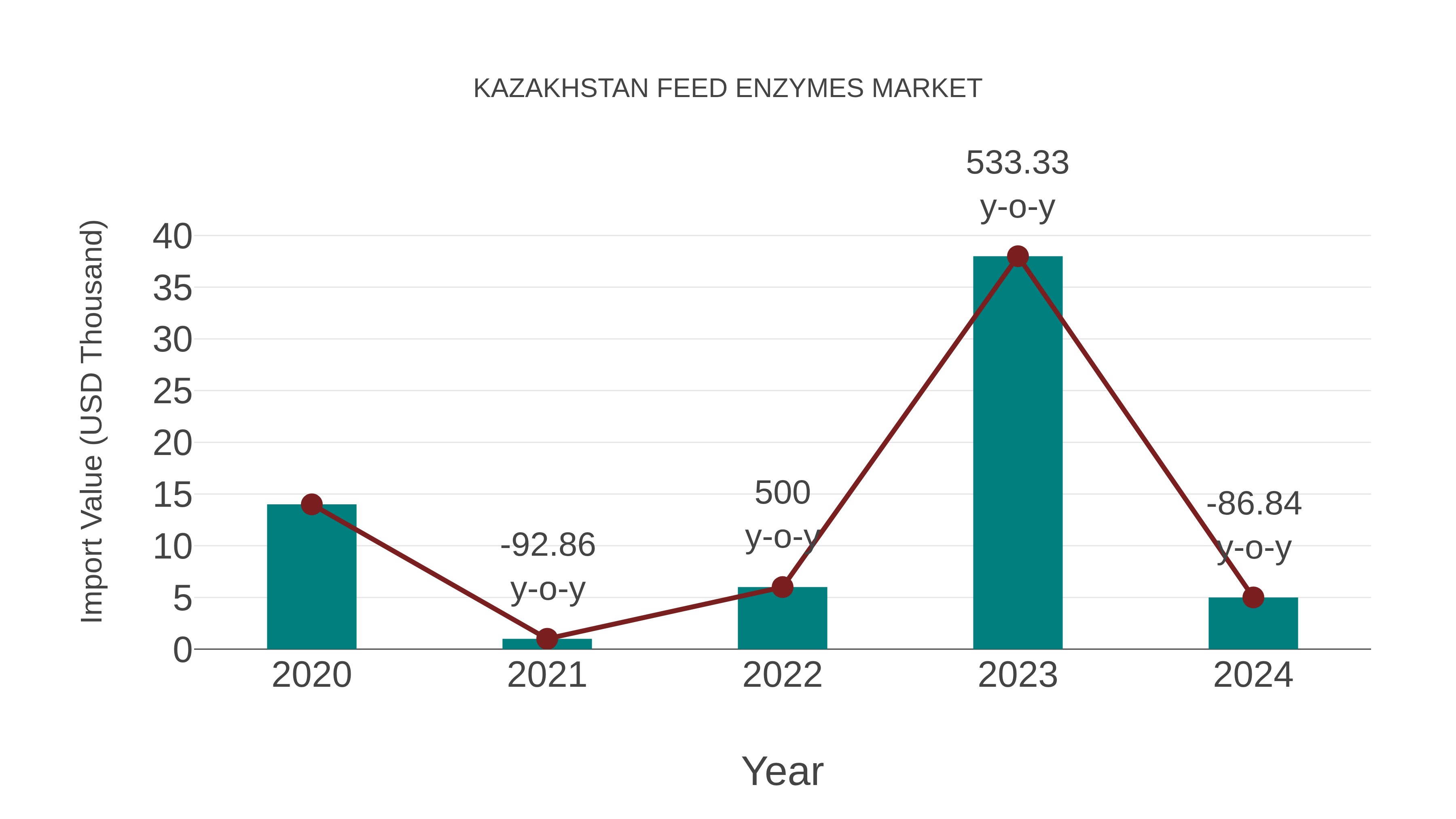
In the Kazakhstan feed enzymes market, the import trend experienced a significant decline from 2023 to 2024, with a growth rate of -86.84%. The compound annual growth rate (CAGR) for imports from 2020 to 2024 stood at -22.69%. This substantial decrease in import momentum may have been influenced by shifting demand patterns or changes in trade policies impacting market stability.
Kazakhstan Feed Enzymes Market Synopsis
The Kazakhstan Feed Enzymes Market is experiencing steady growth due to the increasing demand for animal feed additives to improve feed efficiency and animal health. Feed enzymes have gained popularity in the country as they aid in enhancing nutrient absorption and digestion in livestock, leading to better growth performance and reduced feed costs. Key players in the market are focusing on introducing innovative enzyme products tailored to meet the specific needs of livestock producers in Kazakhstan. The poultry segment dominates the market, followed by the swine and ruminant sectors. Factors such as a growing livestock industry, rising consumer awareness about animal nutrition, and advancements in enzyme technology are driving the market growth. However, challenges related to regulatory approvals and market competition may hinder the market`s expansion in the region.
Kazakhstan Feed Enzymes Market Trends
The Kazakhstan Feed Enzymes Market is experiencing a growing demand for feed enzymes due to the increasing focus on improving animal health and performance in the livestock industry. Key trends include the adoption of enzyme supplementation to enhance nutrient digestibility and reduce feed costs, as well as the rising awareness about the benefits of enzymes in improving feed efficiency and reducing environmental impact. Opportunities in the market lie in the development of innovative enzyme products tailored for specific livestock species and production systems, as well as the expansion of distribution channels to reach a wider customer base. Additionally, the increasing investments in research and development to explore new enzyme formulations and applications further contribute to the market`s growth potential.
Kazakhstan Feed Enzymes Market Challenges
In the Kazakhstan Feed Enzymes Market, several challenges are faced, including limited awareness among farmers about the benefits of feed enzymes, regulatory hurdles in approving new enzyme products, and the high cost associated with incorporating enzymes into animal feed. Additionally, the lack of technical expertise and infrastructure for enzyme production within the country adds to the challenges. Market players also struggle with competition from traditional feed additives and the need to continuously educate the market about the efficiency and cost-effectiveness of feed enzymes. Overcoming these challenges will require strategic marketing efforts, collaboration with regulatory bodies to streamline approval processes, investment in research and development for new enzyme products tailored to local needs, and partnerships with international enzyme manufacturers to access cutting-edge technologies.
Kazakhstan Feed Enzymes Market Investment Opportunities
The Kazakhstan Feed Enzymes Market is primarily driven by the increasing demand for high-quality animal feed to enhance livestock health and performance. Feed enzymes play a crucial role in improving nutrient digestion and absorption in animals, leading to better feed efficiency and overall growth. Additionally, the growing awareness among livestock farmers about the benefits of feed enzymes in reducing feed costs and minimizing environmental impact is fueling market growth. Furthermore, government initiatives to promote sustainable agriculture practices and the rising concerns regarding food safety and quality are also contributing to the increasing adoption of feed enzymes in Kazakhstan. Overall, the drive towards optimizing animal nutrition and productivity is a key factor propelling the growth of the feed enzymes market in Kazakhstan.
Kazakhstan Feed Enzymes Market Government Polices
Government policies related to the Kazakhstan Feed Enzymes Market include regulations on feed additives, quality control standards, and import/export requirements. The government has set guidelines to ensure the safety and efficacy of feed enzymes used in animal nutrition, emphasizing the importance of promoting animal health and productivity while maintaining food safety standards. Additionally, there are specific regulations in place regarding the registration and approval process for feed enzymes to be imported into the country, with a focus on transparency and compliance with international standards. Overall, the government policies aim to support the growth of the Kazakhstan Feed Enzymes Market by providing a regulatory framework that fosters innovation, ensures product quality, and meets the needs of the agriculture industry.
Kazakhstan Feed Enzymes Market Future Outlook
The Kazakhstan Feed Enzymes Market is expected to experience steady growth in the coming years, driven by increasing awareness about the benefits of feed enzymes in improving animal health and performance. Factors such as rising demand for high-quality animal protein, advancements in feed technology, and a growing focus on sustainable farming practices are projected to fuel market expansion. Additionally, the adoption of feed enzymes to enhance nutrient utilization, reduce feed costs, and mitigate environmental impact is likely to drive market growth further. Key players in the industry are anticipated to invest in research and development activities to introduce innovative enzyme solutions tailored to meet the specific needs of the Kazakhstan livestock industry, thereby creating lucrative opportunities for market growth and development.
Key Highlights of the Report:
- Kazakhstan Feed Enzymes Market Outlook
- Market Size of Kazakhstan Feed Enzymes Market, 2025
- Forecast of Kazakhstan Feed Enzymes Market, 2032
- Historical Data and Forecast of Kazakhstan Feed Enzymes Revenues & Volume for the Period 2022 - 2032F
- Kazakhstan Feed Enzymes Market Trend Evolution
- Kazakhstan Feed Enzymes Market Drivers and Challenges
- Kazakhstan Feed Enzymes Price Trends
- Kazakhstan Feed Enzymes Porter's Five Forces
- Kazakhstan Feed Enzymes Industry Life Cycle
- Historical Data and Forecast of Kazakhstan Feed Enzymes Market Revenues & Volume By Type for the Period 2022 - 2032F
- Historical Data and Forecast of Kazakhstan Feed Enzymes Market Revenues & Volume By Phytase for the Period 2022 - 2032F
- Historical Data and Forecast of Kazakhstan Feed Enzymes Market Revenues & Volume By Carbohydrase for the Period 2022 - 2032F
- Historical Data and Forecast of Kazakhstan Feed Enzymes Market Revenues & Volume By Protease for the Period 2022 - 2032F
- Historical Data and Forecast of Kazakhstan Feed Enzymes Market Revenues & Volume By Livestock for the Period 2022 - 2032F
- Historical Data and Forecast of Kazakhstan Feed Enzymes Market Revenues & Volume By Poultry for the Period 2022 - 2032F
- Historical Data and Forecast of Kazakhstan Feed Enzymes Market Revenues & Volume By Swine for the Period 2022 - 2032F
- Historical Data and Forecast of Kazakhstan Feed Enzymes Market Revenues & Volume By Ruminants for the Period 2022 - 2032F
- Historical Data and Forecast of Kazakhstan Feed Enzymes Market Revenues & Volume By Aquatic Animals for the Period 2022 - 2032F
- Historical Data and Forecast of Kazakhstan Feed Enzymes Market Revenues & Volume By Source for the Period 2022 - 2032F
- Historical Data and Forecast of Kazakhstan Feed Enzymes Market Revenues & Volume By Microorganism for the Period 2022 - 2032F
- Historical Data and Forecast of Kazakhstan Feed Enzymes Market Revenues & Volume By Plant for the Period 2022 - 2032F
- Historical Data and Forecast of Kazakhstan Feed Enzymes Market Revenues & Volume By Animal for the Period 2022 - 2032F
- Kazakhstan Feed Enzymes Import Export Trade Statistics
- Market Opportunity Assessment By Type
- Market Opportunity Assessment By Livestock
- Market Opportunity Assessment By Source
- Kazakhstan Feed Enzymes Top Companies Market Share
- Kazakhstan Feed Enzymes Competitive Benchmarking By Technical and Operational Parameters
- Kazakhstan Feed Enzymes Company Profiles
- Kazakhstan Feed Enzymes Key Strategic Recommendations






































