Kazakhstan Frozen Fish Market: Import Trend Analysis
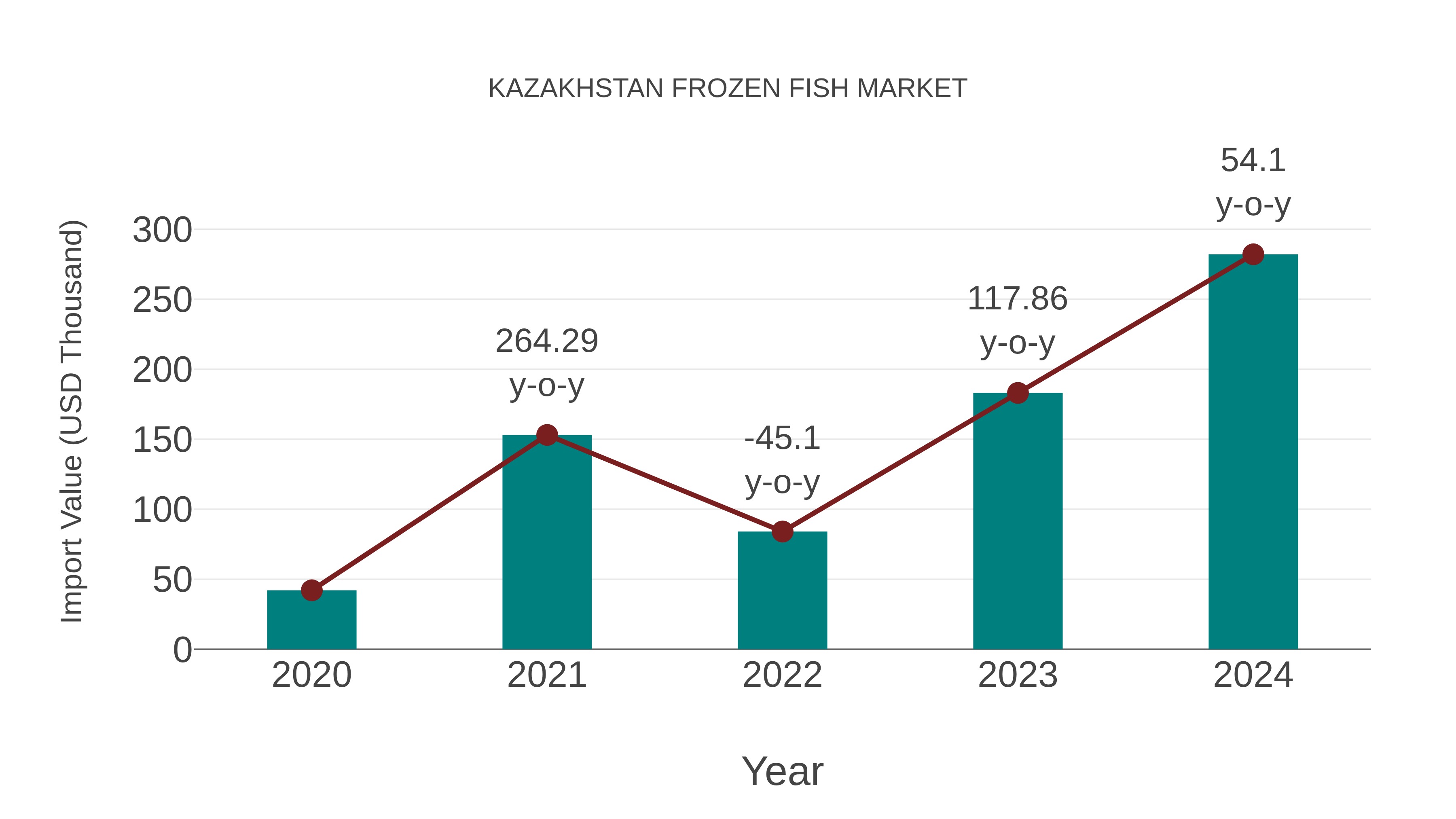
In the Kazakhstan frozen fish market, the import trend experienced significant growth from 2023 to 2024, with a notable rate of 54.1%. The compound annual growth rate (CAGR) for the period of 2020-2024 stood at 60.97%. This surge in imports can be attributed to a notable shift in consumer demand towards frozen fish products, indicating a potential uptrend in market stability and demand for such products during this period.
Kazakhstan Frozen Fish Market Synopsis
The Kazakhstan frozen fish market is experiencing steady growth due to increasing consumer demand for convenient and longer-lasting seafood products. The market is primarily driven by the rising popularity of frozen fish among households, restaurants, and food service providers looking for easy-to-prepare and cost-effective seafood options. Key players in the market are expanding their product offerings to cater to diverse consumer preferences and are leveraging innovative freezing techniques to maintain the quality and freshness of the fish. Additionally, government initiatives promoting sustainable fishing practices and the development of cold chain infrastructure are further supporting market growth. Overall, the Kazakhstan frozen fish market is poised for continued expansion as consumers seek healthy and convenient seafood choices.
Kazakhstan Frozen Fish Market Trends
Currently, the frozen fish market in Kazakhstan is experiencing a growth in demand due to changing consumer preferences towards convenient and ready-to-cook seafood products. The market is witnessing an increase in the variety of frozen fish products available, with a focus on premium and value-added options to cater to different consumer segments. There is also a growing awareness among consumers about the benefits of frozen fish, such as longer shelf life, convenience, and nutritional value. The market is becoming more competitive with the entry of new players offering innovative products and packaging solutions. Additionally, there is a rising trend towards sustainable sourcing and environmentally friendly practices, leading to an increase in the availability of certified sustainable frozen fish products in the market.
Kazakhstan Frozen Fish Market Challenges
In the Kazakhstan Frozen Fish Market, several challenges are faced, including logistical issues related to transportation and storage of frozen fish products in a geographically vast country. Additionally, fluctuating import regulations and tariffs can impact the availability and cost of imported frozen fish. Consumer preferences and awareness about the quality and safety of frozen fish products may also pose challenges for market growth. Competition from other protein sources and fresh fish options further add to the competitive landscape. Furthermore, ensuring proper cold chain management to maintain the quality and freshness of frozen fish products throughout the supply chain is crucial. Overcoming these challenges will require strategic investments in infrastructure, regulatory alignment, consumer education, and innovative marketing strategies to tap into the potential of the Kazakhstan Frozen Fish Market.
Kazakhstan Frozen Fish Market Investment Opportunities
The Kazakhstan Frozen Fish Market presents promising investment opportunities due to increasing consumer demand for convenient and healthy seafood options. With a growing middle class and changing dietary preferences towards more seafood consumption, there is a rising market for frozen fish products in Kazakhstan. Investors can explore opportunities in importing high-quality frozen fish products from established suppliers, setting up distribution channels to reach a wider consumer base, or investing in local processing facilities to cater to the demand for value-added frozen fish products. Additionally, partnerships with local retailers and restaurants can help capitalize on the growing trend of seafood consumption in Kazakhstan. As the market continues to evolve, strategic investments in branding, product innovation, and marketing can position investors for success in the lucrative Kazakhstan Frozen Fish Market.
Jordan Agar Market Government Policies
The Kazakhstan government has implemented various policies related to the frozen fish market to ensure food safety and quality standards. The government has set regulations for the importation and distribution of frozen fish products, including labeling requirements and quality inspections. Additionally, there are measures in place to monitor and control the storage and transportation of frozen fish to prevent contamination and ensure freshness. The government also supports local fish producers through subsidies and incentives to promote domestic production and reduce reliance on imports. Overall, the government`s policies aim to safeguard consumer health, boost the local frozen fish industry, and maintain standards in the Kazakhstan frozen fish market.
Kazakhstan Frozen Fish Market Future Outlook
The future outlook for the Kazakhstan Frozen Fish Market appears promising due to several factors. The increasing consumer awareness about the benefits of frozen fish such as longer shelf life, convenience, and availability of a wide variety of fish species is driving market growth. Additionally, the rising disposable income of the population is expected to boost the demand for premium frozen fish products. The growing retail sector and e-commerce platforms in Kazakhstan also offer opportunities for market expansion by reaching a wider customer base. However, challenges such as transportation and storage logistics, as well as competition from fresh fish markets, may hinder the market growth to some extent. Overall, with strategic marketing efforts, product innovation, and partnerships with key stakeholders, the Kazakhstan Frozen Fish Market is poised for steady growth in the coming years.
Key Highlights of the Report:
- Kazakhstan Frozen Fish Market Outlook
- Market Size of Kazakhstan Frozen Fish Market, 2025
- Forecast of Kazakhstan Frozen Fish Market, 2032
- Historical Data and Forecast of Kazakhstan Frozen Fish Revenues & Volume for the Period 2022 - 2032F
- Kazakhstan Frozen Fish Market Trend Evolution
- Kazakhstan Frozen Fish Market Drivers and Challenges
- Kazakhstan Frozen Fish Price Trends
- Kazakhstan Frozen Fish Porter's Five Forces
- Kazakhstan Frozen Fish Industry Life Cycle
- Historical Data and Forecast of Kazakhstan Frozen Fish Market Revenues & Volume By Type for the Period 2022 - 2032F
- Historical Data and Forecast of Kazakhstan Frozen Fish Market Revenues & Volume By Fish Fingers for the Period 2022 - 2032F
- Historical Data and Forecast of Kazakhstan Frozen Fish Market Revenues & Volume By Fish Cakes for the Period 2022 - 2032F
- Historical Data and Forecast of Kazakhstan Frozen Fish Market Revenues & Volume By Breaded/Battered Fish for the Period 2022 - 2032F
- Historical Data and Forecast of Kazakhstan Frozen Fish Market Revenues & Volume By Whole Fish & Drawn Fish for the Period 2022 - 2032F
- Historical Data and Forecast of Kazakhstan Frozen Fish Market Revenues & Volume By Single Fillet & Butterfly Fillet for the Period 2022 - 2032F
- Historical Data and Forecast of Kazakhstan Frozen Fish Market Revenues & Volume By Dressed Fish for the Period 2022 - 2032F
- Historical Data and Forecast of Kazakhstan Frozen Fish Market Revenues & Volume By Steaks Fish for the Period 2022 - 2032F
- Historical Data and Forecast of Kazakhstan Fish Fingers Frozen Fish Market Revenues & Volume By Others for the Period 2022 - 2032F
- Historical Data and Forecast of Kazakhstan Frozen Fish Market Revenues & Volume By Application for the Period 2022 - 2032F
- Historical Data and Forecast of Kazakhstan Frozen Fish Market Revenues & Volume By Direct Consumption for the Period 2022 - 2032F
- Historical Data and Forecast of Kazakhstan Frozen Fish Market Revenues & Volume By Restaurants for the Period 2022 - 2032F
- Historical Data and Forecast of Kazakhstan Frozen Fish Market Revenues & Volume By Food Processing Factories for the Period 2022 - 2032F
- Historical Data and Forecast of Kazakhstan Frozen Fish Market Revenues & Volume By Others for the Period 2022 - 2032F
- Historical Data and Forecast of Kazakhstan Frozen Fish Market Revenues & Volume By Distribution Channel for the Period 2022 - 2032F
- Historical Data and Forecast of Kazakhstan Frozen Fish Market Revenues & Volume By Supermarkets & Hypermarkets for the Period 2022 - 2032F
- Historical Data and Forecast of Kazakhstan Frozen Fish Market Revenues & Volume By Convenience Stores for the Period 2022 - 2032F
- Historical Data and Forecast of Kazakhstan Frozen Fish Market Revenues & Volume By Speciality Retailers for the Period 2022 - 2032F
- Historical Data and Forecast of Kazakhstan Frozen Fish Market Revenues & Volume By Online for the Period 2022 - 2032F
- Historical Data and Forecast of Kazakhstan Frozen Fish Market Revenues & Volume By Others for the Period 2022 - 2032F
- Kazakhstan Frozen Fish Import Export Trade Statistics
- Market Opportunity Assessment By Type
- Market Opportunity Assessment By Application
- Market Opportunity Assessment By Distribution Channel
- Kazakhstan Frozen Fish Top Companies Market Share
- Kazakhstan Frozen Fish Competitive Benchmarking By Technical and Operational Parameters
- Kazakhstan Frozen Fish Company Profiles
- Kazakhstan Frozen Fish Key Strategic Recommendations






































