Kazakhstan Hotel Furniture Market Summary
The kazakhstan hotel furniture market was estimated at USD 801 Million in 2025 and is projected to reach USD 1160 Million by 2032, growing at a CAGR of 6.2% from 2026 to 2032.
Kazakhstan Hotel Furniture Market Year-wise Growth Rate and Key Drivers
This graph highlights how the Kazakhstan Hotel Furniture Market has steadily grown over the past five years, supported by major growth factors.
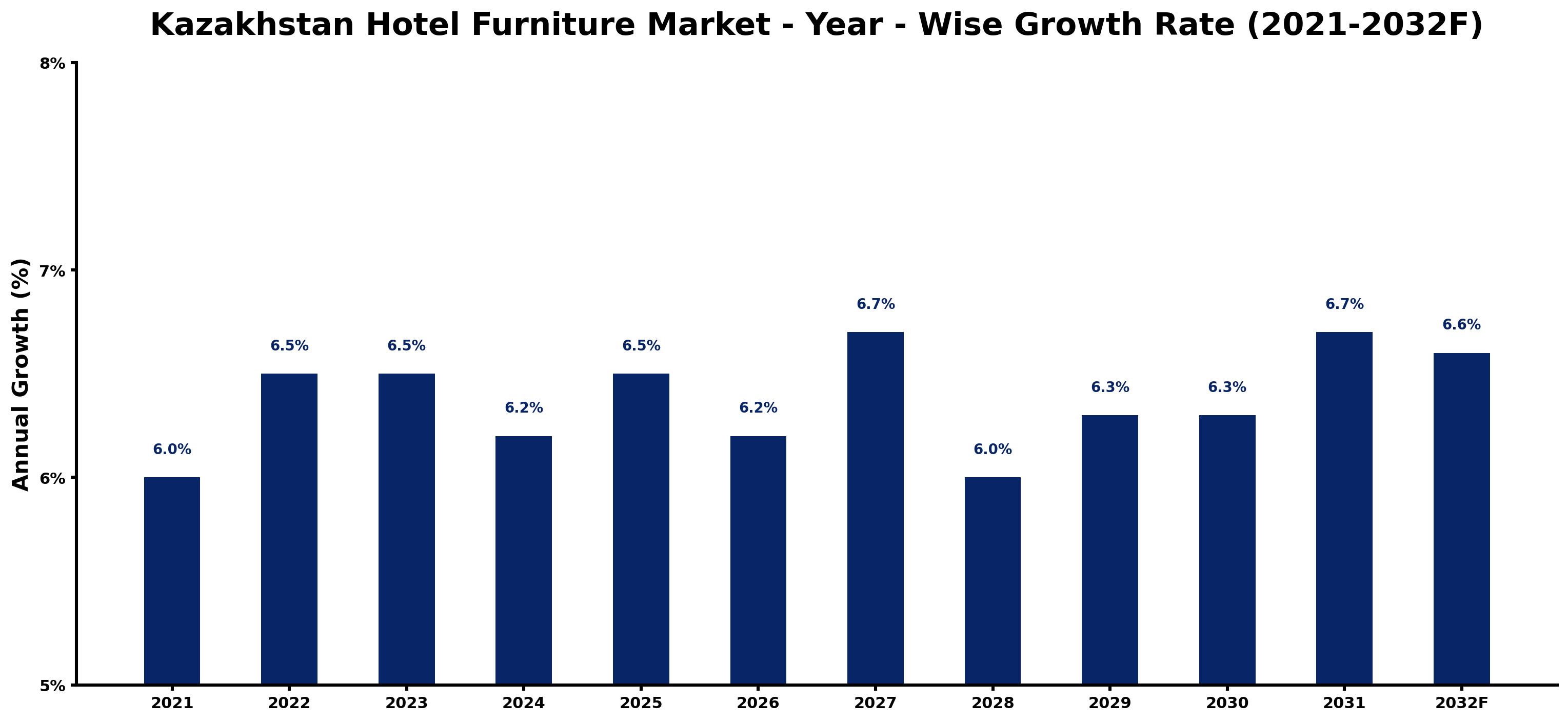
The table below presents the year wise growth rates along with the key drivers influencing the market
| Year | Growth Rate | Major Drivers |
| 2021 | 6.0% | Hospitality sector recovery post-pandemic boosts demand for hotel furniture solutions. |
| 2022 | 6.5% | Rising domestic tourism enhances investment in hotel infrastructure and furnishings. |
| 2023 | 6.5% | Increased foreign investments stimulate innovation in hotel furniture design and functionality. |
| 2024 | 6.2% | Local manufacturers gain market share through customized products for regional climates. |
| 2025 | 6.5% | Eco-friendly furniture options align with global sustainability trends in hospitality. |
| 2026 | 6.2% | Expansion of luxury hotels necessitates high-quality, durable furniture offerings. |
| 2027 | 6.7% | Emergence of boutique hotels spurs demand for unique and bespoke furniture. |
| 2028 | 6.0% | Technological integration in furniture enhances guest experiences and operational efficiency. |
| 2029 | 6.3% | Cultural events increase hotel occupancy, driving continuous furniture replenishment needs. |
| 2030 | 6.3% | Shifts towards remote working lead hotels to create multifunctional furniture spaces. |
| 2031 | 6.7% | Growing focus on wellness tourism influences the design of calming hotel environments. |
| 2032 | 6.6% | Competitive pressures encourage continuous innovation in hotel furniture aesthetics and utility. |
Note - Market size estimations and growth projections presented in this report are based on 6Wresearch's advanced forecasting approach, validated with industry datasets as of June 2026.
Kazakhstan Hotel Furniture Market Synopsis
The Kazakhstan Hotel Furniture Market is projected to reach 6.2% and witness significant growth during the forecast period (2026-2032). Driven by a dynamic increase in the hospitality sector, this market is evolving to meet the diverse needs of a growing number of hotels and resorts throughout the country. As tourism continues to flourish, the demand for high-quality, stylish, and sustainable hotel furniture is becoming a notable trend, shaping the future of this sector.
Kazakhstan Hotel Furniture Market Growth Drivers
Several factors are propelling the growth of the Kazakhstan Hotel Furniture Market. Firstly, the substantial increase in international tourist arrivals is bolstering the hospitality sector, leading to a heightened need for modern hotel furnishings. Furthermore, the government's strategic initiatives to promote tourism are enhancing the overall attractiveness of Kazakhstan as a travel destination, thus driving the demand for upscale hotel facilities and their respective furnishing requirements.
- The influx of foreign investments into the hospitality sector, especially from international hotel chains, is stimulating demand for a broad range of furniture designs and styles that meet global standards.
- The growing middle class in Kazakhstan, characterized by increasing disposable income, is influencing hotel management to enhance guest experiences through upgraded interior designs, pushing the demand for high-quality furniture.
- Sustainability trends are impacting the furniture manufacturing sector, as hotels are increasingly seeking eco-friendly products made from recycled or upcycled materials, which align with their corporate social responsibility goals.
- Customization and personalization of furniture pieces to reflect unique hotel themes are becoming increasingly important, as hotels strive to create distinctive guest experiences that differentiate them from competitors.
- Technological advancements in furniture design and manufacturing processes are also enhancing product offerings and improving operational efficiencies for suppliers in the hotel furniture market.
Kazakhstan Hotel Furniture Market Trends and Opportunities
The Kazakhstan Hotel Furniture Market is witnessing transformative trends that present opportunities for both manufacturers and investors. Notably, there is a pronounced shift towards sustainable sourcing and eco-friendly materials. Hotels are actively pursuing furniture options that minimize their environmental impact, leading to an uptick in demand for items crafted from sustainable resources like bamboo and reclaimed wood.
- The minimalist design trend is gaining momentum, reflecting the desire for sleek and contemporary aesthetics that appeal to the modern traveler.
- Customization is becoming a pivotal trend, with hotels seeking unique furniture designs that resonate with their brand identity, enhancing guest satisfaction and loyalty.
- Collaboration with local artisans to create bespoke furniture pieces is on the rise, fostering local craftsmanship while providing hotels with authentic and culturally resonant offerings.
- The integration of smart technologies into furniture design is also emerging, with smart beds and multifunctional furniture becoming appealing to tech-savvy hotel guests.
- Health and wellness trends are influencing furniture choices, with hotels incorporating ergonomic furniture that supports guest comfort and wellbeing, especially in higher-end establishments.
Kazakhstan Hotel Furniture Market Challenges and Restraints
While the Kazakhstan Hotel Furniture Market offers considerable opportunities, several challenges persist. One of the most significant hurdles is the intensity of competition among both local manufacturers and international suppliers. This competition can drive prices down, affecting profitability for some businesses.
- Fluctuating raw material costs can pose challenges for manufacturers, as price volatility may affect overall production costs and pricing strategies.
- Economic uncertainties can hinder investment and expansion plans within the hospitality sector, directly impacting the furniture market.
- Logistical challenges related to transportation and delivery can disrupt supply chains, affecting the timely provision of furniture to hotels.
- Meeting stringent quality standards while catering to varied design requirements from hotels can be a complex task for furniture suppliers.
- The increasing emphasis on sustainability necessitates that market players invest in environmentally responsible practices, which may require substantial initial outlays.
Kazakhstan Hotel Furniture Market Government Investment and Initiatives
The Kazakhstan government is actively promoting the hotel furniture market through various investment initiatives and policy frameworks aimed at enhancing domestic production. These initiatives include offering tax incentives to local manufacturers, which aim to decrease the dependency on imported furniture, thereby stimulating the local economy.
- Financial assistance programs are provided to support local enterprises in upgrading their production capabilities and improving product quality.
- Government regulations enforce quality control measures, ensuring that both domestic and imported furniture comply with established standards.
- Public investment in tourism infrastructure is directly correlated with increased demand for hotel furnishings, as new developments require substantial furniture input.
- The government promotes collaborations between local suppliers and international hotel brands to elevate quality standards and expand market offerings.
- Incentives are also provided for eco-friendly practices in manufacturing, encouraging companies to adopt sustainable methods to align with global trends.
Kazakhstan Hotel Furniture Market Latest Developments (May 2025 - June 2026)
Recent developments in the Kazakhstan Hotel Furniture Market have illustrated a strong trend towards modernization and sustainability. Many suppliers have begun to expand their portfolios to include eco-friendly and customizable furniture options. This shift aligns with the broader industry move towards creating unique and enhanced guest experiences, catering to the evolving preferences of travelers.
- Trade exhibitions and industry forums have been organized, providing platforms for local manufacturers to showcase innovative products and share insights on market trends.
- There has been an increase in partnerships between local artisans and hotels, aiming to bring authentic Kazakhstan craftsmanship into hotel interiors.
- Sustainability has taken the forefront, with a growing number of hotels committing to eco-certifications, necessitating compatible furniture solutions.
- Investments in technology have led to the introduction of smart furniture solutions to enhance guest comfort and experience.
- Industry stakeholders are increasingly focused on developing flexible supply chains to address logistical challenges, ensuring timely delivery of products.
Kazakhstan Hotel Furniture Market - Key Attractiveness of the Report
- 10 Years of Market Numbers
- Historical Data Starting from 2022 to 2025
- Base Year: 2025
- Forecast Data until 2032
- Key Performance Indicators Impacting the Market
- Major Upcoming Developments and Projects
Key Highlights of the Report:
- Kazakhstan Hotel Furniture Market Outlook
- Market Size of Kazakhstan Hotel Furniture Market, 2025
- Forecast of Kazakhstan Hotel Furniture Market, 2032F
- Historical Data and Forecast of Kazakhstan Hotel Furniture Revenues & Volume for the Period 2022-2032F
- Kazakhstan Hotel Furniture Market Trend Evolution
- Kazakhstan Hotel Furniture Market Drivers and Challenges
- Kazakhstan Hotel Furniture Price Trends
- Kazakhstan Hotel Furniture Porter's Five Forces
- Kazakhstan Hotel Furniture Industry Life Cycle
- Historical Data and Forecast of Kazakhstan Hotel Furniture Market Revenues & Volume By Product Types for the Period 2022-2032F
- Historical Data and Forecast of Kazakhstan Hotel Furniture Market Revenues & Volume By Table and Chairs for the Period 2022-2032F
- Historical Data and Forecast of Kazakhstan Hotel Furniture Market Revenues & Volume By Hotel Beds for the Period 2022-2032F
- Historical Data and Forecast of Kazakhstan Hotel Furniture Market Revenues & Volume By Hotel Casegoods for the Period 2022-2032F
- Historical Data and Forecast of Kazakhstan Hotel Furniture Market Revenues & Volume By Other for the Period 2022-2032F
- Historical Data and Forecast of Kazakhstan Hotel Furniture Market Revenues & Volume By Applications for the Period 2022-2032F
- Historical Data and Forecast of Kazakhstan Hotel Furniture Market Revenues & Volume By Business Hotel for the Period 2022-2032F
- Historical Data and Forecast of Kazakhstan Hotel Furniture Market Revenues & Volume By Luxury Hotel for the Period 2022-2032F
- Historical Data and Forecast of Kazakhstan Hotel Furniture Market Revenues & Volume By Boutique Hotel for the Period 2022-2032F
- Historical Data and Forecast of Kazakhstan Hotel Furniture Market Revenues & Volume By Other for the Period 2022-2032F
- Kazakhstan Hotel Furniture Import Export Trade Statistics
- Market Opportunity Assessment By Product Types
- Market Opportunity Assessment By Applications
- Kazakhstan Hotel Furniture Top Companies Market Share
- Kazakhstan Hotel Furniture Competitive Benchmarking By Technical and Operational Parameters
- Kazakhstan Hotel Furniture Company Profiles
- Kazakhstan Hotel Furniture Key Strategic Recommendations






































