Kazakhstan HVAC System Market Size Growth Rate
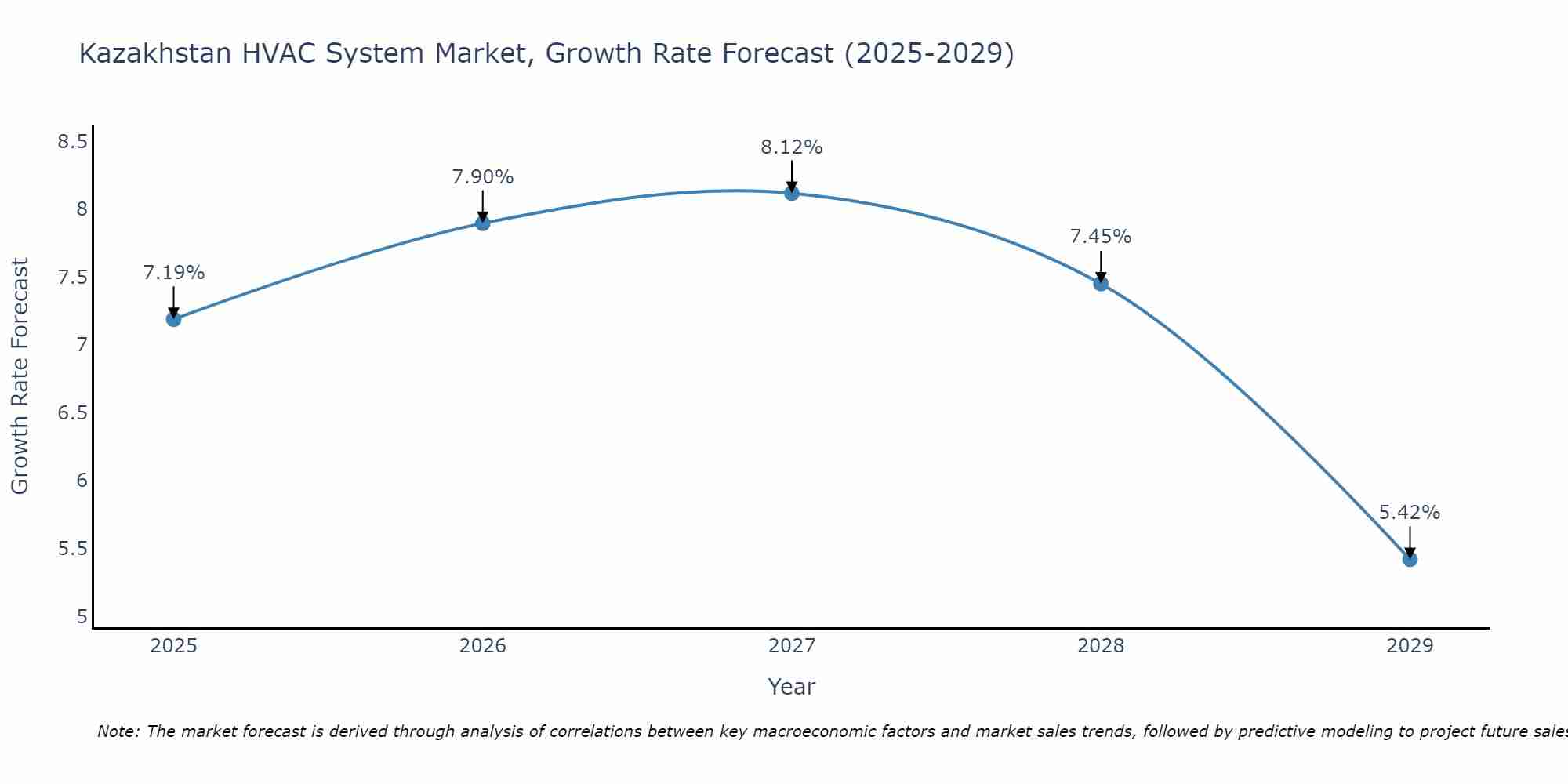
The Kazakhstan HVAC System Market is projected to witness mixed growth rate patterns during 2025 to 2029. The growth rate begins at 7.19% in 2025, climbs to a high of 8.12% in 2027, and moderates to 5.42% by 2029.
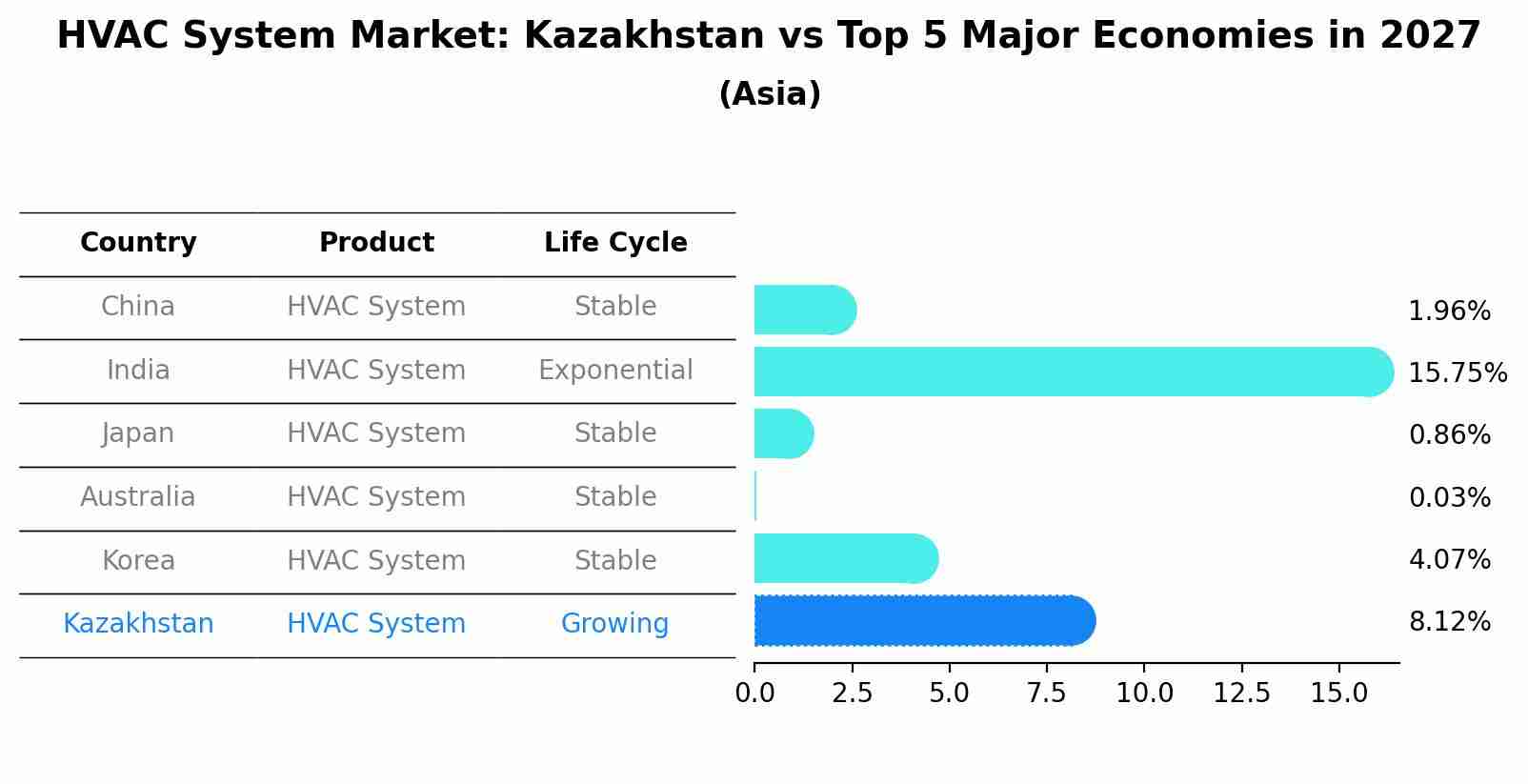
HVAC System Market: Kazakhstan vs Top 5 Major Economies in 2027 (Asia)
In the Asia region, the HVAC System market in Kazakhstan is projected to expand at a growing growth rate of 8.12% by 2027. The largest economy is China, followed by India, Japan, Australia and South Korea.
Kazakhstan Hvac System Market Synopsis
The HVAC (Heating, Ventilation and Air Conditioning) system market in Kazakhstan has been steadily growing over the past few years. The country is now one of the leading markets for HVAC systems in Central Asia
Kazakhstans construction sector has seen a significant increase due to increased investments from foreign companies, which are looking to capitalize on the country's favorable business environment. This has led to an increase in demand for heating, ventilation and air conditioning systems across various industries such as residential buildings, commercial complexes and industrial facilities
In addition to new constructions, many existing buildings have also started upgrading their existing HVAC systems with more energy-efficient solutions that can reduce operating costs while improving indoor comfort levels. In terms of technology trends, reversed cycle air conditioners are becoming popular due to their ability to produce both cooling and heating effects at a relatively low cost compared with other solutions such as heat pump or steam boilers. Heat exchangers are being used increasingly as well due to their efficiency when used for temperature control within closed spaces such as data centers or server rooms
Key Highlights of the Report:
- Kazakhstan HVAC System Market Outlook
- Market Size of Kazakhstan HVAC System Market, 2019
- Forecast of Kazakhstan HVAC System Market, 2026
- Historical Data and Forecast of Kazakhstan HVAC System Revenues & Volume for the Period 2016 - 2026
- Kazakhstan HVAC System Market Trend Evolution
- Kazakhstan HVAC System Market Drivers and Challenges
- Kazakhstan HVAC System Price Trends
- Kazakhstan HVAC System Porter's Five Forces
- Kazakhstan HVAC System Industry Life Cycle
- Historical Data and Forecast of Kazakhstan HVAC System Market Revenues & Volume By Product Type for the Period 2016 - 2026
- Historical Data and Forecast of Kazakhstan HVAC System Market Revenues & Volume By Heating for the Period 2016 - 2026
- Historical Data and Forecast of Kazakhstan HVAC System Market Revenues & Volume By Cooling for the Period 2016 - 2026
- Historical Data and Forecast of Kazakhstan HVAC System Market Revenues & Volume By Ventilation for the Period 2016 - 2026
- Historical Data and Forecast of Kazakhstan HVAC System Market Revenues & Volume By End-User for the Period 2016 - 2026
- Historical Data and Forecast of Kazakhstan HVAC System Market Revenues & Volume By Residential for the Period 2016 - 2026
- Historical Data and Forecast of Kazakhstan HVAC System Market Revenues & Volume By Commercial for the Period 2016 - 2026
- Historical Data and Forecast of Kazakhstan HVAC System Market Revenues & Volume By Industrial for the Period 2016 - 2026
- Kazakhstan HVAC System Import Export Trade Statistics
- Market Opportunity Assessment By Product Type
- Market Opportunity Assessment By End-User
- Kazakhstan HVAC System Top Companies Market Share
- Kazakhstan HVAC System Competitive Benchmarking By Technical and Operational Parameters
- Kazakhstan HVAC System Company Profiles
- Kazakhstan HVAC System Key Strategic Recommendations






































