Kazakhstan Interior Design Market Size, Share & Growth Rate
The Kazakhstan Interior Design Market was estimated at USD 445 Million in 2025 and is projected to reach USD 587 Million by 2032, growing at a CAGR of 4.0% from 2026 to 2032. This growth trajectory is largely propelled by the expanding construction sector and an increasingly affluent consumer base eager for contemporary design solutions. Urbanization is also a pivotal factor, as more Kazakhs migrate to urban centers and seek to enhance their living and working environments.
Kazakhstan Interior Design Market Year-wise Growth Rate and Key Drivers
This graph highlights how the Kazakhstan Interior Design Market has steadily grown over the years, supported by major growth factors.
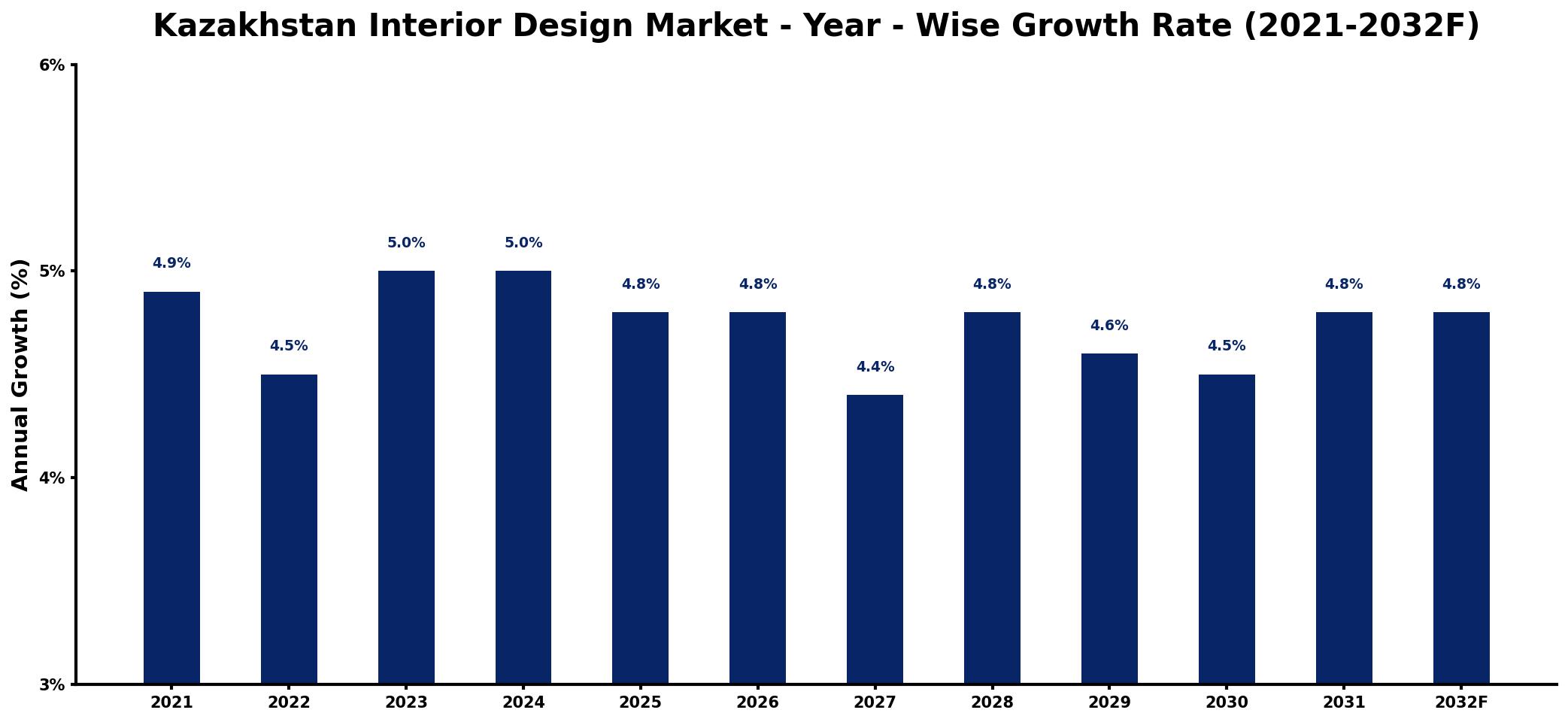
The table below presents the year‑wise growth rates along with the key drivers influencing the market
| Year | Growth Rate | Major Drivers |
| 2021 | 4.9% | Rising disposable income levels |
| 2022 | 4.5% | Increased urbanization trends observed |
| 2023 | 5.0% | Growth in tourism sector investments |
| 2024 | 5.0% | Expansion of real estate developments |
| 2025 | 4.8% | Surge in eco-friendly initiatives |
| 2026 | 4.8% | Growing interest in home renovations |
| 2027 | 4.4% | Emergence of smart home technologies |
| 2028 | 4.8% | Heightened focus on sustainability practices |
| 2029 | 4.6% | Increase in expatriate population influx |
| 2030 | 4.5% | Strengthening of local craftsmanship skills |
| 2031 | 4.8% | Boost in government infrastructure projects |
| 2032 | 4.8% | Rising popularity of online marketplaces |
Note: Market size estimations and growth projections presented in this report are based on 6Wresearch's proprietary forecasting methodology, utilizing the latest available industry data, government publications, and primary research inputs.
Kazakhstan Interior Design Market Synopsis
Kazakhstan's interior design market is currently witnessing an exciting transformation, characterized by a strong inclination toward innovative and sustainable design practices. As the demand for aesthetically pleasing and functional spaces grows, both residential and commercial sectors are becoming more receptive to contemporary design solutions.
This market is further invigorated by local firms that are gaining recognition for their artistry and craftsmanship, alongside an influx of international brands eager to capitalize on this evolving landscape. The integration of technology in design processes is also enhancing service delivery and client engagement, marking a significant shift in how design professionals operate.
Kazakhstan Interior Design Market Key Takeaways
- The market is influenced by rising disposable income levels and urban migration.
- Sustainability and eco-friendly designs are becoming vital for consumer choice.
- Technological integration is redefining the client-designer relationship.
- Local firms are increasingly recognized for unique, culturally inspired designs.
- Investment opportunities are expanding in residential, commercial, and hospitality sectors.
Evaluation of Restraints in Kazakhstan Interior Design Market
Despite its growth potential, the Kazakhstan interior design market faces some significant challenges. A critical issue is the limited availability of high-quality materials and furnishings, which can restrict designers from realizing their creative visions fully. Furthermore, there's often a lack of awareness regarding the benefits of professional interior design services among potential clients, which can make securing contracts difficult.
The competitive landscape is increasingly crowded, with many firms vying for a slice of the market, creating a challenging environment for new entrants. Finally, economic fluctuations pose a risk to consumer spending on design services, further complicating the stability of revenue streams for industry players.
Kazakhstan Interior Design Market Trends
A notable trend in the Kazakhstan Interior Design Market is the rising demand for sustainable and eco-friendly design solutions. Consumers are now prioritizing materials that reduce environmental impact, such as recycled furniture and non-toxic paints. Additionally, minimalist and contemporary aesthetics are increasingly favored, focusing on clean lines and neutral palettes interspersed with natural elements like wood and stone.
Moreover, there's a growing interest in blending traditional Kazakh design motifs with modern sensibilities, resulting in distinctive interior environments that reflect both heritage and contemporary taste. Technology continues to shape the market, with designers leveraging digital tools for visualization and client engagement, enhancing both the process and experience of design.
Kazakhstan Interior Design Market Opportunities
Investment opportunities within the Kazakhstan Interior Design Market are substantial, particularly given the robust growth of the construction sector. The rising middle class is creating increased demand for quality interior design services across various sectors, including residential and commercial projects. Furthermore, the push towards sustainability opens up niche markets for eco-friendly design solutions, inviting innovative collaborations between local designers and international firms.
Engagement with local suppliers can enhance project authenticity and cultural relevance while also helping investors navigate the evolving market landscape. Overall, the potential for growth and diversification within the market is significant, making it an attractive arena for investment.
Government Initiatives in the Kazakhstan Interior Design Market
The Kazakhstan government is actively supporting the interior design sector through various initiatives aimed at fostering industry growth. Policies that provide tax incentives and grants to businesses in this field demonstrate a commitment to enhancing the overall business environment. Additionally, the government places a strong emphasis on promoting sustainable practices, encouraging firms to adopt eco-friendly materials and technologies that align with global sustainability trends.
Regulatory measures are also in place to ensure quality and safety standards within the sector, including licensing requirements for professionals. These initiatives create a more structured landscape, allowing the interior design industry to flourish while adhering to best practices.
Future Insights of the Kazakhstan Interior Design Market
Looking ahead to 2026-2032, the Kazakhstan Interior Design Market is set for significant expansion. With the economy continuing to grow and urbanization accelerating, the demand for sophisticated and aesthetically pleasing interior spaces is anticipated to rise. Ongoing infrastructure development will also provide ample opportunities for design professionals to showcase their creativity and skills.
As consumer preferences shift towards more sustainable and technologically integrated design practices, the market will likely see increased innovation and competitiveness. Firms that adapt to these trends while delivering personalized experiences will thrive in this dynamic environment.
Kazakhstan Interior Design Market Latest Developments (2025 - 2026)
Recent developments within the Kazakhstan Interior Design Market indicate a marked shift towards digitalization and sustainability. Many designers are adopting advanced technologies such as 3D modeling and virtual consultations, enhancing both the efficiency and quality of service. Additionally, theres a growing emphasis on local materials and craftsmanship, as designers strive to create unique spaces that reflect the cultural richness of Kazakhstan.
Kazakhstan Interior Design Market - Key Attractiveness of the Report
- 10 Years of Market Numbers
- Historical Data Starting from 2022 to 2025
- Base Year: 2025
- Forecast Data until 2032
- Key Performance Indicators Impacting the Market
- Major Upcoming Developments and Projects
Key Highlights of the Report:
- Kazakhstan Interior Design Market Outlook
- Market Size of Kazakhstan Interior Design Market, 2025
- Forecast of Kazakhstan Interior Design Market, 2032
- Historical Data and Forecast of Kazakhstan Interior Design Revenues & Volume for the Period 2022-2032F
- Kazakhstan Interior Design Market Trend Evolution
- Kazakhstan Interior Design Market Drivers and Challenges
- Kazakhstan Interior Design Price Trends
- Kazakhstan Interior Design Porter's Five Forces
- Kazakhstan Interior Design Industry Life Cycle
- Historical Data and Forecast of Kazakhstan Interior Design Market Revenues & Volume By End Use for the Period 2022-2032F
- Historical Data and Forecast of Kazakhstan Interior Design Market Revenues & Volume By Commercial for the Period 2022-2032F
- Historical Data and Forecast of Kazakhstan Interior Design Market Revenues & Volume By Residential for the Period 2022-2032F
- Historical Data and Forecast of Kazakhstan Interior Design Market Revenues & Volume By Decoration Type for the Period 2022-2032F
- Historical Data and Forecast of Kazakhstan Interior Design Market Revenues & Volume By New for the Period 2022-2032F
- Historical Data and Forecast of Kazakhstan Interior Design Market Revenues & Volume By Renovations for the Period 2022-2032F
- Kazakhstan Interior Design Import Export Trade Statistics
- Market Opportunity Assessment By End Use
- Market Opportunity Assessment By Decoration Type
- Kazakhstan Interior Design Top Companies Market Share
- Kazakhstan Interior Design Competitive Benchmarking By Technical and Operational Parameters
- Kazakhstan Interior Design Company Profiles
- Kazakhstan Interior Design Key Strategic Recommendations






































