Kazakhstan LTE IoT Market Size & Growth Rate (2026-2032)
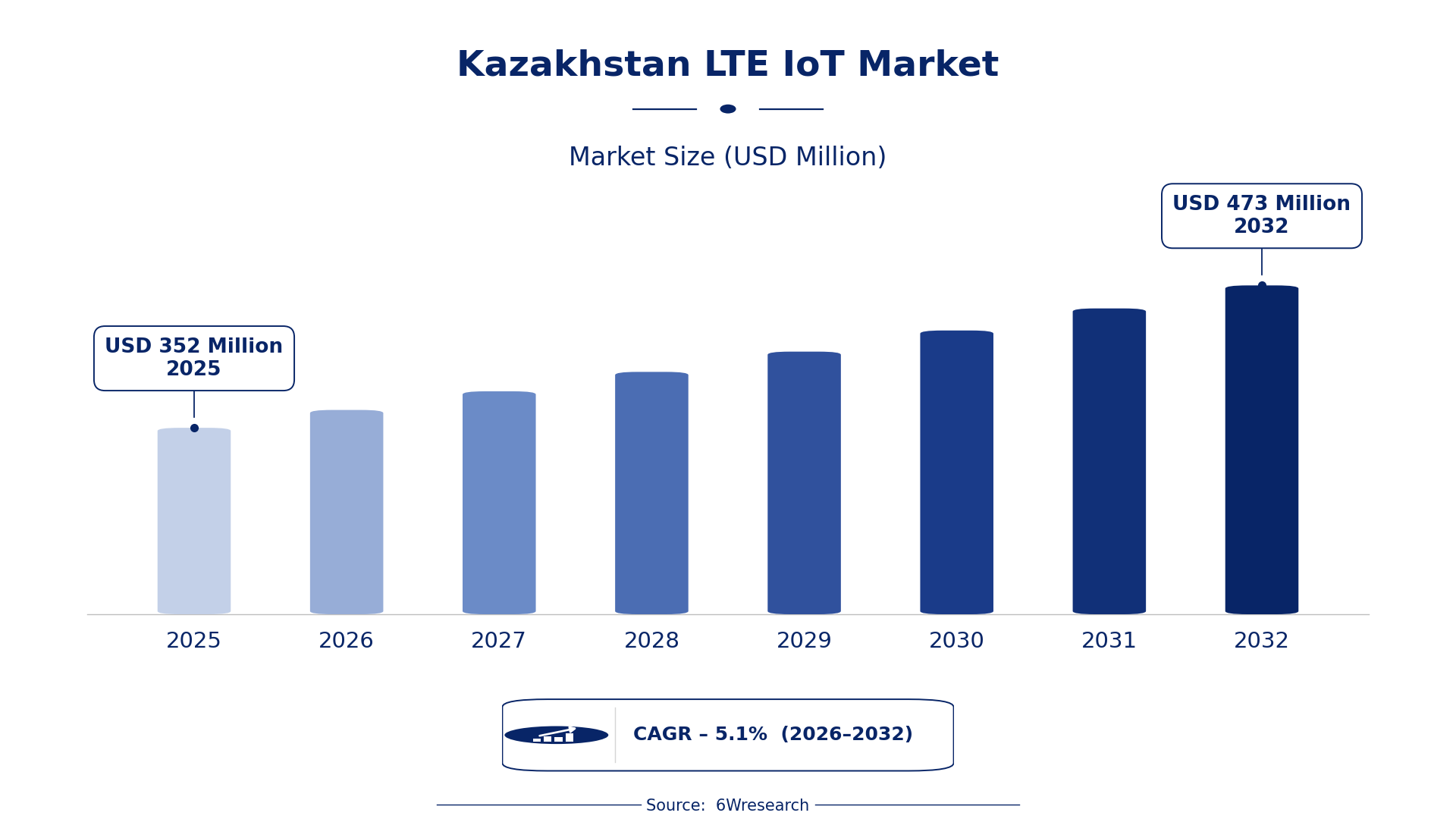
The Kazakhstan LTE IoT Market was estimated at USD 352 Million in 2025 and is projected to reach USD 473 Million by 2032, growing at a CAGR of 5.1% from 2026 to 2032.
Kazakhstan LTE IoT Market Synopsis
The Kazakhstan LTE IoT market is on a trajectory of robust growth, propelled by the rapid adoption of IoT technologies across key sectors such as agriculture, manufacturing, and logistics. As businesses begin to recognize the advantages of connected devices, the focus is shifting towards innovative solutions that can optimize operations and drive efficiency.
Looking ahead, the market is expected to embrace more sophisticated technologies, including the integration of LTE-M and NB-IoT frameworks. This evolution signifies not only a leap in connectivity but also a crucial step towards smart city initiatives endorsed by the government, further shaping the landscape of LTE IoT in Kazakhstan.
Kazakhstan LTE IoT Market Year-wise Growth Rate and Key Drivers
This graph illustrates the annual growth rates of the Kazakhstan LTE IoT Market from 2021 to 2032, highlighting a steady upward trajectory and projected expansion over the forecast period.
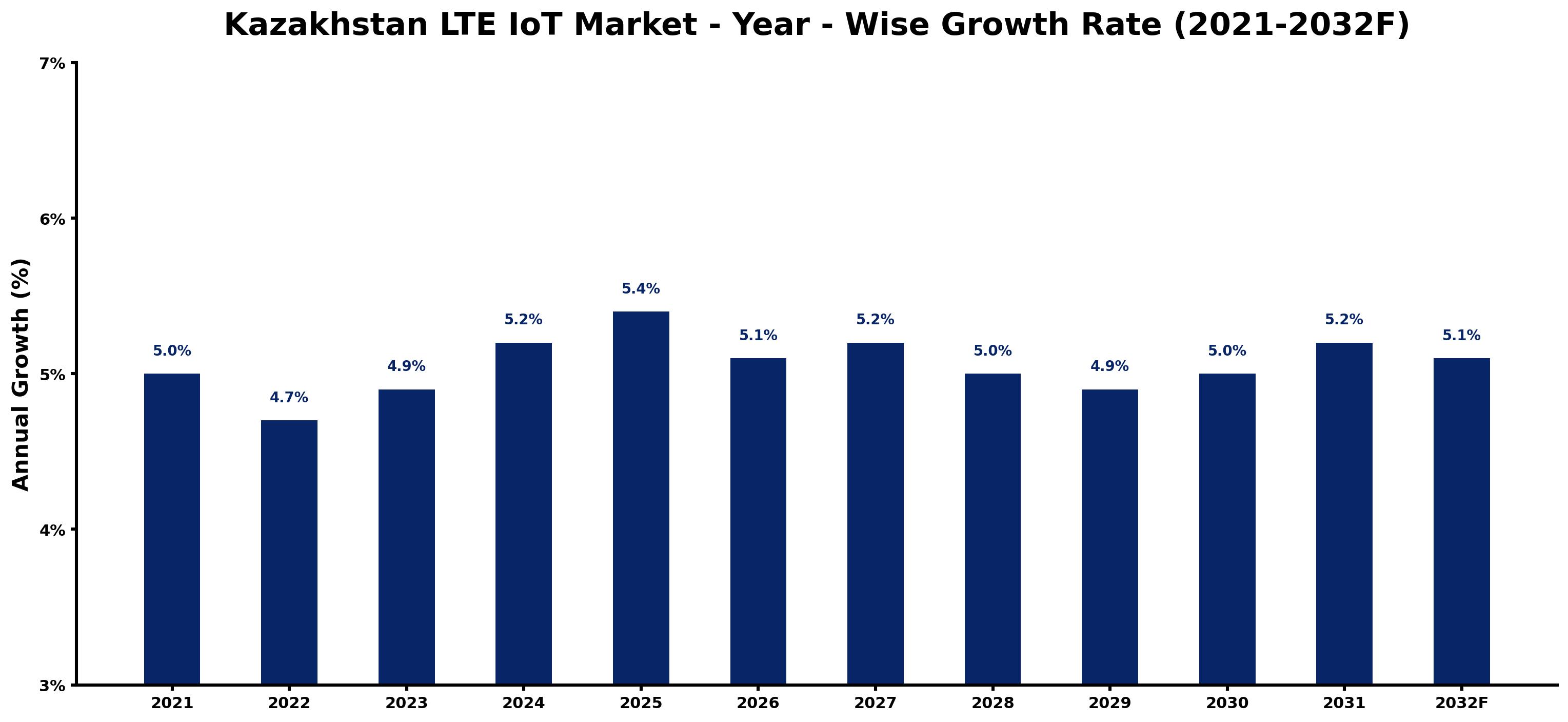
The table below presents the year‑wise growth rates along with the key drivers influencing the market
| Year | Growth Rate | Major Drivers |
| 2021 | 5.0% | Kazakhstan's Smart City initiative boosting IoT deployments. |
| 2022 | 4.7% | Government incentives for smart agriculture technology adoption. |
| 2023 | 4.9% | Increased investment in digital infrastructure by Kazakhtelecom. |
| 2024 | 5.2% | Regulatory support for IoT solutions in transportation. |
| 2025 | 5.4% | Rising mobile device penetration among urban populations. |
| 2026 | 5.1% | Development of local IoT service providers enhancing competition. |
| 2027 | 5.2% | Growing sectors needing automation in oil and gas. |
| 2028 | 5.0% | Increased focus on environmental monitoring technologies. |
| 2029 | 4.9% | Public-private partnerships advancing IoT in public utilities. |
| 2030 | 5.0% | Enhanced connectivity from Kazakhstan's digital economy strategy. |
| 2031 | 5.2% | Boosted digital literacy driving consumer IoT adoption. |
| 2032 | 5.1% | Policy encouragement for smart energy management solutions. |
Note: Market size estimations and growth projections presented in this report are based on 6Wresearch's proprietary forecasting methodology, utilizing the latest available industry data, government publications, and primary research inputs.
Kazakhstan LTE IoT Market Key Takeaways
Below are some of the specific key takeaways from the market, including:
- The increasing deployment of LTE networks is enhancing connectivity for IoT devices.
- Significant investment is being directed towards IoT infrastructure development.
- Government initiatives are actively supporting digital transformation efforts.
- Market players are focusing on tailored IoT solutions for local industry needs.
- Partnerships between telecom operators and solution providers are on the rise.
Evaluation of Restraints in Kazakhstan LTE IoT Market
Despite its promising growth, the Kazakhstan LTE IoT market faces real obstacles that can stifle its expansion. One major issue is the absence of standardized regulations, which creates uncertainty for businesses looking to invest in IoT solutions. This lack of clarity can deter potential adopters who are unsure of compliance or operational guidelines.
Additionally, in certain regions, the high cost and limited availability of necessary IoT infrastructure pose significant barriers. Without affordable access to essential devices and services, many businesses may struggle to implement IoT technologies effectively. Addressing these challenges will be crucial for the sustained growth of the market.
Kazakhstan LTE IoT Market Trends
The landscape of the Kazakhstan LTE IoT market is being shaped by several key trends. Firstly, the increasing deployment of Low Power Wide Area (LPWA) networks is facilitating large-scale IoT integrations. This is particularly important for sectors requiring extensive sensor networks, such as agriculture and logistics.
Another notable trend is the rise of data analytics solutions that utilize real-time information from IoT devices, leading to improved decision-making processes. Partnerships between telecom companies and IoT service providers are becoming more common, streamlining the path to market for new solutions and enhancing operational capabilities across industries.
Kazakhstan LTE IoT Market Opportunities
Investment opportunities abound in the Kazakhstan LTE IoT market, especially as demand for connectivity and efficiency grows. Sectors like transportation, energy, and agriculture offer fertile ground for IoT deployments that promise to enhance productivity and reduce operational costs.
Additionally, with the ongoing rollout of LTE infrastructure, there’s a pressing need for IoT integration services and devices tailored to local industries. Investors can capitalize on these trends by forming strategic partnerships with local telecom providers and aligning their offerings with government-led initiatives aimed at digital transformation.
Government Initiatives in the Kazakhstan LTE IoT Market
Government initiatives play a crucial role in shaping the Kazakhstan LTE IoT market. The administration has been proactive in establishing a supportive regulatory framework, which is essential for fostering innovation and investment in the sector. By prioritizing digital infrastructure development and enhancing connectivity, the government is laying the groundwork for a thriving IoT ecosystem.
- A national digital infrastructure upgrade programme aimed at enhancing network coverage is currently underway.
- In 2025, a regulatory framework was introduced to improve billing transparency for IoT services.
- A public-private initiative focused on developing smart city technologies is expected to launch in 2026.
- Recently, the government allocated funds to support IoT research and innovation projects aimed at local businesses.
- A planned initiative to streamline IoT device certification processes is set to commence in 2027.
Future Insights of the Kazakhstan LTE IoT Market
The Kazakhstan LTE IoT market is likely to see accelerated growth from 2026 to 2032. As companies increasingly adopt IoT solutions to streamline operations, the demand for reliable connectivity will surge. The anticipated rollout of 5G technology also promises to unlock new capabilities, propelling the market into a more advanced phase.
Government initiatives aimed at bolstering smart infrastructure and digital services will remain pivotal. As industries continue to seek operational efficiencies, the role of LTE IoT technology will be indispensable, paving the way for innovations that transform business practices in Kazakhstan.
Kazakhstan LTE IoT Market Latest Developments
In the past year, the Kazakhstan LTE IoT market has experienced significant advancements, demonstrating a clear commitment to leveraging technology for efficiency and modernization. The ongoing investments and partnerships in the sector are indicative of a growing recognition of the importance of IoT solutions in driving economic growth.
- A leading regional operator launched a new LTE-M service in Q3 2025, aimed at improving connectivity for IoT devices.
- An initiative began in early 2025 to integrate smart agriculture technologies using IoT, focusing on increasing crop yields.
- A major technology vendor is currently working on a platform to enhance IoT data analytics capabilities, set to be introduced by mid-2026.
- Plans for a nationwide IoT device exchange program were announced in late 2025 to facilitate access to affordable technologies.
- A collaborative project between telecom operators and local governments is planned for 2026, aimed at deploying smart lighting systems in urban areas.
Kazakhstan LTE IoT Market - Key Attractiveness of the Report
- 10 Years of Market Numbers
- Historical Data Starting from 2022 to 2025
- Base Year: 2025
- Forecast Data until 2032
- Key Performance Indicators Impacting the Market
- Major Upcoming Developments and Projects
Key Highlights of the Report:
- Kazakhstan LTE IoT Market Outlook
- Market Size of Kazakhstan LTE IoT Market, 2025
- Forecast of Kazakhstan LTE IoT Market, 2032
- Historical Data and Forecast of Kazakhstan LTE IoT Revenues & Volume for the Period 2022-2032F
- Kazakhstan LTE IoT Market Trend Evolution
- Kazakhstan LTE IoT Market Drivers and Challenges
- Kazakhstan LTE IoT Price Trends
- Kazakhstan LTE IoT Porter's Five Forces
- Kazakhstan LTE IoT Industry Life Cycle
- Historical Data and Forecast of Kazakhstan LTE IoT Market Revenues & Volume By Technology for the Period 2022-2032F
- Historical Data and Forecast of Kazakhstan LTE IoT Market Revenues & Volume By NB-IoT for the Period 2022-2032F
- Historical Data and Forecast of Kazakhstan LTE IoT Market Revenues & Volume By LTE-M for the Period 2022-2032F
- Historical Data and Forecast of Kazakhstan LTE IoT Market Revenues & Volume By Service for the Period 2022-2032F
- Historical Data and Forecast of Kazakhstan LTE IoT Market Revenues & Volume By Professional Services for the Period 2022-2032F
- Historical Data and Forecast of Kazakhstan LTE IoT Market Revenues & Volume By Managed Services for the Period 2022-2032F
- Historical Data and Forecast of Kazakhstan LTE IoT Market Revenues & Volume By Industry for the Period 2022-2032F
- Historical Data and Forecast of Kazakhstan LTE IoT Market Revenues & Volume By Manufacturing for the Period 2022-2032F
- Historical Data and Forecast of Kazakhstan LTE IoT Market Revenues & Volume By Energy and utilities for the Period 2022-2032F
- Historical Data and Forecast of Kazakhstan LTE IoT Market Revenues & Volume By Transportation and logistics for the Period 2022-2032F
- Historical Data and Forecast of Kazakhstan LTE IoT Market Revenues & Volume By Healthcare for the Period 2022-2032F
- Historical Data and Forecast of Kazakhstan LTE IoT Market Revenues & Volume By Agriculture for the Period 2022-2032F
- Kazakhstan LTE IoT Import Export Trade Statistics
- Market Opportunity Assessment By Technology
- Market Opportunity Assessment By Service
- Market Opportunity Assessment By Industry
- Kazakhstan LTE IoT Top Companies Market Share
- Kazakhstan LTE IoT Competitive Benchmarking By Technical and Operational Parameters
- Kazakhstan LTE IoT Company Profiles
- Kazakhstan LTE IoT Key Strategic Recommendations






































