Kazakhstan Lumber Market Size Growth Rate
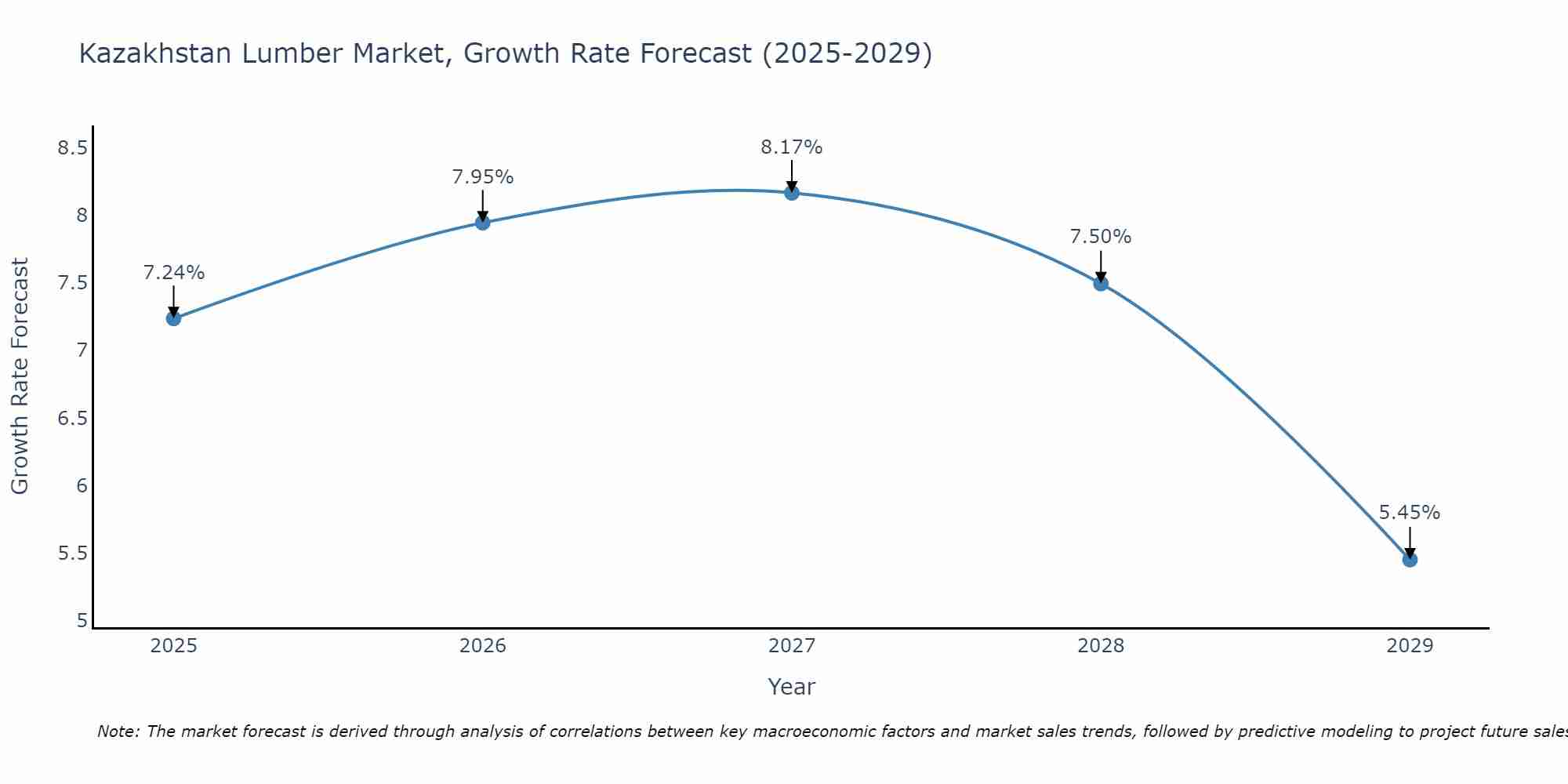
The Kazakhstan Lumber Market is projected to witness mixed growth rate patterns during 2025 to 2029. The growth rate begins at 7.24% in 2025, climbs to a high of 8.17% in 2027, and moderates to 5.45% by 2029.
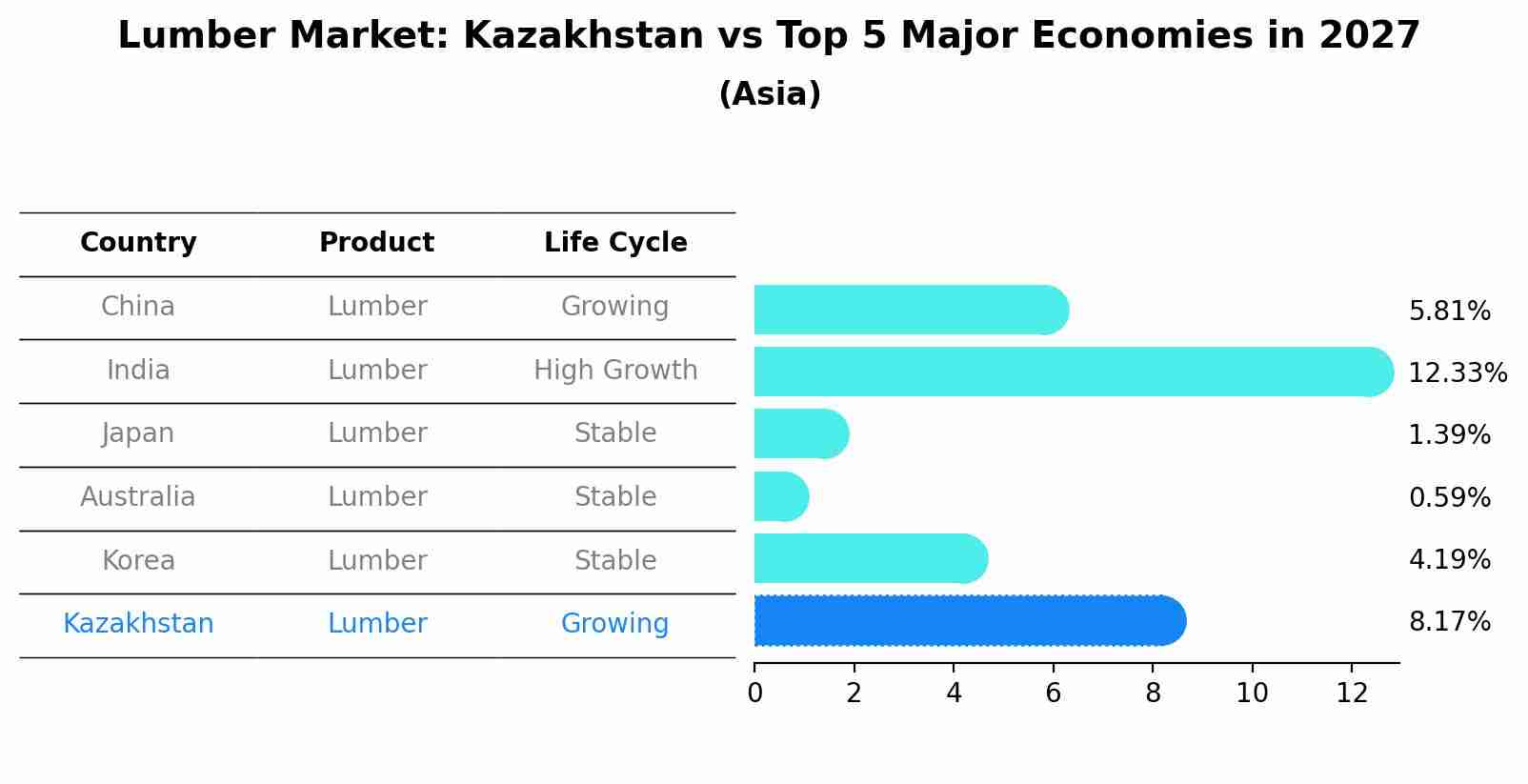
Lumber Market: Kazakhstan vs Top 5 Major Economies in 2027 (Asia)
The Lumber market in Kazakhstan is projected to grow at a growing growth rate of 8.17% by 2027, within the Asia region led by China, along with other countries like India, Japan, Australia and South Korea, collectively shaping a dynamic and evolving market environment driven by innovation and increasing adoption of emerging technologies.
Kazakhstan Lumber Market Overview
In Kazakhstan, the lumber market is witnessing growth due to the construction and furniture manufacturing industries. With abundant forest resources and increasing demand for wood products, there is a rising production and trade of lumber in the country.
Drivers of the market
The construction and furniture industries are key drivers of the lumber market in Kazakhstan. With ongoing infrastructure projects and urban development initiatives, there is a significant demand for lumber products for building construction, flooring, and interior furnishing. Moreover, the growing trend towards sustainable forestry practices and certified wood products contributes to market growth, as consumers prioritize environmentally friendly materials.
Challenges of the market
Challenges in the lumber market include deforestation concerns and sustainable sourcing practices. Balancing the demand for wood products with environmental conservation efforts requires careful management of forest resources and adherence to forestry regulations.
Government Policy of the market
In alignment with sustainable development goals and forest conservation efforts, Kazakhstan government is implementing policies to regulate and promote the lumber market. Initiatives focus on sustainable forestry practices, reforestation efforts, and value-added processing to enhance competitiveness.
Key Highlights of the Report:
- Kazakhstan Lumber Market Outlook
- Market Size of Kazakhstan Lumber Market, 2024
- Forecast of Kazakhstan Lumber Market, 2031
- Historical Data and Forecast of Kazakhstan Lumber Revenues & Volume for the Period 2021-2031
- Kazakhstan Lumber Market Trend Evolution
- Kazakhstan Lumber Market Drivers and Challenges
- Kazakhstan Lumber Price Trends
- Kazakhstan Lumber Porter's Five Forces
- Kazakhstan Lumber Industry Life Cycle
- Historical Data and Forecast of Kazakhstan Lumber Market Revenues & Volume By Types for the Period 2021-2031
- Historical Data and Forecast of Kazakhstan Lumber Market Revenues & Volume By Hardwood Lumber for the Period 2021-2031
- Historical Data and Forecast of Kazakhstan Lumber Market Revenues & Volume By Softwood Lumber for the Period 2021-2031
- Historical Data and Forecast of Kazakhstan Lumber Market Revenues & Volume By Application for the Period 2021-2031
- Historical Data and Forecast of Kazakhstan Lumber Market Revenues & Volume By Construction for the Period 2021-2031
- Historical Data and Forecast of Kazakhstan Lumber Market Revenues & Volume By Furniture for the Period 2021-2031
- Historical Data and Forecast of Kazakhstan Lumber Market Revenues & Volume By Flooring for the Period 2021-2031
- Historical Data and Forecast of Kazakhstan Lumber Market Revenues & Volume By Moldings for the Period 2021-2031
- Historical Data and Forecast of Kazakhstan Lumber Market Revenues & Volume By Others for the Period 2021-2031
- Kazakhstan Lumber Import Export Trade Statistics
- Market Opportunity Assessment By Types
- Market Opportunity Assessment By Application
- Kazakhstan Lumber Top Companies Market Share
- Kazakhstan Lumber Competitive Benchmarking By Technical and Operational Parameters
- Kazakhstan Lumber Company Profiles
- Kazakhstan Lumber Key Strategic Recommendations






































