Kazakhstan Methylene Chloride Market: Import Trend Analysis
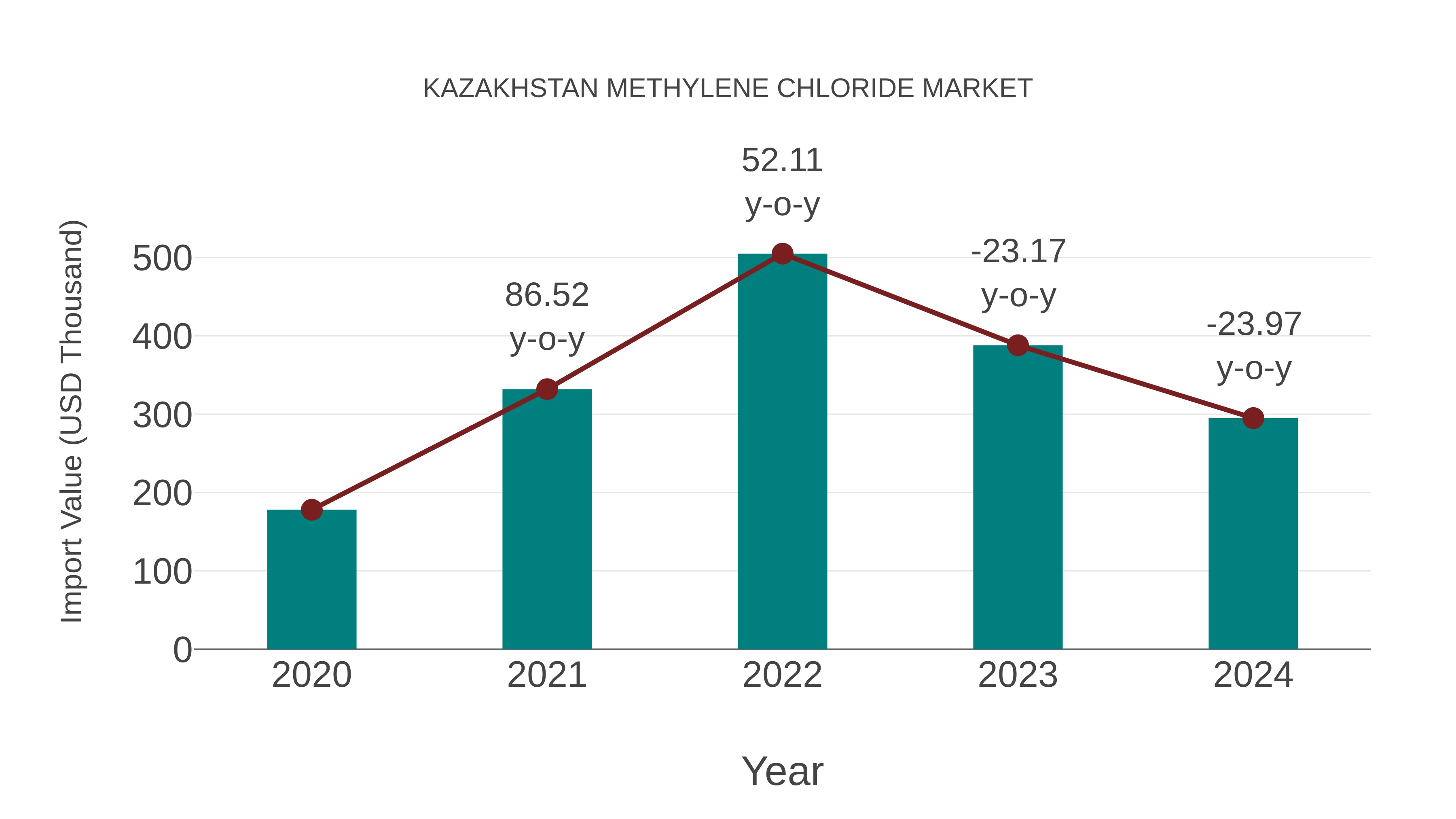
In the Kazakhstan methylene chloride market, the import trend experienced a decline from 2023 to 2024, with a growth rate of -23.97%. However, the compound annual growth rate (CAGR) for the period spanning 2020 to 2024 stood at 13.46%. This negative import momentum in 2024 could be attributed to shifts in demand dynamics or changes in trade policies impacting market stability.
Kazakhstan Methylene Chloride Market Overview
The Kazakhstan Methylene Chloride market is experiencing steady growth, propelled by its diverse applications across various industries such as paints and coatings, pharmaceuticals, and chemical processing. Methylene chloride is valued for its solvent properties, volatility, and low toxicity, making it suitable for degreasing, paint stripping, and extraction processes. As Kazakhstan industrial sector expands and infrastructure projects accelerate, the demand for methylene chloride is expected to rise further. Moreover, technological advancements and product innovations contribute to the market`s growth prospects.
Drivers of the market
The transportation sector`s growth, coupled with the need for cleaner-burning fuels, is fueling the demand for methyl tertiary butyl ether (MTBE). As an octane booster in gasoline, MTBE enhances fuel efficiency and reduces harmful emissions. With Kazakhstan focus on improving fuel quality and meeting environmental regulations, the demand for MTBE is expected to rise.
Challenges of the market
Challenges in the methylene chloride market include regulatory restrictions on usage due to health and environmental concerns, as well as competition from alternative solvents. Moreover, ensuring safe handling, storage, and disposal of methylene chloride poses challenges for users and manufacturers in Kazakhstan.
Government Policy of the market
The government promotes responsible use and handling of methylene chloride to mitigate environmental and health risks. Policies may include regulations on manufacturing processes, waste disposal, and worker safety, as well as initiatives to promote safer alternatives.
Key Highlights of the Report:
- Kazakhstan Methylene Chloride Market Outlook
- Market Size of Kazakhstan Methylene Chloride Market, 2025
- Forecast of Kazakhstan Methylene Chloride Market, 2032
- Historical Data and Forecast of Kazakhstan Methylene Chloride Revenues & Volume for the Period 2022-2032F
- Kazakhstan Methylene Chloride Market Trend Evolution
- Kazakhstan Methylene Chloride Market Drivers and Challenges
- Kazakhstan Methylene Chloride Price Trends
- Kazakhstan Methylene Chloride Porter's Five Forces
- Kazakhstan Methylene Chloride Industry Life Cycle
- Historical Data and Forecast of Kazakhstan Methylene Chloride Market Revenues & Volume By Application for the Period 2022-2032F
- Historical Data and Forecast of Kazakhstan Methylene Chloride Market Revenues & Volume By Paint Remover for the Period 2022-2032F
- Historical Data and Forecast of Kazakhstan Methylene Chloride Market Revenues & Volume By Pharmaceuticals for the Period 2022-2032F
- Historical Data and Forecast of Kazakhstan Methylene Chloride Market Revenues & Volume By Chemical Processing for the Period 2022-2032F
- Historical Data and Forecast of Kazakhstan Methylene Chloride Market Revenues & Volume By Foam Manufacturing for the Period 2022-2032F
- Historical Data and Forecast of Kazakhstan Methylene Chloride Market Revenues & Volume By Metal Cleaning for the Period 2022-2032F
- Historical Data and Forecast of Kazakhstan Methylene Chloride Market Revenues & Volume By Others for the Period 2022-2032F
- Kazakhstan Methylene Chloride Import Export Trade Statistics
- Market Opportunity Assessment By Application
- Kazakhstan Methylene Chloride Top Companies Market Share
- Kazakhstan Methylene Chloride Competitive Benchmarking By Technical and Operational Parameters
- Kazakhstan Methylene Chloride Company Profiles
- Kazakhstan Methylene Chloride Key Strategic Recommendations






































