Kazakhstan Milk Protein Market: Import Trend Analysis
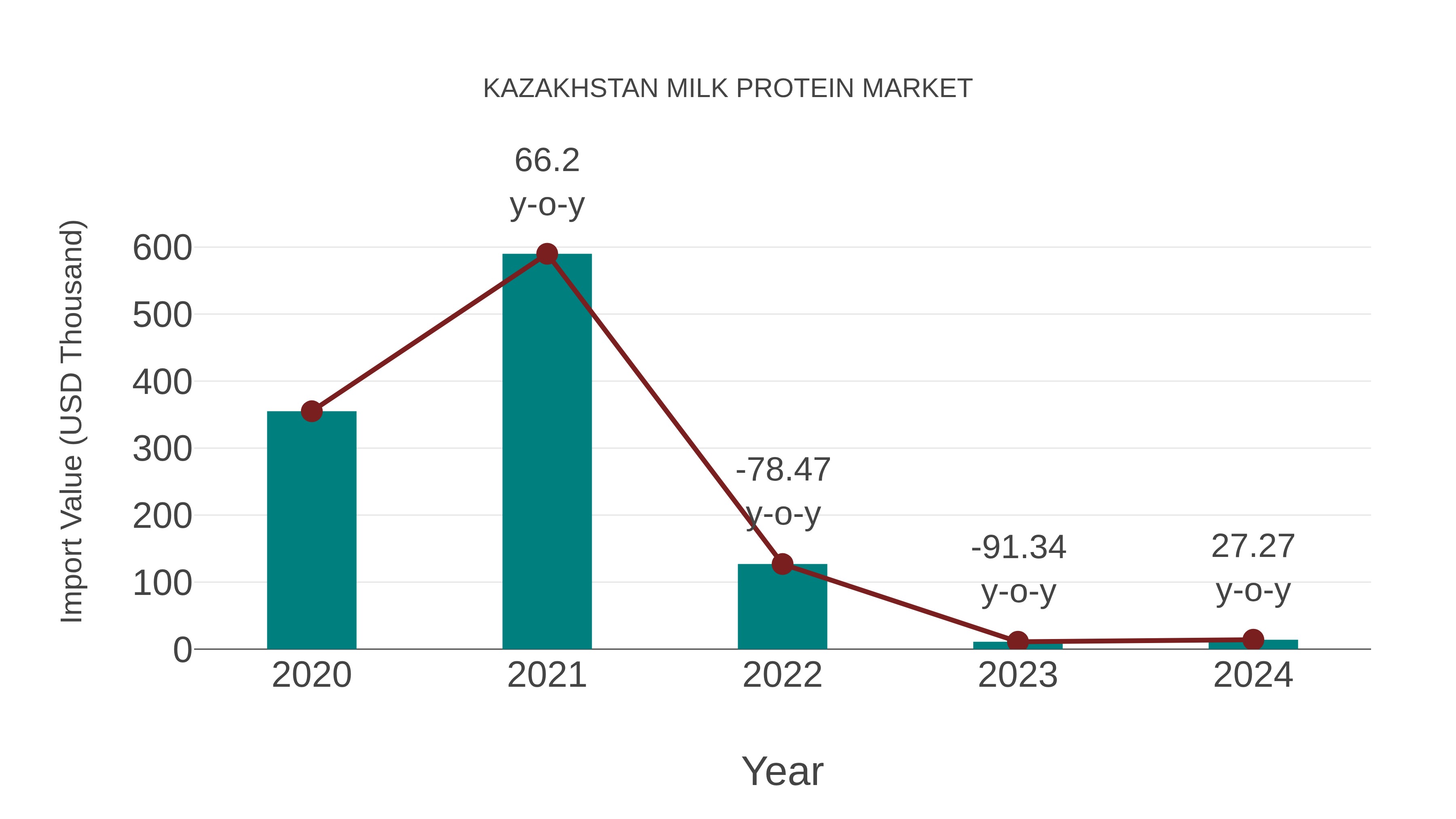
In the Kazakhstan milk protein market, the import trend exhibited a notable growth from 2023 to 2024, with a growth rate of 27.27%. However, the compound annual growth rate (CAGR) for the period 2020-2024 stood at -55.44%. This decline can be attributed to shifts in demand dynamics or changes in trade policies impacting market stability.
Kazakhstan Milk Protein Market Overview
The Kazakhstan milk protein market is witnessing growing demand attributed to the rising awareness of the health benefits associated with protein-rich diets. Milk protein, renowned for its high nutritional value and versatility, is widely used in various food and beverage applications, including sports nutrition, infant formula, and functional foods. Market players are investing in research and development to introduce novel milk protein ingredients and fortified products catering to diverse consumer needs.
Drivers of the market
The Kazakhstan milk protein market is witnessing significant growth due to several driving forces. With the growing awareness of the health benefits associated with milk proteins, there`s an increasing demand for products fortified with these ingredients. Milk proteins, such as whey and casein, are recognized for their nutritional value and functional properties, driving their incorporation into a wide range of food and beverage products. Additionally, the expanding fitness and wellness industry in Kazakhstan is fueling the demand for protein-rich dietary supplements and sports nutrition products. Moreover, advancements in food processing technologies and ingredient sourcing are further supporting market growth by enabling the development of innovative milk protein-based formulations tailored to consumer preferences.
Challenges of the market
Challenges in the Kazakhstan milk protein market may include ensuring consistent quality and supply of milk, as well as meeting stringent regulations and standards for food safety and labeling. Economic factors such as inflation and currency fluctuations could also affect pricing and profitability.
Government Policy of the market
Given the nutritional significance of milk protein, government policies in this sector may target the dairy industry`s sustainability and competitiveness. This could involve initiatives to enhance milk production efficiency, improve processing technologies for protein extraction, and facilitate market access for dairy exporters.
Key Highlights of the Report:
- Kazakhstan Milk Protein Market Outlook
- Market Size of Kazakhstan Milk Protein Market, 2025
- Forecast of Kazakhstan Milk Protein Market, 2032
- Historical Data and Forecast of Kazakhstan Milk Protein Revenues & Volume for the Period 2022-2032F
- Kazakhstan Milk Protein Market Trend Evolution
- Kazakhstan Milk Protein Market Drivers and Challenges
- Kazakhstan Milk Protein Price Trends
- Kazakhstan Milk Protein Porter's Five Forces
- Kazakhstan Milk Protein Industry Life Cycle
- Historical Data and Forecast of Kazakhstan Milk Protein Market Revenues & Volume By Type for the Period 2022-2032F
- Historical Data and Forecast of Kazakhstan Milk Protein Market Revenues & Volume By Whey Protein Isolates for the Period 2022-2032F
- Historical Data and Forecast of Kazakhstan Milk Protein Market Revenues & Volume By Whey Protein Concentrates for the Period 2022-2032F
- Historical Data and Forecast of Kazakhstan Milk Protein Market Revenues & Volume By Milk Protein Hydrolysates for the Period 2022-2032F
- Historical Data and Forecast of Kazakhstan Milk Protein Market Revenues & Volume By Milk Protein Isolates for the Period 2022-2032F
- Historical Data and Forecast of Kazakhstan Milk Protein Market Revenues & Volume By Milk Protein Concentrates for the Period 2022-2032F
- Historical Data and Forecast of Kazakhstan Milk Protein Market Revenues & Volume By Others for the Period 2022-2032F
- Historical Data and Forecast of Kazakhstan Milk Protein Market Revenues & Volume By Form for the Period 2022-2032F
- Historical Data and Forecast of Kazakhstan Milk Protein Market Revenues & Volume By Liquid for the Period 2022-2032F
- Historical Data and Forecast of Kazakhstan Milk Protein Market Revenues & Volume By Dry for the Period 2022-2032F
- Historical Data and Forecast of Kazakhstan Milk Protein Market Revenues & Volume By Applications for the Period 2022-2032F
- Historical Data and Forecast of Kazakhstan Milk Protein Market Revenues & Volume By Dairy Products for the Period 2022-2032F
- Historical Data and Forecast of Kazakhstan Milk Protein Market Revenues & Volume By Sports Nutrition for the Period 2022-2032F
- Historical Data and Forecast of Kazakhstan Milk Protein Market Revenues & Volume By Infant Formula for the Period 2022-2032F
- Historical Data and Forecast of Kazakhstan Milk Protein Market Revenues & Volume By Others for the Period 2022-2032F
- Kazakhstan Milk Protein Import Export Trade Statistics
- Market Opportunity Assessment By Type
- Market Opportunity Assessment By Form
- Market Opportunity Assessment By Applications
- Kazakhstan Milk Protein Top Companies Market Share
- Kazakhstan Milk Protein Competitive Benchmarking By Technical and Operational Parameters
- Kazakhstan Milk Protein Company Profiles
- Kazakhstan Milk Protein Key Strategic Recommendations






































