Kazakhstan Naphtha Market: Import Trend Analysis
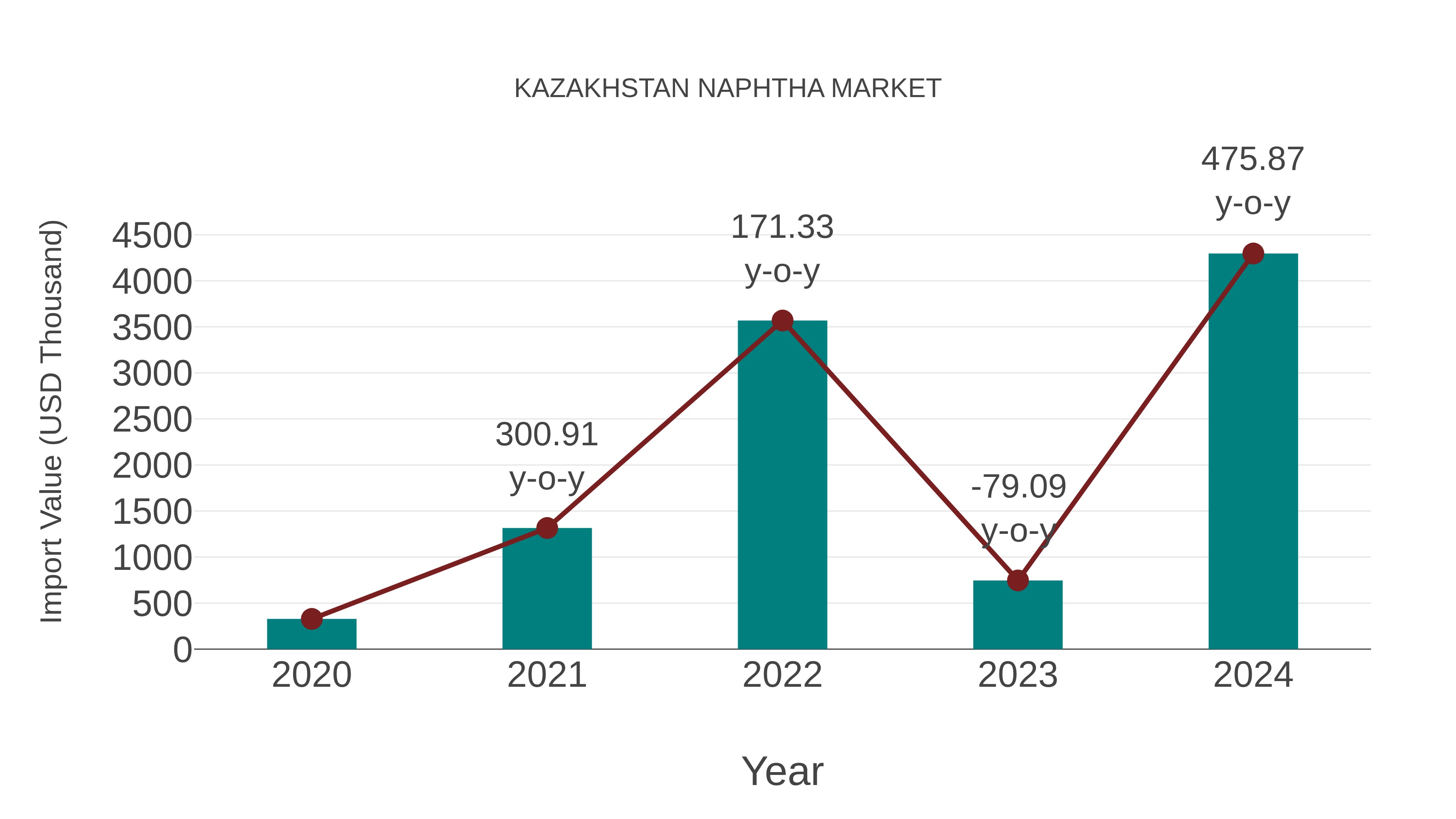
In the Kazakhstan naphtha market, import trends saw a significant surge from 2023 to 2024, with a growth rate of 475.87%. The compound annual growth rate (CAGR) for the period 2020-2024 stood at 90.24%. This remarkable import momentum can be attributed to shifting demand patterns in the market, indicating a potential shift in consumption preferences or industrial requirements during this period.
Kazakhstan Naphtha Market Synopsis
The Kazakhstan naphtha market is currently witnessing steady growth, driven by factors such as increasing demand from the petrochemical industry for producing various chemicals and plastics, as well as the country`s expanding refining capacity. Naphtha is a crucial feedstock for the production of ethylene and propylene, which are essential building blocks for a wide range of consumer and industrial products. Kazakhstan`s strategic location between Europe and Asia makes it a key player in the naphtha market, with several refineries producing high-quality naphtha for domestic consumption and export. The market is also influenced by global oil prices and international demand dynamics. Overall, the Kazakhstan naphtha market presents opportunities for industry players to capitalize on the country`s growing refining sector and increasing petrochemical production.
Kazakhstan Naphtha Market Trends
The Kazakhstan Naphtha Market is currently witnessing growth opportunities driven by the country`s increasing focus on petrochemicals and downstream industries. With the expansion of oil refineries and the development of new petrochemical projects in Kazakhstan, the demand for naphtha as a feedstock is expected to rise. Additionally, the country`s strategic location as a gateway between Europe and Asia presents opportunities for naphtha trading and exports. The trend towards investments in upgrading existing refineries and building new facilities to produce higher-value petrochemical products further boosts the demand for naphtha in the market. As Kazakhstan aims to diversify its economy and reduce dependence on oil exports, the naphtha market is poised for growth and presents opportunities for market players to capitalize on these trends.
Kazakhstan Naphtha Market Challenges
In the Kazakhstan Naphtha Market, some of the key challenges include fluctuating crude oil prices, geopolitical instability in the region, limited refining capacity, and competition from other energy sources. The volatility in crude oil prices can impact the cost of naphtha production and pricing, making it challenging for companies to forecast and plan their operations effectively. Geopolitical instability in Kazakhstan and neighboring countries can disrupt supply chains and create uncertainty for market participants. Additionally, the limited refining capacity in Kazakhstan may result in supply shortages or reliance on imports to meet domestic demand. Furthermore, the increasing competition from alternative energy sources such as natural gas and renewable energy poses a threat to the demand for naphtha in the country. Overall, navigating these challenges requires companies in the Kazakhstan Naphtha Market to have a strategic and adaptive approach to remain competitive.
Kazakhstan Naphtha Market Investment Opportunities
The Kazakhstan Naphtha Market is primarily driven by factors such as the growing demand for petrochemical products, the expansion of the oil and gas industry, and increasing investments in infrastructure projects. The country`s abundant oil and gas reserves make it a significant player in the global naphtha market, attracting investments from both domestic and international players. Additionally, the rising trend of using naphtha as a feedstock for the production of plastics, resins, and other chemicals further fuels the market growth in Kazakhstan. Government initiatives to promote industrial development and attract foreign investments also play a crucial role in driving the naphtha market in the country.
Kazakhstan Naphtha Market Government Polices
The Kazakhstan government has implemented various policies related to the naphtha market to promote domestic production and ensure energy security. These policies include tax incentives for naphtha producers, regulations on naphtha exports to prioritize domestic consumption, and initiatives to attract foreign investments in the sector. Additionally, the government has focused on developing infrastructure for naphtha transportation and storage to support the industry`s growth. Overall, these policies aim to strengthen Kazakhstan`s position in the global naphtha market, enhance energy self-sufficiency, and drive economic development through the sustainable exploitation of the country`s natural resources.
Kazakhstan Naphtha Market Future Outlook
The future outlook for the Kazakhstan Naphtha Market appears to be positive, with consistent growth expected in the coming years. The market is anticipated to benefit from increasing demand for naphtha as a feedstock in the petrochemical industry, driven by the expanding industrial sector and growing investments in infrastructure projects in Kazakhstan. Additionally, the country`s strategic location and access to key export markets are likely to further support the growth of the naphtha market. However, challenges such as fluctuating crude oil prices and environmental concerns may impact market dynamics. Overall, the Kazakhstan Naphtha Market is poised for steady expansion, supported by ongoing industrial development and favorable market conditions.
Key Highlights of the Report:
- Kazakhstan Naphtha Market Outlook
- Market Size of Kazakhstan Naphtha Market, 2025
- Forecast of Kazakhstan Naphtha Market, 2032
- Historical Data and Forecast of Kazakhstan Naphtha Revenues & Volume for the Period 2022 - 2032F
- Kazakhstan Naphtha Market Trend Evolution
- Kazakhstan Naphtha Market Drivers and Challenges
- Kazakhstan Naphtha Price Trends
- Kazakhstan Naphtha Porter's Five Forces
- Kazakhstan Naphtha Industry Life Cycle
- Historical Data and Forecast of Kazakhstan Naphtha Market Revenues & Volume By Application for the Period 2022 - 2032F
- Historical Data and Forecast of Kazakhstan Naphtha Market Revenues & Volume By Chemicals for the Period 2022 - 2032F
- Historical Data and Forecast of Kazakhstan Naphtha Market Revenues & Volume By Energy/Fuel for the Period 2022 - 2032F
- Historical Data and Forecast of Kazakhstan Naphtha Market Revenues & Volume By Others for the Period 2022 - 2032F
- Kazakhstan Naphtha Import Export Trade Statistics
- Market Opportunity Assessment By Application
- Kazakhstan Naphtha Top Companies Market Share
- Kazakhstan Naphtha Competitive Benchmarking By Technical and Operational Parameters
- Kazakhstan Naphtha Company Profiles
- Kazakhstan Naphtha Key Strategic Recommendations






































