Kazakhstan Peat Market: Import Trend Analysis
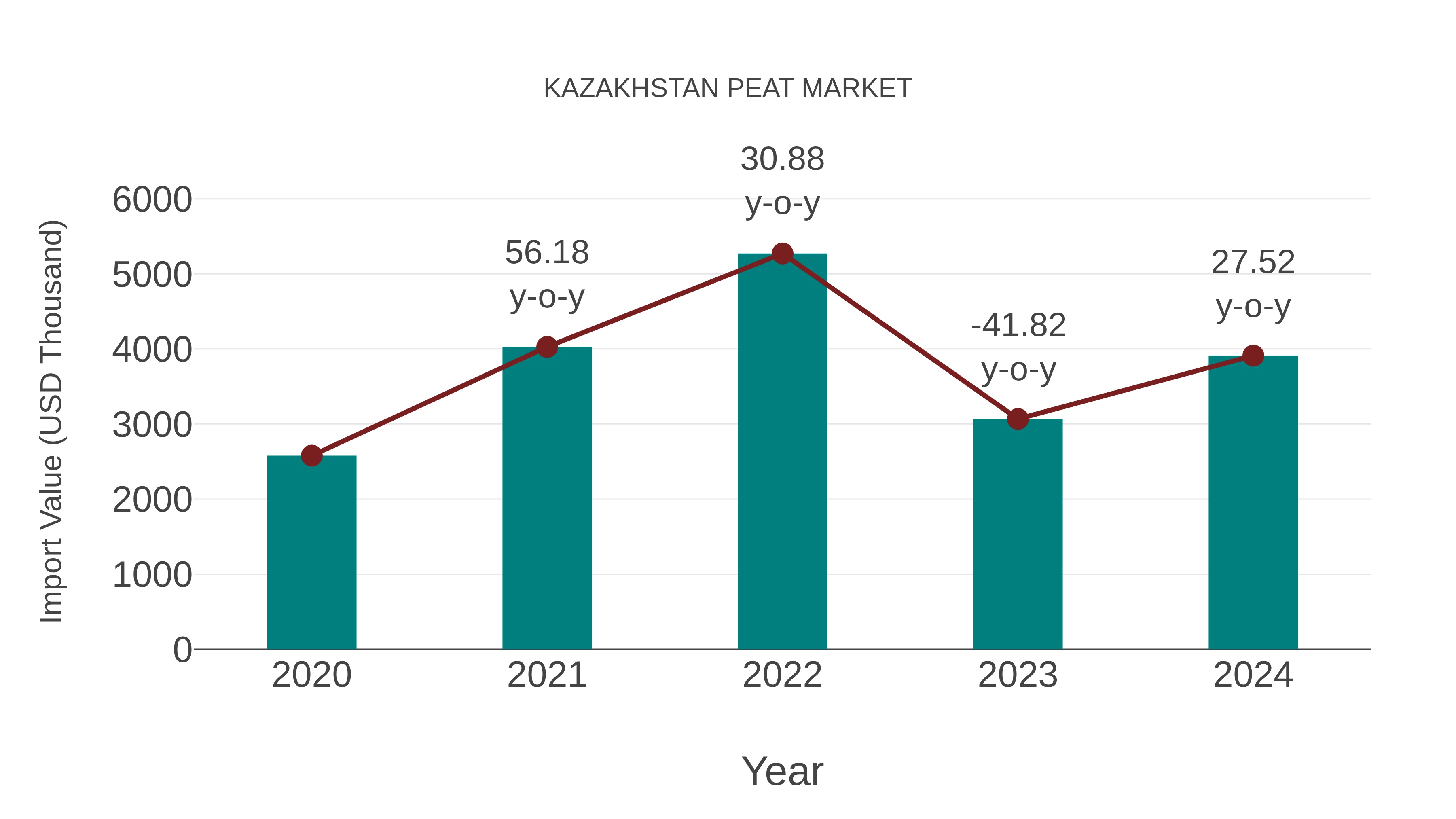
In the Kazakhstan peat market, the import trend exhibited significant growth from 2023 to 2024, with a notable increase of 27.52%. The compound annual growth rate (CAGR) for the period 2020-2024 stood at 10.97%. This surge in import momentum can be attributed to a shift in demand dynamics, indicating evolving market preferences or increased industrial usage during this period.
Kazakhstan Peat Market Overview
The Kazakhstan peat market is characterized by a growing demand for peat-based products due to their widespread use in agriculture, horticulture, and energy production. The country`s vast peat reserves provide a significant opportunity for market growth, with peat extraction primarily concentrated in the northern regions of Kazakhstan. The market is driven by increasing agricultural activities, as peat is commonly used as a soil conditioner and a growing medium for plants. Additionally, the rising trend towards organic farming practices and sustainable energy sources has further boosted the demand for peat in the region. However, challenges such as environmental concerns related to peat extraction and competition from alternative soil amendments may impact market dynamics in the future. Overall, the Kazakhstan peat market presents opportunities for expansion and diversification in various sectors.
Kazakhstan Peat Market Trends
The Kazakhstan Peat Market is experiencing growth due to the increasing demand for peat products in agriculture, horticulture, and landscaping sectors. The trend towards organic farming and sustainable practices has led to a rise in the use of peat as a natural soil amendment and growing medium. Additionally, the growing popularity of peat-based products for landscaping purposes, such as mulches and soil conditioners, is driving market expansion. The market is also witnessing innovation in peat processing technologies to improve product quality and sustainability. With a focus on environmental conservation and the promotion of eco-friendly practices, the Kazakhstan Peat Market is expected to continue growing in the coming years.
Kazakhstan Peat Market Challenges
In the Kazakhstan peat market, some challenges include limited awareness and understanding of the benefits of peat as a soil amendment, inconsistent quality of peat products, and the environmental concerns surrounding peat extraction. The lack of knowledge among farmers and gardeners about the advantages of using peat can hinder market growth. Additionally, variations in the quality of peat products available in the market can impact customer satisfaction and trust in the product. Environmental issues related to peat extraction, such as habitat destruction and carbon emissions, are also significant challenges that need to be addressed to ensure sustainable practices in the industry. Overall, improving awareness, product quality, and environmental sustainability are key areas that require attention in the Kazakhstan peat market.
Kazakhstan Peat Market Investment Opportunities
The Kazakhstan peat market presents promising investment opportunities due to the country`s vast peat reserves and growing demand for peat-based products in agriculture, horticulture, and energy sectors. Investors can consider participating in peat extraction and processing operations to supply the domestic market as well as export to neighboring countries. Additionally, there is potential for developing value-added products such as peat-based fertilizers, soil conditioners, and biofuels to cater to the increasing sustainability and organic farming trends. With government initiatives supporting the development of the peat industry and favorable investment climate in Kazakhstan, investing in the peat market could offer attractive returns and long-term growth prospects for savvy investors.
Kazakhstan Peat Market Government Policy
The Kazakhstan government has implemented policies to regulate the peat market, aiming to protect the environment and ensure sustainable use of peat resources. The country has restrictions on peat extraction to prevent overexploitation and environmental degradation. Additionally, there are regulations in place to promote the restoration and conservation of peatlands to maintain biodiversity and ecosystem health. The government also encourages the development of alternative materials and technologies to reduce reliance on peat as a fuel source. Overall, Kazakhstan`s policies on the peat market prioritize environmental sustainability and resource conservation while promoting innovation in the use of peat and alternative materials.
Kazakhstan Peat Market Future Outlook
The Kazakhstan peat market is expected to witness steady growth in the coming years due to increasing demand for peat as a fuel source and soil amendment in agriculture. The country`s vast peat reserves provide a significant opportunity for market expansion, with potential for increased production and export capabilities. Government initiatives promoting sustainable peatland management and utilization are likely to drive further growth in the market. Additionally, the rising awareness of peat`s environmental benefits, such as carbon sequestration and water retention, is expected to boost its demand across various industries. Overall, the future outlook for the Kazakhstan peat market appears promising, with continued investments and advancements in technology contributing to its development and sustainability.
Key Highlights of the Report:
- Kazakhstan Peat Market Outlook
- Market Size of Kazakhstan Peat Market, 2025
- Forecast of Kazakhstan Peat Market, 2032
- Historical Data and Forecast of Kazakhstan Peat Revenues & Volume for the Period 2022 - 2032F
- Kazakhstan Peat Market Trend Evolution
- Kazakhstan Peat Market Drivers and Challenges
- Kazakhstan Peat Price Trends
- Kazakhstan Peat Porter's Five Forces
- Kazakhstan Peat Industry Life Cycle
- Historical Data and Forecast of Kazakhstan Peat Market Revenues & Volume By Type for the Period 2022 - 2032F
- Historical Data and Forecast of Kazakhstan Peat Market Revenues & Volume By Coco Peat for the Period 2022 - 2032F
- Historical Data and Forecast of Kazakhstan Peat Market Revenues & Volume By Sod Peat for the Period 2022 - 2032F
- Historical Data and Forecast of Kazakhstan Peat Market Revenues & Volume By Other for the Period 2022 - 2032F
- Historical Data and Forecast of Kazakhstan Peat Market Revenues & Volume By Material Type for the Period 2022 - 2032F
- Historical Data and Forecast of Kazakhstan Peat Market Revenues & Volume By Fibric for the Period 2022 - 2032F
- Historical Data and Forecast of Kazakhstan Peat Market Revenues & Volume By Hemic for the Period 2022 - 2032F
- Historical Data and Forecast of Kazakhstan Peat Market Revenues & Volume By Sapric for the Period 2022 - 2032F
- Historical Data and Forecast of Kazakhstan Peat Market Revenues & Volume By Others for the Period 2022 - 2032F
- Historical Data and Forecast of Kazakhstan Peat Market Revenues & Volume By Application for the Period 2022 - 2032F
- Historical Data and Forecast of Kazakhstan Peat Market Revenues & Volume By Agriculture for the Period 2022 - 2032F
- Historical Data and Forecast of Kazakhstan Peat Market Revenues & Volume By Fuel & Energy for the Period 2022 - 2032F
- Historical Data and Forecast of Kazakhstan Peat Market Revenues & Volume By Others for the Period 2022 - 2032F
- Kazakhstan Peat Import Export Trade Statistics
- Market Opportunity Assessment By Type
- Market Opportunity Assessment By Material Type
- Market Opportunity Assessment By Application
- Kazakhstan Peat Top Companies Market Share
- Kazakhstan Peat Competitive Benchmarking By Technical and Operational Parameters
- Kazakhstan Peat Company Profiles
- Kazakhstan Peat Key Strategic Recommendations






































