Kazakhstan Processed Food Market: Import Trend Analysis
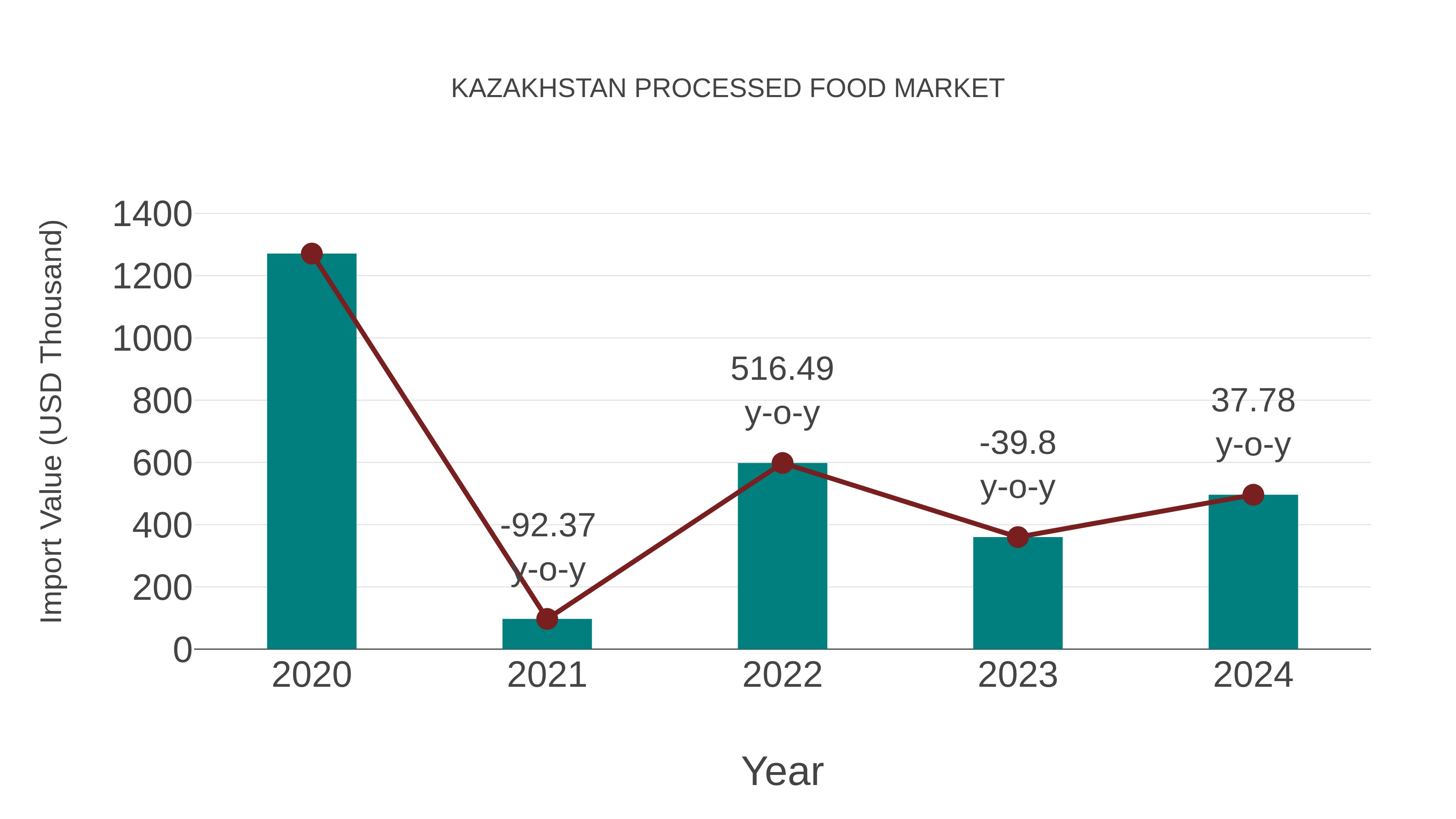
In the Kazakhstan processed food market, the import trend saw significant growth from 2023 to 2024, with a growth rate of 37.78%. However, the compound annual growth rate (CAGR) for 2020-2024 was -20.96%. This fluctuation may be attributed to shifts in consumer preferences or changes in trade policies affecting import momentum.
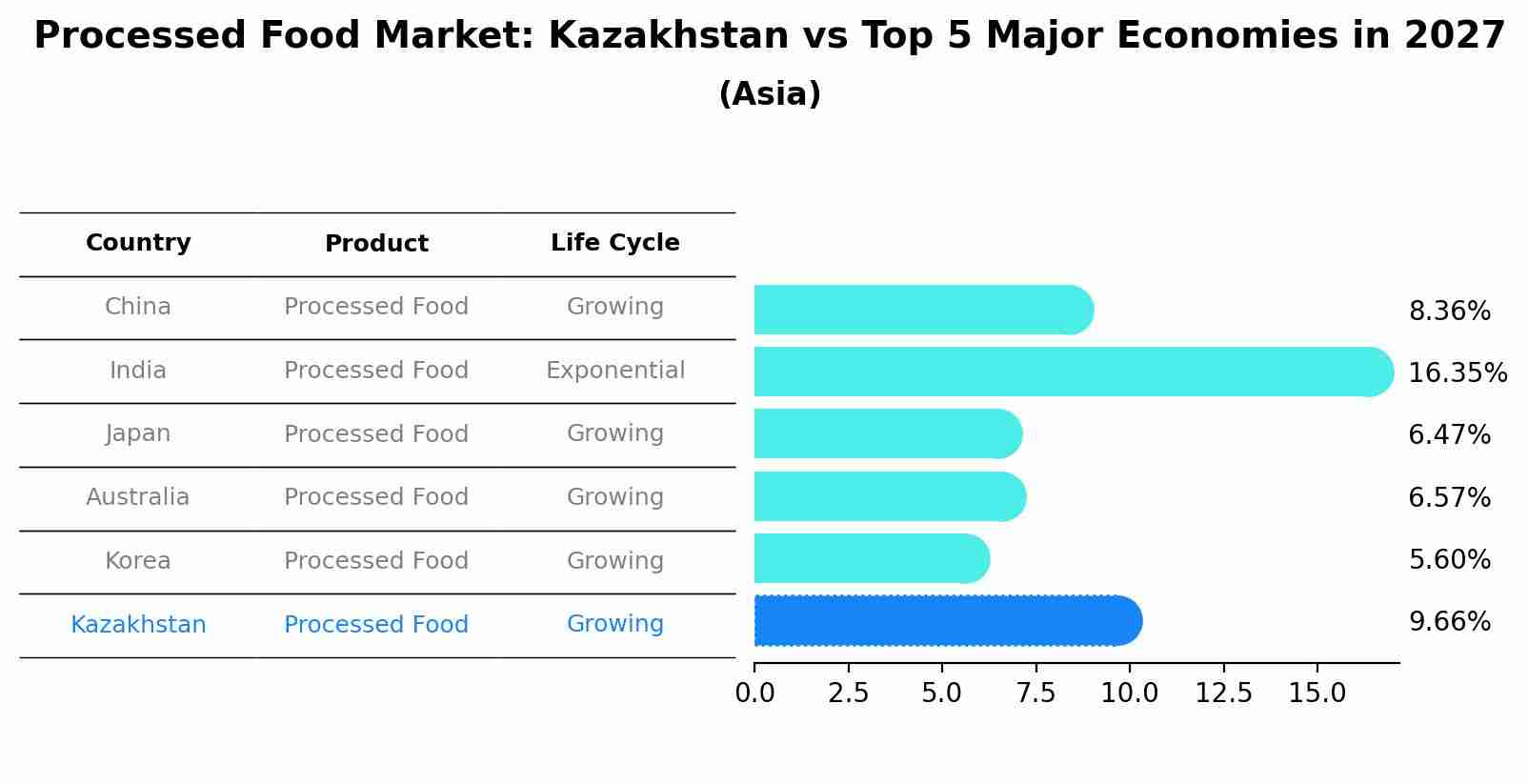
Processed Food Market: Kazakhstan vs Top 5 Major Economies in 2027 (Asia)
In the Asia region, the Processed Food market in Kazakhstan is projected to expand at a growing growth rate of 9.66% by 2027. The largest economy is China, followed by India, Japan, Australia and South Korea.
Kazakhstan Processed Food Market Overview
The processed food market in Kazakhstan is witnessing steady growth, driven by urbanization, changing consumer lifestyles, and increasing disposable incomes. Processed foods offer convenience, longer shelf life, and diverse flavors, meeting the evolving dietary preferences of consumers. Moreover, technological advancements in food processing and packaging techniques are enhancing product quality, safety, and shelf appeal, further driving market expansion. Additionally, the growing trend of online food delivery services is creating new avenues for market growth, facilitating easy access to a wide range of processed food products.
Drivers of the market
The processed food market in Kazakhstan is driven by urbanization, changing lifestyles, and increasing disposable incomes leading to higher demand for convenient and ready-to-eat food products. Factors such as busy schedules, convenience-driven consumption patterns, and the influence of Western food culture contribute to the growing popularity of processed food items among consumers in Kazakhstan.
Challenges of the market
The processed food market in Kazakhstan is hindered by the rising consumer demand for fresh and minimally processed foods, which affects market growth. The high cost of raw materials and production processes increases the overall cost of processed foods, making them less competitive. Additionally, stringent food safety regulations require continuous compliance, adding to operational challenges. The market also faces competition from imported processed foods, which often have better quality and variety, appealing more to consumers.
Government Policy of the market
In the Kazakhstan Processed Food Market, policies focus on ensuring food safety and promoting healthy eating habits. Regulations mandate strict hygiene standards in food processing and promote the use of natural ingredients. The government also supports the development of the processed food industry through incentives for innovation and export promotion.
Key Highlights of the Report:
- Kazakhstan Processed Food Market Outlook
- Market Size of Kazakhstan Processed Food Market, 2024
- Forecast of Kazakhstan Processed Food Market, 2031
- Historical Data and Forecast of Kazakhstan Processed Food Revenues & Volume for the Period 2018 - 2031
- Kazakhstan Processed Food Market Trend Evolution
- Kazakhstan Processed Food Market Drivers and Challenges
- Kazakhstan Processed Food Price Trends
- Kazakhstan Processed Food Porter's Five Forces
- Kazakhstan Processed Food Industry Life Cycle
- Historical Data and Forecast of Kazakhstan Processed Food Market Revenues & Volume By Process for the Period 2018 - 2031
- Historical Data and Forecast of Kazakhstan Processed Food Market Revenues & Volume By Minimally for the Period 2018 - 2031
- Historical Data and Forecast of Kazakhstan Processed Food Market Revenues & Volume By Highly for the Period 2018 - 2031
- Historical Data and Forecast of Kazakhstan Processed Food Market Revenues & Volume By Product type for the Period 2018 - 2031
- Historical Data and Forecast of Kazakhstan Processed Food Market Revenues & Volume By Plant based for the Period 2018 - 2031
- Historical Data and Forecast of Kazakhstan Processed Food Market Revenues & Volume By Fruits for the Period 2018 - 2031
- Historical Data and Forecast of Kazakhstan Processed Food Market Revenues & Volume By Vegetables for the Period 2018 - 2031
- Historical Data and Forecast of Kazakhstan Processed Food Market Revenues & Volume By Legumes for the Period 2018 - 2031
- Historical Data and Forecast of Kazakhstan Processed Food Market Revenues & Volume By Extracted foods for the Period 2018 - 2031
- Historical Data and Forecast of Kazakhstan Processed Food Market Revenues & Volume By Others for the Period 2018 - 2031
- Historical Data and Forecast of Kazakhstan Processed Food Market Revenues & Volume By Animal based for the Period 2018 - 2031
- Historical Data and Forecast of Kazakhstan Processed Food Market Revenues & Volume By Milk for the Period 2018 - 2031
- Historical Data and Forecast of Kazakhstan Processed Food Market Revenues & Volume By Application for the Period 2018 - 2031
- Historical Data and Forecast of Kazakhstan Processed Food Market Revenues & Volume By Baked foods for the Period 2018 - 2031
- Historical Data and Forecast of Kazakhstan Processed Food Market Revenues & Volume By Baby food for the Period 2018 - 2031
- Historical Data and Forecast of Kazakhstan Processed Food Market Revenues & Volume By Breakfast Cereal for the Period 2018 - 2031
- Historical Data and Forecast of Kazakhstan Processed Food Market Revenues & Volume By Biscuits for the Period 2018 - 2031
- Historical Data and Forecast of Kazakhstan Processed Food Market Revenues & Volume By Cheese for the Period 2018 - 2031
- Historical Data and Forecast of Kazakhstan Processed Food Market Revenues & Volume By Chocolate confectionary for the Period 2018 - 2031
- Historical Data and Forecast of Kazakhstan Processed Food Market Revenues & Volume By Ice creams for the Period 2018 - 2031
- Historical Data and Forecast of Kazakhstan Processed Food Market Revenues & Volume By Instant Noodles for the Period 2018 - 2031
- Kazakhstan Processed Food Import Export Trade Statistics
- Market Opportunity Assessment By Process
- Market Opportunity Assessment By Product type
- Market Opportunity Assessment By Application
- Kazakhstan Processed Food Top Companies Market Share
- Kazakhstan Processed Food Competitive Benchmarking By Technical and Operational Parameters
- Kazakhstan Processed Food Company Profiles
- Kazakhstan Processed Food Key Strategic Recommendations






































