Kazakhstan Vehicle Analytics Market Size & Growth Rate (2026-2032)
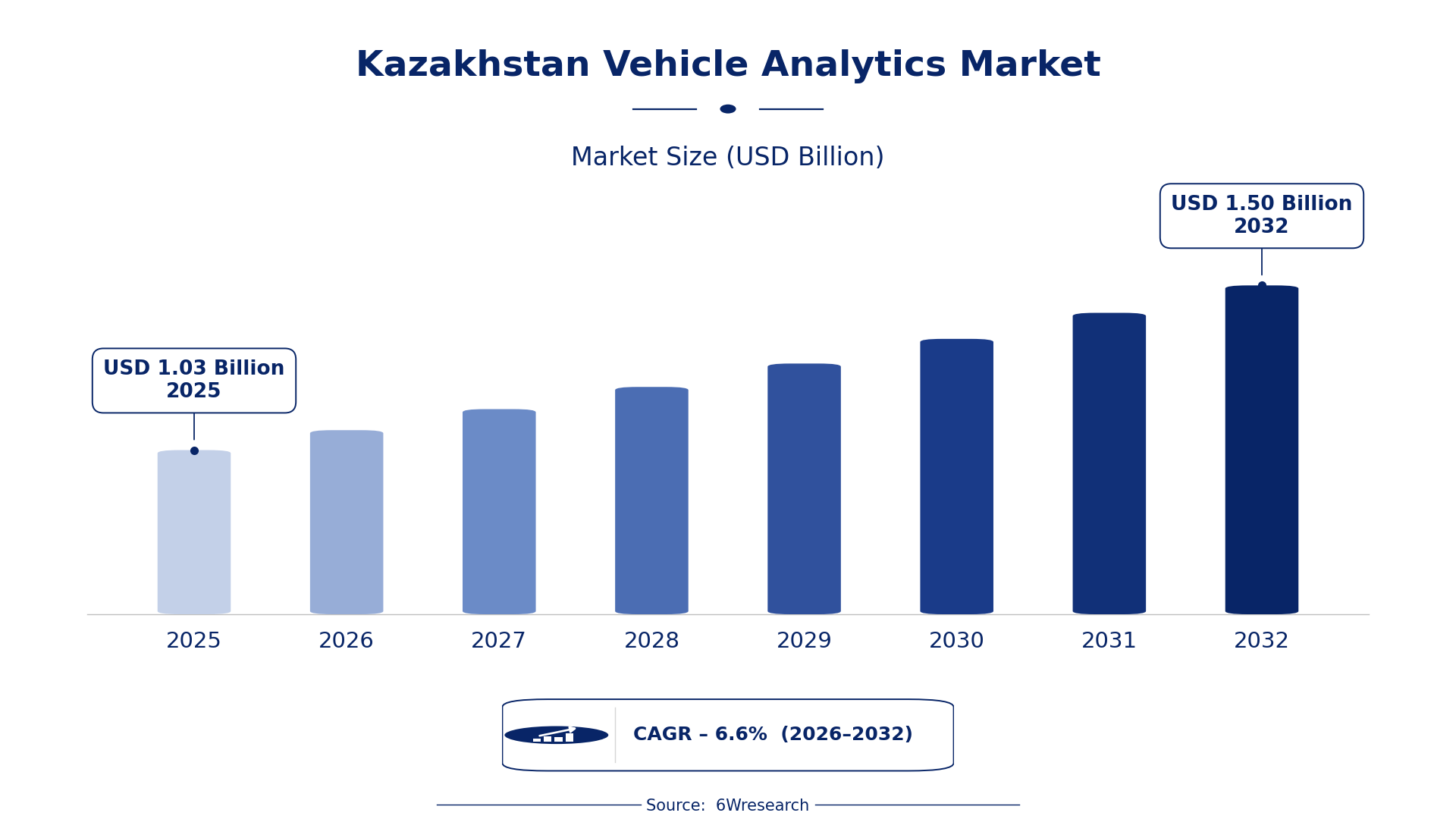
The Kazakhstan Vehicle Analytics Market was estimated at USD 1030 Million in 2025 and is projected to reach USD 1495 Million by 2032, growing at a CAGR of 6.6% from 2026 to 2032.
Kazakhstan Vehicle Analytics Market Synopsis
In Kazakhstan, the vehicle analytics market is gaining traction due to a surge in telematics adoption among commercial fleets. As businesses strive for operational efficiency, real-time data analytics becomes essential for optimizing fleet management and driver performance.
The increasing penetration of connected vehicle technologies plays a crucial role in this growth. Companies are increasingly recognizing the value of data-driven insights, which not only enhance vehicle safety but also lead to substantial cost savings across the transportation sector.
Kazakhstan Vehicle Analytics Market Year-wise Growth Rate and Key Drivers
This graph illustrates the annual growth rates of the Kazakhstan Vehicle Analytics Market from 2021 to 2032, highlighting a steady upward trajectory and projected expansion over the forecast period.
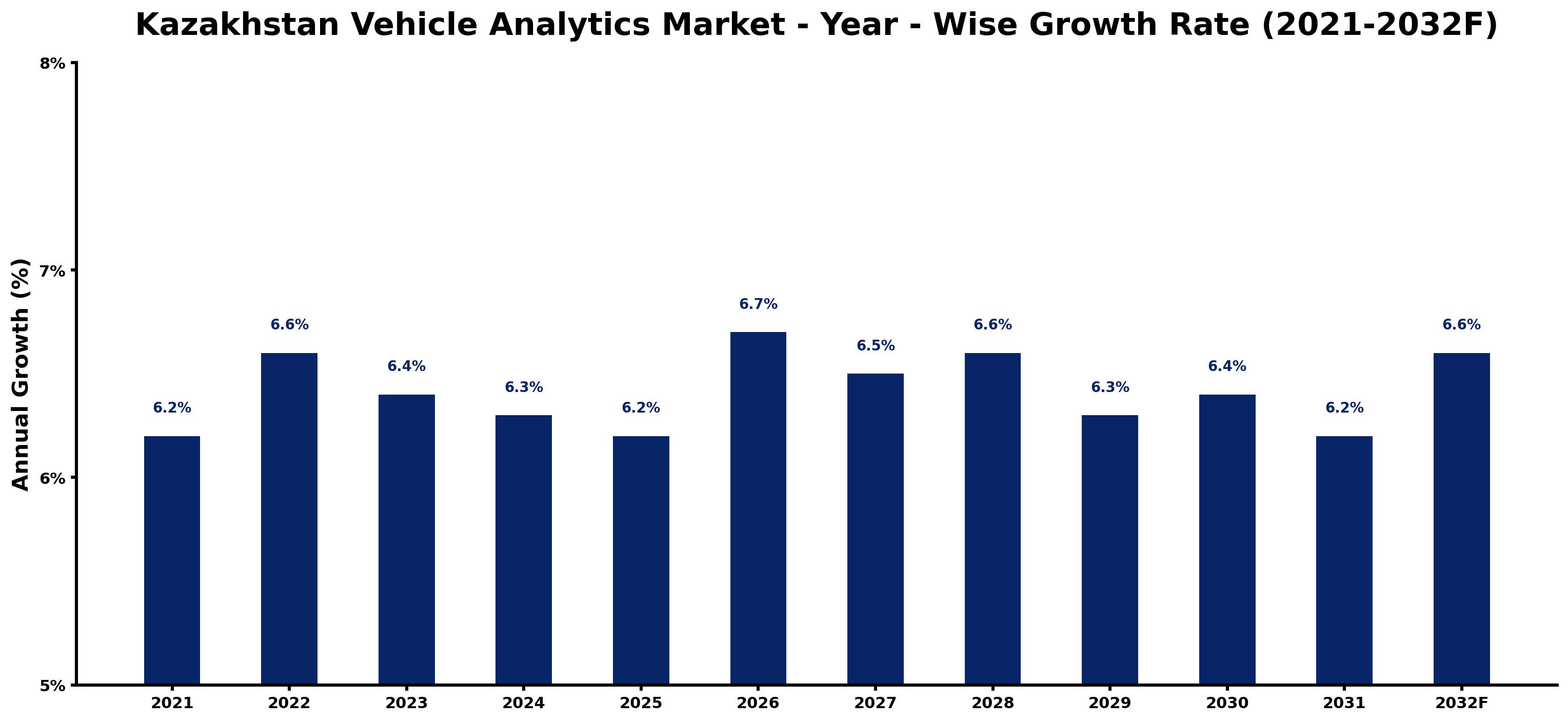
The table below presents the year‑wise growth rates along with the key drivers influencing the market
| Year | Growth Rate | Major Drivers |
| 2021 | 6.2% | Adoption of national smart transportation strategy. |
| 2022 | 6.6% | Increased government focus on vehicle emission regulations. |
| 2023 | 6.4% | Launch of nationwide digital vehicle registration system. |
| 2024 | 6.3% | Growing interest in telematics from Kazakhstan's auto insurers. |
| 2025 | 6.2% | Investment in road safety analytics by local authorities. |
| 2026 | 6.7% | Government incentives for electric vehicle data integration. |
| 2027 | 6.5% | Surge in demand for real-time traffic data solutions. |
| 2028 | 6.6% | Partnerships established for vehicle data sharing initiatives. |
| 2029 | 6.3% | Boost in automotive cybersecurity regulations for analytics. |
| 2030 | 6.4% | Implementation of smart city pilot programs in Almaty. |
| 2031 | 6.2% | Increasing urban population driving vehicle usage data needs. |
| 2032 | 6.6% | Rising interest in mobility as a service (MaaS). |
Note: Market size estimations and growth projections presented in this report are based on 6Wresearch's proprietary forecasting methodology, utilizing the latest available industry data, government publications, and primary research inputs.
Kazakhstan Vehicle Analytics Market Key Takeaways
Below are some of the specific key takeaways from the market, including:
- The market is driven by the growing demand for real-time monitoring and predictive maintenance solutions.
- Integration of IoT and AI technologies is enhancing the functionality of vehicle analytics tools.
- Data accuracy and ownership issues remain significant concerns for market stakeholders.
- Government policies are increasingly promoting the adoption of vehicle access control systems.
- Investment in telematics by logistics companies is set to drive future growth.
Evaluation of Restraints in Kazakhstan Vehicle Analytics Market
Despite its growth potential, the Kazakhstan vehicle analytics market faces several restraints. One of the main issues is the challenge of processing the vast amounts of data generated by connected vehicles. Stakeholders often struggle with ensuring data accuracy and reliability, which can undermine trust in analytics solutions. on top of that, concerns regarding data ownership and usage rights complicate the market landscape. These factors may hinder the broader adoption of vehicle analytics technologies across various sectors.
Kazakhstan Vehicle Analytics Market Trends
Key trends shaping the Kazakhstan vehicle analytics market include the increasing use of artificial intelligence for predictive analytics and decision-making. Companies are looking to leverage advanced algorithms to enhance their fleet management strategies. Additionally, there's a noticeable shift towards integrating vehicle analytics with smart city initiatives, allowing for improved traffic management and urban planning.
The rise of electric vehicles (EVs) is also influencing analytics requirements, as manufacturers and fleet operators seek to optimize battery management and charging infrastructure. This trend is expected to create new opportunities for vehicle analytics providers focused on EV performance metrics.
Kazakhstan Vehicle Analytics Market Opportunities
Investment opportunities are abundant in the Kazakhstan vehicle analytics market, particularly within the logistics and transportation sectors. As companies increasingly prioritize data-driven solutions, there is a growing demand for advanced analytics platforms that offer real-time insights. on top of that, partnerships between technology providers and local enterprises can facilitate the development of customized analytics solutions tailored to regional needs.
The government’s focus on enhancing transportation infrastructure presents an additional avenue for growth. Initiatives aimed at integrating vehicle analytics with national traffic management systems could yield significant benefits for public safety and operational efficiency.
Government Initiatives in the Kazakhstan Vehicle Analytics Market
Government policy is increasingly shaping the Kazakhstan vehicle analytics market, emphasizing the need for improved security and traffic regulation. By implementing standards for vehicle access control systems and collaborating with private sector partners, the government is laying the groundwork for more integrated and efficient transport solutions.
- A recently completed initiative involved the establishment of new regulations aimed at standardizing vehicle access control technologies.
- Currently underway is a national program focused on enhancing urban traffic management through advanced analytics integration.
- Upcoming plans include a public-private partnership set to improve data-sharing mechanisms across transportation agencies by 2027.
- A regulatory framework introduced in 2025 mandates compliance with data accuracy standards for all vehicle analytics providers.
- Ongoing initiatives are promoting the adoption of telematics among public transportation operators to enhance service efficiency.
Future Insights of the Kazakhstan Vehicle Analytics Market
Looking ahead to 2026-2032, the Kazakhstan vehicle analytics market is expected to continue its upward trajectory, driven by advancements in technology and increasing data-driven decision-making across industries. Companies that invest in innovative analytics solutions will likely gain a competitive edge, particularly as the demand for real-time insights intensifies. The integration of vehicle analytics with broader smart city initiatives will also play a crucial role in shaping the future of transportation in Kazakhstan.
Kazakhstan Vehicle Analytics Market Latest Developments
In the past year, Kazakhstan’s vehicle analytics market has witnessed notable activity, particularly in terms of technological advancements and partnerships. Companies are increasingly focused on enhancing their offerings to meet the growing demands of fleet operators and logistics companies.
- A major technology vendor launched a new vehicle performance monitoring platform in early 2025, aimed at improving fleet efficiency.
- An ongoing initiative that began in mid-2025 focuses on integrating AI capabilities into existing vehicle analytics solutions.
- A partnership between regional operators and tech firms is currently underway, aiming to develop tailored analytics solutions for the local market.
- Upcoming is a rollout expected in late 2026 of a nationwide telematics program designed to enhance data sharing among transportation agencies.
- A recent pilot project was completed in Q1 2025, demonstrating the effectiveness of predictive maintenance analytics in reducing operational costs for fleets.
Kazakhstan Vehicle Analytics Market - Key Attractiveness of the Report
- 10 Years of Market Numbers
- Historical Data Starting from 2022 to 2025
- Base Year: 2025
- Forecast Data until 2032
- Key Performance Indicators Impacting the Market
- Major Upcoming Developments and Projects
Key Highlights of the Report:
- Kazakhstan Vehicle Analytics Market Outlook
- Market Size of Kazakhstan Vehicle Analytics Market, 2025
- Forecast of Kazakhstan Vehicle Analytics Market, 2032
- Historical Data and Forecast of Kazakhstan Vehicle Analytics Revenues & Volume for the Period 2022-2032F
- Kazakhstan Vehicle Analytics Market Trend Evolution
- Kazakhstan Vehicle Analytics Market Drivers and Challenges
- Kazakhstan Vehicle Analytics Price Trends
- Kazakhstan Vehicle Analytics Porter's Five Forces
- Kazakhstan Vehicle Analytics Industry Life Cycle
- Historical Data and Forecast of Kazakhstan Vehicle Analytics Market Revenues & Volume By Application for the Period 2022-2032F
- Historical Data and Forecast of Kazakhstan Vehicle Analytics Market Revenues & Volume By Predictive Maintenance for the Period 2022-2032F
- Historical Data and Forecast of Kazakhstan Vehicle Analytics Market Revenues & Volume By Warranty Analytics for the Period 2022-2032F
- Historical Data and Forecast of Kazakhstan Vehicle Analytics Market Revenues & Volume By Traffic Management for the Period 2022-2032F
- Historical Data and Forecast of Kazakhstan Vehicle Analytics Market Revenues & Volume By Safety and Security Management for the Period 2022-2032F
- Historical Data and Forecast of Kazakhstan Vehicle Analytics Market Revenues & Volume By Driver and User Behaviour Analysis for the Period 2022-2032F
- Historical Data and Forecast of Kazakhstan Vehicle Analytics Market Revenues & Volume By Dealer Performance Analysis for the Period 2022-2032F
- Historical Data and Forecast of Kazakhstan Vehicle Analytics Market Revenues & Volume By Infotainment for the Period 2022-2032F
- Historical Data and Forecast of Kazakhstan Predictive Maintenance Vehicle Analytics Market Revenues & Volume By Usage-Based Insurance for the Period 2022-2032F
- Historical Data and Forecast of Kazakhstan Vehicle Analytics Market Revenues & Volume By Component for the Period 2022-2032F
- Historical Data and Forecast of Kazakhstan Vehicle Analytics Market Revenues & Volume By Software for the Period 2022-2032F
- Historical Data and Forecast of Kazakhstan Vehicle Analytics Market Revenues & Volume By Services for the Period 2022-2032F
- Historical Data and Forecast of Kazakhstan Vehicle Analytics Market Revenues & Volume By End-User for the Period 2022-2032F
- Historical Data and Forecast of Kazakhstan Vehicle Analytics Market Revenues & Volume By Original Equipment Manufacturers (OEMs) for the Period 2022-2032F
- Historical Data and Forecast of Kazakhstan Vehicle Analytics Market Revenues & Volume By Service Providers for the Period 2022-2032F
- Historical Data and Forecast of Kazakhstan Vehicle Analytics Market Revenues & Volume By Automotive Dealers for the Period 2022-2032F
- Historical Data and Forecast of Kazakhstan Vehicle Analytics Market Revenues & Volume By Fleet Owners for the Period 2022-2032F
- Historical Data and Forecast of Kazakhstan Vehicle Analytics Market Revenues & Volume By Regulatory Bodies for the Period 2022-2032F
- Historical Data and Forecast of Kazakhstan Vehicle Analytics Market Revenues & Volume By Insurers for the Period 2022-2032F
- Historical Data and Forecast of Kazakhstan Vehicle Analytics Market Revenues & Volume By Deployment Mode for the Period 2022-2032F
- Historical Data and Forecast of Kazakhstan Vehicle Analytics Market Revenues & Volume By On-Premises for the Period 2022-2032F
- Historical Data and Forecast of Kazakhstan Vehicle Analytics Market Revenues & Volume By On-Demand for the Period 2022-2032F
- Kazakhstan Vehicle Analytics Import Export Trade Statistics
- Market Opportunity Assessment By Application
- Market Opportunity Assessment By Component
- Market Opportunity Assessment By End-User
- Market Opportunity Assessment By Deployment Mode
- Kazakhstan Vehicle Analytics Top Companies Market Share
- Kazakhstan Vehicle Analytics Competitive Benchmarking By Technical and Operational Parameters
- Kazakhstan Vehicle Analytics Company Profiles
- Kazakhstan Vehicle Analytics Key Strategic Recommendations






































