Kenya BBQ Charcoal Market Size Growth Rate
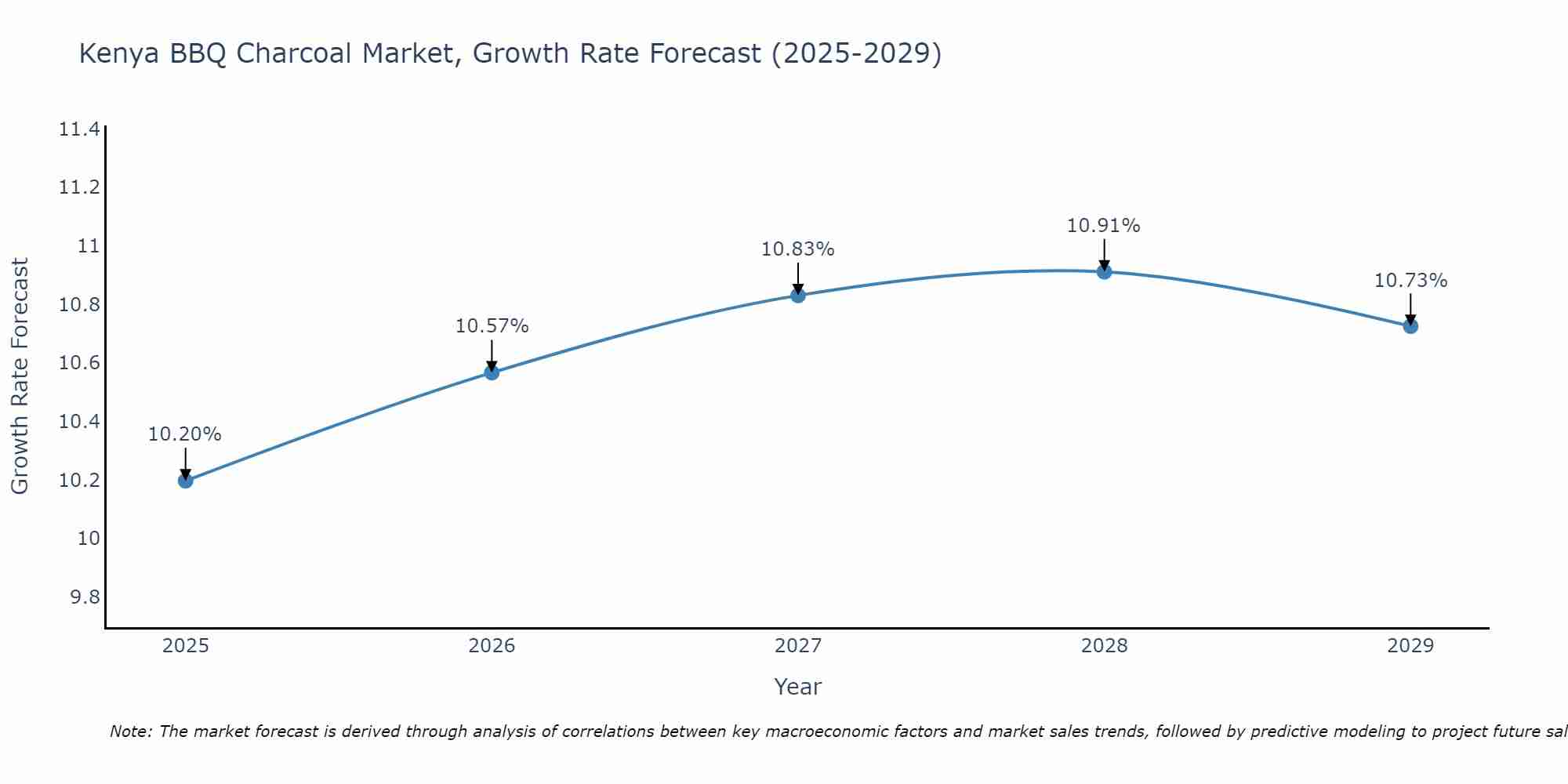
The Kenya BBQ Charcoal Market is projected to witness mixed growth rate patterns during 2025 to 2029. The growth rate begins at 10.20% in 2025, climbs to a high of 10.91% in 2028, and moderates to 10.73% by 2029.
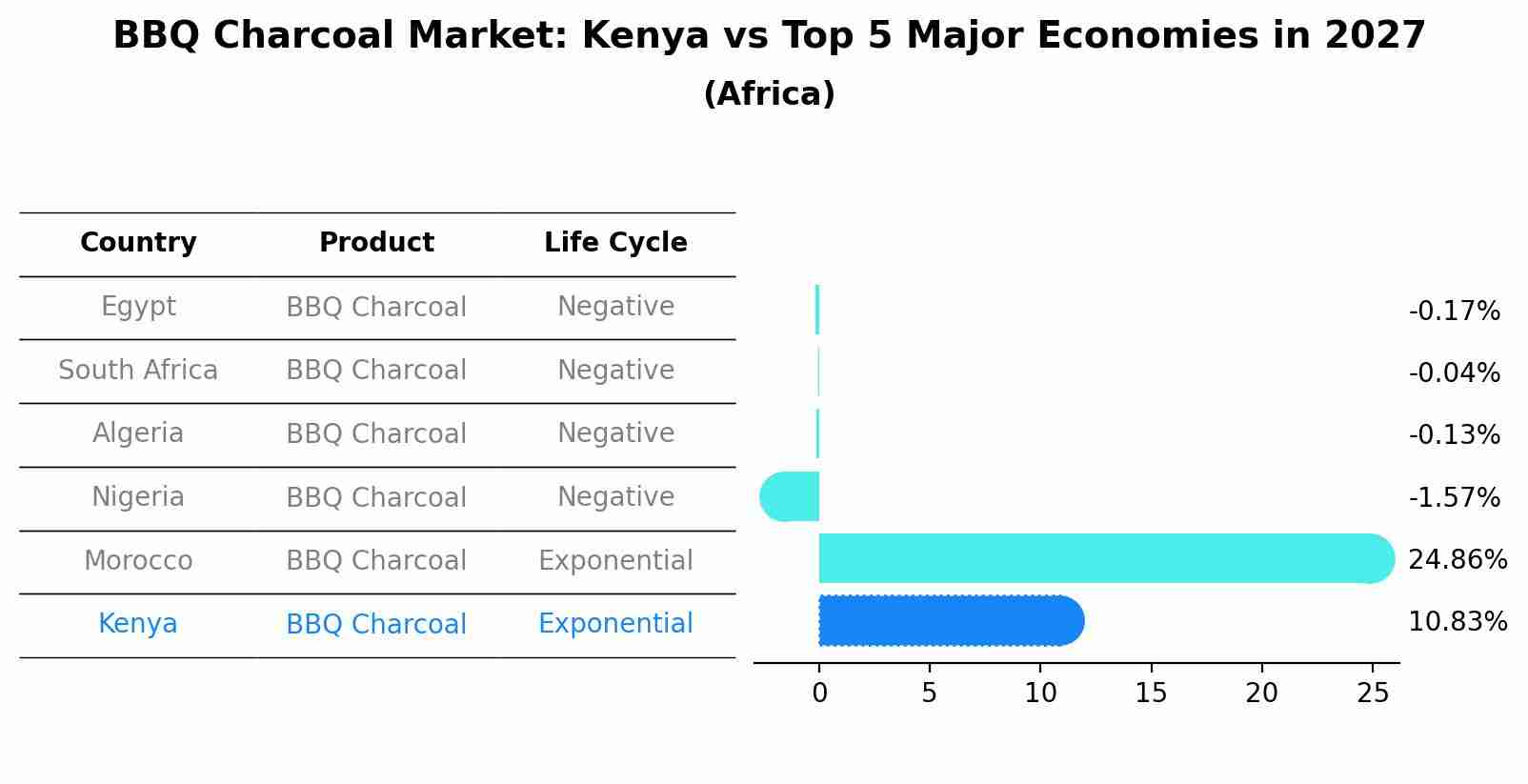
BBQ Charcoal Market: Kenya vs Top 5 Major Economies in 2027 (Africa)
In the Africa region, the BBQ Charcoal market in Kenya is projected to expand at a high growth rate of 10.83% by 2027. The largest economy is Egypt, followed by South Africa, Algeria, Nigeria and Morocco.
Kenya BBQ Charcoal Market Overview
Kenya BBQ charcoal market is growing as outdoor cooking and recreational activities become more popular. The government promotes sustainable charcoal production practices to address environmental concerns. Policies include supporting community-based forest management programs and providing training for efficient charcoal production techniques.
Drivers of the market
The BBQ charcoal market in Kenya is primarily driven by the country`s vibrant tourism industry and the growing popularity of outdoor recreational activities such as camping and barbecuing. Additionally, the increasing preference for natural and sustainable fuel sources among consumers is fueling the demand for BBQ charcoal.
Challenges of the market
The BBQ charcoal market in Kenya faces challenges including environmental concerns and competition from alternative fuel sources. Charcoal production can lead to deforestation and environmental degradation, prompting regulatory scrutiny and efforts to promote sustainable practices. Additionally, the market competes with other fuels like propane and electric grills, which offer convenience and cleaner combustion.
Government Policy of the market
In response to deforestation and environmental degradation caused by unsustainable charcoal production, the Kenya government has implemented policies to regulate the BBQ charcoal market. These policies include forest conservation measures, charcoal production permits, and alternative energy promotion initiatives to encourage sustainable charcoal production and consumption practices.
Key Highlights of the Report:
- Kenya BBQ Charcoal Market Outlook
- Market Size of Kenya BBQ Charcoal Market, 2024
- Forecast of Kenya BBQ Charcoal Market, 2031
- Historical Data and Forecast of Kenya BBQ Charcoal Revenues & Volume for the Period 2021-2031
- Kenya BBQ Charcoal Market Trend Evolution
- Kenya BBQ Charcoal Market Drivers and Challenges
- Kenya BBQ Charcoal Price Trends
- Kenya BBQ Charcoal Porter's Five Forces
- Kenya BBQ Charcoal Industry Life Cycle
- Historical Data and Forecast of Kenya BBQ Charcoal Market Revenues & Volume By Form for the Period 2021-2031
- Historical Data and Forecast of Kenya BBQ Charcoal Market Revenues & Volume By Briquettes BBQ Charcoal for the Period 2021-2031
- Historical Data and Forecast of Kenya BBQ Charcoal Market Revenues & Volume By Lump Wood BBQ Charcoal for the Period 2021-2031
- Historical Data and Forecast of Kenya BBQ Charcoal Market Revenues & Volume By Sales Channel for the Period 2021-2031
- Historical Data and Forecast of Kenya BBQ Charcoal Market Revenues & Volume By Direct BBQ Charcoal Sales for the Period 2021-2031
- Historical Data and Forecast of Kenya BBQ Charcoal Market Revenues & Volume By Retail BBQ Charcoal Sales for the Period 2021-2031
- Historical Data and Forecast of Kenya BBQ Charcoal Market Revenues & Volume By End User for the Period 2021-2031
- Historical Data and Forecast of Kenya BBQ Charcoal Market Revenues & Volume By BBQ Charcoal for Hotels, Restaurants and Catering (HoReCa) for the Period 2021-2031
- Historical Data and Forecast of Kenya BBQ Charcoal Market Revenues & Volume By BBQ Charcoal for Households for the Period 2021-2031
- Historical Data and Forecast of Kenya BBQ Charcoal Market Revenues & Volume By Source for the Period 2021-2031
- Historical Data and Forecast of Kenya BBQ Charcoal Market Revenues & Volume By BBQ Charcoal made from Agricultural Waste for the Period 2021-2031
- Historical Data and Forecast of Kenya BBQ Charcoal Market Revenues & Volume By BBQ Charcoal made from Coconut Shells for the Period 2021-2031
- Historical Data and Forecast of Kenya BBQ Charcoal Market Revenues & Volume By BBQ Charcoal made from Nutshells for the Period 2021-2031
- Historical Data and Forecast of Kenya BBQ Charcoal Market Revenues & Volume By BBQ Charcoal made from Hardwood for the Period 2021-2031
- Historical Data and Forecast of Kenya BBQ Charcoal Market Revenues & Volume By BBQ Charcoal made from Bamboo for the Period 2021-2031
- Kenya BBQ Charcoal Import Export Trade Statistics
- Market Opportunity Assessment By Form
- Market Opportunity Assessment By Sales Channel
- Market Opportunity Assessment By End User
- Market Opportunity Assessment By Source
- Kenya BBQ Charcoal Top Companies Market Share
- Kenya BBQ Charcoal Competitive Benchmarking By Technical and Operational Parameters
- Kenya BBQ Charcoal Company Profiles
- Kenya BBQ Charcoal Key Strategic Recommendations






































