Kenya Bean To Bar Chocolate Market Growth Rate Analysis (2025 - 2031)
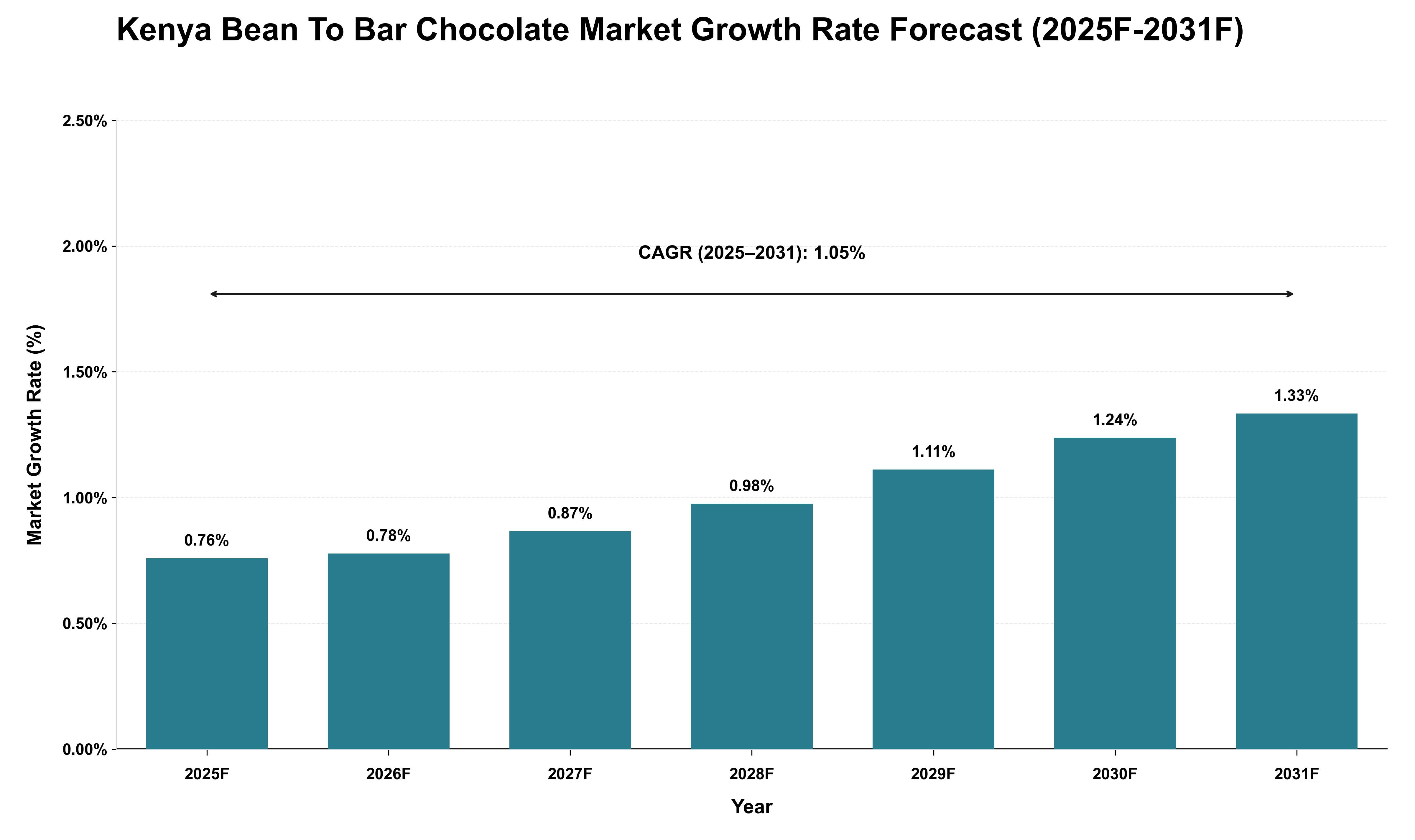
The forecast for the Kenya Bean To Bar Chocolate market will be shaped by several macroeconomic factors, including evolving consumer preferences towards artisanal and ethically sourced products, which will drive incremental growth. As the CAGR of 1.05% suggests, annual growth rates will gradually increase from 0.76% in 2025 to 1.33% by 2031, reflecting a slow but steady adoption of premium chocolate offerings amidst rising disposable incomes and urbanization trends. Import dependencies on raw materials may influence pricing dynamics, particularly as global supply chains adapt to changing demand patterns for cocoa and other ingredients. Additionally, technological advancements in production processes are expected to enhance efficiency and product quality, further supporting growth in this segment. The cyclical nature of consumer spending on luxury goods will also play a role, with potential upticks during festive seasons contributing to the overall positive trajectory of the market during this forecast period.
Key Highlights of the Report:
- Kenya Bean-To-Bar Chocolate Market Outlook
- Market Size of Kenya Bean-To-Bar Chocolate Market, 2024
- Forecast of Kenya Bean-To-Bar Chocolate Market, 2031
- Historical Data and Forecast of Kenya Bean-To-Bar Chocolate Revenues & Volume for the Period 2021- 2031
- Kenya Bean-To-Bar Chocolate Market Trend Evolution
- Kenya Bean-To-Bar Chocolate Market Drivers and Challenges
- Kenya Bean-To-Bar Chocolate Price Trends
- Kenya Bean-To-Bar Chocolate Porter's Five Forces
- Kenya Bean-To-Bar Chocolate Industry Life Cycle
- Historical Data and Forecast of Kenya Bean-To-Bar Chocolate Market Revenues & Volume By Type for the Period 2021- 2031
- Historical Data and Forecast of Kenya Bean-To-Bar Chocolate Market Revenues & Volume By Dark Chocolate for the Period 2021- 2031
- Historical Data and Forecast of Kenya Bean-To-Bar Chocolate Market Revenues & Volume By Milk Chocolate for the Period 2021- 2031
- Historical Data and Forecast of Kenya Bean-To-Bar Chocolate Market Revenues & Volume By White Chocolate for the Period 2021- 2031
- Historical Data and Forecast of Kenya Bean-To-Bar Chocolate Market Revenues & Volume By Chocolate Bean for the Period 2021- 2031
- Historical Data and Forecast of Kenya Bean-To-Bar Chocolate Market Revenues & Volume By Others for the Period 2021- 2031
- Historical Data and Forecast of Kenya Bean-To-Bar Chocolate Market Revenues & Volume By Application for the Period 2021- 2031
- Historical Data and Forecast of Kenya Bean-To-Bar Chocolate Market Revenues & Volume By Supermarkets for the Period 2021- 2031
- Historical Data and Forecast of Kenya Bean-To-Bar Chocolate Market Revenues & Volume By Convenience Stores for the Period 2021- 2031
- Historical Data and Forecast of Kenya Bean-To-Bar Chocolate Market Revenues & Volume By Independent Retailers for the Period 2021- 2031
- Historical Data and Forecast of Kenya Bean-To-Bar Chocolate Market Revenues & Volume By Online Sales for the Period 2021- 2031
- Historical Data and Forecast of Kenya Bean-To-Bar Chocolate Market Revenues & Volume By Others for the Period 2021- 2031
- Kenya Bean-To-Bar Chocolate Import Export Trade Statistics
- Market Opportunity Assessment By Type
- Market Opportunity Assessment By Application
- Kenya Bean-To-Bar Chocolate Top Companies Market Share
- Kenya Bean-To-Bar Chocolate Competitive Benchmarking By Technical and Operational Parameters
- Kenya Bean-To-Bar Chocolate Company Profiles
- Kenya Bean-To-Bar Chocolate Key Strategic Recommendations






































