Kenya Bread Market Growth Rate Analysis (2025 - 2031)
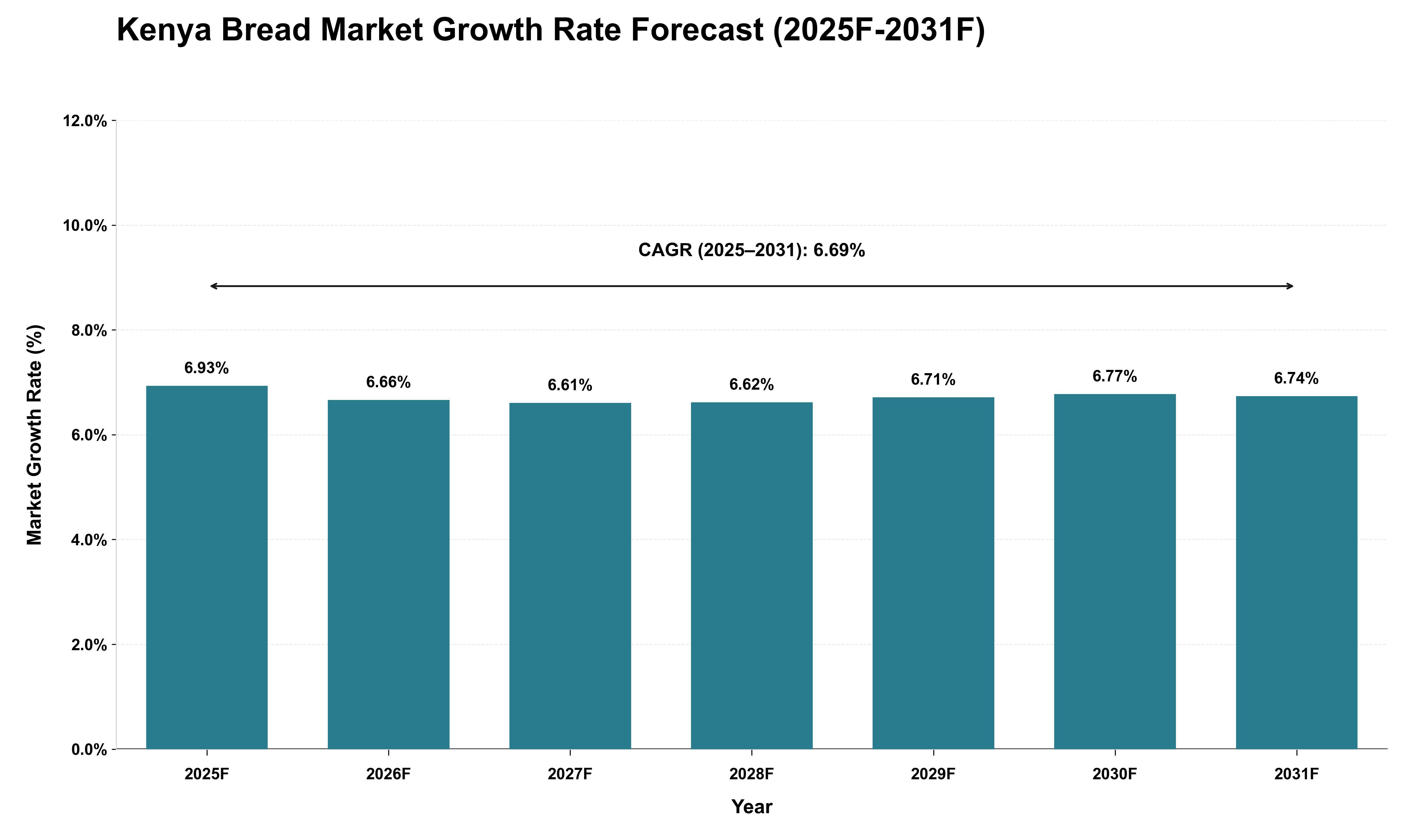
From 2025 onward, the Kenya bread market is anticipated to experience a robust growth trajectory, with a compound annual growth rate (CAGR) of 6.69%. This growth will be underpinned by regulatory frameworks that are likely to favor local production and reduce import dependencies, thereby enhancing food security and stabilizing prices. The annual growth rates indicate a consistent upward trend, with fluctuations reflecting cyclical demand patterns influenced by consumer preferences and economic conditions. As urbanization continues to rise, the demand for convenient food options like bread will likely increase, supported by government policies aimed at boosting agricultural productivity and infrastructure improvements. Additionally, trade policies may evolve to facilitate better access to raw materials while ensuring quality standards are met, further driving market expansion through enhanced competitiveness in both domestic and export markets.
Key Highlights of the Report:
- Kenya Bread Market Outlook
- Market Size of Kenya Bread Market, 2024
- Forecast of Kenya Bread Market, 2031
- Historical Data and Forecast of Kenya Bread Revenues & Volume for the Period 2021 - 2031
- Kenya Bread Market Trend Evolution
- Kenya Bread Market Drivers and Challenges
- Kenya Bread Price Trends
- Kenya Bread Porter's Five Forces
- Kenya Bread Industry Life Cycle
- Historical Data and Forecast of Kenya Bread Market Revenues & Volume By Loaves for the Period 2021 - 2031
- Historical Data and Forecast of Kenya Bread Market Revenues & Volume By Baguettes for the Period 2021 - 2031
- Historical Data and Forecast of Kenya Bread Market Revenues & Volume By Rolls for the Period 2021 - 2031
- Historical Data and Forecast of Kenya Bread Market Revenues & Volume By Burger Buns for the Period 2021 - 2031
- Historical Data and Forecast of Kenya Bread Market Revenues & Volume By Ciabatta for the Period 2021 - 2031
- Historical Data and Forecast of Kenya Bread Market Revenues & Volume By Others for the Period 2021 - 2031
- Historical Data and Forecast of Kenya Bread Market Revenues & Volume By Convenience Stores for the Period 2021 - 2031
- Historical Data and Forecast of Kenya Bread Market Revenues & Volume By Specialist Retailers for the Period 2021 - 2031
- Historical Data and Forecast of Kenya Bread Market Revenues & Volume By Supermarkets and Hypermarkets for the Period 2021 - 2031
- Historical Data and Forecast of Kenya Bread Market Revenues & Volume By Online Retail for the Period 2021 - 2031
- Historical Data and Forecast of Kenya Bread Market Revenues & Volume By Variety Stores for the Period 2021 - 2031
- Historical Data and Forecast of Kenya Bread Market Revenues & Volume By Others for the Period 2021 - 2031
- Kenya Bread Import Export Trade Statistics
- Market Opportunity Assessment By Loaves
- Market Opportunity Assessment By Convenience Stores
- Kenya Bread Top Companies Market Share
- Kenya Bread Competitive Benchmarking By Technical and Operational Parameters
- Kenya Bread Company Profiles
- Kenya Bread Key Strategic Recommendations






































