Kenya Camera Tripods Market Size, Share & Growth Rate
The Kenya Camera Tripods Market was estimated at USD 354 Million in 2025 and is projected to reach USD 464 Million by 2032, growing at a CAGR of 3.9% from 2026 to 2032. This growth trajectory is primarily driven by the increasing consumer interest in photography and videography, particularly among social media influencers and amateur photographers. As smartphone capabilities improve and social media platforms expand, the demand for reliable and high-quality tripods to enhance visual content is expected to rise significantly.
Kenya Camera Tripods Market Year-wise Growth Rate and Key Drivers
This graph highlights how the Kenya Camera Tripods Market has steadily grown over the years, supported by major growth factors.
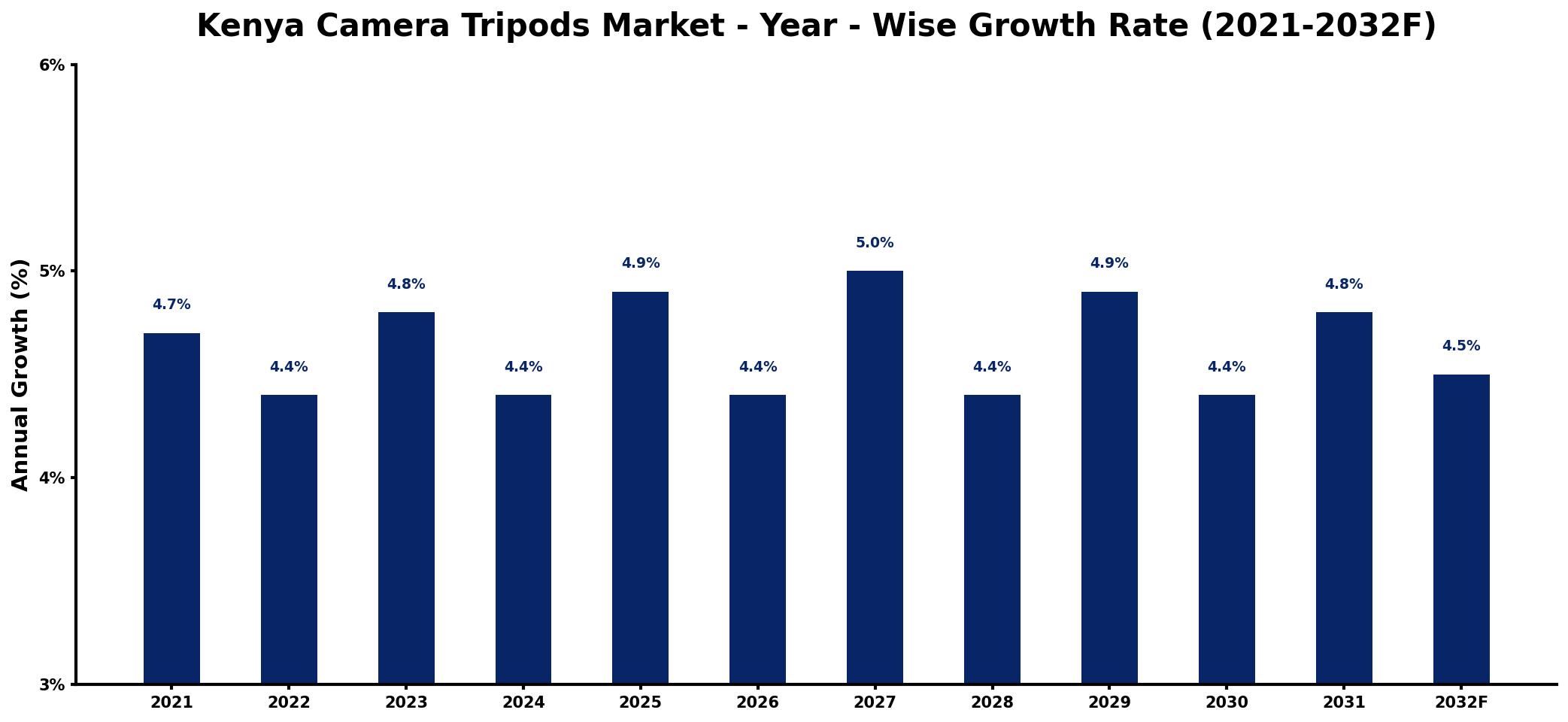
The table below presents the year‑wise growth rates along with the key drivers influencing the market
| Year | Growth Rate | Major Drivers |
| 2021 | 4.7% | Rising interest in photography hobbies |
| 2022 | 4.4% | Growth in influencer marketing strategies |
| 2023 | 4.8% | Increased demand for content creation |
| 2024 | 4.4% | Expansion of social media platforms |
| 2025 | 4.9% | Surge in outdoor recreational activities |
| 2026 | 4.4% | Higher investments in multimedia production |
| 2027 | 5.0% | Emergence of new photography technologies |
| 2028 | 4.4% | Strengthening of local distribution networks |
| 2029 | 4.9% | Growing popularity of vlogging culture |
| 2030 | 4.4% | Increased consumer awareness of quality |
| 2031 | 4.8% | Development of online retail channels |
| 2032 | 4.5% | Rising trend in visual storytelling |
Note: Market size estimations and growth projections presented in this report are based on 6Wresearch's proprietary forecasting methodology, utilizing the latest available industry data, government publications, and primary research inputs.
Kenya Camera Tripods Market Synopsis
The Kenya Camera Tripods Market is experiencing a notable shift, with a growing preference for lightweight and versatile tripods that cater to various camera types, including smartphones, DSLRs, and mirrorless systems. Consumers are increasingly demanding products that combine portability with quick setup features, driven by the mobile nature of modern photography and content creation.
As the photography landscape evolves, both amateur and professional photographers are seeking equipment that can offer stability and adaptability in diverse shooting environments. With the rise of social media as a visual storytelling platform, the need for reliable camera tripods has become paramount in ensuring quality output in photography and videography.
Kenya Camera Tripods Market Key Takeaways
- The market is expected to grow due to the rising popularity of photography among consumers and professionals alike.
- Lightweight and portable tripods are increasingly in demand, aligning with on-the-go photography needs.
- Social media trends are significantly influencing the demand for high-quality visual content creation tools.
- Local manufacturers face challenges from low-cost imports, emphasizing the need for product differentiation.
- Investment opportunities exist for products tailored to local market preferences and collaborations with influencers.
Evaluation of Restraints in Kenya Camera Tripods Market
Despite the promising growth of the Kenya Camera Tripods Market, several significant restraints hinder its full potential. One primary challenge is the influx of low-cost imported tripods, which often compromise quality, creating a competitive environment that can disadvantage local manufacturers. Moreover, many amateur photographers are still unaware of the value of investing in high-quality tripods, which inhibits their purchasing decisions. Limited distribution networks further complicate accessibility to specialized photography gear, with high transportation costs adding to the barriers for local vendors looking to expand their market presence.
Kenya Camera Tripods Market Trends
Current trends in the Kenya Camera Tripods Market highlight a growing consumer preference for multifunctional tripods that support a wide range of shooting angles and heights. The rise of vlogging and content creation has led to increased demand for tripods equipped with features such as smartphone adapters and remote triggers. Additionally, a shift towards eco-friendly materials in tripod manufacturing is gaining traction as consumers become more environmentally conscious. Overall, the focus on innovation and adaptability in product design is shaping the market landscape.
Kenya Camera Tripods Market Opportunities
The opportunities for growth within the Kenya Camera Tripods Market are substantial. As consumer demand for high-quality photography equipment rises, both local and international investors can capitalize on this trend by providing affordable and durable products tailored to the specific needs of Kenyan photographers and content creators. Moreover, the integration of complementary accessories such as smartphone mounts can enhance market offerings. Collaborating with local influencers for marketing initiatives presents an effective strategy to build brand awareness and trust, further driving market expansion.
Government Initiatives in the Kenya Camera Tripods Market
While there are no specific government policies targeting the Kenya Camera Tripods Market, broader business initiatives such as the Investment Promotion Act encourage foreign direct investment and provide favorable conditions for local businesses. Additionally, the government's focus on promoting tourism indirectly bolsters the market, as increasing numbers of tourists generate demand for photography equipment to capture their experiences. General import regulations and tax policies also affect the cost dynamics for importing camera tripods into the country.
Future Insights of the Kenya Camera Tripods Market
Looking ahead, the Kenya Camera Tripods Market is poised for steady growth from 2026 to 2032, influenced by the continual rise in photography and videography interest among both amateur and professional users. As social media platforms expand and tourism flourishes, there will be an increased need for quality camera equipment to meet the demands of content creation. Innovations in design and materials will likely play a crucial role in shaping the market, enabling manufacturers to attract a diverse consumer base.
Kenya Camera Tripods Market Latest Developments (2025 - 2026)
Recent developments in the Kenya Camera Tripods Market indicate a shift towards more user-friendly designs, with manufacturers focusing on lightweight materials and enhanced features for portability. Additionally, there's been a notable rise in collaborative marketing efforts with local influencers, which is proving effective in engaging the photography community. Overall, the industry is adapting to the demands of a digitally savvy audience, pushing forward innovation and improving customer outreach.
Kenya Camera Tripods Market - Key Attractiveness of the Report
- 10 Years of Market Numbers
- Historical Data Starting from 2022 to 2025
- Base Year: 2025
- Forecast Data until 2032
- Key Performance Indicators Impacting the Market
- Major Upcoming Developments and Projects
Key Highlights of the Report:
- Kenya Camera Tripods Market Outlook
- Market Size of Kenya Camera Tripods Market, 2025
- Forecast of Kenya Camera Tripods Market, 2032
- Historical Data and Forecast of Kenya Camera Tripods Revenues & Volume for the Period 2022-2032F
- Kenya Camera Tripods Market Trend Evolution
- Kenya Camera Tripods Market Drivers and Challenges
- Kenya Camera Tripods Price Trends
- Kenya Camera Tripods Porter's Five Forces
- Kenya Camera Tripods Industry Life Cycle
- Historical Data and Forecast of Kenya Camera Tripods Market Revenues & Volume By Product Type for the Period 2022-2032F
- Historical Data and Forecast of Kenya Camera Tripods Market Revenues & Volume By Travel for the Period 2022-2032F
- Historical Data and Forecast of Kenya Camera Tripods Market Revenues & Volume By Studio for the Period 2022-2032F
- Historical Data and Forecast of Kenya Camera Tripods Market Revenues & Volume By Pocket for the Period 2022-2032F
- Historical Data and Forecast of Kenya Camera Tripods Market Revenues & Volume By Others for the Period 2022-2032F
- Historical Data and Forecast of Kenya Camera Tripods Market Revenues & Volume By Distribution Channel for the Period 2022-2032F
- Historical Data and Forecast of Kenya Camera Tripods Market Revenues & Volume By Store Based for the Period 2022-2032F
- Historical Data and Forecast of Kenya Camera Tripods Market Revenues & Volume By Non Store Based for the Period 2022-2032F
- Kenya Camera Tripods Import Export Trade Statistics
- Market Opportunity Assessment By Product Type
- Market Opportunity Assessment By Distribution Channel
- Kenya Camera Tripods Top Companies Market Share
- Kenya Camera Tripods Competitive Benchmarking By Technical and Operational Parameters
- Kenya Camera Tripods Company Profiles
- Kenya Camera Tripods Key Strategic Recommendations






































